Oman Rum Market Size, Share & Growth Rate
The Oman Rum Market was estimated at USD 385 Million in 2025 and is projected to reach USD 526 Million by 2032, growing at a CAGR of 4.6% from 2026 to 2032. This growth is primarily driven by an increasing consumer preference for premium and craft spirits, as well as an expanding cocktail culture in Oman. As disposable incomes rise and tourism flourishes, the market is likely to experience heightened demand for high-quality rums that offer unique flavor profiles and artisanal production methods.
Oman Rum Market Year-wise Growth Rate and Key Drivers
This graph highlights how the Oman Rum Market has steadily grown over the years, supported by major growth factors.
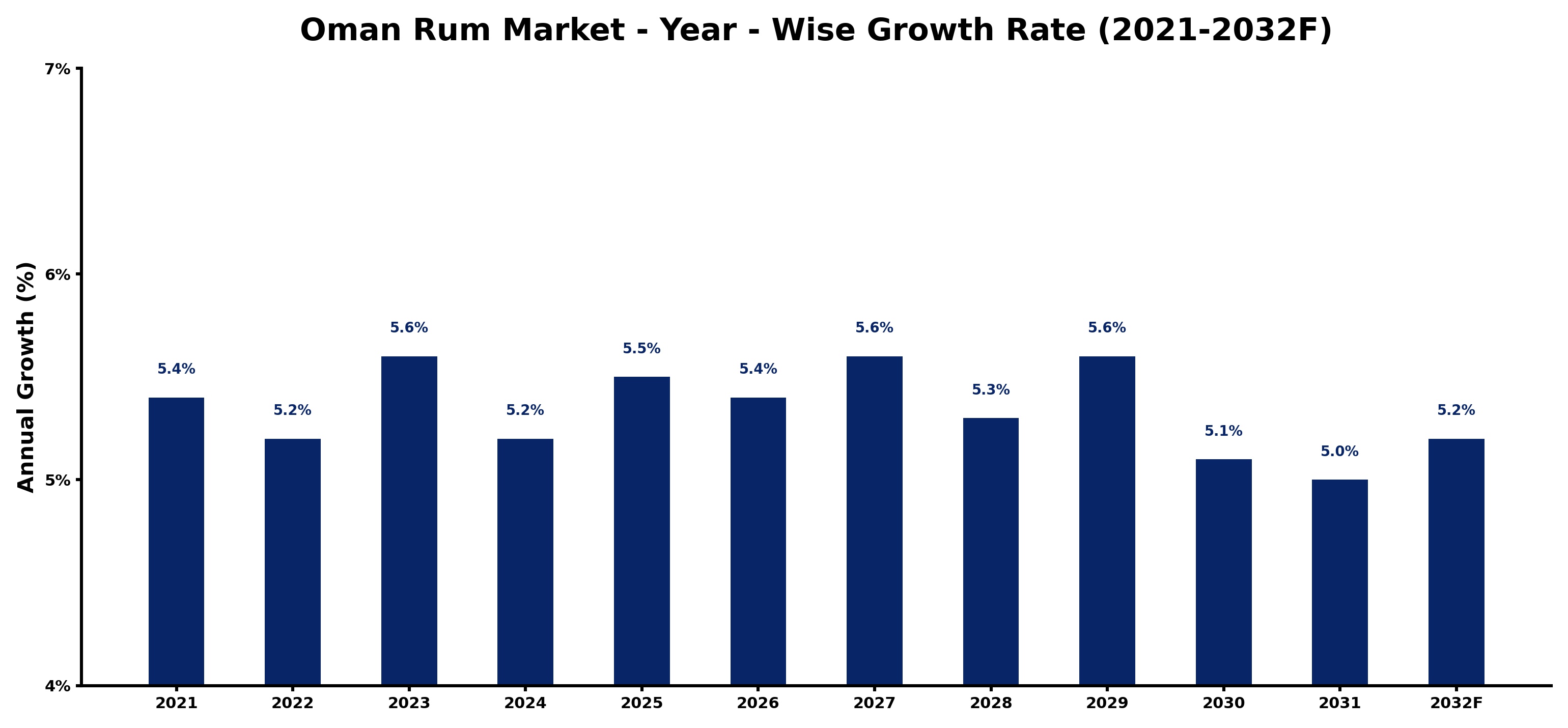
The table below presents the year‑wise growth rates along with the key drivers influencing the market
| Year | Growth Rate | Major Drivers |
| 2021 | 5.4% | Increasing industrial infrastructure investments |
| 2022 | 5.2% | Increasing adoption of advanced technologies |
| 2023 | 5.6% | Increasing adoption of advanced technologies |
| 2024 | 5.2% | Increasing smart city development projects |
| 2025 | 5.5% | Expansion of commercial construction activities |
| 2026 | 5.4% | Growing renewable energy integration projects |
| 2027 | 5.6% | Rising electricity demand across industries |
| 2028 | 5.3% | Expansion of commercial construction activities |
| 2029 | 5.6% | Expansion of commercial construction activities |
| 2030 | 5.1% | Government infrastructure modernization initiatives |
| 2031 | 5.0% | Expansion of manufacturing activities |
| 2032 | 5.2% | Increasing industrial infrastructure investments |
Note - Market size estimations and growth projections presented in this report are based on 6Wresearch's advanced forecasting approach, validated with industry datasets as of June 2026.
Oman Rum Market Synopsis
In recent years, the Oman rum market has gained momentum, fueled by a surge in consumer interest for premium and craft spirits. This burgeoning interest contrasts with the historical dominance of other alcoholic beverages like whiskey and vodka, suggesting a pivotal shift in local consumption patterns. As Omani consumers become more discerning, the market is poised to transition towards a more diverse and sophisticated landscape.
The outlook for the Oman rum market is bright, particularly as local distilleries innovate with unique flavors and sustainable practices. Consumers are not only seeking quality but also narrative; brands that emphasize heritage and craftsmanship are increasingly favored. As the cocktail culture permeates social scenes, the demand for rum-based cocktails and ready-to-drink options is set to escalate.
Oman Rum Market Key Takeaways
- The market is evolving due to a growing consumer trend towards premiumization and craft rums.
- Innovative flavors and unique branding are crucial to capturing the interest of Omani consumers.
- The cocktail culture is gaining traction, fostering demand for rum-based beverages.
- Consumer preferences are shifting towards sustainability and natural ingredients in rum production.
- Rising disposable incomes are contributing to increased spending on premium spirits.
Evaluation of Restraints in Oman Rum Market
Despite the positive trajectory, the Oman rum market faces several restraints. A notable challenge is the limited awareness of rum as a distinct category, which hinders its growth relative to more established spirits like whiskey and vodka. Regulatory hurdles surrounding alcohol advertising and sales further complicate market expansion. Additionally, high import duties and transportation costs restrict the affordability and accessibility of rum brands, limiting consumer choices in the market.
Oman Rum Market Trends
Several emerging trends are currently shaping the Oman rum market. Premiumization is at the forefront, with a rising number of consumers gravitating towards high-quality, craft rums that offer distinctive taste experiences. Moreover, there's an increasing desire for innovative rum cocktails, alongside the demand for ready-to-drink options. Consumers are also becoming more health-conscious, prompting interest in rum brands that emphasize organic and natural ingredients. Sustainability remains a key focus, with brands adopting ethical sourcing practices that resonate with environmentally aware consumers.
Oman Rum Market Opportunities
The Oman rum market presents significant investment opportunities, particularly for those looking to capitalize on the growing interest in premium spirits and mixology. Collaborations with local distilleries can yield innovative products that cater to specific consumer preferences. Furthermore, marketing strategies emphasizing the rich cultural significance of rum in Oman can help foster brand loyalty. As tourism continues to rise, there lies an opportunity for rum producers to engage both local and international consumers, creating a dynamic marketplace.
Government Initiatives in the Oman Rum Market
Government policies in Oman regarding alcohol consumption and sales are notably stringent. The sale of alcohol is regulated through licensed outlets, and there are strict age restrictions for purchasers. Advertising and promotional activities related to alcoholic products face significant limitations, which can affect brand visibility. Furthermore, high taxes and import duties are imposed on alcoholic beverages, including rum, as part of the government's efforts to promote responsible drinking practices while simultaneously regulating market growth.
Future Insights of the Oman Rum Market
Looking ahead to 2026-2032, the Oman rum market is expected to see continued growth, fueled by the dual forces of an evolving consumer base and an expanding cocktail culture. As local distilleries continue to innovate, consumers will increasingly seek unique and high-quality offerings. Enhanced tourism infrastructure may also play a role, as international visitors introduce new drinking habits. Companies that adapt their marketing and product strategies to resonate with both local and global consumers will likely thrive in this promising market.
Oman Rum Market Latest Developments (May 2025 - June 2026)
The Oman rum market has recently witnessed a surge in creative product launches, with local distilleries experimenting with unique flavor infusions and aging processes. This innovation aligns with the growing consumer demand for artisanal and high-quality spirits. Additionally, an increase in collaborative events and cocktail festivals is emerging, further promoting rum as a beverage of choice. Overall, the market is moving towards enhanced consumer engagement and education, vital for nurturing a deeper appreciation for rum.
Oman Rum Market - Key Attractiveness of the Report
- 10 Years of Market Numbers
- Historical Data Starting from 2022 to 2025
- Base Year: 2025
- Forecast Data until 2032
- Key Performance Indicators Impacting the Market
- Major Upcoming Developments and Projects
Key Highlights of the Report:
- Oman Rum Market Outlook
- Market Size of Oman Rum Market, 2025
- Forecast of Oman Rum Market, 2032
- Historical Data and Forecast of Oman Rum Revenues & Volume for the Period 2022-2032F
- Oman Rum Market Trend Evolution
- Oman Rum Market Drivers and Challenges
- Oman Rum Price Trends
- Oman Rum Porter's Five Forces
- Oman Rum Industry Life Cycle
- Historical Data and Forecast of Oman Rum Market Revenues & Volume By Type for the Period 2022-2032F
- Historical Data and Forecast of Oman Rum Market Revenues & Volume By Golden for the Period 2022-2032F
- Historical Data and Forecast of Oman Rum Market Revenues & Volume By Dark for the Period 2022-2032F
- Historical Data and Forecast of Oman Rum Market Revenues & Volume By White for the Period 2022-2032F
- Historical Data and Forecast of Oman Rum Market Revenues & Volume By Spiced for the Period 2022-2032F
- Historical Data and Forecast of Oman Rum Market Revenues & Volume By Distribution Channel for the Period 2022-2032F
- Historical Data and Forecast of Oman Rum Market Revenues & Volume By On-trade for the Period 2022-2032F
- Historical Data and Forecast of Oman Rum Market Revenues & Volume By Off-trade for the Period 2022-2032F
- Oman Rum Import Export Trade Statistics
- Market Opportunity Assessment By Type
- Market Opportunity Assessment By Distribution Channel
- Oman Rum Top Companies Market Share
- Oman Rum Competitive Benchmarking By Technical and Operational Parameters
- Oman Rum Company Profiles
- Oman Rum Key Strategic Recommendations






































