Qatar Rum Market Size, Share & Growth Rate
The Qatar Rum Market was estimated at USD 303 Million in 2025 and is projected to reach USD 409 Million by 2032, growing at a CAGR of 4.4% from 2026 to 2032. This growth trajectory is buoyed by the rising interest in premium spirits and the expanding mixology culture among consumers. Additionally, the increasing number of expatriates and a flourishing tourism sector further stimulate demand for diverse rum offerings, enhancing the market's appeal in social and leisure settings.
Qatar Rum Market Year-wise Growth Rate and Key Drivers
This graph highlights how the Qatar Rum Market has steadily grown over the years, supported by major growth factors.
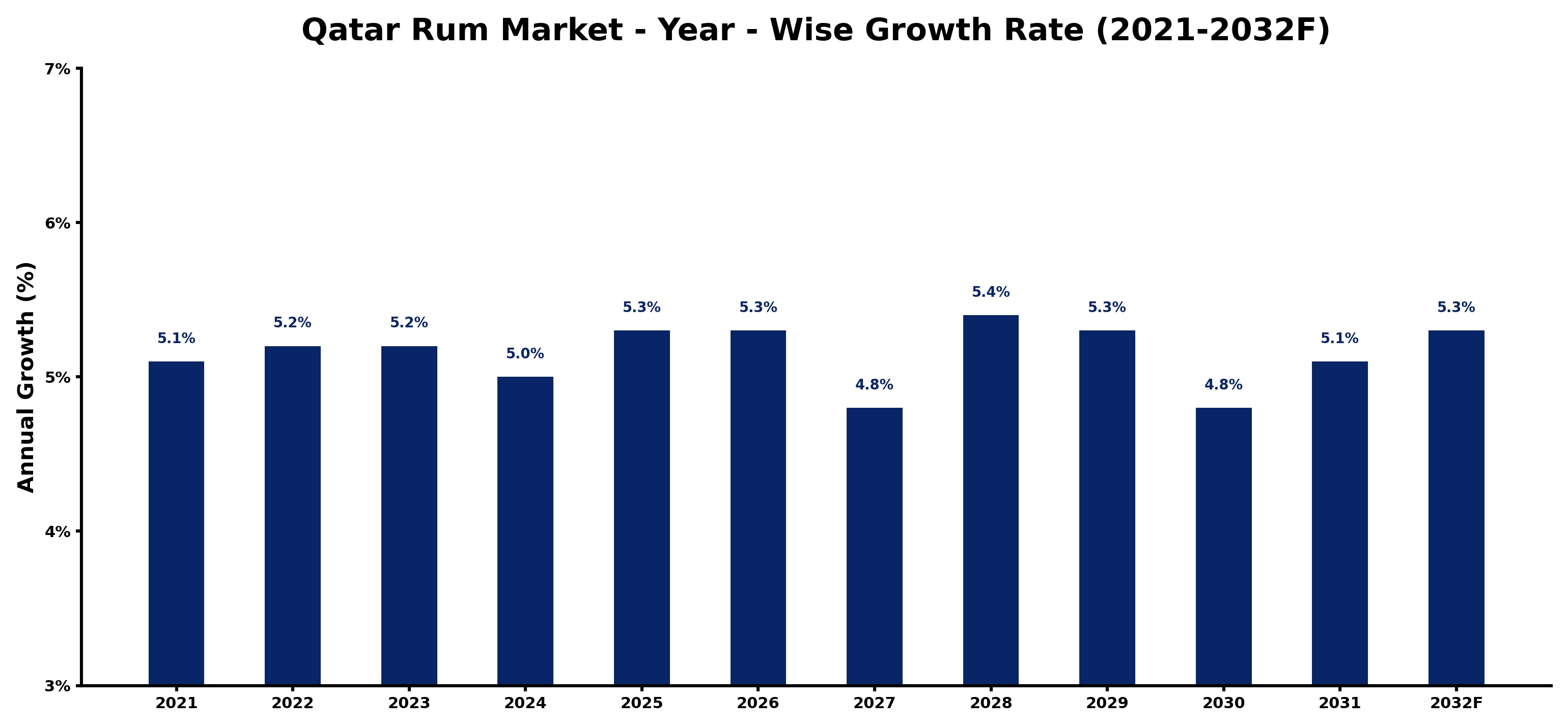
The table below presents the year‑wise growth rates along with the key drivers influencing the market
| Year | Growth Rate | Major Drivers |
| 2021 | 5.1% | Increasing industrial infrastructure investments |
| 2022 | 5.2% | Increasing adoption of advanced technologies |
| 2023 | 5.2% | Growing renewable energy integration projects |
| 2024 | 5.0% | Rising electricity demand across industries |
| 2025 | 5.3% | Expansion of manufacturing activities |
| 2026 | 5.3% | Growing renewable energy integration projects |
| 2027 | 4.8% | Increasing industrial automation investments |
| 2028 | 5.4% | Increasing smart city development projects |
| 2029 | 5.3% | Expansion of commercial construction activities |
| 2030 | 4.8% | Growing renewable energy integration projects |
| 2031 | 5.1% | Increasing industrial infrastructure investments |
| 2032 | 5.3% | Expansion of commercial construction activities |
Note - Market size estimations and growth projections presented in this report are based on 6Wresearch's advanced forecasting approach, validated with industry datasets as of June 2026.
Qatar Rum Market Synopsis
The dynamic hospitality sector is the strongest force shaping the Qatar Rum market today. A growing number of hotels, bars, and restaurants are incorporating rum into their drink menus, catering to both locals and tourists who seek premium experiences. This shift in consumer preferences toward high-quality, flavored rum options is steering the market toward sustainable growth.
Furthermore, the evolving social landscape in Qatar plays a crucial role in shaping demand. As the nation continues to embrace diverse cultural influences, rum is increasingly celebrated for its versatility, making it a favored choice during social gatherings and special events. This trend underlines the spirit's integral role in Qatar's developing beverage culture.
Qatar Rum Market Key Takeaways
- The Qatar Rum market is experiencing robust growth driven by premiumization and tourism.
- Regulations surrounding the sale of alcoholic beverages continue to impact market strategies.
- The expatriate population significantly influences rum consumption patterns.
- Flavored and craft rum products are on the rise, appealing to diverse consumer tastes.
- Social events and hospitality venues are pivotal in promoting rum consumption.
Evaluation of Restraints in Qatar Rum Market
Despite its growth, the Qatar Rum market faces significant restraints that could limit its potential. The stringent legal framework governing the sale and marketing of alcoholic beverages remains a formidable challenge. Compliance with Islamic laws constrains promotional activities, limiting brands' abilities to reach broader audiences effectively. Moreover, the relatively niche market for rum poses additional hurdles, as producers and distributors must strategically navigate the limited consumer base, maintaining profitability in a heavily regulated environment.
Qatar Rum Market Trends
Current trends highlight a shift towards craft and flavored rums, appealing to an adventurous consumer base eager for unique drinking experiences. Additionally, the increasing prevalence of mixology-focused events has elevated rum's status as a key ingredient in signature cocktails. Environmental sustainability is also becoming an important concern, leading consumers to seek brands that prioritize eco-friendly practices in their production and packaging processes.
Qatar Rum Market Opportunities
The Qatar Rum market offers notable opportunities for growth, particularly in premium and craft segments. With increasing consumer interest in high-quality spirits, brands that innovate with unique flavors and artisanal production methods stand to capture significant market share. Moreover, tapping into the burgeoning e-commerce channels for distribution could enhance brand visibility and accessibility, catering to the changing shopping preferences of consumers.
Government Initiatives in the Qatar Rum Market
The Qatari government has established various policies aimed at regulating the alcohol industry, promoting responsible consumption while balancing cultural norms. Public spending on tourism and hospitality infrastructure has created a conducive environment for the rum market to thrive. Furthermore, initiatives to boost the tourism sector may indirectly benefit rum sales as visitors contribute to the demand for alcoholic beverages in the hospitality landscape.
Future Insights of the Qatar Rum Market
Looking ahead to 2026-2032, the Qatar Rum market is poised for considerable expansion, driven by the growing expatriate community and increased tourism activity. As cultural exchanges continue to influence local tastes, brands that adapt to these changing preferences will likely succeed. The sustained interest in premium spirits and innovation within the sector will further propel growth, creating an environment ripe for investment and new entrants.
Qatar Rum Market Latest Developments (May 2025 - June 2026)
Recent developments in the Qatar Rum market indicate a continued focus on premiumization and consumer engagement through tasting events and brand collaborations. As more hospitality venues feature rum-centric menus, awareness and appreciation for this spirit are growing among consumers. Additionally, advancements in distribution channels, including online platforms, are helping brands reach broader audiences, ultimately supporting the market's expansion.
Qatar Rum Market - Key Attractiveness of the Report
- 10 Years of Market Numbers
- Historical Data Starting from 2022 to 2025
- Base Year: 2025
- Forecast Data until 2032
- Key Performance Indicators Impacting the Market
- Major Upcoming Developments and Projects
Key Highlights of the Report:
- Qatar Rum Market Outlook
- Market Size of Qatar Rum Market, 2025
- Forecast of Qatar Rum Market, 2032
- Historical Data and Forecast of Qatar Rum Revenues & Volume for the Period 2022-2032F
- Qatar Rum Market Trend Evolution
- Qatar Rum Market Drivers and Challenges
- Qatar Rum Price Trends
- Qatar Rum Porter's Five Forces
- Qatar Rum Industry Life Cycle
- Historical Data and Forecast of Qatar Rum Market Revenues & Volume By Type for the Period 2022-2032F
- Historical Data and Forecast of Qatar Rum Market Revenues & Volume By Golden for the Period 2022-2032F
- Historical Data and Forecast of Qatar Rum Market Revenues & Volume By Dark for the Period 2022-2032F
- Historical Data and Forecast of Qatar Rum Market Revenues & Volume By White for the Period 2022-2032F
- Historical Data and Forecast of Qatar Rum Market Revenues & Volume By Spiced for the Period 2022-2032F
- Historical Data and Forecast of Qatar Rum Market Revenues & Volume By Distribution Channel for the Period 2022-2032F
- Historical Data and Forecast of Qatar Rum Market Revenues & Volume By On-trade for the Period 2022-2032F
- Historical Data and Forecast of Qatar Rum Market Revenues & Volume By Off-trade for the Period 2022-2032F
- Qatar Rum Import Export Trade Statistics
- Market Opportunity Assessment By Type
- Market Opportunity Assessment By Distribution Channel
- Qatar Rum Top Companies Market Share
- Qatar Rum Competitive Benchmarking By Technical and Operational Parameters
- Qatar Rum Company Profiles
- Qatar Rum Key Strategic Recommendations






































