Oman Vitamin K Market Size, Share & Growth Rate
The Oman Vitamin K Market was estimated at USD 368 Million in 2025 and is projected to reach USD 478 Million by 2032, growing at a CAGR of 3.8% from 2026 to 2032. This growth trajectory is primarily driven by heightened awareness of the health benefits associated with vitamin K, particularly in supporting bone density and cardiovascular health. The increasing population of elderly individuals seeking preventive health measures is further fueling demand for both supplements and fortified foods.
Oman Vitamin K Market Growth Rate Analysis (2021-2032)
The Oman Vitamin K market has shown stable growth over the years, with a slight increase from 4.5% in 2021 to 4.9% in 2023. This upward trend can be attributed to rising consumer awareness of vitamin deficiencies and the benefits of supplementation, driven by shifts in dietary habits and an expanding health-conscious demographic. Despite a minor dip to 4.3% in 2022, the market rebounded due to increased investments in health infrastructure and digital platforms for distribution, helping consumers access these products more conveniently. Forecasts suggest growth will continue at an average of 4.5% through 2032, reflecting ongoing demand for Vitamin K amidst evolving dietary trends and robust health regulations.
Oman Vitamin K Market Year-wise Growth Rate and Key Drivers
This graph highlights how the Oman Vitamin K Market has steadily grown over the past five years, supported by major growth factors.
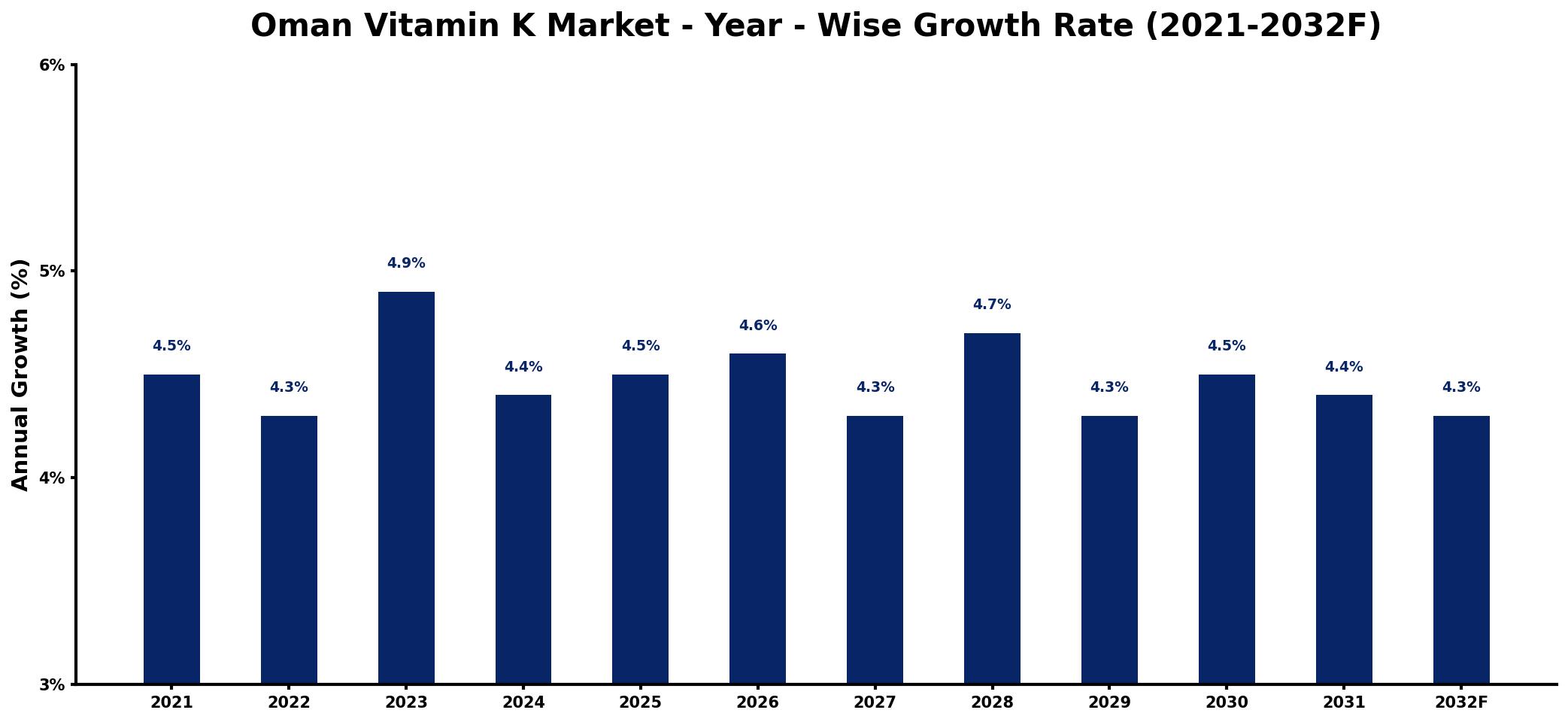
The table below presents the year‑wise growth rates along with the key drivers influencing the market
| Year | Growth Rate | Major Drivers |
| 2021 | 4.5% | Rising health awareness among consumers |
| 2022 | 4.3% | Increased dietary supplement consumption |
| 2023 | 4.9% | Growing interest in natural ingredients |
| 2024 | 4.4% | Expansion of health food stores |
| 2025 | 4.5% | Investment in nutritional research initiatives |
| 2026 | 4.6% | Surge in preventive healthcare measures |
| 2027 | 4.3% | Emerging trends in functional foods |
| 2028 | 4.7% | Growth of online health platforms |
| 2029 | 4.3% | Rising demand for organic products |
| 2030 | 4.5% | Increased collaboration with healthcare professionals |
| 2031 | 4.4% | Development of innovative delivery formats |
| 2032 | 4.3% | Enhanced focus on personalized nutrition |
Note: Market size estimations and growth projections presented in this report are based on 6Wresearch's proprietary forecasting methodology, utilizing the latest available industry data, government publications, and primary research inputs.
Oman Vitamin K Market Synopsis
The most significant force shaping the Oman Vitamin K Market today is the rising awareness among consumers regarding the health benefits of vitamin K. As knowledge spreads about its role in blood coagulation and bone health, more individuals are incorporating vitamin K-rich foods and supplements into their diets.
Additionally, the demographic shift towards an aging population is contributing to increased market demand. With osteoporosis and cardiovascular issues becoming more prevalent among older adults, the push for preventive health strategies is likely to stimulate growth in the vitamin K segment.
Oman Vitamin K Market Key Takeaways
- The market is driven by an increasing focus on preventive health measures.
- Demand for vitamin K supplements is rising, particularly among older adults.
- Fortified foods are gaining popularity as a means to enhance dietary intake of vitamin K.
- Regulatory frameworks may impact the approval and marketing of vitamin K products.
- Consumer education is crucial for market growth and product differentiation.
Evaluation of Restraints in Oman Vitamin K Market
Despite the positive growth outlook, the Oman Vitamin K Market faces notable constraints. One of the primary challenges is the lack of consumer and healthcare professional awareness regarding the significance of vitamin K. This knowledge gap hampers demand and slows market penetration, as many individuals remain uninformed about the health benefits. Regulatory complexities surrounding the approval of vitamin K supplements also create barriers for manufacturers, potentially stifling innovation. Furthermore, supply chain issues and competition from alternative sources of vitamin K necessitate strategic differentiation efforts by market players.
Oman Vitamin K Market Trends
Current trends in the Oman Vitamin K Market include the growing interest in natural health products and organic supplement formulations. As consumers become increasingly health-conscious, they seek products that align with holistic health principles. Innovations in food technology are also on the rise, with fortified food products emerging as a significant trend. Additionally, online retail platforms are becoming vital for vitamin K product distribution, enhancing accessibility for consumers.
Oman Vitamin K Market Opportunities
Investors and stakeholders should note the substantial growth opportunities in the development of fortified foods. There is also significant potential for creating educational campaigns aimed at both consumers and healthcare professionals. Collaborations with healthcare providers could further raise awareness, driving increased vitamin K supplementation. Emerging research into the broader health benefits of vitamin K may also open up new avenues for product innovation.
Government Initiatives in the Oman Vitamin K Market
The Omani government is actively supporting the vitamin K market as part of its broader health initiatives. Policies encouraging the production of supplements and fortified foods are being introduced, along with regulations designed to ensure product safety and efficacy. Moreover, government-led educational campaigns are expected to play a pivotal role in raising awareness about the importance of vitamin K in maintaining overall health.
Future Insights of the Oman Vitamin K Market
Looking ahead to the 2026-2032 period, the Oman Vitamin K Market is poised for robust expansion. As consumer awareness continues to rise, and the aging population seeks preventive health solutions, demand is likely to escalate. The combination of innovative product offerings and governmental support will create a conducive environment for market growth, solidifying vitamin K's role as an essential component of dietary health in Oman.
Oman Vitamin K Market Latest Developments (2025 - 2026)
Recent developments in the Oman Vitamin K Market have highlighted a trend toward enhanced product formulation and distribution. Companies are increasingly focusing on integrating vitamin K into diverse food products, targeting health-conscious consumers. Additionally, the rise of e-commerce has transformed how consumers access vitamin K supplements, enabling greater market reach and convenience.
Oman Vitamin K Market - Key Attractiveness of the Report
- 10 Years of Market Numbers
- Historical Data Starting from 2022 to 2025
- Base Year: 2025
- Forecast Data until 2032
- Key Performance Indicators Impacting the Market
- Major Upcoming Developments and Projects
Key Highlights of the Report:
- Oman Vitamin K Market Outlook
- Market Size of Oman Vitamin K Market, 2025
- Forecast of Oman Vitamin K Market, 2032
- Historical Data and Forecast of Oman Vitamin K Revenues & Volume for the Period 2022-2032F
- Oman Vitamin K Market Trend Evolution
- Oman Vitamin K Market Drivers and Challenges
- Oman Vitamin K Price Trends
- Oman Vitamin K Porter's Five Forces
- Oman Vitamin K Industry Life Cycle
- Historical Data and Forecast of Oman Vitamin K Market Revenues & Volume By Type for the Period 2022-2032F
- Historical Data and Forecast of Oman Vitamin K Market Revenues & Volume By Vitamin K1 for the Period 2022-2032F
- Historical Data and Forecast of Oman Vitamin K Market Revenues & Volume By Vitamin K2 for the Period 2022-2032F
- Historical Data and Forecast of Oman Vitamin K Market Revenues & Volume By Application for the Period 2022-2032F
- Historical Data and Forecast of Oman Vitamin K Market Revenues & Volume By Osteoporosis for the Period 2022-2032F
- Historical Data and Forecast of Oman Vitamin K Market Revenues & Volume By Vitamin-K Dependent Clotting Factor Deficiency for the Period 2022-2032F
- Historical Data and Forecast of Oman Vitamin K Market Revenues & Volume By Prothrombin Deficiency for the Period 2022-2032F
- Historical Data and Forecast of Oman Vitamin K Market Revenues & Volume By Vitamin K Deficiency Bleeding for the Period 2022-2032F
- Historical Data and Forecast of Oman Vitamin K Market Revenues & Volume By Dermal Applications for the Period 2022-2032F
- Historical Data and Forecast of Oman Vitamin K Market Revenues & Volume By Route of Administration for the Period 2022-2032F
- Historical Data and Forecast of Oman Vitamin K Market Revenues & Volume By Oral for the Period 2022-2032F
- Historical Data and Forecast of Oman Vitamin K Market Revenues & Volume By Parenteral for the Period 2022-2032F
- Historical Data and Forecast of Oman Vitamin K Market Revenues & Volume By Topical for the Period 2022-2032F
- Oman Vitamin K Import Export Trade Statistics
- Market Opportunity Assessment By Type
- Market Opportunity Assessment By Application
- Market Opportunity Assessment By Route of Administration
- Oman Vitamin K Top Companies Market Share
- Oman Vitamin K Competitive Benchmarking By Technical and Operational Parameters
- Oman Vitamin K Company Profiles
- Oman Vitamin K Key Strategic Recommendations






































