Oman Windows Market Summary
The oman windows market was estimated at USD 234 Million in 2025 and is projected to reach USD 330 Million by 2032, growing at a CAGR of 5.9% from 2026 to 2032.
Oman Windows Market Year-wise Growth Rate and Key Drivers
This graph highlights how the Oman Windows Market has steadily grown over the past five years, supported by major growth factors.
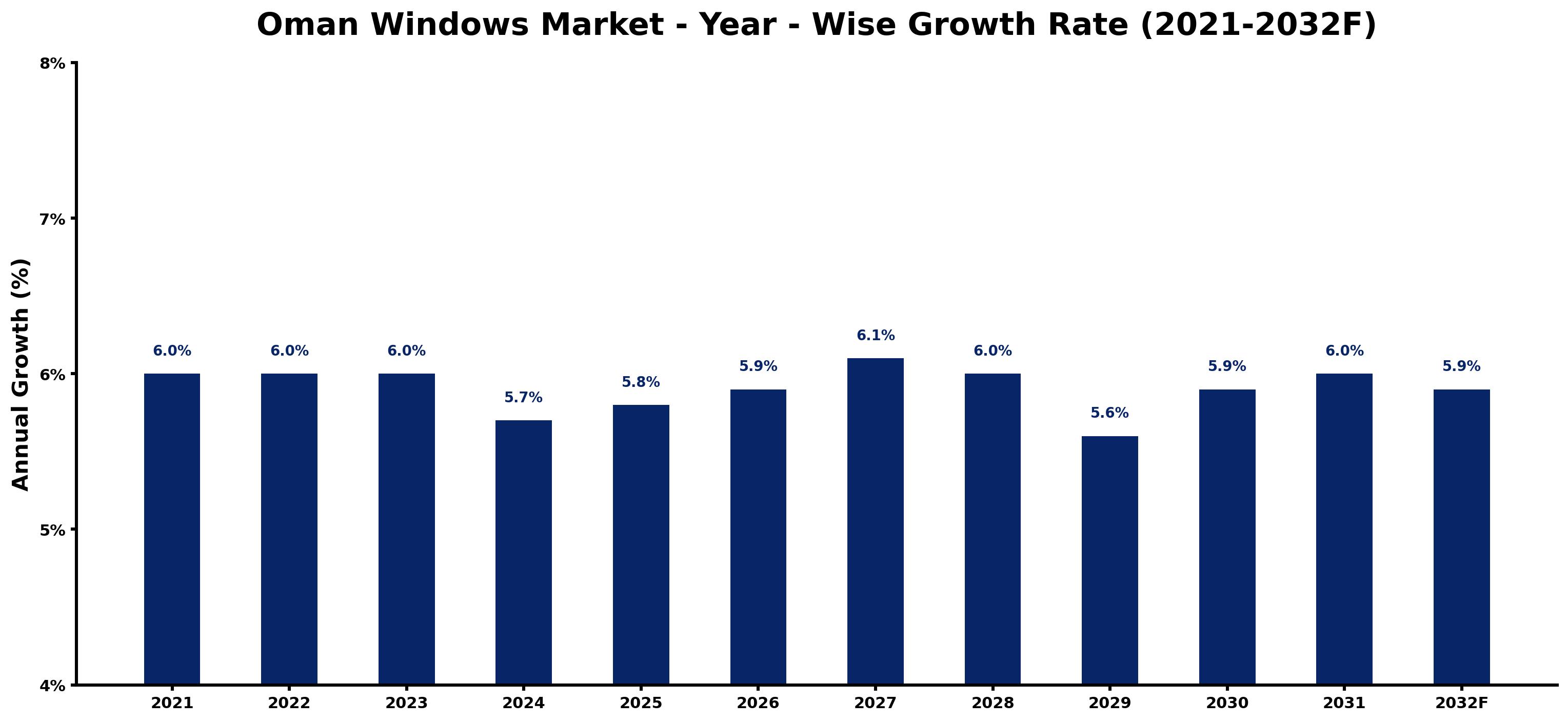
The table below presents the year wise growth rates along with the key drivers influencing the market
| Year | Growth Rate | Major Drivers |
| 2021 | 6.0% | Post-lockdown retail projects initiated, revitalizing the construction landscape in Oman. |
| 2022 | 6.0% | Increased focus on energy efficiency prompted demand for innovative window solutions. |
| 2023 | 6.0% | Local manufacturers began emphasizing sustainability, aligning with global green initiatives. |
| 2024 | 5.7% | Large-scale infrastructure developments in Muscat fueled interest in durable window options. |
| 2025 | 5.8% | Consumer awareness of thermal insulation options enhanced preferences for high-performance windows. |
| 2026 | 5.9% | International collaborations introduced advanced glazing technologies to the Omani market. |
| 2027 | 6.1% | Urbanization in Oman led to increased residential projects, boosting window market growth. |
| 2028 | 6.0% | Emerging trends in smart homes encouraged integration of tech-savvy window solutions. |
| 2029 | 5.6% | The hospitality sector's expansion drove demand for aesthetically appealing window designs. |
| 2030 | 5.9% | Energy regulations in neighboring GCC countries influenced Oman's energy-efficient window demand. |
| 2031 | 6.0% | Public-private partnerships catalyzed investments in sustainable construction practices in Oman. |
| 2032 | 5.9% | Revamped building codes focused on energy efficiency significantly shaped window product standards. |
Note - Market size estimations and growth projections presented in this report are based on 6Wresearch's advanced forecasting approach, validated with industry datasets as of June 2026.
Oman Windows Market Synopsis
The Oman Windows Market is projected to reach 5.9% and witness significant growth during the forecast period (2026-2032). This growth is primarily driven by the increasing demand for energy-efficient and aesthetically pleasing window solutions, which are integral to modern building designs. Windows are not only essential for natural light and ventilation but also play a critical role in thermal insulation, thereby enhancing overall energy efficiency in residential and commercial properties.
Oman Windows Market Growth Drivers
The expansion of the Oman Windows Market is influenced by several key factors, including:
- The burgeoning construction and renovation activities, leading to higher demand for versatile window solutions that meet both aesthetic and functional requirements.
- The growing emphasis on energy efficiency, prompting builders and homeowners to opt for windows that contribute to lower energy consumption and enhanced thermal performance.
- The advent of advanced window technologies, such as double glazing and low-emissivity coatings, which provide improved insulation and comfort within buildings.
- The increasing popularity of customizable window solutions that cater to specific design needs, allowing homeowners and architects greater flexibility in their building projects.
- The push towards sustainable building practices, motivating stakeholders across the construction sector to prioritize eco-friendly technologies and materials in their projects.
Oman Windows Market Challenges and Restraints
Despite the positive outlook, the Oman Windows Market faces several challenges that may hinder its growth:
- One of the primary concerns is the need for manufacturers to develop windows that not only meet energy efficiency standards but also adhere to increasing sustainability regulations.
- Investment requirements for research and development can be significant, as companies must innovate to create eco-friendly materials while adhering to local and international standards.
- Market competition may lead to pricing pressures, pushing manufacturers to balance quality and affordability in their product offerings.
- Awareness among consumers about energy-efficient window options is still growing, which means that educational initiatives may be required to boost adoption rates.
- The fluctuating availability of raw materials and economic uncertainties can also pose challenges to consistent production capabilities and pricing strategies.
Oman Windows Market Trends and Opportunities
Several trends are emerging in the Oman Windows Market that present opportunities for growth and innovation:
- Smart window technologies that integrate with home automation systems are becoming increasingly popular as consumers seek enhanced convenience and energy management.
- The focus on modular construction methods promotes the use of pre-fabricated window units, streamlining installation processes and reducing labor costs.
- Design trends favoring minimalistic and streamlined aesthetics are driving demand for modern window profiles that complement contemporary architecture.
- Enhanced marketing strategies highlighting the long-term savings associated with energy-efficient windows are expected to resonate well with cost-conscious consumers.
- The potential for government partnerships to promote sustainable building initiatives, which can include incentives for the use of innovative window solutions in new developments.
Oman Windows Market Government Investment and Initiatives
The Omani government plays a pivotal role in enhancing the quality and energy efficiency of windows through various initiatives and investments:
- Incentives are being offered for the production and installation of high-performance windows, encouraging manufacturers to adopt energy-efficient practices.
- Public spending on infrastructure development is directed towards building projects that meet stringent energy efficiency standards, thereby boosting demand in the windows market.
- Grants are available for research initiatives aimed at advancing innovative window technologies that focus on sustainability and operational efficiency.
- Regulatory frameworks are being established to mandate energy efficiency standards for all new buildings, which indirectly drives the market for compliant window solutions.
- The emphasis on sustainable urban development is prompting partnerships with private sectors to explore eco-friendly construction materials, including modern window technologies.
Oman Windows Market Latest Developments (May 2025 - June 2026)
The period from May 2025 to June 2026 has seen notable developments within the Oman Windows Market, reflecting ongoing shifts in industry dynamics:
- There has been a marked increase in the adoption of green building practices, with more projects incorporating energy-efficient window technologies as a standard requirement.
- The introduction of new energy-efficient standards for residential and commercial buildings has heightened demand for compliant window products.
- Collaborations between local manufacturers and international technology firms have led to the introduction of innovative window solutions that enhance thermal performance.
- A growing consumer interest in aesthetic design has prompted manufacturers to expand their offerings to include a wider variety of window styles and finishes.
- Educational campaigns aimed at raising awareness about the benefits of energy-efficient windows have begun to yield positive feedback from the market.
Oman Windows Market - Key Attractiveness of the Report
- 10 Years of Market Numbers
- Historical Data Starting from 2022 to 2025
- Base Year: 2025
- Forecast Data until 2032
- Key Performance Indicators Impacting the Market
- Major Upcoming Developments and Projects
Key Highlights of the Report:
- Oman Windows Market Outlook
- Market Size of Oman Windows Market, 2025
- Forecast of Oman Windows Market, 2032
- Historical Data and Forecast of Oman Windows Revenues & Volume for the Period 2022-2032F
- Oman Windows Market Trend Evolution
- Oman Windows Market Drivers and Challenges
- Oman Windows Price Trends
- Oman Windows Porter's Five Forces
- Oman Windows Industry Life Cycle
- Historical Data and Forecast of Oman Windows Market Revenues & Volume By Material for the Period 2022-2032F
- Historical Data and Forecast of Oman Windows Market Revenues & Volume By uPVC for the Period 2022-2032F
- Historical Data and Forecast of Oman Windows Market Revenues & Volume By Wood for the Period 2022-2032F
- Historical Data and Forecast of Oman Windows Market Revenues & Volume By Metal for the Period 2022-2032F
- Historical Data and Forecast of Oman Windows Market Revenues & Volume By Others for the Period 2022-2032F
- Historical Data and Forecast of Oman Windows Market Revenues & Volume By Application for the Period 2022-2032F
- Historical Data and Forecast of Oman Windows Market Revenues & Volume By Residential for the Period 2022-2032F
- Historical Data and Forecast of Oman Windows Market Revenues & Volume By Commercial for the Period 2022-2032F
- Oman Windows Import Export Trade Statistics
- Market Opportunity Assessment By Material
- Market Opportunity Assessment By Application
- Oman Windows Top Companies Market Share
- Oman Windows Competitive Benchmarking By Technical and Operational Parameters
- Oman Windows Company Profiles
- Oman Windows Key Strategic Recommendations






































