Pakistan Apiculture Market: Import Trend Analysis
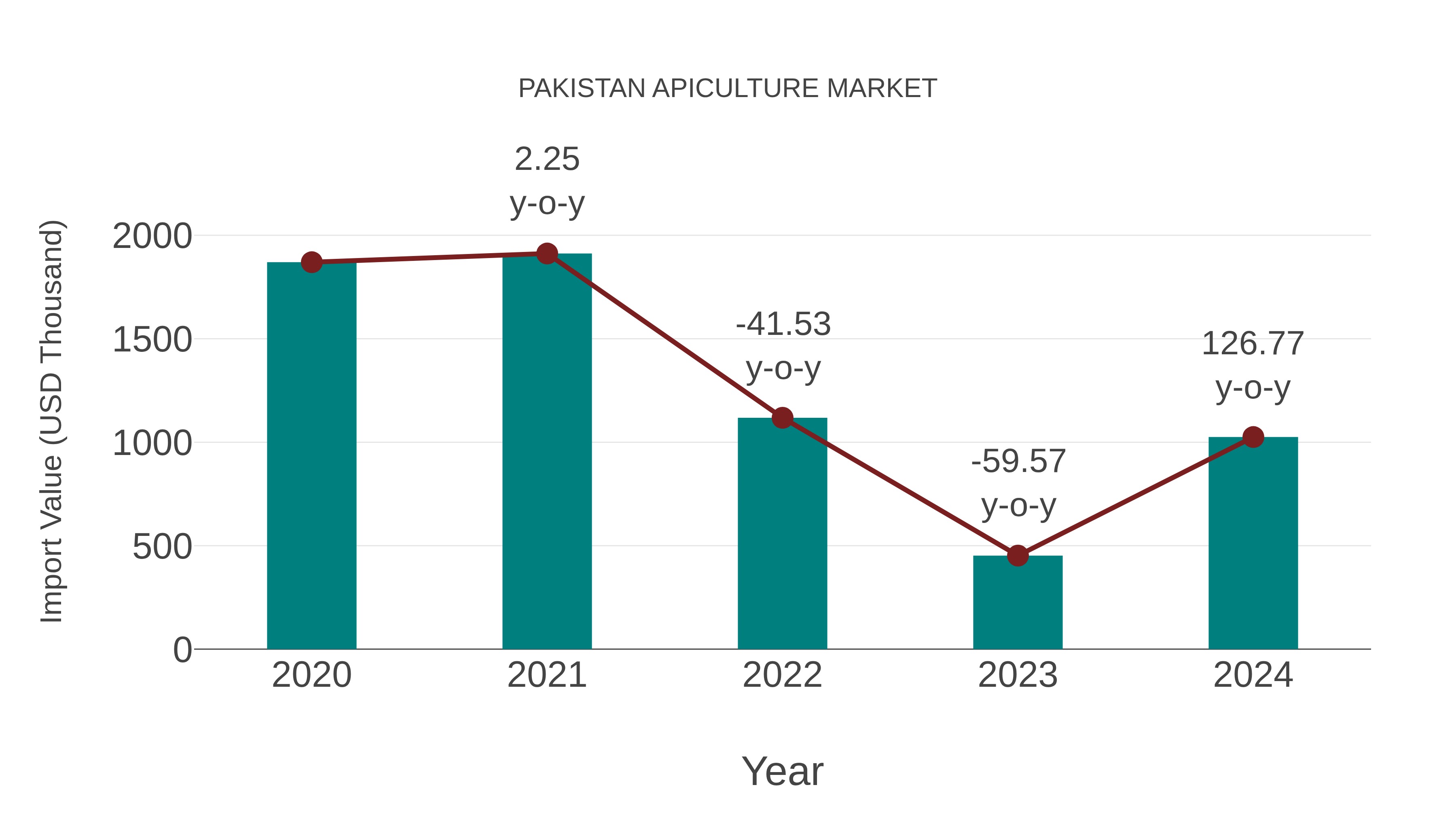
Pakistan import trend for the apiculture market exhibited a notable increase in 2024, with a growth rate of 126.77% compared to the previous year. However, the Compound Annual Growth Rate (CAGR) for the period 2020-2024 stood at -13.96%. This decline in CAGR could be attributed to factors such as fluctuating demand dynamics, changes in trade policies, or market instability during the period under review.
Pakistan Apiculture Market Synopsis
The Pakistan Apiculture Market is witnessing steady growth driven by increasing awareness about the health benefits of honey, propolis, and other bee products. The country`s diverse flora and favorable climatic conditions provide ample opportunities for beekeeping activities. Small-scale beekeepers dominate the market, with a focus on traditional methods of honey production. However, there is a growing trend towards modern beekeeping techniques and equipment adoption to improve productivity and quality standards. The demand for organic and natural honey is on the rise, both domestically and internationally, creating export opportunities for Pakistani beekeepers. Challenges such as climate change, pesticide use, and lack of infrastructure persist but efforts are being made to address these issues to further develop the apiculture industry in Pakistan.
Pakistan Apiculture Market Trends
Currently, the Pakistan Apiculture Market is experiencing a growing interest in beekeeping as a lucrative and sustainable agricultural practice. The demand for honey and other bee products is increasing due to their perceived health benefits and natural properties. Small-scale beekeeping operations are becoming popular among farmers and entrepreneurs, leading to a rise in the number of beekeepers in the country. Additionally, there is a growing awareness about the importance of bees in pollination, which is driving the adoption of beekeeping practices. The government is also providing support and incentives to promote the apiculture industry, further fueling its growth. Overall, the Pakistan Apiculture Market is witnessing a positive trend with a focus on sustainable beekeeping practices and the production of high-quality honey products.
Pakistan Apiculture Market Challenges
In the Pakistan Apiculture Market, several challenges are faced, including limited access to modern beekeeping techniques and equipment, inadequate training and education for beekeepers, inconsistent quality control measures leading to variable honey quality, difficulty in accessing markets for honey distribution, and the threat of diseases and pests affecting bee colonies. Additionally, the lack of government support and policies tailored specifically for the apiculture industry hinders its growth potential. These challenges combined contribute to the overall underdevelopment of the Pakistan Apiculture Market, limiting the ability of beekeepers to maximize their productivity and profitability in this sector. Addressing these challenges through improved training programs, better infrastructure, market linkages, and supportive policies can help unlock the full potential of the apiculture industry in Pakistan.
Pakistan Apiculture Market Investment Opportunities
The Pakistan apiculture market offers promising investment opportunities due to increasing demand for honey and other bee products both domestically and internationally. With a diverse landscape and favorable climatic conditions, Pakistan has the potential to produce high-quality honey and bee products. Investing in modern beekeeping technologies, training programs for beekeepers, and establishing value-added honey processing facilities could lead to increased production and better quality products. Additionally, there is a growing trend towards organic and natural products globally, presenting a lucrative market for Pakistani honey. Collaborating with local beekeepers, supporting sustainable practices, and exploring export opportunities can further enhance the growth prospects in the Pakistan apiculture market.
Pakistan Apiculture Market Future Outlook
The future outlook for the Pakistan Apiculture Market appears promising due to increasing awareness about the health benefits of honey and other bee products. The growing demand for natural and organic products, coupled with the rising popularity of honey as a sweetener and alternative medicine, is expected to drive market growth. Additionally, the government`s initiatives to promote beekeeping as a sustainable livelihood option for rural communities will likely contribute to the expansion of the apiculture industry in Pakistan. With a favorable climate for beekeeping and a diverse range of flora supporting honey production, the market is poised for steady growth in the coming years, presenting opportunities for both small-scale beekeepers and commercial enterprises to thrive in the sector.
Key Highlights of the Report:
- Pakistan Apiculture Market Outlook
- Market Size of Pakistan Apiculture Market, 2025
- Forecast of Pakistan Apiculture Market, 2032
- Historical Data and Forecast of Pakistan Apiculture Revenues & Volume for the Period 2022 - 2032F
- Pakistan Apiculture Market Trend Evolution
- Pakistan Apiculture Market Drivers and Challenges
- Pakistan Apiculture Price Trends
- Pakistan Apiculture Porter's Five Forces
- Pakistan Apiculture Industry Life Cycle
- Historical Data and Forecast of Pakistan Apiculture Market Revenues & Volume By Product Type for the Period 2022 - 2032F
- Historical Data and Forecast of Pakistan Apiculture Market Revenues & Volume By Honey for the Period 2022 - 2032F
- Historical Data and Forecast of Pakistan Apiculture Market Revenues & Volume By Beeswax for the Period 2022 - 2032F
- Historical Data and Forecast of Pakistan Apiculture Market Revenues & Volume By Live-bees for the Period 2022 - 2032F
- Historical Data and Forecast of Pakistan Apiculture Market Revenues & Volume By Others for the Period 2022 - 2032F
- Historical Data and Forecast of Pakistan Apiculture Market Revenues & Volume By Application for the Period 2022 - 2032F
- Historical Data and Forecast of Pakistan Apiculture Market Revenues & Volume By Medical for the Period 2022 - 2032F
- Historical Data and Forecast of Pakistan Apiculture Market Revenues & Volume By Food Beverages for the Period 2022 - 2032F
- Historical Data and Forecast of Pakistan Apiculture Market Revenues & Volume By Cosmetics for the Period 2022 - 2032F
- Historical Data and Forecast of Pakistan Apiculture Market Revenues & Volume By Others for the Period 2022 - 2032F
- Pakistan Apiculture Import Export Trade Statistics
- Market Opportunity Assessment By Product Type
- Market Opportunity Assessment By Application
- Pakistan Apiculture Top Companies Market Share
- Pakistan Apiculture Competitive Benchmarking By Technical and Operational Parameters
- Pakistan Apiculture Company Profiles
- Pakistan Apiculture Key Strategic Recommendations






































