Pakistan Bamboo Furniture Market: Import Trend Analysis
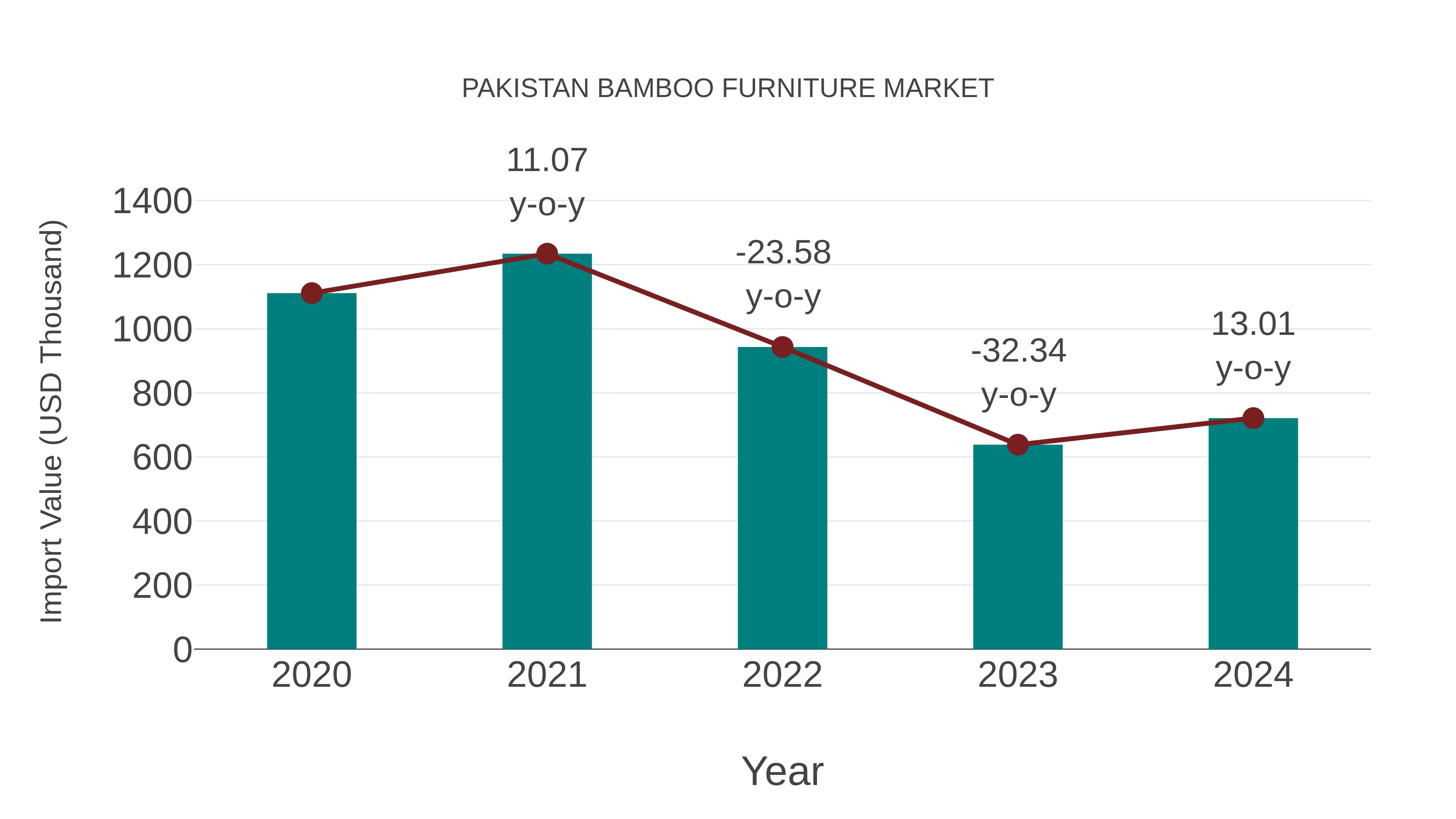
Pakistan import trend for bamboo furniture saw a growth rate of 13.01% from 2023 to 2024, with a compound annual growth rate (CAGR) of -10.25% from 2020 to 2024. This fluctuation could be attributed to changing consumer preferences or shifts in trade policies impacting market stability.
Pakistan Bamboo Furniture Market Synopsis
The Pakistan Bamboo Furniture Market is experiencing steady growth driven by increasing consumer awareness about sustainable and eco-friendly products. Bamboo furniture is gaining popularity due to its durability, aesthetic appeal, and environmental benefits. The market is witnessing a rise in demand for bamboo furniture in both residential and commercial sectors, with a growing number of manufacturers and retailers offering a wide range of bamboo furniture products. The government`s focus on promoting sustainable practices and the availability of raw materials in the country are further contributing to the market`s expansion. As consumers become more conscious of their environmental impact, the Pakistan Bamboo Furniture Market is expected to continue its growth trajectory in the coming years.
Pakistan Bamboo Furniture Market Trends
The Pakistan Bamboo Furniture Market is experiencing a growing trend towards sustainable and eco-friendly furniture options. Consumers are increasingly seeking environmentally friendly alternatives to traditional furniture materials, leading to a rise in demand for bamboo furniture. Bamboo is a fast-growing and renewable resource that offers durability and a unique aesthetic appeal. Additionally, there is a growing interest in handcrafted and artisanal bamboo furniture pieces, reflecting a preference for unique and culturally inspired designs. Manufacturers in the Pakistan Bamboo Furniture Market are responding to these trends by incorporating innovative designs, eco-friendly production processes, and promoting the benefits of bamboo as a sustainable furniture material. Overall, the market is witnessing a shift towards more sustainable practices and a greater appreciation for the beauty and functionality of bamboo furniture.
Pakistan Bamboo Furniture Market Challenges
In the Pakistan Bamboo Furniture Market, challenges include limited awareness and appreciation for bamboo as a sustainable and eco-friendly material, as well as the perception of bamboo furniture being less durable or stylish compared to traditional wood furniture. Additionally, the lack of standardized quality control measures and limited availability of skilled artisans proficient in bamboo furniture craftsmanship pose obstacles to market growth. Infrastructure issues, such as inadequate transportation facilities for bamboo sourcing and distribution, also hinder the industry`s development. Furthermore, price competition from cheaper alternatives and the need for investment in innovative design and marketing strategies to attract a broader consumer base are significant challenges faced by stakeholders in the Pakistan Bamboo Furniture Market.
Pakistan Bamboo Furniture Market Investment Opportunities
The Pakistan Bamboo Furniture Market presents promising investment opportunities due to the increasing demand for sustainable and environmentally-friendly furniture options. Bamboo is known for its strength, durability, and eco-friendly properties, making it an attractive choice for consumers looking for sustainable home decor solutions. Investors can capitalize on this trend by investing in bamboo furniture manufacturing companies, retail outlets specializing in bamboo furniture, or even by partnering with local artisans to create unique bamboo furniture pieces. Additionally, with the growing awareness of climate change and the importance of sustainable living practices, the Pakistan Bamboo Furniture Market is likely to continue to expand, providing long-term growth potential for investors in this sector.
Jordan Agar Market Government Policies
In Pakistan, government policies related to the bamboo furniture market are aimed at promoting sustainable practices and encouraging local craftsmanship. The government has implemented initiatives to support the cultivation and harvesting of bamboo, providing incentives for farmers to grow bamboo as a sustainable alternative to traditional timber. Additionally, there are policies in place to facilitate the manufacturing and export of bamboo furniture, with a focus on promoting the industry both domestically and internationally. Regulations are in place to ensure quality standards and environmental sustainability in the production process, aligning with the government`s broader goals of promoting green growth and supporting the local economy through the development of the bamboo furniture sector.
Pakistan Bamboo Furniture Market Future Outlook
The Pakistan Bamboo Furniture Market is poised for significant growth in the coming years. Increasing awareness about sustainable living practices, coupled with a growing trend towards eco-friendly products, is driving demand for bamboo furniture in the country. Bamboo`s rapid growth cycle, renewability, and durability make it an attractive alternative to traditional wood furniture. The government`s initiatives to promote bamboo cultivation and manufacturing are further boosting the market. With a rising middle class population, changing consumer preferences, and a focus on environmentally-friendly products, the Pakistan Bamboo Furniture Market is expected to expand rapidly. Market players should capitalize on this growing trend by innovating in design, improving quality, and enhancing distribution channels to cater to the increasing demand for bamboo furniture in the country.
Key Highlights of the Report:
- Pakistan Bamboo Furniture Market Outlook
- Market Size of Pakistan Bamboo Furniture Market, 2025
- Forecast of Pakistan Bamboo Furniture Market, 2032
- Historical Data and Forecast of Pakistan Bamboo Furniture Revenues & Volume for the Period 2022 - 2032F
- Pakistan Bamboo Furniture Market Trend Evolution
- Pakistan Bamboo Furniture Market Drivers and Challenges
- Pakistan Bamboo Furniture Price Trends
- Pakistan Bamboo Furniture Porter's Five Forces
- Pakistan Bamboo Furniture Industry Life Cycle
- Historical Data and Forecast of Pakistan Bamboo Furniture Market Revenues & Volume By Type for the Period 2022 - 2032F
- Historical Data and Forecast of Pakistan Bamboo Furniture Market Revenues & Volume By Chairs & Tables for the Period 2022 - 2032F
- Historical Data and Forecast of Pakistan Bamboo Furniture Market Revenues & Volume By Stools for the Period 2022 - 2032F
- Historical Data and Forecast of Pakistan Bamboo Furniture Market Revenues & Volume By Beds for the Period 2022 - 2032F
- Historical Data and Forecast of Pakistan Bamboo Furniture Market Revenues & Volume By Others for the Period 2022 - 2032F
- Historical Data and Forecast of Pakistan Bamboo Furniture Market Revenues & Volume By End User for the Period 2022 - 2032F
- Historical Data and Forecast of Pakistan Bamboo Furniture Market Revenues & Volume By Residential for the Period 2022 - 2032F
- Historical Data and Forecast of Pakistan Bamboo Furniture Market Revenues & Volume By Commercial for the Period 2022 - 2032F
- Pakistan Bamboo Furniture Import Export Trade Statistics
- Market Opportunity Assessment By Type
- Market Opportunity Assessment By End User
- Pakistan Bamboo Furniture Top Companies Market Share
- Pakistan Bamboo Furniture Competitive Benchmarking By Technical and Operational Parameters
- Pakistan Bamboo Furniture Company Profiles
- Pakistan Bamboo Furniture Key Strategic Recommendations






































