Pakistan Bamboos Market Size Growth Rate
The Pakistan Bamboos Market is poised for steady growth rate improvements from 2025 to 2029. Commencing at 5.75% in 2025, growth builds up to 9.20% by 2029.

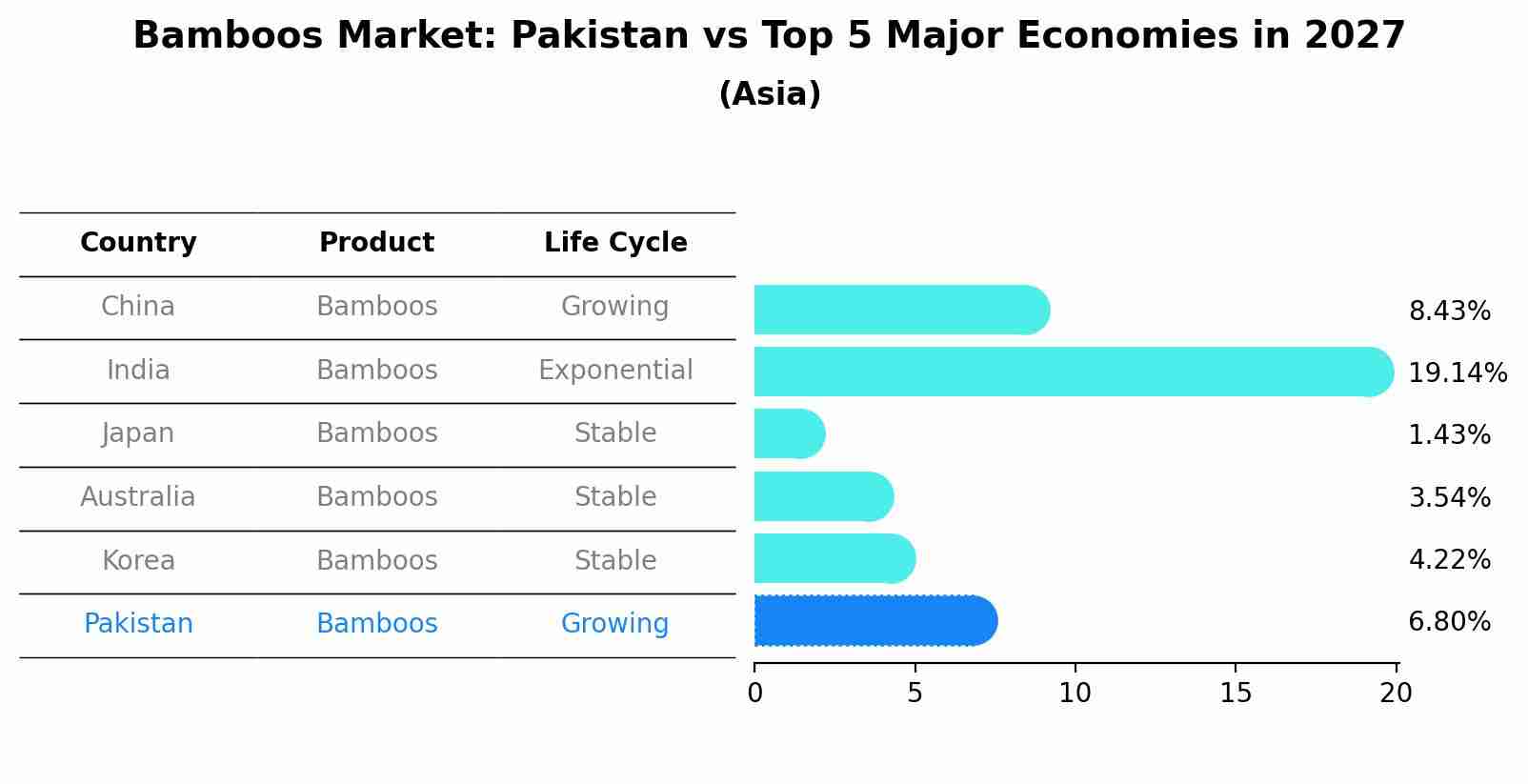
Bamboos Market: Pakistan vs Top 5 Major Economies in 2027 (Asia)
Pakistan's Bamboos market is anticipated to experience a growing growth rate of 6.80% by 2027, reflecting trends observed in the largest economy China, followed by India, Japan, Australia and South Korea.
Pakistan Bamboos Market Overview
The Pakistan bamboos market is witnessing steady growth due to the increasing demand for sustainable and eco-friendly materials in various industries such as construction, furniture, and handicrafts. Bamboo, being a fast-growing and renewable resource, is favored for its versatility and durability. The market offers a wide range of bamboo products including flooring, fencing, scaffolding, and furniture. Government initiatives promoting bamboo cultivation and processing are further driving market growth. Key players in the Pakistan bamboos market are focusing on innovation and product development to meet the evolving consumer preferences for environmentally friendly products. Overall, the Pakistan bamboos market is poised for continued expansion as awareness about the benefits of bamboo products grows among consumers and industries.
Pakistan Bamboos Market Trends
The Pakistan Bamboos Market is experiencing growth due to the increasing demand for sustainable and eco-friendly materials in various industries such as construction, furniture, and handicrafts. Bamboo is gaining popularity as a versatile and renewable resource that offers durability and aesthetic appeal. The market is witnessing a rise in innovative bamboo products such as flooring, textiles, and even bamboo-based charcoal. Government initiatives promoting bamboo cultivation and processing are also driving market growth. Additionally, the growing awareness among consumers about the environmental benefits of bamboo is further fueling the demand for bamboo products in Pakistan. Overall, the Pakistan Bamboos Market is poised for continued expansion in the coming years as sustainability becomes a key focus for businesses and consumers alike.
Pakistan Bamboos Market Challenges
In the Pakistan Bamboos Market, some key challenges faced include limited awareness about the benefits and versatility of bamboo products among consumers and businesses, leading to lower demand. Additionally, there are issues related to the quality and standardization of bamboo products, which can affect market credibility and hinder growth opportunities. The lack of proper infrastructure for bamboo cultivation and processing also poses a challenge, impacting supply chain efficiency and product availability. Furthermore, competition from traditional materials and other substitute products adds complexity to market penetration efforts. Overcoming these challenges will require investments in marketing and education initiatives, enhancing product quality control measures, and developing sustainable practices throughout the bamboo value chain to drive market expansion and competitiveness.
Pakistan Bamboos Market Investment Opportunities
The Pakistan Bamboos Market presents promising investment opportunities due to the growing demand for sustainable and eco-friendly construction materials. Bamboo is highly versatile and has a wide range of applications, including in the construction, furniture, and paper industries. With the increasing focus on environmental conservation and sustainable development practices, the demand for bamboo products is expected to rise. Investors can explore opportunities in bamboo plantations, manufacturing of bamboo-based products, and export of bamboo goods to international markets. Additionally, government initiatives promoting the cultivation and utilization of bamboo further support the growth of this market. Overall, investing in the Pakistan Bamboos Market offers potential for long-term growth and profitability in alignment with sustainable business practices.
Pakistan Bamboos Market Government Policy
The Pakistan government has implemented various policies to promote the growth of the bamboo market in the country. One key policy is the National Bamboo Development Program, which aims to increase bamboo cultivation, processing, and utilization through capacity building initiatives and financial support for farmers. Additionally, the government is working to streamline regulations and licensing processes for bamboo-related activities to encourage investment in the sector. The Pakistan Agriculture Research Council (PARC) is also conducting research and development projects to enhance bamboo productivity and quality. Furthermore, the government is actively promoting sustainable bamboo harvesting practices to ensure the long-term viability of the industry and protect the environment. Overall, these policies demonstrate a commitment to boosting the Pakistan bamboo market and harnessing its economic and environmental potential.
Pakistan Bamboos Market Future Outlook
The Pakistan Bamboos Market is poised for growth in the coming years due to increasing awareness about the sustainability and versatility of bamboo as a renewable resource. With a growing demand for eco-friendly products and construction materials, the market is expected to expand as more industries and consumers embrace bamboo-based solutions. Additionally, the government`s focus on promoting bamboo cultivation and processing through initiatives such as the Green Pakistan Program will further drive the market forward. As the country continues to invest in infrastructure development and sustainable practices, the Pakistan Bamboos Market is likely to experience steady growth and offer lucrative opportunities for investors and businesses in the near future.
Key Highlights of the Report:
- Pakistan Bamboos Market Outlook
- Market Size of Pakistan Bamboos Market, 2021
- Forecast of Pakistan Bamboos Market, 2031
- Historical Data and Forecast of Pakistan Bamboos Revenues & Volume for the Period 2018 - 2031
- Pakistan Bamboos Market Trend Evolution
- Pakistan Bamboos Market Drivers and Challenges
- Pakistan Bamboos Price Trends
- Pakistan Bamboos Porter's Five Forces
- Pakistan Bamboos Industry Life Cycle
- Historical Data and Forecast of Pakistan Bamboos Market Revenues & Volume By Application for the Period 2018 - 2031
- Historical Data and Forecast of Pakistan Bamboos Market Revenues & Volume By Raw Materials for the Period 2018 - 2031
- Historical Data and Forecast of Pakistan Bamboos Market Revenues & Volume By Industrial Products for the Period 2018 - 2031
- Historical Data and Forecast of Pakistan Bamboos Market Revenues & Volume By Furniture for the Period 2018 - 2031
- Historical Data and Forecast of Pakistan Bamboos Market Revenues & Volume By Shoots for the Period 2018 - 2031
- Historical Data and Forecast of Pakistan Bamboos Market Revenues & Volume By Others for the Period 2018 - 2031
- Pakistan Bamboos Import Export Trade Statistics
- Market Opportunity Assessment By Application
- Pakistan Bamboos Top Companies Market Share
- Pakistan Bamboos Competitive Benchmarking By Technical and Operational Parameters
- Pakistan Bamboos Company Profiles
- Pakistan Bamboos Key Strategic Recommendations






































