Pakistan Cloud ERP Market Size & Growth Rate (2026-2032)
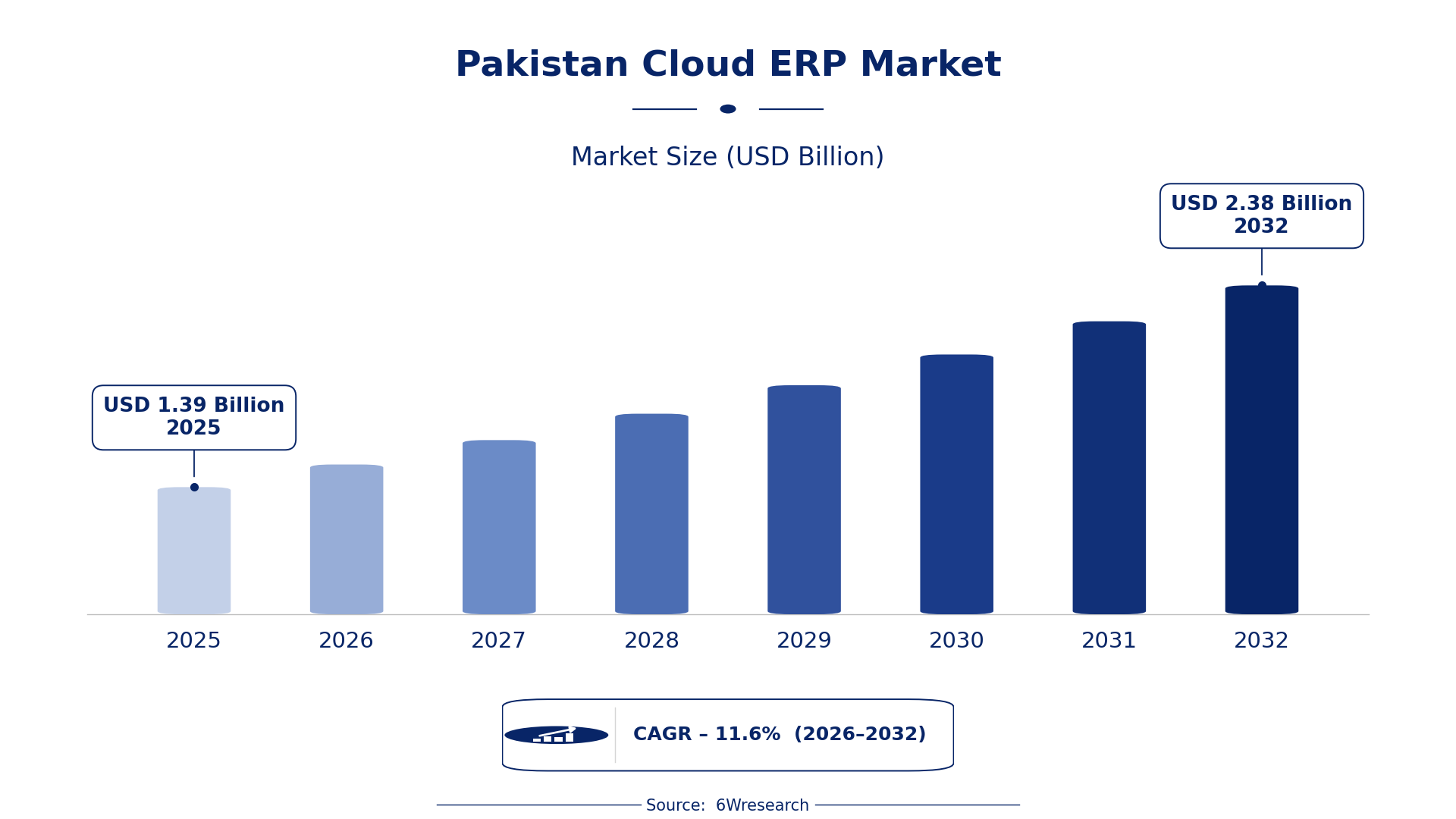
The Pakistan Cloud ERP Market was estimated at USD 1391 Million in 2025 and is projected to reach USD 2384 Million by 2032, growing at a CAGR of 11.6% from 2026 to 2032.
Pakistan Cloud ERP Market Synopsis
In Pakistan, the shift towards cloud-based Enterprise Resource Planning (ERP) solutions is gaining momentum as organizations recognize the potential for enhanced efficiency and reduced operational costs. This trend reflects a broader desire for integrated systems that can respond quickly to changing business environments.
As businesses seek to improve their competitiveness, the demand for cloud ERP solutions is set to grow. Companies are increasingly looking for systems that provide real-time data access and analytics, paving the way for informed decision-making and streamlined processes.
Pakistan Cloud ERP Market Year-wise Growth Rate and Key Drivers
This graph illustrates the annual growth rates of the Pakistan Cloud ERP Market from 2021 to 2032, highlighting a steady upward trajectory and projected expansion over the forecast period.
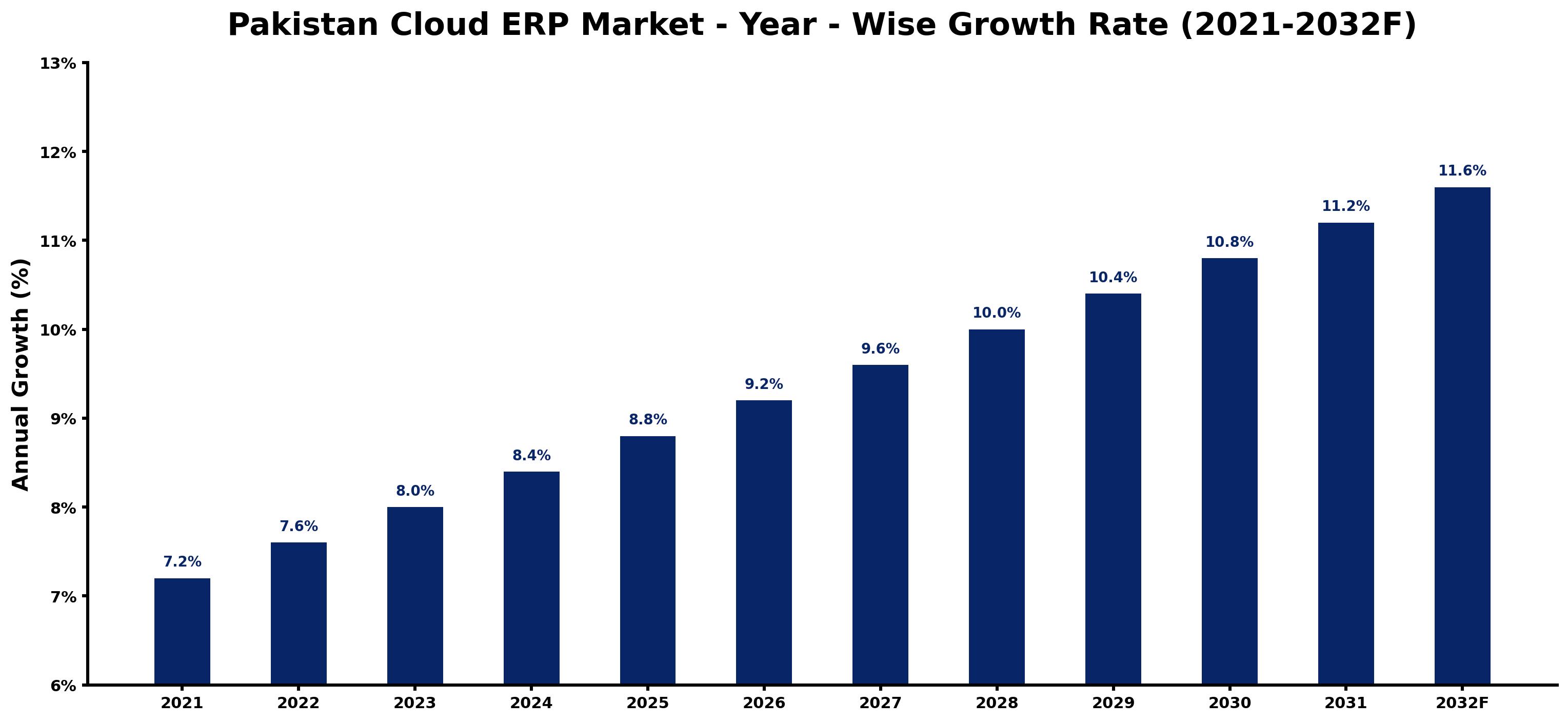
The table below presents the year‑wise growth rates along with the key drivers influencing the market
| Year | Growth Rate | Major Drivers |
| 2021 | 7.2% | Rising adoption of SaaS solutions among SMEs in Pakistan |
| 2022 | 7.6% | Increased focus on digital compliance regulations by SECP |
| 2023 | 8.0% | Growing need for integrated business processes in logistics sector |
| 2024 | 8.4% | Surge in fintech startups requiring ERP cloud solutions |
| 2025 | 8.8% | Official support for e-governance enhancing ERP uptake |
| 2026 | 9.2% | Local enterprises seeking cost-effective cloud infrastructure solutions |
| 2027 | 9.6% | Higher investments in technology by textile manufacturing firms |
| 2028 | 10.0% | Emerging trends in AI integration for business management |
| 2029 | 10.4% | Demands from retail sector for efficient inventory management |
| 2030 | 10.8% | Government initiatives promoting technology innovation ecosystems |
| 2031 | 11.2% | Increasing cyber security awareness driving cloud ERP adoption |
| 2032 | 11.6% | Growing digital literacy among workforce supporting ERP usage |
Note: Market size estimations and growth projections presented in this report are based on 6Wresearch's proprietary forecasting methodology, utilizing the latest available industry data, government publications, and primary research inputs.
Pakistan Cloud ERP Market Key Takeaways
Below are some of the specific key takeaways from the market, including:
- Significant growth potential, with a projected market size of USD 2384 Million by 2032.
- Increasing demand for integrated business management solutions from various sectors.
- Real-time data access is crucial for operational efficiency and strategic planning.
- Cloud ERP adoption is met with both opportunities and challenges, particularly regarding data security.
- Government initiatives are fostering a supportive environment for cloud ERP implementation.
Evaluation of Restraints in Pakistan Cloud ERP Market
Despite the growth potential, several factors are hindering the adoption of cloud ERP systems in Pakistan. A significant barrier is the resistance to transition from established traditional ERP systems to newer cloud-based solutions. Concerns regarding data security and reliability of cloud services also loom large for many businesses. on top of that, the cost of implementing cloud ERP solutions can be prohibitive, especially for small and medium-sized enterprises that require tailored customizations to meet their unique operational needs.
Pakistan Cloud ERP Market Trends
The trend towards digital transformation is reshaping the landscape of business operations in Pakistan. Companies are increasingly adopting cloud-based ERP systems to enhance agility and responsiveness. The integration of artificial intelligence and machine learning into ERP systems is becoming prevalent, enabling businesses to leverage data analytics for better forecasting and decision-making.
Remote work has also accelerated the demand for cloud ERP solutions, as organizations seek systems that can support distributed teams. The focus is shifting towards user-friendly interfaces and mobile accessibility, ensuring that employees can access critical information anytime, anywhere.
Pakistan Cloud ERP Market Opportunities
The market presents genuine opportunities for growth, particularly in sectors like manufacturing, retail, and logistics. As these industries modernize their operations, the demand for scalable and flexible cloud ERP solutions is expected to rise. on top of that, the government's support for local ERP software development is opening doors for innovative solutions tailored to specific market needs.
Partnerships between local firms and international technology providers can also enhance the delivery of cloud ERP solutions, fostering an ecosystem that promotes continuous improvement and adaptation to changing market demands.
Government Initiatives in the Pakistan Cloud ERP Market
The Pakistani government has recognized the importance of digital transformation in driving economic growth. Through targeted policies and initiatives, it is creating a conducive environment for the adoption of cloud-based ERP systems. This regulatory support is critical for businesses aiming to modernize their operations and embrace cloud technologies.
- A national digital infrastructure upgrade programme launched in early 2023 aims to enhance connectivity for businesses adopting cloud solutions.
- Current initiatives include tax incentives for organizations implementing cloud ERP solutions to alleviate financial burdens.
- Ongoing grants for local developers of ERP software are designed to stimulate innovation and local capacity building.
- Training programs are underway to equip professionals with the skills needed for managing cloud ERP systems effectively.
- Plans for a public-private initiative expected to be rolled out by 2026 will further support businesses transitioning to cloud-based systems.
Future Insights of the Pakistan Cloud ERP Market
Looking ahead, the Pakistan Cloud ERP Market is likely to witness accelerated growth driven by ongoing digital transformation initiatives. As businesses increasingly prioritize real-time data analytics and operational flexibility, cloud ERP systems will become essential tools for maintaining competitive advantage. The combination of government support and evolving technological capabilities positions the market for a dynamic shift, ultimately leading to widespread adoption across various sectors.
Pakistan Cloud ERP Market Latest Developments
In the last year, the Pakistan Cloud ERP Market has seen notable advancements. Organizations are increasingly recognizing the value of cloud-based solutions as they adapt to a changing business environment. The pace of innovation and the introduction of new functionalities within ERP systems are contributing to this upward trend.
- A major technology vendor announced the launch of a new cloud ERP solution in early 2023, targeting SMEs with customizable features.
- Several companies are currently upgrading their existing ERP systems to cloud-based platforms, reflecting a shift in operational strategy.
- A partnership between a regional operator and a software developer is expected to enhance cloud infrastructure support, aiming for completion by late 2024.
- An initiative that began in mid-2023 focuses on integrating AI-driven analytics into existing ERP systems, enhancing decision-making capabilities.
- Upcoming workshops and training sessions planned for Q1 2025 aim to bolster workforce capabilities in cloud ERP management.
Pakistan Cloud ERP Market - Key Attractiveness of the Report
- 10 Years of Market Numbers
- Historical Data Starting from 2022 to 2025
- Base Year: 2025
- Forecast Data until 2032
- Key Performance Indicators Impacting the Market
- Major Upcoming Developments and Projects
Key Highlights of the Report:
- Pakistan Cloud ERP Market Outlook
- Market Size of Pakistan Cloud ERP Market, 2025
- Forecast of Pakistan Cloud ERP Market, 2032
- Historical Data and Forecast of Pakistan Cloud ERP Revenues & Volume for the Period 2022-2032F
- Pakistan Cloud ERP Market Trend Evolution
- Pakistan Cloud ERP Market Drivers and Challenges
- Pakistan Cloud ERP Price Trends
- Pakistan Cloud ERP Porter's Five Forces
- Pakistan Cloud ERP Industry Life Cycle
- Historical Data and Forecast of Pakistan Cloud ERP Market Revenues & Volume By Component for the Period 2022-2032F
- Historical Data and Forecast of Pakistan Cloud ERP Market Revenues & Volume By Solution for the Period 2022-2032F
- Historical Data and Forecast of Pakistan Cloud ERP Market Revenues & Volume By Services for the Period 2022-2032F
- Historical Data and Forecast of Pakistan Cloud ERP Market Revenues & Volume By Vertical for the Period 2022-2032F
- Historical Data and Forecast of Pakistan Cloud ERP Market Revenues & Volume By BFSI for the Period 2022-2032F
- Historical Data and Forecast of Pakistan Cloud ERP Market Revenues & Volume By Manufacturing for the Period 2022-2032F
- Historical Data and Forecast of Pakistan Cloud ERP Market Revenues & Volume By IT and Telecom for the Period 2022-2032F
- Historical Data and Forecast of Pakistan Cloud ERP Market Revenues & Volume By Business Function for the Period 2022-2032F
- Historical Data and Forecast of Pakistan Cloud ERP Market Revenues & Volume By Accounting and Finance for the Period 2022-2032F
- Historical Data and Forecast of Pakistan Cloud ERP Market Revenues & Volume By Sales and Marketing for the Period 2022-2032F
- Historical Data and Forecast of Pakistan Cloud ERP Market Revenues & Volume By Inventory and Order Management for the Period 2022-2032F
- Historical Data and Forecast of Pakistan Cloud ERP Market Revenues & Volume By Organization Size for the Period 2022-2032F
- Historical Data and Forecast of Pakistan Cloud ERP Market Revenues & Volume By SMEs for the Period 2022-2032F
- Historical Data and Forecast of Pakistan Cloud ERP Market Revenues & Volume By Large Enterprises for the Period 2022-2032F
- Pakistan Cloud ERP Import Export Trade Statistics
- Market Opportunity Assessment By Component
- Market Opportunity Assessment By Vertical
- Market Opportunity Assessment By Business Function
- Market Opportunity Assessment By Organization Size
- Pakistan Cloud ERP Top Companies Market Share
- Pakistan Cloud ERP Competitive Benchmarking By Technical and Operational Parameters
- Pakistan Cloud ERP Company Profiles
- Pakistan Cloud ERP Key Strategic Recommendations






































