Pakistan Dairy Cream Market Size Growth Rate
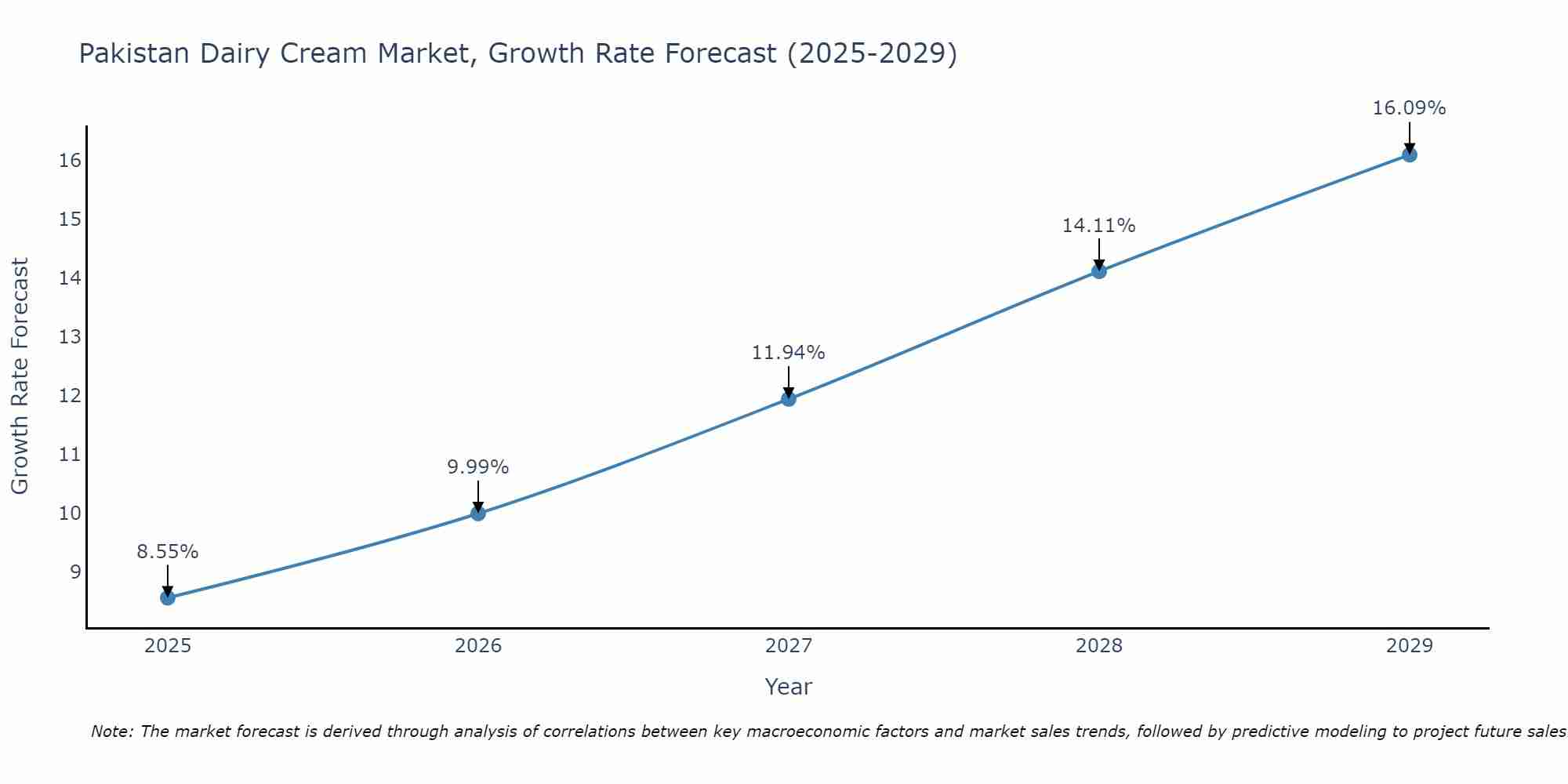
The Pakistan Dairy Cream Market is poised for steady growth rate improvements from 2025 to 2029. From 8.55% in 2025, the growth rate steadily ascends to 16.09% in 2029.
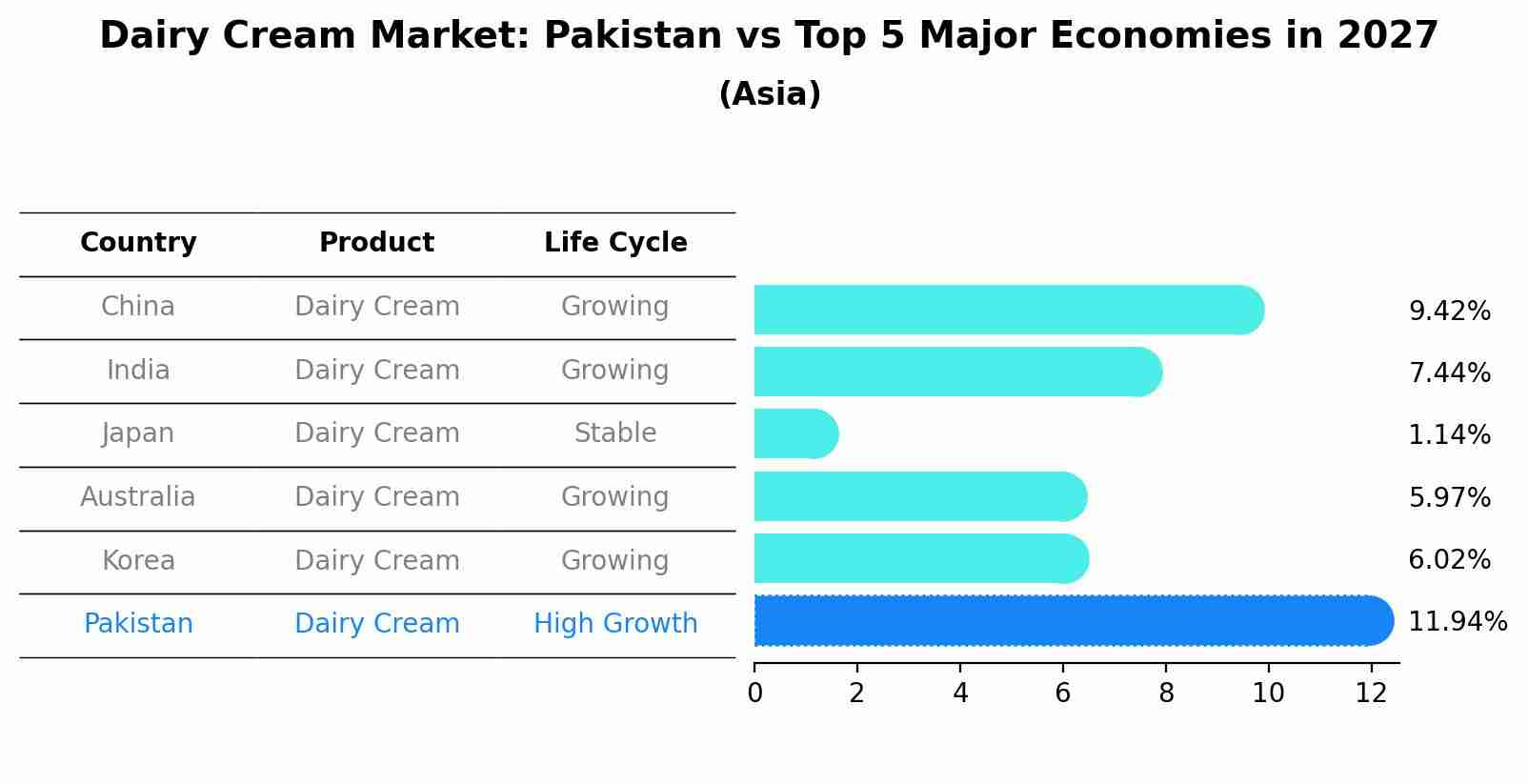
Dairy Cream Market: Pakistan vs Top 5 Major Economies in 2027 (Asia)
The Dairy Cream market in Pakistan is projected to grow at a high growth rate of 11.94% by 2027, within the Asia region led by China, along with other countries like India, Japan, Australia and South Korea, collectively shaping a dynamic and evolving market environment driven by innovation and increasing adoption of emerging technologies.
Pakistan Dairy Cream Market Overview
The Pakistan Dairy Cream market is experiencing steady growth driven by increasing consumer demand for dairy-based products. With a rising trend towards home baking and cooking, dairy cream has become a popular ingredient in households across the country. Urbanization, changing lifestyles, and a growing middle-class population are also contributing to the market expansion. Key players in the industry are focusing on product innovation, such as introducing flavored and whipped cream variants, to cater to evolving consumer preferences. Additionally, the foodservice sector is a significant market segment for dairy cream, with establishments like bakeries, cafes, and restaurants driving demand. The market is competitive, with both local and international brands vying for market share through aggressive marketing strategies and distribution networks. Overall, the Pakistan Dairy Cream market presents opportunities for growth and innovation in the coming years.
Pakistan Dairy Cream Market Trends
The Pakistan Dairy Cream Market is experiencing a rise in demand for high-quality and premium dairy cream products, driven by increasing consumer interest in gourmet cooking and baking. Consumers are seeking versatile and convenient options for adding richness and flavor to their dishes, leading to a surge in the popularity of dairy cream for both culinary and dessert applications. Moreover, health-conscious consumers are also driving the demand for healthier alternatives such as low-fat or plant-based dairy cream options. In response to these trends, manufacturers in the Pakistan Dairy Cream Market are focusing on product innovation, such as introducing new flavors and packaging formats, as well as enhancing the nutritional profile of their products to cater to evolving consumer preferences.
Pakistan Dairy Cream Market Challenges
In the Pakistan Dairy Cream Market, some of the key challenges faced include issues related to supply chain inefficiencies leading to high transportation costs and product spoilage. The market also faces challenges in terms of ensuring consistent quality and availability of raw materials, as well as maintaining product freshness throughout the distribution process. Additionally, market competition and pricing pressures can make it difficult for dairy cream producers to differentiate their products and maintain profitability. Furthermore, fluctuations in milk prices and government regulations on dairy farming practices can impact the overall cost structure and sustainability of dairy cream production in Pakistan. Overall, addressing these challenges will require strategic investments in improving logistics, quality control measures, and market positioning strategies.
Pakistan Dairy Cream Market Investment Opportunities
The Pakistan Dairy Cream Market presents significant investment opportunities due to the country`s growing population, increasing disposable income, and changing consumer preferences towards dairy products. Investors can consider entering the market by investing in dairy cream production facilities, distribution networks, and marketing strategies to capitalize on the rising demand for high-quality dairy products. Additionally, introducing innovative products such as flavored dairy creams, organic options, and convenient packaging formats can help companies differentiate themselves in the market and attract a wider consumer base. As the dairy industry in Pakistan continues to expand, investing in the dairy cream sector can offer long-term growth potential and profitability for investors looking to tap into the country`s evolving consumer trends and preferences.
Pakistan Dairy Cream Market Government Policy
Government policies related to the Pakistan Dairy Cream Market focus on promoting the growth and sustainability of the dairy industry. These policies include measures to improve the quality and safety standards of dairy products, support for small-scale dairy farmers through subsidies and financial incentives, and initiatives to enhance dairy production efficiency. Government regulations also aim to ensure fair market competition, prevent price manipulation, and support the development of dairy infrastructure and technology. In recent years, the government has implemented programs to boost dairy exports, increase milk processing capacity, and enhance the overall competitiveness of the dairy sector. Additionally, efforts are being made to address challenges such as milk adulteration and improve milk collection and distribution systems to benefit both consumers and dairy industry stakeholders.
Pakistan Dairy Cream Market Future Outlook
The Pakistan Dairy Cream Market is expected to experience steady growth in the coming years due to factors such as increasing consumer demand for dairy products, rising disposable incomes, and a growing awareness of the benefits of dairy cream in various culinary applications. Additionally, the trend towards premium and high-quality dairy products is likely to drive market expansion as consumers seek indulgent and versatile ingredients for cooking and baking. With a strong agricultural sector and a growing dairy industry in Pakistan, there are ample opportunities for market players to innovate and introduce new product offerings to cater to evolving consumer preferences. However, challenges such as price volatility of raw materials and market competition may impact the market dynamics, requiring companies to adopt strategic pricing and marketing strategies to maintain their market share and competitiveness.
Key Highlights of the Report:
- Pakistan Dairy Cream Market Outlook
- Market Size of Pakistan Dairy Cream Market, 2021
- Forecast of Pakistan Dairy Cream Market, 2031
- Historical Data and Forecast of Pakistan Dairy Cream Revenues & Volume for the Period 2018 - 2031
- Pakistan Dairy Cream Market Trend Evolution
- Pakistan Dairy Cream Market Drivers and Challenges
- Pakistan Dairy Cream Price Trends
- Pakistan Dairy Cream Porter's Five Forces
- Pakistan Dairy Cream Industry Life Cycle
- Historical Data and Forecast of Pakistan Dairy Cream Market Revenues & Volume By Type for the Period 2018 - 2031
- Historical Data and Forecast of Pakistan Dairy Cream Market Revenues & Volume By Fresh Cream for the Period 2018 - 2031
- Historical Data and Forecast of Pakistan Dairy Cream Market Revenues & Volume By Thickened Cream/Heavy Cream for the Period 2018 - 2031
- Historical Data and Forecast of Pakistan Dairy Cream Market Revenues & Volume By Whipping Cream for the Period 2018 - 2031
- Historical Data and Forecast of Pakistan Dairy Cream Market Revenues & Volume By Sour Cream for the Period 2018 - 2031
- Historical Data and Forecast of Pakistan Dairy Cream Market Revenues & Volume By Other Types for the Period 2018 - 2031
- Historical Data and Forecast of Pakistan Dairy Cream Market Revenues & Volume By Distribution Channel for the Period 2018 - 2031
- Historical Data and Forecast of Pakistan Dairy Cream Market Revenues & Volume By Supermarkets/ Hypermarkets for the Period 2018 - 2031
- Historical Data and Forecast of Pakistan Dairy Cream Market Revenues & Volume By Convenince Stores for the Period 2018 - 2031
- Historical Data and Forecast of Pakistan Dairy Cream Market Revenues & Volume By Online Retail Stores for the Period 2018 - 2031
- Historical Data and Forecast of Pakistan Dairy Cream Market Revenues & Volume By Other Distribution Channels for the Period 2018 - 2031
- Pakistan Dairy Cream Import Export Trade Statistics
- Market Opportunity Assessment By Type
- Market Opportunity Assessment By Distribution Channel
- Pakistan Dairy Cream Top Companies Market Share
- Pakistan Dairy Cream Competitive Benchmarking By Technical and Operational Parameters
- Pakistan Dairy Cream Company Profiles
- Pakistan Dairy Cream Key Strategic Recommendations






































