Pakistan Digital Market Size & Growth Rate (2026-2032)
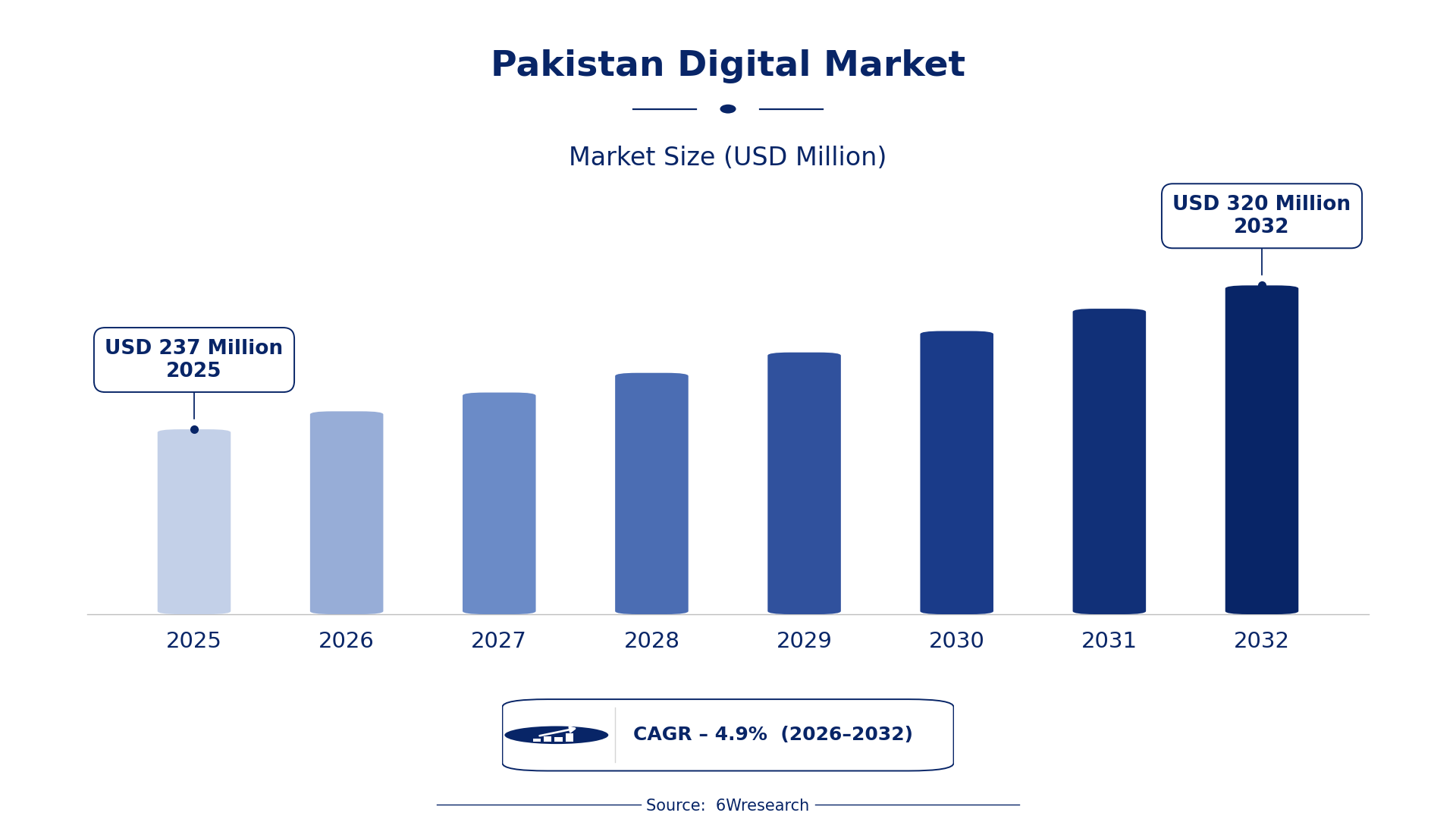
The Pakistan Digital Market was estimated at USD 237 Million in 2025 and is projected to reach USD 320 Million by 2032, growing at a CAGR of 4.9% from 2026 to 2032.
Pakistan Digital Market Synopsis
The surge in internet penetration is the most influential force driving the Pakistan Digital Market today. With an increasingly tech-savvy youth demographic and a growing reliance on digital services, businesses are rapidly adapting to meet evolving consumer preferences.
E-commerce platforms are seeing remarkable growth as online shopping becomes a norm, particularly post-pandemic. The rising popularity of mobile payment solutions further enhances the digital economy, though challenges such as cybersecurity and limited access to high-speed internet in rural regions still pose hurdles.
Pakistan Digital Market Year-wise Growth Rate and Key Drivers
This graph illustrates the annual growth rates of the Pakistan Digital Market from 2021 to 2032, highlighting a steady upward trajectory and projected expansion over the forecast period.
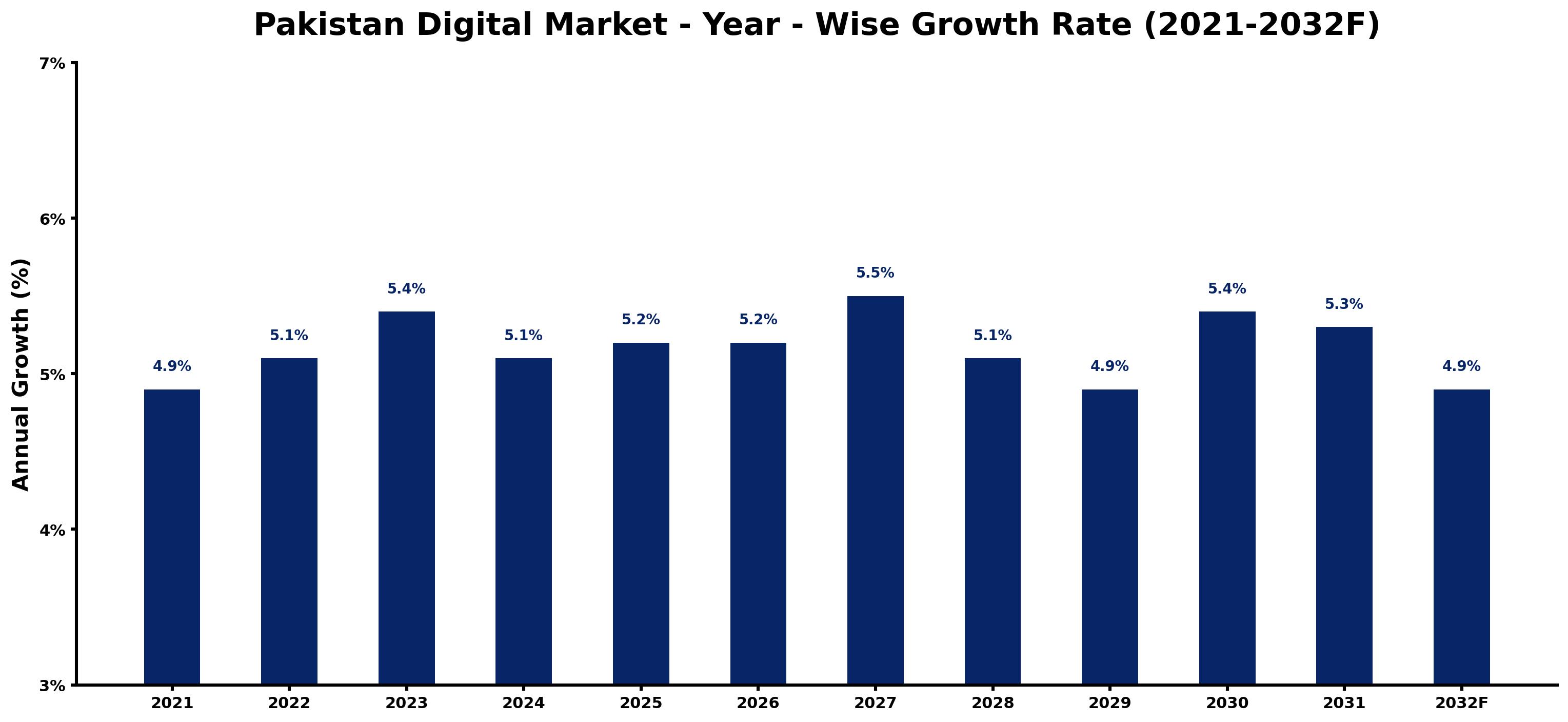
The table below presents the year‑wise growth rates along with the key drivers influencing the market
| Year | Growth Rate | Major Drivers |
| 2021 | 4.9% | Rising e-commerce adoption driven by younger consumers. |
| 2022 | 5.1% | Growing digital literacy initiatives supported by government programs. |
| 2023 | 5.4% | Increase in mobile wallet usage among urban populations. |
| 2024 | 5.1% | Local tech hubs fostering digital entrepreneurship and innovation. |
| 2025 | 5.2% | Demand for online education platforms amid changing job market. |
| 2026 | 5.2% | Launch of 5G services boosting digital application development. |
| 2027 | 5.5% | Government policies promoting cybersecurity compliance for businesses. |
| 2028 | 5.1% | Surging demand for digital media content among youth. |
| 2029 | 4.9% | Increasing reliance on telehealth services expanding digital services. |
| 2030 | 5.4% | Rising popularity of social media marketing for local brands. |
| 2031 | 5.3% | Upsurge in digital banking adoption among millennials. |
| 2032 | 4.9% | Regulatory support for e-signatures improving online transactions. |
Note: Market size estimations and growth projections presented in this report are based on 6Wresearch's proprietary forecasting methodology, utilizing the latest available industry data, government publications, and primary research inputs.
Pakistan Digital Market Key Takeaways
Below are some of the specific key takeaways from the market, including:
- The digital market's growth is underpinned by rising smartphone adoption and internet access.
- E-commerce continues to expand, driven by changing consumer shopping behaviors.
- Mobile payment solutions are becoming essential for financial transactions.
- Government initiatives are promoting digital literacy and infrastructure improvements.
- There are emerging opportunities in digital marketing and fintech innovations.
Evaluation of Restraints in Pakistan Digital Market
Despite its growth potential, the Pakistan Digital Market faces notable constraints. Limited access to high-speed internet in rural areas restricts a large segment of the population from fully participating in the digital economy. Coupled with low levels of digital literacy, these factors hinder widespread adoption of online services. on top of that, unreliable electricity supply and inadequate logistics infrastructure create significant barriers for e-commerce businesses, complicating their ability to serve customers efficiently. Regulatory challenges and concerns regarding cybersecurity add further complexity, necessitating a concerted effort from both the government and private sectors to address these issues.
Pakistan Digital Market Trends
Several trends are currently shaping the Pakistan Digital Market. The shift toward online shopping is accelerating, particularly with more consumers seeking the convenience of e-commerce. Social media platforms are increasingly being utilized for marketing, as businesses recognize the importance of digital presence. on top of that, the adoption of mobile banking is on the rise, driven by the need for accessible financial services. As these trends evolve, they create a dynamic environment ripe for innovation and investment.
Pakistan Digital Market Opportunities
Opportunities within the Pakistan Digital Market are abundant, particularly in sectors like e-commerce and fintech. Businesses can explore avenues for growth through enhanced digital marketing strategies and innovative payment solutions. The increasing demand for online services provides a fertile ground for startups, especially those focused on improving customer experience and accessibility. As the digital economy matures, there is also significant potential for collaborations that can address infrastructural gaps and drive technological advancements.
Government Initiatives in the Pakistan Digital Market
Government policy is playing a crucial role in shaping the trajectory of the Pakistan Digital Market. The emphasis on enhancing digital connectivity and fostering a conducive environment for digital entrepreneurship is vital for the sector's growth. Recent initiatives focus on improving infrastructure, increasing digital skills, and encouraging innovation, which are essential for sustaining the momentum in this market.
- A recently completed initiative involves the rollout of a national digital infrastructure upgrade program aimed at enhancing internet connectivity across urban and rural areas.
- A current initiative focuses on implementing digital skills training programs to boost digital literacy, particularly among the youth.
- A planned public-private partnership is expected to expand e-commerce logistics capabilities by 2028, addressing the logistics challenges faced by online retailers.
- The Digital Pakistan Policy, currently underway, aims to simplify regulations and support digital startups to foster innovation.
- Upcoming initiatives include a regulatory framework set to introduce new measures for enhancing online security and consumer protection in e-commerce.
Future Insights of the Pakistan Digital Market
Looking ahead to 2026-2032, the Pakistan Digital Market is expected to thrive, driven by increasing internet access and smartphone penetration. The e-commerce sector is likely to see sustained growth, fueled by consumer demand for online shopping and the convenience of digital payment methods. Continued government support for digitalization initiatives will further bolster the digital economy, while advancements in social media and digital advertising will offer businesses new ways to engage with customers. This evolving landscape positions the Pakistan Digital Market as an attractive sector for investment and innovation.
Pakistan Digital Market Latest Developments
Over the past 12-14 months, the Pakistan Digital Market has witnessed a wave of activity that signals a positive direction for the industry. From infrastructure upgrades to new service offerings, the momentum is building as stakeholders adapt to the growing demands of a digital-savvy population.
- A major technology vendor launched a new cloud-based platform in early 2025, enhancing e-commerce capabilities for small and medium-sized enterprises.
- An initiative that began in mid-2025 focuses on improving mobile payment infrastructure, currently underway and expected to expand access to financial services.
- In Q3 2025, a leading regional operator announced a partnership with local startups to develop innovative digital marketing solutions tailored for the Pakistani market.
- Upcoming plans include a digital advertising campaign scheduled for early 2026, aimed at raising awareness about online shopping benefits among consumers.
- In late 2025, a national e-commerce summit was held, bringing together industry experts to discuss future trends and challenges facing the market.
Pakistan Digital Market - Key Attractiveness of the Report
- 10 Years of Market Numbers
- Historical Data Starting from 2022 to 2025
- Base Year: 2025
- Forecast Data until 2032
- Key Performance Indicators Impacting the Market
- Major Upcoming Developments and Projects
Key Highlights of the Report:
- Pakistan Digital Market Outlook
- Market Size of Pakistan Digital Market, 2025
- Forecast of Pakistan Digital Market, 2032
- Historical Data and Forecast of Pakistan Digital Revenues & Volume for the Period 2022-2032F
- Pakistan Digital Market Trend Evolution
- Pakistan Digital Market Drivers and Challenges
- Pakistan Digital Price Trends
- Pakistan Digital Porter's Five Forces
- Pakistan Digital Industry Life Cycle
- Historical Data and Forecast of Pakistan Digital Market Revenues & Volume By Software for the Period 2022-2032F
- Historical Data and Forecast of Pakistan Digital Market Revenues & Volume By CRM Software for the Period 2022-2032F
- Historical Data and Forecast of Pakistan Digital Market Revenues & Volume By Email Marketing Software for the Period 2022-2032F
- Historical Data and Forecast of Pakistan Digital Market Revenues & Volume By Social Media Advertising for the Period 2022-2032F
- Pakistan Digital Import Export Trade Statistics
- Market Opportunity Assessment By Software
- Pakistan Digital Top Companies Market Share
- Pakistan Digital Competitive Benchmarking By Technical and Operational Parameters
- Pakistan Digital Company Profiles
- Pakistan Digital Key Strategic Recommendations






































