Pakistan Enterprise Firewall Market Size & Growth Rate (2026-2032)
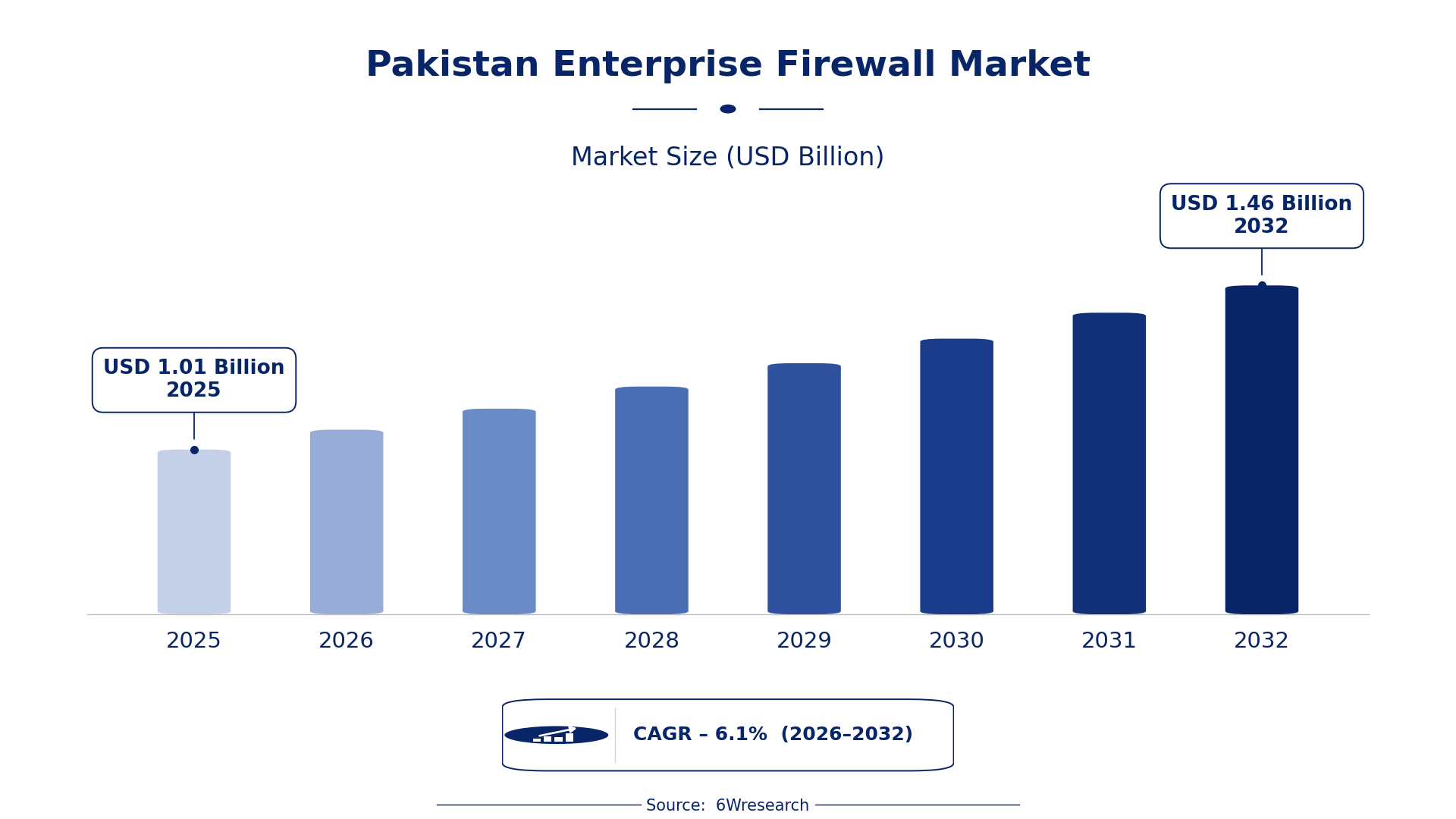
The Pakistan Enterprise Firewall Market was estimated at USD 1008 Million in 2025 and is projected to reach USD 1460 Million by 2032, growing at a CAGR of 6.1% from 2026 to 2032.
Pakistan Enterprise Firewall Market Synopsis
The escalating concerns regarding cybersecurity threats are the primary force reshaping the Pakistan Enterprise Firewall Market. As organizations increasingly depend on digital frameworks for their operations, protecting sensitive data has become paramount.
A growing number of businesses in Pakistan are adopting advanced firewall solutions to counteract the rising tide of cyberattacks. This need is catalyzed by government initiatives and increasing awareness among enterprises about the vulnerabilities that digital infrastructures face.
Pakistan Enterprise Firewall Market Year-wise Growth Rate and Key Drivers
This graph illustrates the annual growth rates of the Pakistan Enterprise Firewall Market from 2021 to 2032, highlighting a steady upward trajectory and projected expansion over the forecast period.
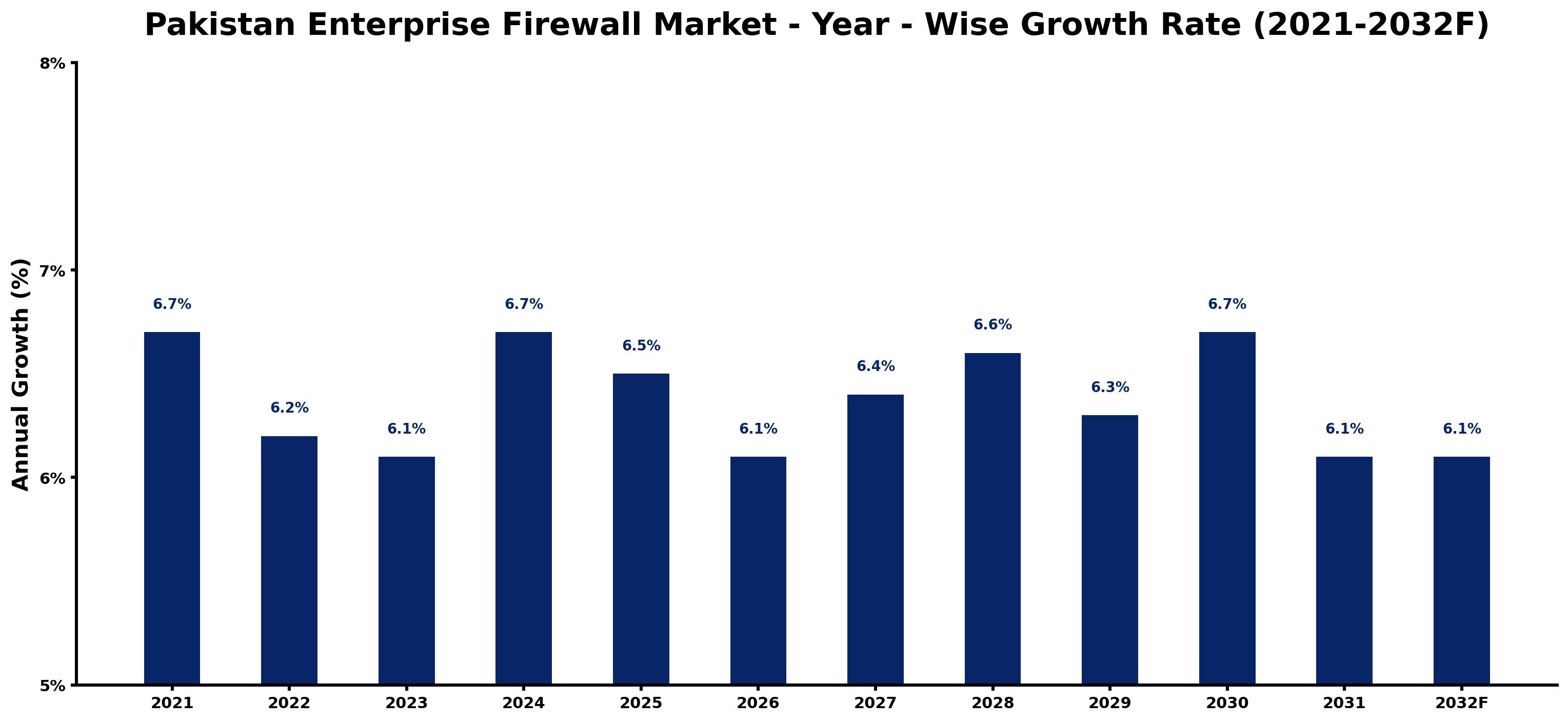
The table below presents the year‑wise growth rates along with the key drivers influencing the market
| Year | Growth Rate | Major Drivers |
| 2021 | 6.7% | Cybersecurity regulations by PTA enhance enterprise firewall adoption. |
| 2022 | 6.2% | Increased cyber threats spur investment in security technologies. |
| 2023 | 6.1% | Local businesses seek compliance with data protection laws. |
| 2024 | 6.7% | Government incentives boost local cybersecurity startups' growth. |
| 2025 | 6.5% | Rising internet penetration drives demand for security solutions. |
| 2026 | 6.1% | Public sector procurement initiatives prioritize cybersecurity infrastructure. |
| 2027 | 6.4% | Growing reliance on remote work necessitates stronger firewalls. |
| 2028 | 6.6% | Increased digital banking usage highlights need for protection. |
| 2029 | 6.3% | Telecom reforms enhance network security measures across enterprises. |
| 2030 | 6.7% | Surge in IoT devices raises demand for comprehensive security. |
| 2031 | 6.1% | Implementation of GDPR-like regulations fuels enterprise firewall investments. |
| 2032 | 6.1% | Accelerated digital payments adoption necessitates robust cybersecurity frameworks. |
Note: Market size estimations and growth projections presented in this report are based on 6Wresearch's proprietary forecasting methodology, utilizing the latest available industry data, government publications, and primary research inputs.
Pakistan Enterprise Firewall Market Key Takeaways
Below are some of the specific key takeaways from the market, including:
- The market is driven by the increasing adoption of cloud-based services and a surge in sophisticated cyber threats.
- Organizations are focusing on next-generation firewalls with integrated threat intelligence capabilities.
- Customization of firewall solutions tailored to specific industry verticals presents a significant growth opportunity.
- Government policies are influencing the mandatory implementation of firewall technologies in both public and private sectors.
- The demand for managed firewall services is increasing, particularly among SMEs lacking in-house cybersecurity expertise.
Evaluation of Restraints in Pakistan Enterprise Firewall Market
Despite its growth prospects, the Pakistan Enterprise Firewall Market faces several limitations. A significant hurdle is the prevalent lack of cybersecurity awareness among many organizations, which leads to inadequate investment in necessary security measures. Budget constraints further exacerbate this issue, preventing enterprises from adopting advanced technologies.
on top of that, the rapid evolution of cyber threats creates challenges in maintaining effective defenses, especially for businesses managing complex and diverse network environments. The scarcity of skilled cybersecurity professionals in Pakistan complicates the deployment and upkeep of sophisticated firewall systems.
Pakistan Enterprise Firewall Market Trends
The demand for next-generation firewalls equipped with integrated threat intelligence is rising. Companies are seeking solutions that not only offer basic protection but also adapt to the dynamic nature of cyber threats. Cloud-based firewall solutions are gaining traction as they offer scalability and flexibility, essential for organizations in a rapidly changing business environment.
Zero-trust security frameworks are becoming more prevalent, as enterprises recognize that the traditional perimeter-based defenses are no longer sufficient. This shift toward integrated security platforms that combine firewall capabilities with intrusion detection and prevention systems indicates a maturing market focus on comprehensive security solutions.
Pakistan Enterprise Firewall Market Opportunities
The increasing adoption of digital technologies creates numerous opportunities for innovation in firewall solutions. Tailoring products to specific industry sectors, such as banking, healthcare, and e-commerce, allows vendors to address unique security needs effectively.
on top of that, providing managed firewall services to small and medium-sized enterprises can fill a vital gap in the market. As organizations continue to expand their online presence, the need for comprehensive, accessible, and effective firewall solutions will be critical, presenting substantial growth potential.
Government Initiatives in the Pakistan Enterprise Firewall Market
Government policies play a crucial role in shaping the direction of the Pakistan Enterprise Firewall Market. The government emphasizes the necessity for organizations to adopt robust cybersecurity measures, recognizing the growing risks posed by cyber threats. Initiatives to improve cybersecurity awareness and infrastructure are increasingly prioritized.
- A recently completed initiative mandated all government agencies to install enterprise firewalls as part of their cybersecurity framework.
- A current program is underway to provide training and resources to help SMEs implement effective cybersecurity measures.
- A planned public-private partnership aims to develop standards for firewall technologies by 2026.
- The government is promoting incentives for organizations investing in comprehensive firewall solutions to enhance national cyber resilience.
- Ongoing efforts include a nationwide cybersecurity awareness campaign targeting businesses across all sectors.
Future Insights of the Pakistan Enterprise Firewall Market
The Pakistan Enterprise Firewall Market is on an upward trajectory, driven by increased digital transformation across various industries. As enterprises prioritize cybersecurity and comply with government regulations, demand for advanced firewall solutions will continue to grow. Innovations in technology, such as artificial intelligence and cloud integration, will shape the future of firewall capabilities, making them more effective against evolving cyber threats.
Looking ahead to 2026-2032, organizations will increasingly seek integrated security solutions that combine various cybersecurity functionalities. This demand for comprehensive security measures will fuel market expansion and encourage vendors to innovate their product offerings.
Pakistan Enterprise Firewall Market Latest Developments
Recent activity within the Pakistan Enterprise Firewall Market has highlighted a concerted push towards advanced security solutions. Over the last year, businesses have ramped up their investments in cybersecurity infrastructure, reflecting an urgent need for reliable protection against cyber threats.
- A major technology vendor launched a new cloud-based firewall solution designed to scale with organizational needs, rolled out in Q1 2025.
- An initiative to enhance firewall capabilities through artificial intelligence began in mid-2025 and is currently underway.
- A strategic partnership between local IT firms aims to combine resources for developing innovative firewall technologies, expected to formalize by late 2025.
- A service upgrade for managed firewall offerings was completed in early 2025, providing additional features and improved user experience.
- Plans for a nationwide firewall implementation initiative targeting critical sectors are projected to kick off in early 2026.
Pakistan Enterprise Firewall Market - Key Attractiveness of the Report
- 10 Years of Market Numbers
- Historical Data Starting from 2022 to 2025
- Base Year: 2025
- Forecast Data until 2032
- Key Performance Indicators Impacting the Market
- Major Upcoming Developments and Projects
Key Highlights of the Report:
- Pakistan Enterprise Firewall Market Outlook
- Market Size of Pakistan Enterprise Firewall Market, 2025
- Forecast of Pakistan Enterprise Firewall Market, 2032
- Historical Data and Forecast of Pakistan Enterprise Firewall Revenues & Volume for the Period 2022-2032F
- Pakistan Enterprise Firewall Market Trend Evolution
- Pakistan Enterprise Firewall Market Drivers and Challenges
- Pakistan Enterprise Firewall Price Trends
- Pakistan Enterprise Firewall Porter's Five Forces
- Pakistan Enterprise Firewall Industry Life Cycle
- Historical Data and Forecast of Pakistan Enterprise Firewall Market Revenues & Volume By Types for the Period 2022-2032F
- Historical Data and Forecast of Pakistan Enterprise Firewall Market Revenues & Volume By Next Generation for the Period 2022-2032F
- Historical Data and Forecast of Pakistan Enterprise Firewall Market Revenues & Volume By Application for the Period 2022-2032F
- Historical Data and Forecast of Pakistan Enterprise Firewall Market Revenues & Volume By Conventional for the Period 2022-2032F
- Historical Data and Forecast of Pakistan Enterprise Firewall Market Revenues & Volume By Industry vertical for the Period 2022-2032F
- Historical Data and Forecast of Pakistan Enterprise Firewall Market Revenues & Volume By Government & Public Utilities for the Period 2022-2032F
- Historical Data and Forecast of Pakistan Enterprise Firewall Market Revenues & Volume By Healthcare for the Period 2022-2032F
- Historical Data and Forecast of Pakistan Enterprise Firewall Market Revenues & Volume By Telecommunication for the Period 2022-2032F
- Historical Data and Forecast of Pakistan Enterprise Firewall Market Revenues & Volume By Education for the Period 2022-2032F
- Historical Data and Forecast of Pakistan Enterprise Firewall Market Revenues & Volume By Retail for the Period 2022-2032F
- Historical Data and Forecast of Pakistan Enterprise Firewall Market Revenues & Volume By Entertainment & Media for the Period 2022-2032F
- Historical Data and Forecast of Pakistan Enterprise Firewall Market Revenues & Volume By Manufacturing for the Period 2022-2032F
- Historical Data and Forecast of Pakistan Enterprise Firewall Market Revenues & Volume By Education for the Period 2022-2032F
- Historical Data and Forecast of Pakistan Enterprise Firewall Market Revenues & Volume By Organization Size for the Period 2022-2032F
- Historical Data and Forecast of Pakistan Enterprise Firewall Market Revenues & Volume By Small and Medium Sized Enterprises (SMBs) for the Period 2022-2032F
- Historical Data and Forecast of Pakistan Enterprise Firewall Market Revenues & Volume By Large Enterprises for the Period 2022-2032F
- Pakistan Enterprise Firewall Import Export Trade Statistics
- Market Opportunity Assessment By Types
- Market Opportunity Assessment By Industry vertical
- Market Opportunity Assessment By Organization Size
- Pakistan Enterprise Firewall Top Companies Market Share
- Pakistan Enterprise Firewall Competitive Benchmarking By Technical and Operational Parameters
- Pakistan Enterprise Firewall Company Profiles
- Pakistan Enterprise Firewall Key Strategic Recommendations






































