Pakistan Food Blenders and Mixers Market: Import Trend Analysis
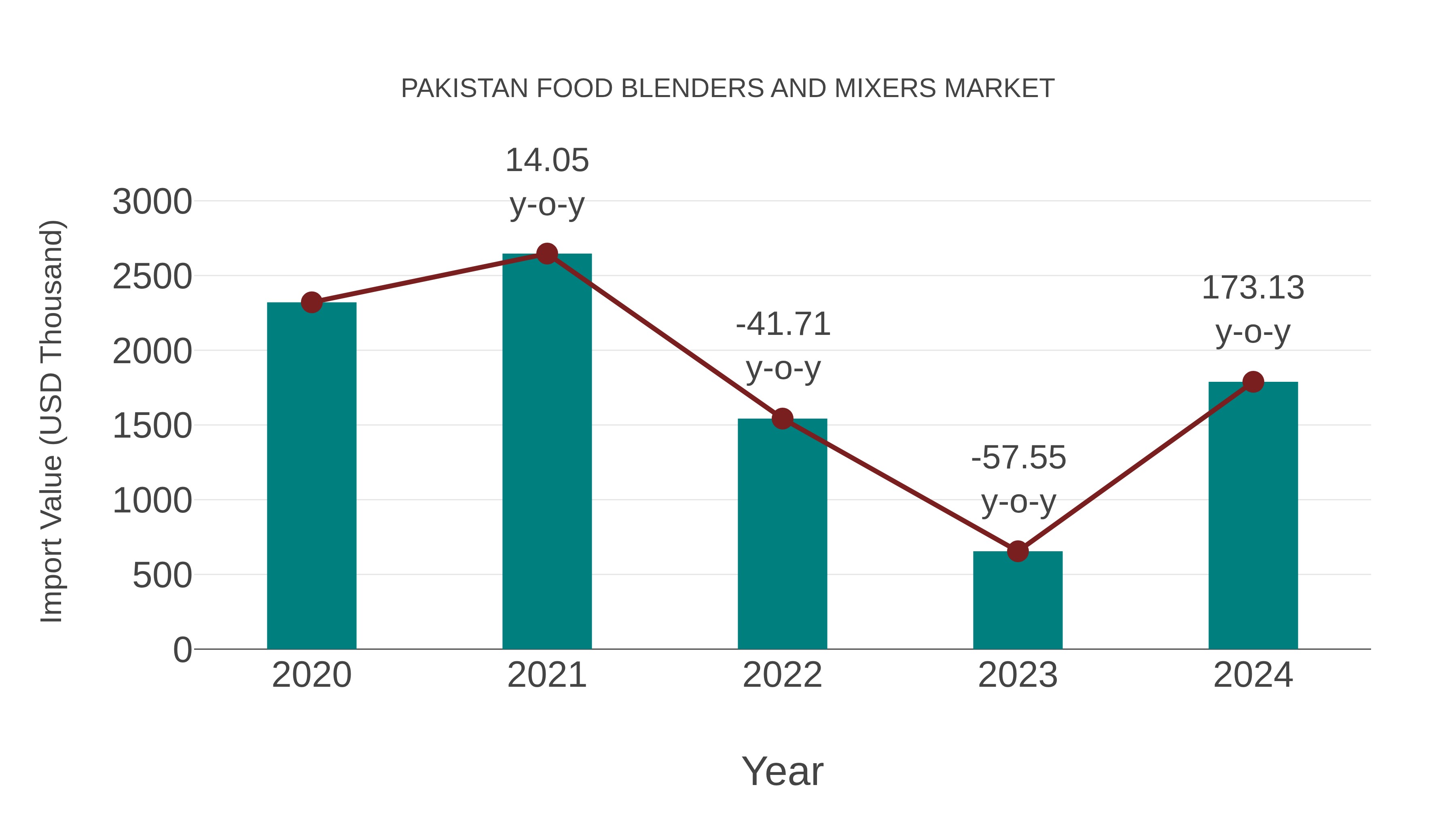
Pakistan food blenders and mixers market witnessed a significant import trend with a growth rate of 173.13% from 2023 to 2024. However, the compound annual growth rate (CAGR) for 2020-2024 stood at -6.3%. This fluctuation could be attributed to shifts in consumer preferences or changes in trade policies impacting the market`s performance.
Pakistan Food Blenders and Mixers Market Synopsis
The Pakistan Food Blenders and Mixers Market is witnessing steady growth driven by the rising demand for convenient and time-saving kitchen appliances. Consumers in Pakistan are increasingly seeking versatile blenders and mixers that offer multiple functions such as blending, grinding, and mixing. The market is characterized by a mix of local and international brands offering a wide range of products across different price points to cater to varying consumer preferences. Key trends in the market include the increasing popularity of high-performance blenders for smoothies and juices, as well as the demand for compact and easy-to-use mixers for baking and cooking purposes. With a growing focus on healthy living and culinary experimentation, the Pakistan Food Blenders and Mixers Market is expected to continue its growth trajectory in the coming years.
Pakistan Food Blenders and Mixers Market Trends
The Pakistan Food Blenders and Mixers market is experiencing growth due to the increasing demand for convenience and time-saving kitchen appliances. Consumers are seeking efficient ways to prepare meals and baked goods, driving the sales of food blenders and mixers. The market is also benefiting from the rising trend of home baking and cooking among the Pakistani population, as people are spending more time at home due to the ongoing pandemic. Manufacturers have the opportunity to capitalize on this trend by introducing innovative features such as multi-functional blenders and mixers, energy-efficient models, and ergonomic designs to cater to the evolving needs of consumers. Additionally, the growing e-commerce sector in Pakistan provides a platform for companies to reach a wider audience and increase their market share in the food blenders and mixers segment.
Pakistan Food Blenders and Mixers Market Challenges
In the Pakistan Food Blenders and Mixers Market, some challenges that are commonly faced include intense competition from both domestic and international manufacturers, fluctuating raw material prices, and the need for continuous innovation to meet changing consumer preferences. Additionally, inadequate infrastructure and inconsistencies in electricity supply can impact manufacturing operations and product quality. Regulatory hurdles and compliance issues related to food safety and quality standards also pose challenges for companies operating in this market. Furthermore, limited access to skilled labor and technical expertise in the food processing industry can hinder growth and innovation efforts for businesses in Pakistan`s Food Blenders and Mixers Market.
Pakistan Food Blenders and Mixers Market Investment Opportunities
The Pakistan Food Blenders and Mixers Market is primarily driven by the increasing demand for convenience and efficiency in food preparation processes. Consumers are increasingly seeking appliances that can help them save time and effort in the kitchen, leading to a growing preference for food blenders and mixers. Additionally, the rising trend of home baking and cooking, fueled by social media influences and a desire for healthier homemade meals, is driving the demand for these appliances. Technological advancements in the industry, such as improved motor power and multifunctional capabilities, are also contributing to market growth. Moreover, the expanding middle-class population with higher disposable incomes is willing to invest in high-quality kitchen appliances, further boosting the market for food blenders and mixers in Pakistan.
Pakistan Food Blenders and Mixers Market Government Polices
The Pakistan government has implemented various policies to regulate the Food Blenders and Mixers Market in the country. These policies include quality control measures to ensure that products meet safety and health standards, as well as licensing requirements for manufacturers and distributors. Additionally, the government has imposed import tariffs on foreign food blenders and mixers to protect local manufacturers and promote domestic production. The government also provides support through subsidies and incentives to encourage innovation and investment in the sector. Overall, these policies aim to promote a competitive and efficient market while safeguarding consumer interests and ensuring product quality and safety.
Pakistan Food Blenders and Mixers Market Future Outlook
The future outlook for the Pakistan Food Blenders and Mixers Market looks promising with a projected steady growth trajectory. Factors such as increasing urbanization, changing lifestyles, and a growing preference for convenience foods are expected to drive the demand for food blenders and mixers in the country. The rise of small and medium-sized food businesses, along with a burgeoning foodservice industry, will further contribute to market expansion. Additionally, technological advancements leading to the development of more efficient and innovative blender and mixer models are anticipated to attract consumers seeking high-quality products. As the Pakistani population continues to embrace modern cooking techniques and culinary trends, the demand for food blenders and mixers is likely to rise, presenting opportunities for market players to introduce new products and capture a larger market share.
Key Highlights of the Report:
- Pakistan Food Blenders and Mixers Market Outlook
- Market Size of Pakistan Food Blenders and Mixers Market, 2025
- Forecast of Pakistan Food Blenders and Mixers Market, 2032
- Historical Data and Forecast of Pakistan Food Blenders and Mixers Revenues & Volume for the Period 2022 - 2032F
- Pakistan Food Blenders and Mixers Market Trend Evolution
- Pakistan Food Blenders and Mixers Market Drivers and Challenges
- Pakistan Food Blenders and Mixers Price Trends
- Pakistan Food Blenders and Mixers Porter's Five Forces
- Pakistan Food Blenders and Mixers Industry Life Cycle
- Historical Data and Forecast of Pakistan Food Blenders and Mixers Market Revenues & Volume By Type for the Period 2022 - 2032F
- Historical Data and Forecast of Pakistan Food Blenders and Mixers Market Revenues & Volume By High Shear for the Period 2022 - 2032F
- Historical Data and Forecast of Pakistan Food Blenders and Mixers Market Revenues & Volume By Shaft for the Period 2022 - 2032F
- Historical Data and Forecast of Pakistan Food Blenders and Mixers Market Revenues & Volume By Ribbon Mixer for the Period 2022 - 2032F
- Historical Data and Forecast of Pakistan Food Blenders and Mixers Market Revenues & Volume By Double Cone for the Period 2022 - 2032F
- Historical Data and Forecast of Pakistan Food Blenders and Mixers Market Revenues & Volume By Planetary Mixer for the Period 2022 - 2032F
- Historical Data and Forecast of Pakistan Food Blenders and Mixers Market Revenues & Volume By Screw Mixers & Blenders for the Period 2022 - 2032F
- Historical Data and Forecast of Pakistan Food Blenders and Mixers Market Revenues & Volume By Application for the Period 2022 - 2032F
- Historical Data and Forecast of Pakistan Food Blenders and Mixers Market Revenues & Volume By Bakery for the Period 2022 - 2032F
- Historical Data and Forecast of Pakistan Food Blenders and Mixers Market Revenues & Volume By Dairy for the Period 2022 - 2032F
- Historical Data and Forecast of Pakistan Food Blenders and Mixers Market Revenues & Volume By Beverages for the Period 2022 - 2032F
- Historical Data and Forecast of Pakistan Food Blenders and Mixers Market Revenues & Volume By Confectionery for the Period 2022 - 2032F
- Pakistan Food Blenders and Mixers Import Export Trade Statistics
- Market Opportunity Assessment By Type
- Market Opportunity Assessment By Application
- Pakistan Food Blenders and Mixers Top Companies Market Share
- Pakistan Food Blenders and Mixers Competitive Benchmarking By Technical and Operational Parameters
- Pakistan Food Blenders and Mixers Company Profiles
- Pakistan Food Blenders and Mixers Key Strategic Recommendations






































