Pakistan Glass Market Growth Rate Analysis (2025 - 2031)
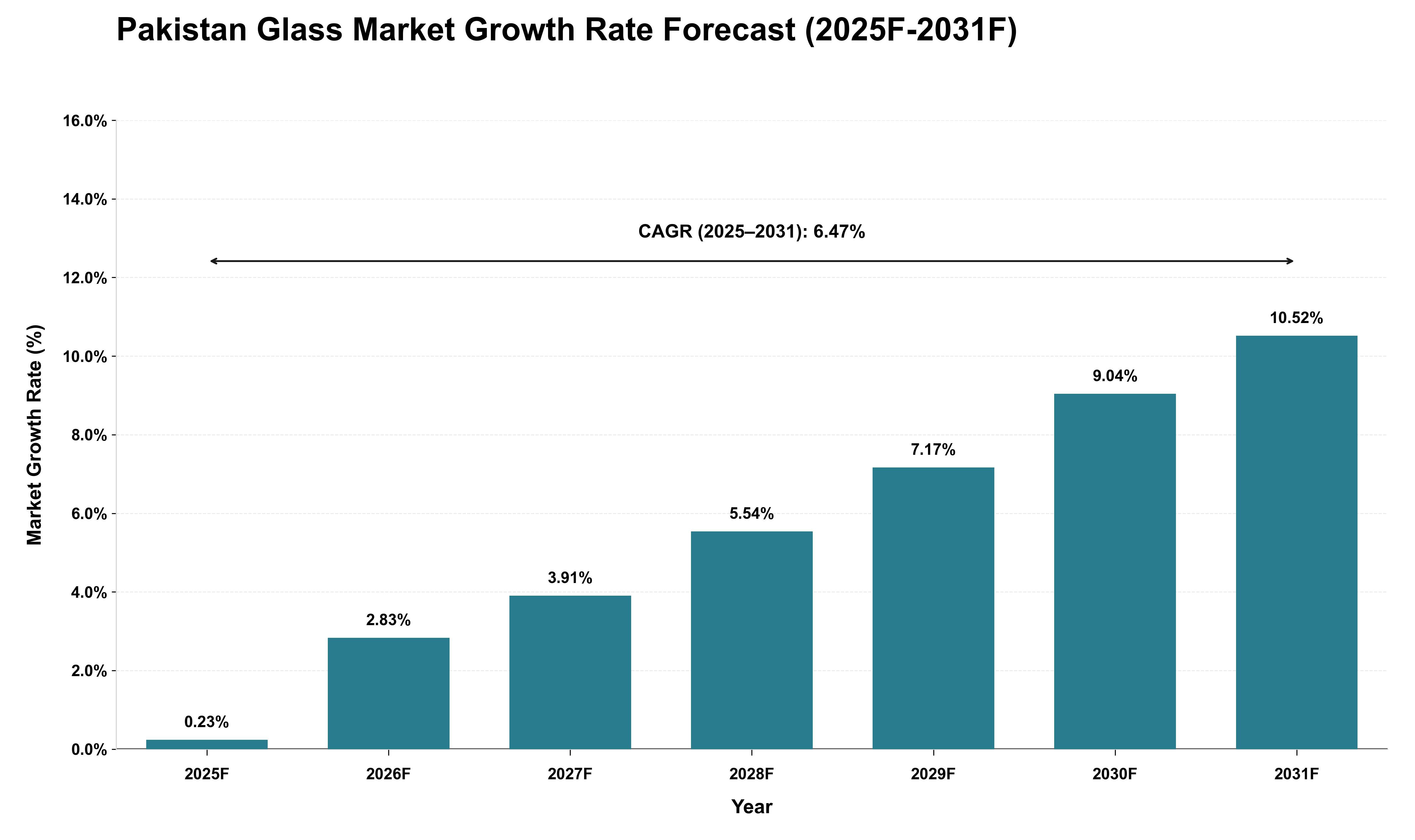
The Pakistan glass market will experience significant structural transitions driven by technological advancements and product substitution over the forecast period. As the CAGR of 6.47% indicates, growth will accelerate notably, particularly from 2029 to 2031, where annual growth rates are projected to exceed 10%. This surge will likely be fueled by increased demand for energy-efficient and sustainable glass products, aligning with global trends towards eco-friendly construction materials. Additionally, as local manufacturers adopt advanced production technologies, they will enhance efficiency and reduce costs, thereby improving competitiveness against imported alternatives. The anticipated rise in urbanization and infrastructure development will further bolster demand for various glass applications, including architectural and automotive sectors. Consequently, import dependencies may shift as domestic production capabilities expand to meet evolving consumer preferences and regulatory standards aimed at promoting local industries.
Key Highlights of the Report:
- Pakistan Glass Market Outlook
- Market Size of Pakistan Glass Market, 2025
- Forecast of Pakistan Glass Market, 2032
- Historical Data and Forecast of Pakistan Glass Revenues & Volume for the Period 2022 - 2032F
- Pakistan Glass Market Trend Evolution
- Pakistan Glass Market Drivers and Challenges
- Pakistan Glass Price Trends
- Pakistan Glass Porter's Five Forces
- Pakistan Glass Industry Life Cycle
- Historical Data and Forecast of Pakistan Glass Market Revenues & Volume By Product Types for the Period 2022 - 2032F
- Historical Data and Forecast of Pakistan Glass Market Revenues & Volume By Basic for the Period 2022 - 2032F
- Historical Data and Forecast of Pakistan Glass Market Revenues & Volume By Tempered for the Period 2022 - 2032F
- Historical Data and Forecast of Pakistan Glass Market Revenues & Volume By Laminated for the Period 2022 - 2032F
- Historical Data and Forecast of Pakistan Glass Market Revenues & Volume By Insulated for the Period 2022 - 2032F
- Historical Data and Forecast of Pakistan Glass Market Revenues & Volume By Others for the Period 2022 - 2032F
- Historical Data and Forecast of Pakistan Glass Market Revenues & Volume By Applications for the Period 2022 - 2032F
- Historical Data and Forecast of Pakistan Glass Market Revenues & Volume By Architectural for the Period 2022 - 2032F
- Historical Data and Forecast of Pakistan Glass Market Revenues & Volume By Automotive & transportation for the Period 2022 - 2032F
- Historical Data and Forecast of Pakistan Glass Market Revenues & Volume By Others for the Period 2022 - 2032F
- Historical Data and Forecast of Pakistan Glass Market Revenues & Volume By Technology Types for the Period 2022 - 2032F
- Historical Data and Forecast of Pakistan Glass Market Revenues & Volume By Float for the Period 2022 - 2032F
- Historical Data and Forecast of Pakistan Glass Market Revenues & Volume By Rolled for the Period 2022 - 2032F
- Historical Data and Forecast of Pakistan Glass Market Revenues & Volume By Sheet for the Period 2022 - 2032F
- Pakistan Glass Import Export Trade Statistics
- Market Opportunity Assessment By Product Types
- Market Opportunity Assessment By Applications
- Market Opportunity Assessment By Technology Types
- Pakistan Glass Top Companies Market Share
- Pakistan Glass Competitive Benchmarking By Technical and Operational Parameters
- Pakistan Glass Company Profiles
- Pakistan Glass Key Strategic Recommendations






































