Pakistan Handicrafts Market: Import Trend Analysis
Pakistan import trend for the handicrafts market experienced a negative Compound Annual Growth Rate (CAGR) of -8.71% from 2020 to 2024. This decline could be attributed to shifts in consumer preferences towards more modern or machine-made products, impacting the demand for traditional handicrafts.
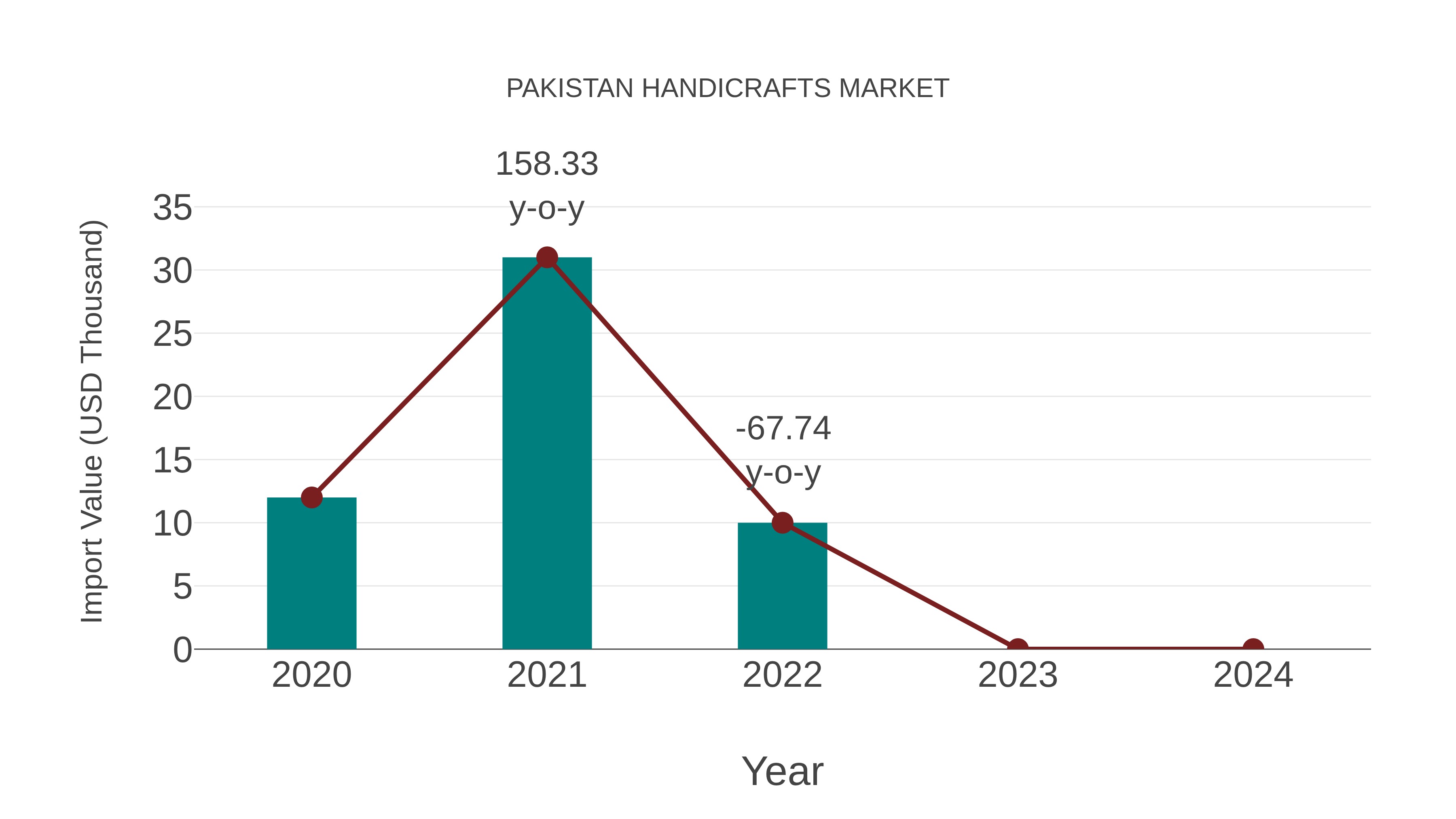
Pakistan Handicrafts Market Growth Rate
According to 6Wresearch internal database and industry insights, the Pakistan Handicrafts Market is projected to grow at a compound annual growth rate (CAGR) of 6.5% during the forecast period 2026–2032.
Topics Covered in the Pakistan Handicrafts Market Report
The Pakistan Handicrafts Market report thoroughly covers the market by product type, distribution channel, and end-users. The report provides a detailed analysis of ongoing market trends, opportunities/high-growth areas, and market drivers, helping stakeholders devise and align their market strategies according to current and future market dynamics.
Pakistan Handicrafts Market Highlights
| Report Name | Pakistan Handicrafts Market |
| Forecast period | 2026-2032 |
| CAGR | 6.5% |
| Growing Sector | Residential |
Pakistan Handicrafts Market Synopsis
The Pakistan Handicrafts Market is witnessing firm growth. This growth is attributed to multiple factors, such as surging domestic and international demand for traditional handmade products. In addition to this, consumer awareness concerning sustainable and eco-friendly products has increased rapidly, further strengthening the market. With this, the handmade items are becoming increasingly popular in both residential and commercial sectors. This is further supported by government efforts to encourage local artisans and their craftsmanship through exhibitions and global trade fairs.
Evaluation of Growth Drivers in the Pakistan Handicrafts Market
Below are some prominent drivers and their influence on the market dynamics:
| Drivers | Primary Segments Affected | Why It Matters |
| Increasing International Demand | By Product Type (Woodware, Art Metal Ware, Hand Printed Textiles) | The export growth is driven by surging consumer interest in global markets for unique and culturally significant products. |
| Government Support for Artisans | By Distribution Channel (Mass Retailers, Specialty Stores) | The market presence of local artisans is boosted with promotional support. |
| Rise in Interior Decoration Trend | By End-User (Residential, Commercial) | More consumers are decorating their homes with authentic handmade pieces. |
| E-commerce and Online Retail Growth | By Sales Channel (Online Stores) | The convenience of online shopping increases accessibility and consumer reach. |
| Cultural Preservation Initiatives | By Product Type (Imitation Jewellery, Zari Goods) | Efforts to preserve traditional craftsmanship have gained traction, increasing demand for artisanal products. |
The Pakistan Handicrafts Market size is projected to grow at a CAGR of 6.5% from 2026 to 2032. Several factors are contributing to this market's expansion. The growth of domestic and international tourism has played an important role in promoting handicrafts products, driven by a growing interest in authentic and regionally made items. These are factors are leaving a positive impact on the market growth. In addition to this, the consumer interest in eco-conscious handmade products is rising, giving a boost in the usage of sustainable and eco-friendly materials. Furthermore, the growth of e-commerce platforms and online retail sales facilitates better accessibility to Pakistani handicrafts. These factors have a significant influence on the Pakistan Handicrafts Market Growth.
Evaluation of Restraints in the Pakistan Handicrafts Market
Below are some prominent restraints and their influence on the market dynamics:
| Restraints | Primary Segments Affected | What This Means |
| Raw Material Sourcing Challenges | By Raw Material (Wood, Metal, Textile) | Limited availability and cost fluctuations of raw materials affect production. |
| High Labor Costs | By Product Type (Hand Printed Textiles, Sculptures) | Handmade processes are labour-intensive, making production costs high. |
| Limited Global Distribution Channels | By Sales Channel (Independent Retailers, Specialty Stores) | The export growth is restricted due to hurdles in reaching international markets. |
| Competition from Mass-Produced Goods | By End-User (Commercial, Residential) | Handcrafted goods must confront high competition due to mass production and cheaper imports. |
Pakistan Handicrafts Market Challenges
Several challenges are impacting the Pakistan Handicrafts Market. The sourcing of raw material is one of the prominent challenges that the market encounters. This is due to a lack of accessibility to high-quality materials. In addition to this, the cost of artisanal products is high, increasing production expenditure. Furthermore, there is a lack of international distribution channels, making it difficult for local artisans to access larger markets, restricting the overall market growth potential.
Pakistan Handicrafts Market Trends
Some major trends contributing to the Pakistan Handicrafts Market growth are:
- Increasing Demand for Customized Products: The demand for personalized handicrafts through their interest in custom jewelry, home décor, and personalized gifts is rising and generating new market possibilities.
- Sustainability and Eco-Conscious Products: The demand for handicrafts made from recycled and natural materials is rising due to consumer growing interest in sustainable and eco-friendly products.
- Social Media Influence: The use of social media platforms have given a wider access to artisans to display their work to a worldwide audience, which helps them connect with potential customers.
- Growing Popularity of Handmade Fashion: Nowadays, wearing handmade clothing and accessories has become a fashion statement as it allows consumer to differentiate its style while being committed to sustainability.
Investment Opportunities in the Pakistan Handicrafts Market
Some investment opportunities that will form the dynamics of the Pakistan Handicrafts Industry include:
- Development of E-Commerce Platforms: The establishment of online retail platforms for handicraft products allow businesses to access international markets and reach more customers.
- Expansion into Export Markets: International trade fairs and cultural exhibitions enable artisans and manufacturers to extend their business operations via international market entry and Pakistani handicraft export promotion.
- Incorporation of Modern Manufacturing Technologies: Firms can enhance production efficiency and scalability while maintaining their products handmade features with the introduction of advanced manufacturing technologies.
- Collaboration with Luxury Brands: Artisans can upscale their craft skills while accessing high-value international markets with collaborations between local artisans and luxury premium brands.
Top 5 Leading Players in the Pakistan Handicrafts Market
Below is the list of prominent companies leading the Pakistan Handicrafts Market Share:
1. Kashmir Handicrafts
| Company Name | Kashmir Handicrafts |
| Established Year | 1985 |
| Headquarters | Lahore, Pakistan |
| Official Website | Click Here |
Specializes in handmade Kashmiri textiles, embroidery, and wood products, serving both local and international markets.
2. Chitrakoot Arts
| Company Name | Chitrakoot Arts |
| Established Year | 1992 |
| Headquarters | Karachi, Pakistan |
| Official Website | - |
Offers a wide range of Pakistani hand-painted crafts and decorative items, specializing in traditional motifs and artwork.
3. The Artisans of Pakistan
| Company Name | The Artisans of Pakistan |
| Established Year | 2000 |
| Headquarters | Islamabad, Pakistan |
| Official Website | Click Here |
Works with artisans across Pakistan to produce a variety of handcrafted goods including wood carvings, pottery, and textiles.
4. Sculptors of Pakistan
| Company Name | Sculptors of Pakistan |
| Established Year | 2010 |
| Headquarters | Multan, Pakistan |
| Official Website | - |
Known for creating intricate sculptures and statues, catering to local and international art markets.
5. Pakistani Art Craft
| Company Name | Pakistani Art Craft |
| Established Year | 2015 |
| Headquarters | Lahore, Pakistan |
| Official Website | - |
Specializes in a wide range of traditional and contemporary handicrafts, focusing on export to North America and Europe.
Government Regulations in the Pakistan Handicrafts Market
According to Pakistani government data, the promotion of artisanal and traditional crafts is part of the country’s broader economic diversification strategy. The Ministry of Commerce supports handicraft exports through subsidies and international trade exhibitions. Additionally, the Export Development Fund aids handicraft producers in participating in global markets. The National Council of Arts also works toward preserving traditional crafts and creating sustainable income streams for local artisans through grants and market development programs.
Future Insights of the Pakistan Handicrafts Market
The Pakistan Handicrafts Market will continue to propel growth due to surging global need for unique, handmade, and culturally significant products. Rising interest in eco-friendly goods, digital retail expansion, and government initiatives to promote exports and artisanal skills will propel the market forward. Improved product development, better access to international markets, and greater investment in technology will form new opportunities in the industry.
Market Segmentation Analysis
The report offers a comprehensive study of the following market segments and their leading categories:
By Product Type – Woodware to Lead the Market
According to Rashika, Senior Research Analyst at 6Wresearch, Woodware, including wooden carvings, furniture, and home décor products, is expected to lead the market due to its long-standing popularity in the international market.
By Distribution Channel – Mass Retailers to Lead the Market
Mass retailers are anticipated to lead the distribution channel segment due to their wide reach and ability to cater to the public. These retailers stock a large variety of handicrafts and provide them at competitive prices, making them easily accessible to the average consumer.
By End-Users – Residential to Lead the Market
The residential sector will continue to lead the Pakistan handicrafts market due to the surging requirement for unique, culturally significant décor items. Handicrafts are widely used in home decoration, furniture, and functional items like lamps, vases, and mirrors.
Key Attractiveness of the Report
- 10 Years of Market Numbers
- Historical Data Starting from 2022 to 2025
- Base Year: 2025
- Forecast Data until 2032
- Key Performance Indicators Impacting the Market
- Major Upcoming Developments and Projects
Key Highlights of the Report:
- Pakistan Handicrafts Market Outlook
- Market Size of Pakistan Handicrafts Market, 2025
- Forecast of Pakistan Handicrafts Market, 2032
- Historical Data and Forecast of Pakistan Handicrafts Revenues & Volume for the Period 2022 - 2032F
- Pakistan Handicrafts Market Trend Evolution
- Pakistan Handicrafts Market Drivers and Challenges
- Pakistan Handicrafts Price Trends
- Pakistan Handicrafts Porter's Five Forces
- Pakistan Handicrafts Industry Life Cycle
- Historical Data and Forecast of Pakistan Handicrafts Market Revenues & Volume By Product Type for the Period 2022 - 2032F
- Historical Data and Forecast of Pakistan Handicrafts Market Revenues & Volume By Woodware for the Period 2022 - 2032F
- Historical Data and Forecast of Pakistan Handicrafts Market Revenues & Volume By Art metal Ware for the Period 2022 - 2032F
- Historical Data and Forecast of Pakistan Handicrafts Market Revenues & Volume By Hand printed Textiles and Scarves for the Period 2022 - 2032F
- Historical Data and Forecast of Pakistan Handicrafts Market Revenues & Volume By Embroidered and Crocheted Goods for the Period 2022 - 2032F
- Historical Data and Forecast of Pakistan Handicrafts Market Revenues & Volume By Zari and Zari Goods for the Period 2022 - 2032F
- Historical Data and Forecast of Pakistan Handicrafts Market Revenues & Volume By Imitation Jewellery for the Period 2022 - 2032F
- Historical Data and Forecast of Pakistan Handicrafts Market Revenues & Volume By Sculptures for the Period 2022 - 2032F
- Historical Data and Forecast of Pakistan Woodware Handicrafts Market Revenues & Volume By Others for the Period 2022 - 2032F
- Historical Data and Forecast of Pakistan Handicrafts Market Revenues & Volume By Distribution Channel for the Period 2022 - 2032F
- Historical Data and Forecast of Pakistan Handicrafts Market Revenues & Volume By Mass Retailers for the Period 2022 - 2032F
- Historical Data and Forecast of Pakistan Handicrafts Market Revenues & Volume By Departmental Stores for the Period 2022 - 2032F
- Historical Data and Forecast of Pakistan Handicrafts Market Revenues & Volume By Independent Retailers for the Period 2022 - 2032F
- Historical Data and Forecast of Pakistan Handicrafts Market Revenues & Volume By Specialty Stores for the Period 2022 - 2032F
- Historical Data and Forecast of Pakistan Handicrafts Market Revenues & Volume By Online Stores for the Period 2022 - 2032F
- Historical Data and Forecast of Pakistan Handicrafts Market Revenues & Volume By Others for the Period 2022 - 2032F
- Historical Data and Forecast of Pakistan Handicrafts Market Revenues & Volume By End-users for the Period 2022 - 2032F
- Historical Data and Forecast of Pakistan Handicrafts Market Revenues & Volume By Residential for the Period 2022 - 2032F
- Historical Data and Forecast of Pakistan Handicrafts Market Revenues & Volume By Commercial for the Period 2022 - 2032F
- Pakistan Handicrafts Import Export Trade Statistics
- Market Opportunity Assessment By Product Type
- Market Opportunity Assessment By Distribution Channel
- Market Opportunity Assessment By End-users
- Pakistan Handicrafts Top Companies Market Share
- Pakistan Handicrafts Competitive Benchmarking By Technical and Operational Parameters
- Pakistan Handicrafts Company Profiles
- Pakistan Handicrafts Key Strategic Recommendations
Market Segmentation
The Marketreport covers a detailed analysis of the following market segments
By Product Types
- Small Size
- Medium Size
- Large Size
By Applications
- Airports
- Highway
- Municipal






































