Pakistan Oil and Gas Automation and Instrumentation Market: Import Trend Analysis
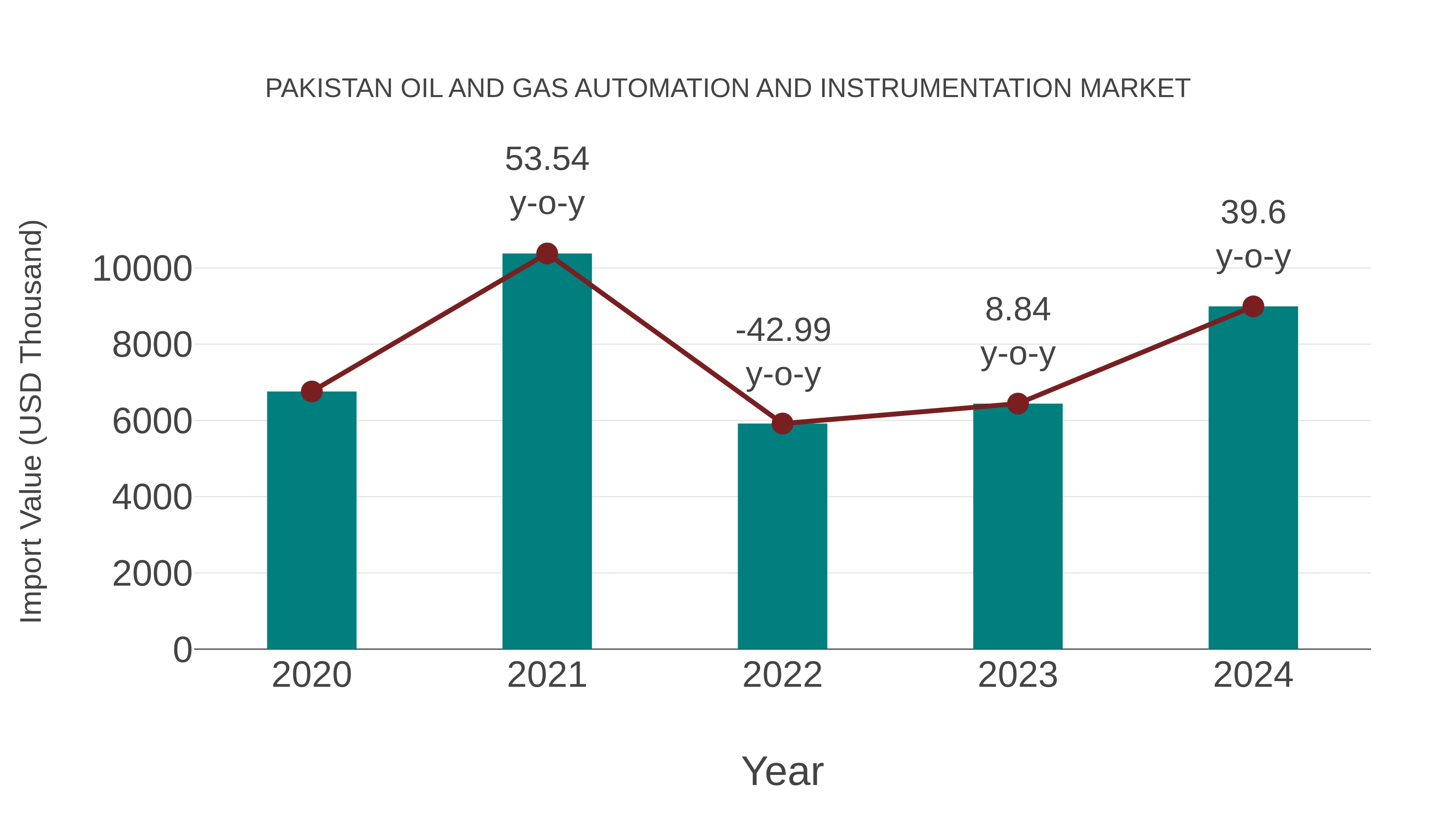
Pakistan import trend for oil and gas automation and instrumentation equipment showed significant growth from 2023 to 2024, with a rate of 39.6%. The compound annual growth rate (CAGR) for the period 2020-2024 was 7.39%. This notable surge can be attributed to increased investments in modernizing the oil and gas sector infrastructure to enhance operational efficiency and meet growing demand.
Key Highlights of the Report:
- Pakistan Oil and Gas Automation and Instrumentation Market Outlook
- Market Size of Pakistan Oil and Gas Automation and Instrumentation Market, 2025
- Forecast of Pakistan Oil and Gas Automation and Instrumentation Market, 2032
- Historical Data and Forecast of Pakistan Oil and Gas Automation and Instrumentation Revenues & Volume for the Period 2022-2032F
- Pakistan Oil and Gas Automation and Instrumentation Market Trend Evolution
- Pakistan Oil and Gas Automation and Instrumentation Market Drivers and Challenges
- Pakistan Oil and Gas Automation and Instrumentation Price Trends
- Pakistan Oil and Gas Automation and Instrumentation Porter's Five Forces
- Pakistan Oil and Gas Automation and Instrumentation Industry Life Cycle
- Historical Data and Forecast of Pakistan Oil and Gas Automation and Instrumentation Market Revenues & Volume By Solution for the Period 2022-2032F
- Historical Data and Forecast of Pakistan Oil and Gas Automation and Instrumentation Market Revenues & Volume By Supervisory Control and Data Acquisition (SCADA) for the Period 2022-2032F
- Historical Data and Forecast of Pakistan Oil and Gas Automation and Instrumentation Market Revenues & Volume By Programmable Logic Controller (PLC) for the Period 2022-2032F
- Historical Data and Forecast of Pakistan Oil and Gas Automation and Instrumentation Market Revenues & Volume By Distributed Control Systems (DCS) for the Period 2022-2032F
- Historical Data and Forecast of Pakistan Oil and Gas Automation and Instrumentation Market Revenues & Volume By Safety Automation for the Period 2022-2032F
- Historical Data and Forecast of Pakistan Oil and Gas Automation and Instrumentation Market Revenues & Volume By Advanced Process Control (APC) for the Period 2022-2032F
- Historical Data and Forecast of Pakistan Oil and Gas Automation and Instrumentation Market Revenues & Volume By Manufacturing Execution System (MES) for the Period 2022-2032F
- Historical Data and Forecast of Pakistan Oil and Gas Automation and Instrumentation Market Revenues & Volume By Instrument for the Period 2022-2032F
- Historical Data and Forecast of Pakistan Oil and Gas Automation and Instrumentation Market Revenues & Volume By Field Instruments for the Period 2022-2032F
- Historical Data and Forecast of Pakistan Oil and Gas Automation and Instrumentation Market Revenues & Volume By Control Valves for the Period 2022-2032F
- Historical Data and Forecast of Pakistan Oil and Gas Automation and Instrumentation Market Revenues & Volume By Leakage Detection System for the Period 2022-2032F
- Historical Data and Forecast of Pakistan Oil and Gas Automation and Instrumentation Market Revenues & Volume By Flow Computer for the Period 2022-2032F
- Historical Data and Forecast of Pakistan Oil and Gas Automation and Instrumentation Market Revenues & Volume By Communication for the Period 2022-2032F
- Historical Data and Forecast of Pakistan Oil and Gas Automation and Instrumentation Market Revenues & Volume By Process for the Period 2022-2032F
- Historical Data and Forecast of Pakistan Oil and Gas Automation and Instrumentation Market Revenues & Volume By Upstream Process for the Period 2022-2032F
- Historical Data and Forecast of Pakistan Oil and Gas Automation and Instrumentation Market Revenues & Volume By Midstream Process for the Period 2022-2032F
- Historical Data and Forecast of Pakistan Oil and Gas Automation and Instrumentation Market Revenues & Volume By Downstream Process for the Period 2022-2032F
- Pakistan Oil and Gas Automation and Instrumentation Import Export Trade Statistics
- Market Opportunity Assessment By Solution
- Market Opportunity Assessment By Instrument
- Market Opportunity Assessment By Process
- Pakistan Oil and Gas Automation and Instrumentation Top Companies Market Share
- Pakistan Oil and Gas Automation and Instrumentation Competitive Benchmarking By Technical and Operational Parameters
- Pakistan Oil and Gas Automation and Instrumentation Company Profiles
- Pakistan Oil and Gas Automation and Instrumentation Key Strategic Recommendations






































