Pakistan Organic Food Market Growth Rate
According to 6Wresearch internal database and industry insights, the Pakistan Organic Food Market is growing at a compound annual growth rate (CAGR) of 8.2% during the forecast period (2026-2032).
Pakistan Organic Food Market Year-wise Growth Rate and Key Drivers
This graph highlights how the Pakistan Organic Food Market has steadily grown over the past five years, supported by major growth factors.
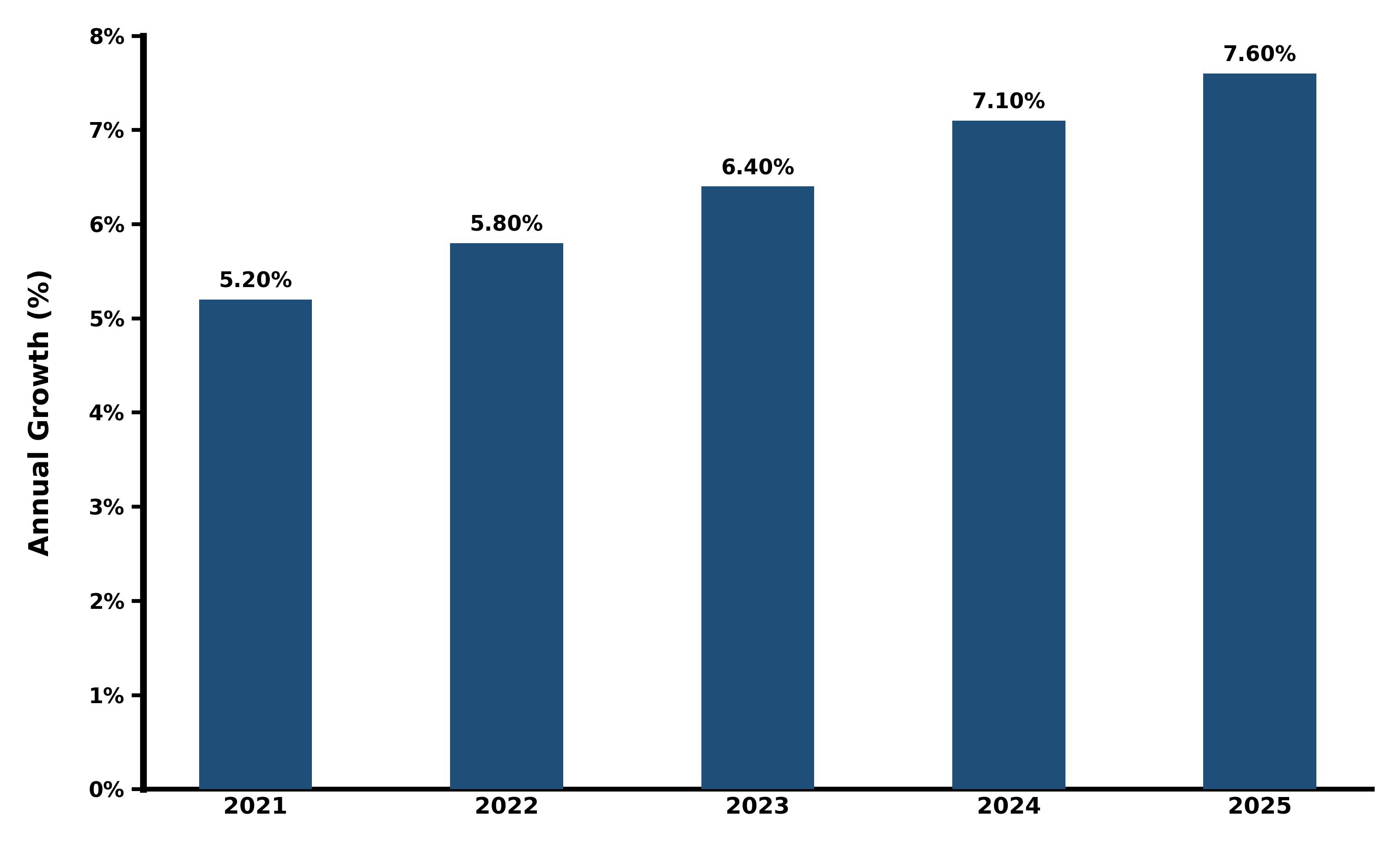
The table below presents the year‑wise growth rates along with the key drivers influencing the market
| Years | Est. Annual Growth in % | Growth Drivers |
| 2021 | 5.2% | Rising health awareness and demand for chemical-free food among urban consumers. |
| 2022 | 5.8% | Expansion of organic food retail chains and supermarkets in major cities. |
| 2023 | 6.4% | Government incentives for organic farming and certification schemes. |
| 2024 | 7.1% | Growing popularity of organic dairy, fruits, and vegetables in households. |
| 2025 | 7.6% | Increased exports of certified organic products to Middle East and Europe. |
Topics Covered in the Pakistan Organic Food Market Report
The Pakistan Organic Food Market report thoroughly covers the market by food type and application. The report provides detailed insights into ongoing trends, opportunities, and key drivers to help stakeholders develop market strategies aligned with current and future dynamics.
Pakistan Organic Food Market Highlights
| Report Name | Pakistan Organic Food Market |
| Forecast Period | 2026–2032 |
| CAGR | 8.2% |
| Growing Sector | Export |
Pakistan Organic Food Market Synopsis
The Pakistan Organic Food Market is experiencing strong expansion due to three factors which include increasing health-conscious consumers, government support for organic farming and growing export volumes. Urban households and commercial sectors are demanding chemical-free, nutrient-rich foods. The market trust is increasing through the combination of expanding retail and e-commerce channels and certifications which include USDA Organic and local standards. The investments made in cold storage and packaging and processing infrastructure development enable manufacturers to operate their supply chains more efficiently while accessing domestic and international markets.
Evaluation of Growth Drivers in the Pakistan Organic Food Market
Below mentioned some growth drivers and their impact on market dynamics:
| Drivers | Primary Segments Affected | Why It Matters |
| Government Support & Certification Growth | Organic Food Exports, Certification Programs | Enhances Pakistan’s credibility as a certified organic producer. |
| Rising Health Awareness | Fruit & Vegetables, Dairy Products | Drives domestic demand for chemical-free, nutrient-rich foods. |
| Expansion of Retail & E-commerce | Household & Commercial Applications | Increases the accessibility and consumer convenience. |
| Export Market Growth | Dairy, Meat, Processed Foods | Makes high foreign revenue and strengthens global trade presence. |
| Investment in Cold Storage & Processing | Fruits, Vegetables, Dairy | Increases product quality, shelf-life, and supply chain efficiency. |
Pakistan Organic Food Market is expected to grow robustly, at CAGR of 8.2% during the forecast period of 2026-2032. The market key drivers include demand for organic and healthy nutrition enriched food by the consumers of Pakistan. Other than increasing urbanization, high spending power of consumers and changes in the lifestyle of people is encouraging the market expansion. also, the growth of e-commerce retail platforms is boosting the demand of the industry by providing ease of accessibility and wide range product offering to consumers. Moreover, it can be seen that the growing government initiatives and subsidies for organic farming is encouraging the market expansion. the increasing export toward middle eastern and European markets is also proliferating the market expansion.
Evaluation of Restraints in the Pakistan Organic Food Market
Below mentioned are some major restraints and their influence on market dynamics:
| Restraints | Primary Segments Affected | Why It Matters |
| High Production Costs | Organic Fruits & Vegetables, Dairy Products | Increases the price of organic food, making it less affordable for many consumers. |
| Limited Awareness of Organic Benefits | Fruit & Vegetables, Processed Foods | Prevents widespread adoption of organic products, especially in rural areas. |
| Lack of Sufficient Infrastructure | Export, Processing Facilities | Hinders efficient distribution and export of organic products, limiting market expansion. |
| Regulatory Challenges | Certification, Exports | The stringent regulations hamper the industry growth. |
| Dependence on Imports | Organic Inputs, Seeds | Relies on imports for organic farming supplies affects the overall cost of production. |
Pakistan Organic Food Market Challenges
The Pakistan Organic Food Market faces several challenges which include limited organic product awareness, high production costs and the absence of standardized certification systems. The processing and distribution infrastructure shortcomings prevent products from being accessible to customers. The existence of cheaper conventional food options creates a barrier which stops customers from embracing new products. Organic producers face challenges in expanding their international presence as of strict export requirements and logistical difficulties. The current market structure needs to develop new farming methods which will help organic farming become more popular among farmers.
Pakistan Organic Food Market Trends
Some major trends contributing to Pakistan Organic Food Market growth:
- Health-Conscious Food Consumption: The consumers are increasingly preferring healthy and nutrition-enriched options due to increasing health consciousness.
- Retail & E-commerce Expansion: The online retail platforms are increasing the market expansion by providing ease of accessibility and a wide range of product offerings to the consumers.
- Certification Adoption: The standard organic certifications build trust among consumers regarding the authenticity of organic products and increase the adoption of products.
Investment Opportunities in Pakistan Organic Food Market
Here are investment opportunities present in Pakistan Organic Food Industry:
- Organic Dairy and Processed Foods: The consumers, specifically in urban areas, are increasingly demanding convenient, fortified, and ready-to-eat organic products.
- Export-Oriented Production: The investors can invest more in increasing the exports to other countries where there is high demand for organic food, mainly targeting Middle Eastern and European markets.
- Digital Retail & Home Delivery: The growth in e-commerce platforms is expected to increase the market expansion by providing one-click home delivery services to customers.
Top 5 Leading Players in the Pakistan Organic Food Market
Here are top 5 leading players contributing to Pakistan Organic Food Market share:
1. National Foods Limited
| Company Name | National Foods Limited |
|---|---|
| Established Year | 1970 |
| Headquarters | Karachi, Pakistan |
| Official Website | Click Here |
National Foods Limited is known for its wide range of packaged food products, focusing on healthier and natural ingredients. The company has built a strong reputation through continuous product innovation, quality control, and a broad portfolio that includes spices, recipe mixes, pickles, and ready-to-cook foods, making it a leading player in Pakistan’s packaged food industry.
2. Matco Foods Limited
| Company Name | Matco Foods Limited |
|---|---|
| Established Year | 1984 |
| Headquarters | Lahore, Pakistan |
| Official Website | Click Here |
Matco Foods Limited is a major producer of organic rice and specialized food products serving both domestic and international markets. The company focuses on premium rice processing, sustainable agricultural practices, and value-added food solutions, helping it maintain a strong position in the global food export industry.
3. Haleeb Foods Limited
| Company Name | Haleeb Foods Limited |
|---|---|
| Established Year | 1984 |
| Headquarters | Lahore, Pakistan |
| Official Website | Click Here |
Haleeb Foods Limited is a prominent dairy company in Pakistan known for producing natural and nutritious dairy products such as milk, butter, cream, and tea whiteners. With a strong brand presence and extensive distribution network, the company continues to expand its product offerings while maintaining high quality standards.
4. Shakarganj Food Products Ltd
| Company Name | Shakarganj Food Products Ltd |
|---|---|
| Established Year | 1978 |
| Headquarters | Lahore, Pakistan |
| Official Website | Click Here |
Shakarganj Food Products Ltd is recognized for its diverse portfolio of processed food items produced using high-quality and natural ingredients. The company supplies various food products to both local and international markets while strengthening its presence in Pakistan’s processed food industry through strong manufacturing capabilities.
5. PK Meat & Food Company
| Company Name | PK Meat & Food Company (PKM) |
|---|---|
| Established Year | 1995 |
| Headquarters | Karachi, Pakistan |
| Official Website | Click Here |
PK Meat & Food Company specializes in high-quality meat processing and export. The company focuses on traceable, hygienic, and sustainable meat production systems, supplying premium meat products to both domestic and international markets while meeting global food safety standards.
Government Regulations Introduced in the Pakistan Organic Food Market
According to Pakistani government data, the Pakistan Ministry of National Food Security and Research oversees organic certification standards, pesticide-free production, and hygiene practices. The Pakistan Organic Standards and Export Promotion Programs create regulations which boost market credibility and promote sustainable farming practices while making Pakistan products more competitive in international markets. The initiatives guarantee organic food product quality and safety which leads to increased consumer trust and helps Pakistan's organic food industry develop its export capabilities.
Future Insights of the Pakistan Organic Food Market
The Pakistan Organic Food Market will experience growth through three drivers which include urban development, health-focused consumer behavior and increasing export activities. The market will expand as more people want certified organic products and e-commerce platforms continue to develop. Processing infrastructure investments will enhance product distribution and product quality and product safety which will satisfy both domestic and international market requirements. Organic food demand will increase as more people understand healthy eating and sustainable practices, which will create new business opportunities in the industry.
Market Segmentation Analysis
The report offers a comprehensive study of the subsequent market segments and their leading categories.
Fruits & Vegetables to Dominate the Market – By Food Type
According to Guneet Kaur, Senior Research Analyst at 6Wresearch, fruits and vegetables dominate due to rising health awareness and preference for fresh, chemical-free produce. Urban households, restaurants, and export markets favor these products for nutritional value and organic certification compliance.
Households to Dominate the Market – By Application
Households lead the application segment as consumers increasingly prefer organic ingredients for daily consumption, emphasizing chemical-free, nutrient-rich foods. The retail and e-commerce sales of products receive support from urban families who create demand while they maintain brand loyalty through their purchasing.
Key attractiveness of the report
- 10 Years Market Numbers.
- Historical Data Starting from 2022 to 2025.
- Base Year: 2025
- Forecast Data until 2032.
- Key Performance Indicators Impacting the Market.
- Major Upcoming Developments and Projects.
Key Highlights of the Report:
- Pakistan Organic Food Market Outlook
- Market Size of Pakistan Organic Food Market, 2025
- Forecast of Pakistan Organic Food Market, 2032
- Historical Data and Forecast of Pakistan Organic Food Revenues & Volume for the Period 2022-2032
- Pakistan Organic Food Market Trend Evolution
- Pakistan Organic Food Market Drivers and Challenges
- Pakistan Organic Food Price Trends
- Pakistan Organic Food Porter's Five Forces
- Pakistan Organic Food Industry Life Cycle
- Historical Data and Forecast of Pakistan Organic Food Market Revenues & Volume By Food Type for the Period 2022-2032
- Historical Data and Forecast of Pakistan Organic Food Market Revenues & Volume By Fruit & Vegetables for the Period 2022-2032
- Historical Data and Forecast of Pakistan Organic Food Market Revenues & Volume By Meat for the Period 2022-2032
- Historical Data and Forecast of Pakistan Organic Food Market Revenues & Volume By Fish & Poultry for the Period 2022-2032
- Historical Data and Forecast of Pakistan Organic Food Market Revenues & Volume By Dairy Products for the Period 2022-2032
- Historical Data and Forecast of Pakistan Organic Food Market Revenues & Volume By Frozen & Processed Foods for the Period 2022-2032
- Historical Data and Forecast of Pakistan Organic Food Market Revenues & Volume By Others for the Period 2022-2032
- Historical Data and Forecast of Pakistan Organic Food Market Revenues & Volume By Application for the Period 2022-2032
- Historical Data and Forecast of Pakistan Organic Food Market Revenues & Volume By Commercial for the Period 2022-2032
- Historical Data and Forecast of Pakistan Organic Food Market Revenues & Volume By Cosmetics & Personal Care for the Period 2022-2032
- Historical Data and Forecast of Pakistan Organic Food Market Revenues & Volume By Households for the Period 2022-2032
- Historical Data and Forecast of Pakistan Organic Food Market Revenues & Volume By Others for the Period 2022-2032
- Pakistan Organic Food Import Export Trade Statistics
- Market Opportunity Assessment By Food Type
- Market Opportunity Assessment By Application
- Pakistan Organic Food Top Companies Market Share
- Pakistan Organic Food Competitive Benchmarking By Technical and Operational Parameters
- Pakistan Organic Food Company Profiles
- Pakistan Organic Food Key Strategic Recommendations
Market covered
The report subsequently covers the market by following segments and subsegments:
By Food Type:
- Fruit & Vegetables
- Meat
- Fish & Poultry
- Dairy Products
- Frozen & Processed Foods
- Others
By Application:
- Commercial
- Cosmetics & Personal Care
- Households
- Others






































