Pakistan Particle Board Market Growth Rate Analysis (2025 - 2031)
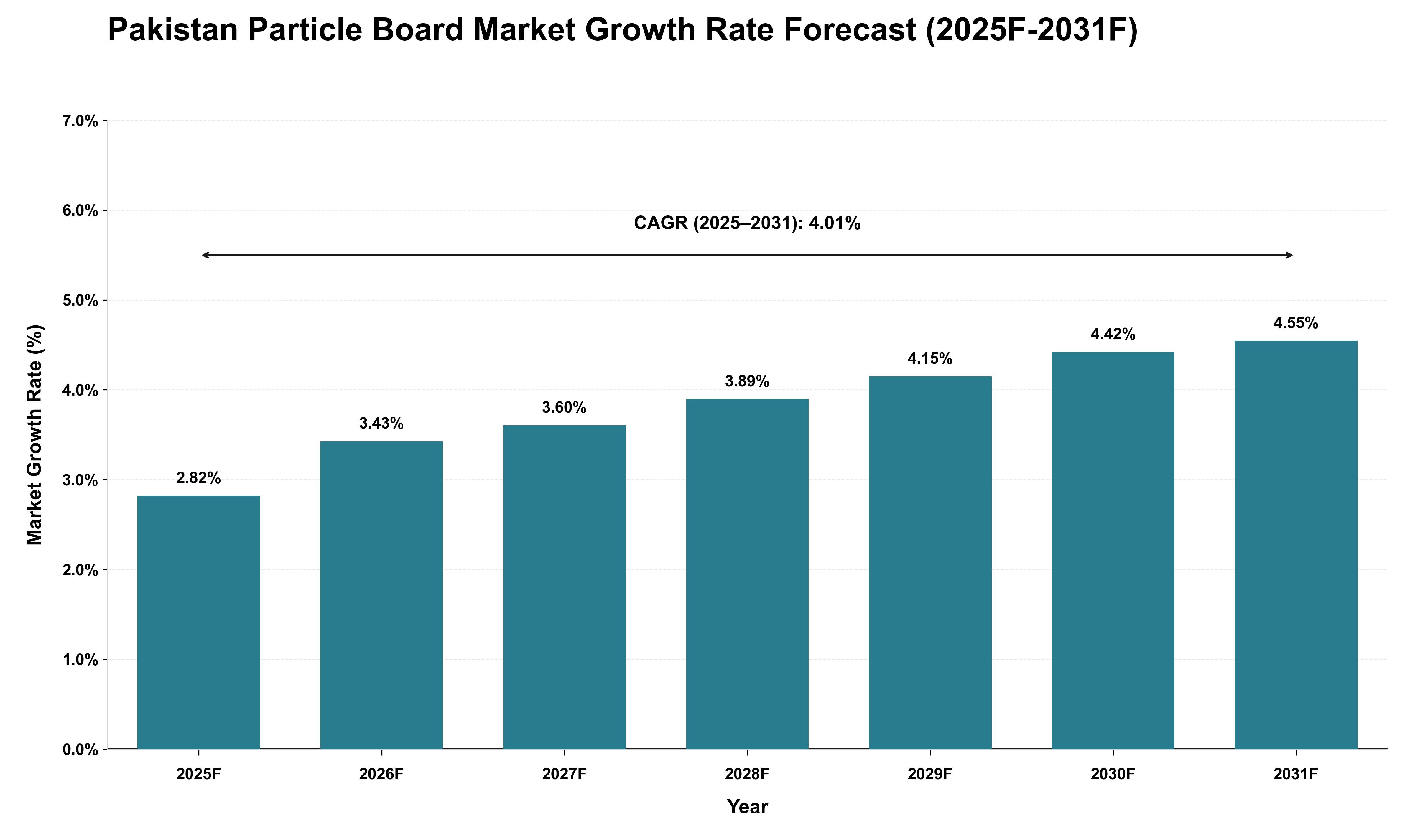
The Pakistan particle board market will experience a notable transformation driven by fluctuations in raw material availability and pricing dynamics over the forecast period. As demand for sustainable building materials rises, the sector will likely face pressures from both domestic supply constraints and import dependencies, particularly for wood-based inputs. The projected CAGR of 4.01% reflects an anticipated increase in production efficiency and technological advancements that could mitigate some cost pressures. Annual growth rates will gradually ascend from 2.82% in 2025 to 4.55% by 2031, indicating a strengthening market as manufacturers adapt to evolving consumer preferences and regulatory frameworks favoring eco-friendly products. Additionally, cyclical trends in construction activity will influence demand patterns, with potential spikes during economic recovery phases enhancing market resilience against external shocks related to raw material sourcing and pricing volatility.
Key Highlights of the Report:
- Pakistan Particle Board Market Outlook
- Market Size of Pakistan Particle Board Market, 2025
- Forecast of Pakistan Particle Board Market, 2032
- Historical Data and Forecast of Pakistan Particle Board Revenues & Volume for the Period 2022 - 2032F
- Pakistan Particle Board Market Trend Evolution
- Pakistan Particle Board Market Drivers and Challenges
- Pakistan Particle Board Price Trends
- Pakistan Particle Board Porter's Five Forces
- Pakistan Particle Board Industry Life Cycle
- Historical Data and Forecast of Pakistan Particle Board Market Revenues & Volume By Type for the Period 2022 - 2032F
- Historical Data and Forecast of Pakistan Particle Board Market Revenues & Volume By Standard Chipboard for the Period 2022 - 2032F
- Historical Data and Forecast of Pakistan Particle Board Market Revenues & Volume By Melamine Veneered Chipboard for the Period 2022 - 2032F
- Historical Data and Forecast of Pakistan Particle Board Market Revenues & Volume By Flooring Grade Chipboard for the Period 2022 - 2032F
- Historical Data and Forecast of Pakistan Particle Board Market Revenues & Volume By Wood Veneered Chipboard for the Period 2022 - 2032F
- Historical Data and Forecast of Pakistan Particle Board Market Revenues & Volume By Plastic Veneered Chipboard for the Period 2022 - 2032F
- Historical Data and Forecast of Pakistan Particle Board Market Revenues & Volume By Other for the Period 2022 - 2032F
- Historical Data and Forecast of Pakistan Particle Board Market Revenues & Volume By Application for the Period 2022 - 2032F
- Historical Data and Forecast of Pakistan Particle Board Market Revenues & Volume By Construction for the Period 2022 - 2032F
- Historical Data and Forecast of Pakistan Particle Board Market Revenues & Volume By Furniture for the Period 2022 - 2032F
- Historical Data and Forecast of Pakistan Particle Board Market Revenues & Volume By Infrastructure for the Period 2022 - 2032F
- Historical Data and Forecast of Pakistan Particle Board Market Revenues & Volume By Other for the Period 2022 - 2032F
- Pakistan Particle Board Import Export Trade Statistics
- Market Opportunity Assessment By Type
- Market Opportunity Assessment By Application
- Pakistan Particle Board Top Companies Market Share
- Pakistan Particle Board Competitive Benchmarking By Technical and Operational Parameters
- Pakistan Particle Board Company Profiles
- Pakistan Particle Board Key Strategic Recommendations






































