Pakistan Peas Market: Import Trend Analysis
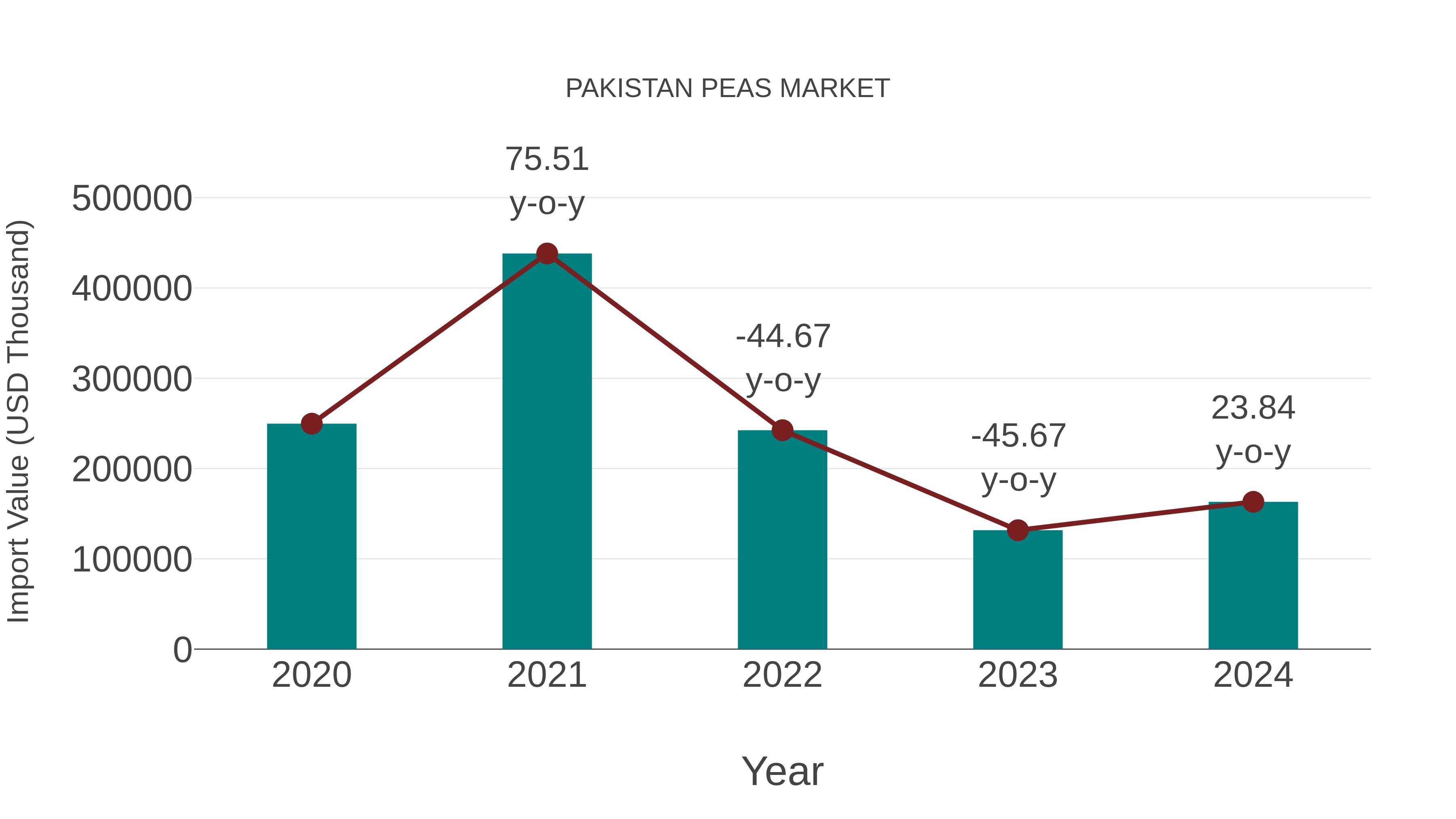
Pakistan import trend for peas in 2023-2024 showed a growth rate of 23.84%, while the Compound Annual Growth Rate (CAGR) for 2020-2024 was -10.1%. This shift may be attributed to changing consumer preferences or fluctuations in global trade dynamics impacting the market.
Pakistan Peas Market Overview
The Pakistan peas market is a significant segment within the country`s agricultural sector, with a strong demand for both fresh and processed peas. Major factors driving this market include the increasing population, changing dietary preferences towards healthier options, and the growth of the food processing industry. The production of peas primarily takes place in provinces like Punjab and Sindh, with a focus on both green peas and yellow peas varieties. Pakistan also exports peas to various international markets, contributing to its economy. However, challenges such as fluctuating weather conditions, pest attacks, and limited technological advancements in farming practices pose constraints to the market`s growth. Overall, the Pakistan peas market shows promise for further development and expansion, driven by consumer demand and export opportunities.
Pakistan Peas Market Trends
The Pakistan peas market is experiencing a growing demand for both fresh and processed peas due to their nutritional value and versatility in various cuisines. There is an increasing preference for organic and locally sourced peas among consumers, driving producers to adopt sustainable farming practices. The market is also witnessing a rise in the popularity of value-added pea products such as pea protein powder and snacks, catering to the health-conscious consumer segment. Additionally, the convenience factor of frozen peas is contributing to their steady demand in urban areas. Overall, the Pakistan peas market is expected to continue its growth trajectory fueled by changing consumer preferences towards healthier food options and the expanding variety of pea-based products available in the market.
Pakistan Peas Market Challenges
In the Pakistan peas market, several challenges are faced by both producers and consumers. One major challenge is the fluctuation in prices due to factors such as weather conditions, supply chain disruptions, and government policies. This makes it difficult for farmers to predict their income and for consumers to budget effectively. Another challenge is the lack of modern farming techniques and infrastructure, leading to lower yields and inconsistent quality of peas. Additionally, the presence of counterfeit or low-quality peas in the market affects consumer trust and the overall reputation of the industry. Furthermore, limited access to credit and financial services hinders the growth and expansion of pea farming operations in Pakistan. Overall, addressing these challenges through improved regulations, investments in technology, and better market access could help strengthen the Pakistan peas market.
Pakistan Peas Market Investment Opportunities
Investment opportunities in the Pakistan peas market are promising due to increasing demand for peas both domestically and internationally. Pakistan is a significant producer of peas, with favorable climatic conditions for cultivation. Investors can explore opportunities in pea farming, processing facilities, and export ventures. The growing popularity of plant-based diets and the versatility of peas as a protein source make them a lucrative investment option. Additionally, government initiatives to support agriculture and export sectors further enhance the investment potential in the Pakistan peas market. By leveraging technological advancements and sustainable farming practices, investors can capitalize on the growing demand for peas in various industries such as food, feed, and pharmaceuticals.
Pakistan Peas Market Government Policy
The Pakistan government has implemented several policies related to the peas market to support local farmers and ensure food security. These policies include setting minimum support prices for peas, providing subsidies on inputs such as fertilizers and pesticides, and offering credit facilities to farmers. The government also actively promotes research and development in pea cultivation to improve yields and quality. Additionally, export incentives and trade agreements are in place to boost the country`s peas exports. These policies aim to enhance the productivity and competitiveness of the Pakistan peas market, ensuring a stable supply of peas for domestic consumption and facilitating growth in the export market.
Pakistan Peas Market Future Outlook
The future outlook for the Pakistan peas market appears promising, driven by factors such as increasing demand for plant-based protein sources, growing awareness about the health benefits of peas, and expanding applications in food products. The rise in vegetarian and vegan populations globally is also expected to boost the demand for peas as a sustainable and nutritious protein alternative. Additionally, advancements in agricultural practices and technologies are likely to improve crop yields and quality, enhancing the overall production and supply chain efficiency. However, challenges such as fluctuating weather patterns, price volatility, and competition from other protein sources could impact market growth. Overall, with the right strategic investments and market positioning, the Pakistan peas market is poised for steady growth in the coming years.
Key Highlights of the Report:
- Pakistan Peas Market Outlook
- Market Size of Pakistan Peas Market, 2025
- Forecast of Pakistan Peas Market, 2032
- Historical Data and Forecast of Pakistan Peas Revenues & Volume for the Period 2022 - 2032F
- Pakistan Peas Market Trend Evolution
- Pakistan Peas Market Drivers and Challenges
- Pakistan Peas Price Trends
- Pakistan Peas Porter's Five Forces
- Pakistan Peas Industry Life Cycle
- Historical Data and Forecast of Pakistan Peas Market Revenues & Volume By Type for the Period 2022 - 2032F
- Historical Data and Forecast of Pakistan Peas Market Revenues & Volume By Field Peas for the Period 2022 - 2032F
- Historical Data and Forecast of Pakistan Peas Market Revenues & Volume By Garden Peas for the Period 2022 - 2032F
- Historical Data and Forecast of Pakistan Peas Market Revenues & Volume By Others for the Period 2022 - 2032F
- Historical Data and Forecast of Pakistan Peas Market Revenues & Volume By Application for the Period 2022 - 2032F
- Historical Data and Forecast of Pakistan Peas Market Revenues & Volume By Food for the Period 2022 - 2032F
- Historical Data and Forecast of Pakistan Peas Market Revenues & Volume By Others for the Period 2022 - 2032F
- Historical Data and Forecast of Pakistan Peas Market Revenues & Volume By Distribution Channel for the Period 2022 - 2032F
- Historical Data and Forecast of Pakistan Peas Market Revenues & Volume By Online for the Period 2022 - 2032F
- Historical Data and Forecast of Pakistan Peas Market Revenues & Volume By Offline for the Period 2022 - 2032F
- Historical Data and Forecast of Pakistan Peas Market Revenues & Volume By Others for the Period 2022 - 2032F
- Pakistan Peas Import Export Trade Statistics
- Market Opportunity Assessment By Type
- Market Opportunity Assessment By Application
- Market Opportunity Assessment By Distribution Channel
- Pakistan Peas Top Companies Market Share
- Pakistan Peas Competitive Benchmarking By Technical and Operational Parameters
- Pakistan Peas Company Profiles
- Pakistan Peas Key Strategic Recommendations






































