Pakistan Peat Market: Import Trend Analysis
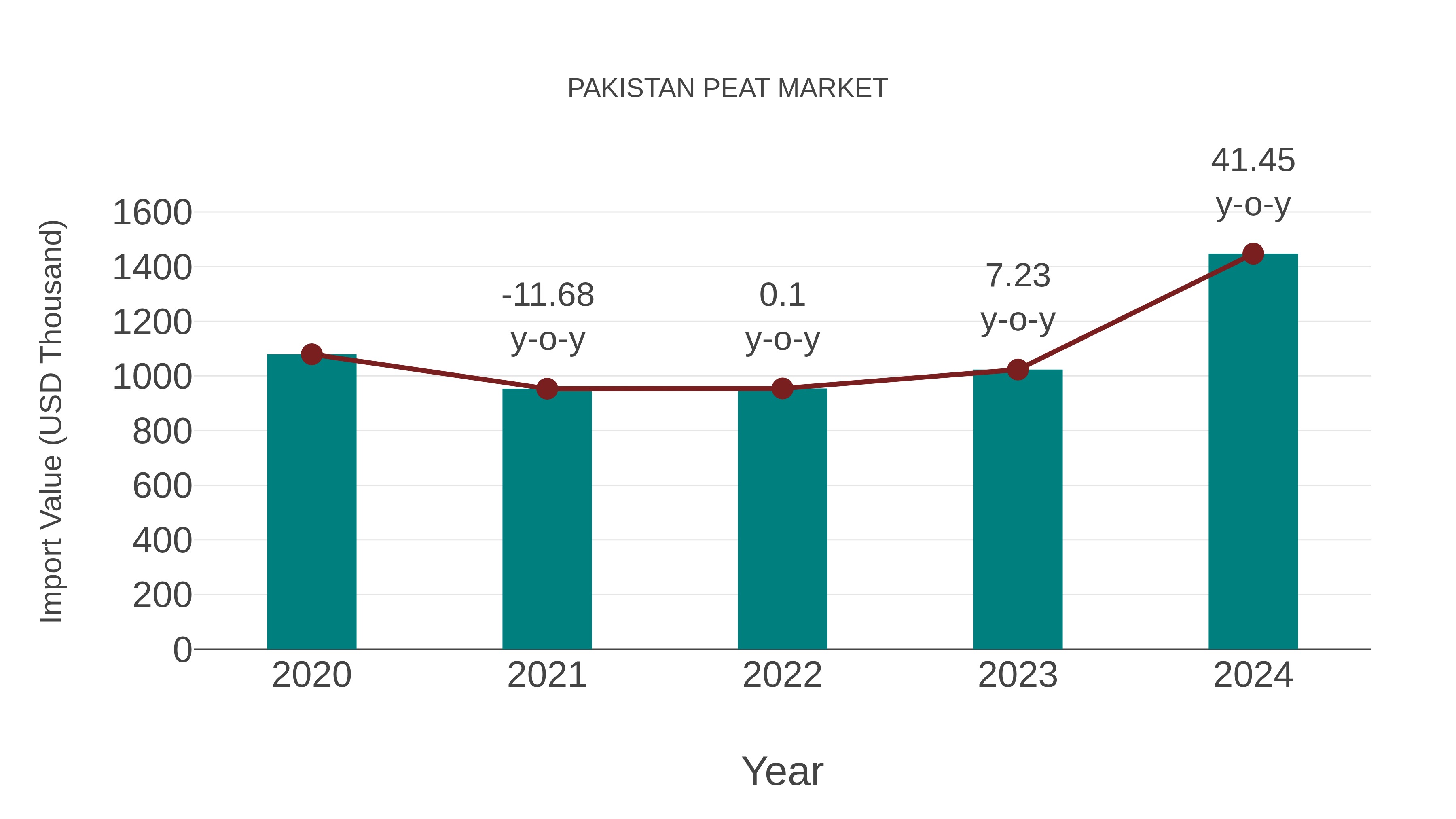
Pakistan import trend for the peat market saw a notable increase in 2023-2024, with a growth rate of 41.45%. The compound annual growth rate (CAGR) for 2020-2024 stood at 7.61%. This surge can be attributed to increasing industrial demand for peat-based products in the region.
Pakistan Peat Market Overview
The Pakistan peat market is experiencing steady growth driven by increasing demand across various sectors including agriculture, horticulture, and energy production. Peat is widely used in Pakistan as a soil conditioner to improve soil structure and fertility in agricultural practices. The horticulture sector also utilizes peat for growing media in nurseries and greenhouses. Furthermore, peat is being explored as a potential source of renewable energy in Pakistan, contributing to the market`s expansion. Government initiatives promoting sustainable practices and the increasing awareness among farmers about the benefits of using peat are also fueling market growth. However, challenges related to environmental concerns and sustainable peatland management practices need to be addressed to ensure the long-term viability of the Pakistan peat market.
Pakistan Peat Market Trends
The Pakistan Peat Market is experiencing growth due to the increasing demand for peat as a soil conditioner and growing medium in agriculture and horticulture. Sustainability concerns are driving the shift towards peat as a renewable resource compared to other soil amendments. Additionally, the rise in urban gardening and landscaping projects is boosting the demand for peat products such as peat moss and peat pellets. The market is also witnessing innovation in peat-based products, such as biodegradable peat pots and sustainable packaging solutions. Government initiatives to promote organic farming practices and environmental conservation are further supporting the growth of the peat market in Pakistan. Overall, the market is projected to continue expanding as awareness about the benefits of using peat in various applications increases.
Pakistan Peat Market Challenges
In the Pakistan Peat Market, several challenges are faced that hinder its growth and development. One of the primary challenges is the lack of awareness and understanding among farmers and stakeholders about the benefits and potential applications of peat as a soil amendment. This limits the demand for peat products and restricts market expansion. Additionally, the extraction and processing of peat face environmental concerns related to habitat destruction and carbon emissions, leading to sustainability issues. Furthermore, the absence of clear regulations and standards for peat extraction and usage poses a challenge in ensuring responsible and ethical practices within the industry. Overcoming these challenges would require concerted efforts towards education, sustainable practices, and regulatory frameworks to promote the growth of the Pakistan Peat Market.
Pakistan Peat Market Investment Opportunities
The Pakistan Peat Market presents promising investment opportunities due to the country`s vast peat reserves and the increasing global demand for peat-based products. Investors can explore opportunities in peat extraction, processing, and trading businesses. With peat being a valuable resource for agriculture, horticulture, and energy production, investing in peat-related industries could yield significant returns. Additionally, there is potential for innovation and sustainability in the Pakistan Peat Market, such as developing environmentally friendly peat extraction methods or creating value-added products from peat. Collaborating with local stakeholders and government bodies to ensure sustainable practices and compliance with regulations will be crucial for long-term success in this market.
Pakistan Peat Market Government Policy
In Pakistan, the government has implemented policies to regulate the peat market, primarily focusing on environmental conservation and sustainable use of peatlands. The National Peatlands Policy aims to protect peatlands from degradation and promote their sustainable management through measures such as setting guidelines for peat extraction, restoration of degraded peatlands, and promoting alternative livelihood options for communities dependent on peatlands. Additionally, the government has introduced regulations to control peat extraction activities to minimize environmental impact and ensure responsible use of peat resources. These policies reflect the government`s commitment to balancing economic development with environmental conservation in the peat market sector.
Pakistan Peat Market Future Outlook
The Pakistan Peat Market is projected to witness steady growth in the coming years due to increasing awareness about the benefits of peat in agriculture, horticulture, and energy production. The demand for peat is expected to rise as more farmers adopt peat-based products to improve soil quality and enhance crop yields. Additionally, the government`s focus on promoting sustainable agricultural practices and renewable energy sources is likely to drive the market further. However, environmental concerns related to peat extraction and the availability of alternative soil amendments could pose challenges to market growth. Overall, with the right regulatory framework and technological advancements, the Pakistan Peat Market is anticipated to expand in the foreseeable future.
Key Highlights of the Report:
- Pakistan Peat Market Outlook
- Market Size of Pakistan Peat Market, 2025
- Forecast of Pakistan Peat Market, 2032
- Historical Data and Forecast of Pakistan Peat Revenues & Volume for the Period 2022 - 2032F
- Pakistan Peat Market Trend Evolution
- Pakistan Peat Market Drivers and Challenges
- Pakistan Peat Price Trends
- Pakistan Peat Porter's Five Forces
- Pakistan Peat Industry Life Cycle
- Historical Data and Forecast of Pakistan Peat Market Revenues & Volume By Type for the Period 2022 - 2032F
- Historical Data and Forecast of Pakistan Peat Market Revenues & Volume By Coco Peat for the Period 2022 - 2032F
- Historical Data and Forecast of Pakistan Peat Market Revenues & Volume By Sod Peat for the Period 2022 - 2032F
- Historical Data and Forecast of Pakistan Peat Market Revenues & Volume By Other for the Period 2022 - 2032F
- Historical Data and Forecast of Pakistan Peat Market Revenues & Volume By Material Type for the Period 2022 - 2032F
- Historical Data and Forecast of Pakistan Peat Market Revenues & Volume By Fibric for the Period 2022 - 2032F
- Historical Data and Forecast of Pakistan Peat Market Revenues & Volume By Hemic for the Period 2022 - 2032F
- Historical Data and Forecast of Pakistan Peat Market Revenues & Volume By Sapric for the Period 2022 - 2032F
- Historical Data and Forecast of Pakistan Peat Market Revenues & Volume By Others for the Period 2022 - 2032F
- Historical Data and Forecast of Pakistan Peat Market Revenues & Volume By Application for the Period 2022 - 2032F
- Historical Data and Forecast of Pakistan Peat Market Revenues & Volume By Agriculture for the Period 2022 - 2032F
- Historical Data and Forecast of Pakistan Peat Market Revenues & Volume By Fuel & Energy for the Period 2022 - 2032F
- Historical Data and Forecast of Pakistan Peat Market Revenues & Volume By Others for the Period 2022 - 2032F
- Pakistan Peat Import Export Trade Statistics
- Market Opportunity Assessment By Type
- Market Opportunity Assessment By Material Type
- Market Opportunity Assessment By Application
- Pakistan Peat Top Companies Market Share
- Pakistan Peat Competitive Benchmarking By Technical and Operational Parameters
- Pakistan Peat Company Profiles
- Pakistan Peat Key Strategic Recommendations






































