Pakistan Polyester Fabric Market Summary
The pakistan polyester fabric market was estimated at USD 350 Million in 2025 and is projected to reach USD 461 Million by 2032, growing at a CAGR of 5.0% from 2026 to 2032.
Pakistan Polyester Fabric Market Year-wise Growth Rate and Key Drivers
This graph highlights how the Pakistan Polyester Fabric Market has steadily grown over the past five years, supported by major growth factors.
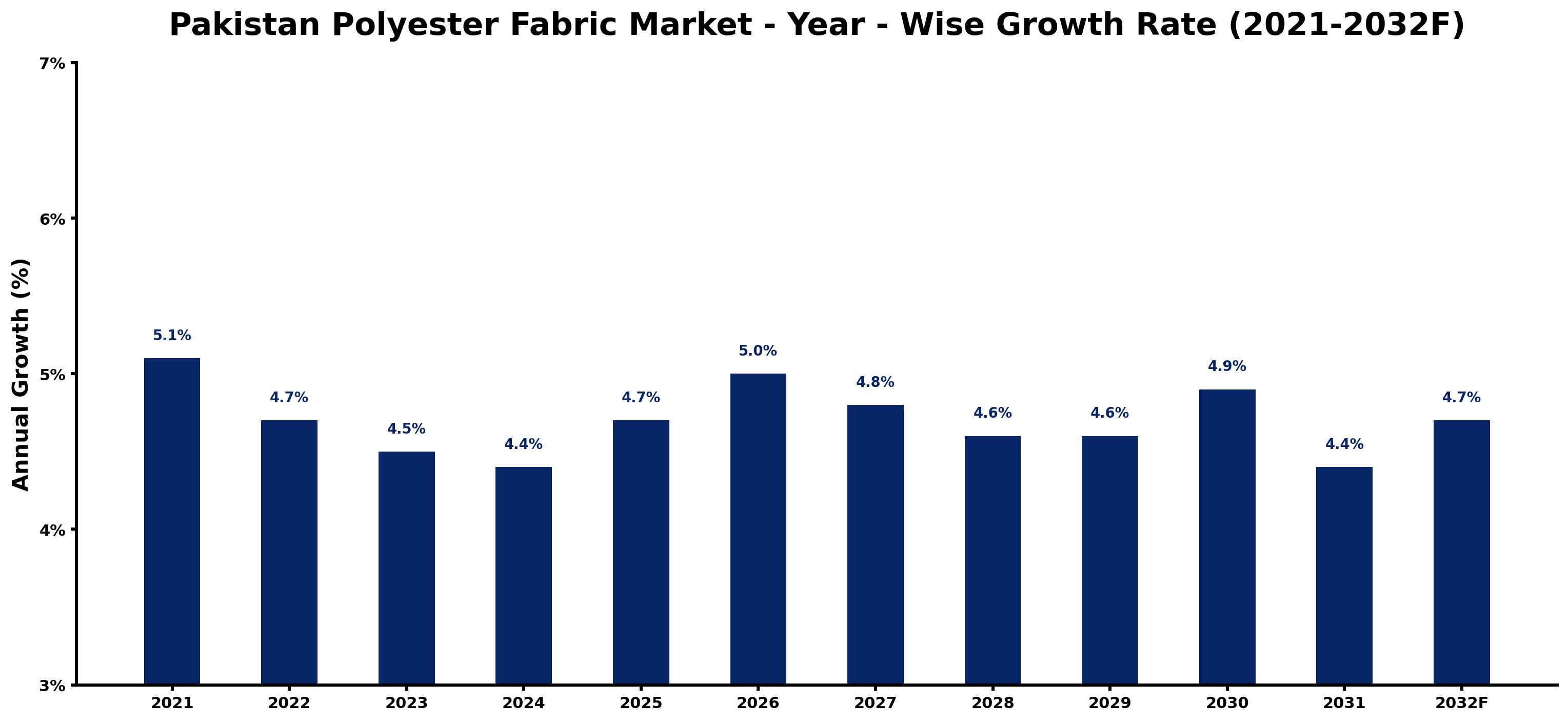
The table below presents the year wise growth rates along with the key drivers influencing the market
| Year | Growth Rate | Major Drivers |
| 2021 | 5.1% | Post-lockdown retail projects emphasized demand for breathable textiles in local markets. |
| 2022 | 4.7% | Increased awareness around sustainability influenced the textile sourcing strategies of local producers. |
| 2023 | 4.5% | Rising export potential from regional markets highlighted the importance of polyester fabric production. |
| 2024 | 4.4% | Urbanization accelerated housing projects, boosting the need for durable, affordable fabric solutions. |
| 2025 | 4.7% | Local manufacturing facilities enhanced capabilities, reducing reliance on overseas polyester imports. |
| 2026 | 5.0% | Emerging fashion trends favored lightweight and versatile materials, propelling polyester fabric sales. |
| 2027 | 4.8% | Technological innovations improved fabric quality, attracting premium segment consumers to polyester options. |
| 2028 | 4.6% | E-commerce platforms expanded reach, increasing polyester fabric accessibility to diverse customer segments. |
| 2029 | 4.6% | Collaborations between designers and manufacturers fostered unique polyester fabric applications in apparel. |
| 2030 | 4.9% | Environmental considerations began influencing polyester recycling initiatives within the textile industry. |
| 2031 | 4.4% | Consumer preferences shifted towards multifunctional fabrics, encouraging innovation in polyester offerings. |
| 2032 | 4.7% | Regional trade agreements enhanced competitiveness, promoting polyester fabric exports to neighboring countries. |
Note - Market size estimations and growth projections presented in this report are based on 6Wresearch's advanced forecasting approach, validated with industry datasets as of June 2026.
Pakistan Polyester Fabric Market Synopsis
The Pakistan Polyester Fabric Market is projected to reach 5.0% and witness significant growth during the forecast period (2026-2032). This growth is primarily propelled by a variety of factors, including an increase in disposable income among the population and evolving lifestyle preferences that favor synthetic fabrics. As consumers increasingly adopt polyester for its diverse applications in apparel and home furnishings, the market is positioned for robust expansion.
Pakistan Polyester Fabric Market Growth Drivers
Several key drivers are influencing the growth of the Pakistan polyester fabric market. Firstly, the rise in disposable incomes has resulted in higher consumer spending on quality fabrics, promoting the demand for polyester. Secondly, the shift towards synthetic materials in clothing manufacturing and home décor is on the rise, as polyester is known for its durability and versatility. Additionally, the market is being supported by a notable trend towards wrinkle-free and easy-care fabrics, which are increasingly preferred in various sectors, including automotive and healthcare.
- The increasing urbanization in Pakistan is leading to changing lifestyles, which in turn fuels the demand for fashionable and functional polyester fabrics.
- The introduction of innovative textile technologies enables the creation of high-performance polyester fabrics, further attracting consumers.
- A growing awareness regarding sustainability is driving interest in recycled polyester sourced from PET bottles, which helps the industry meet environmental goals.
- The increasing prevalence of online retail platforms facilitates access to a wide range of polyester fabric options for consumers.
- The rise in health-conscious consumer behavior has led to a demand for fabrics that promote comfort and ease of maintenance, further accelerating market growth.
Pakistan Polyester Fabric Market Application Areas
The applications of polyester fabric in Pakistan are vast and varied, aligning with emerging consumer trends across different sectors. In the apparel sector, polyester is widely used for clothing items due to its durability and ability to retain color, making it an ideal choice for both everyday wear and specialized clothing. Furthermore, the functional properties of polyester, such as moisture-wicking and thermal insulation, are increasingly being utilized in activewear.
- In home furnishings, polyester fabrics are popular for upholstery and curtains due to their stain resistance and easy maintenance.
- The automotive industry employs polyester fabrics for seat covers and interior linings, benefiting from their durability and aesthetic appeal.
- The healthcare sector utilizes polyester in the production of medical textiles, catering to the need for hygiene and comfort.
- Engineering applications leverage polyester's strength for industrial textiles, reinforcing its importance across diverse fields.
- Fashion brands are increasingly incorporating polyester blends into their collections to create versatile and accessible clothing options.
Pakistan Polyester Fabric Market Government Investment and Initiatives
The growth of the Pakistan polyester fabric market is notably supported by various government initiatives aimed at boosting the textile sector overall. The government has implemented policies to enhance investment in textile manufacturing, focusing on modernizing the production processes and improving the overall quality standards. Additionally, initiatives promoting the use of eco-friendly fibers and sustainable practices in textile production have gained traction, aligning with global environmental standards.
- Public funding designated for research and development in textile technology enhances the capabilities of local manufacturers.
- The government has established training programs to equip the workforce with skills relevant to modern textile production techniques.
- Incentives for using recycled materials in textile production are creating a favorable environment for sustainable practices.
- Trade policies aimed at reducing tariffs on textile imports have stimulated raw material availability, benefiting local manufacturers.
- Collaborative efforts between government and industry stakeholders are focusing on enhancing export capabilities of polyester products.
Pakistan Polyester Fabric Market Latest Developments (May 2025 - June 2026)
Recent developments within the Pakistan polyester fabric market have focused on sustainability and innovation. Manufacturers have begun introducing more eco-friendly product lines, leveraging advances in recycling technologies. Furthermore, investment in automated production processes has increased, aimed at improving operational efficiency and reducing production costs. Consumer interest in high-performance polyester fabrics has driven brands to explore new blends that combine polyester with other materials, enhancing functionality and comfort. The regulatory framework has also been evolving, with new policies supporting the growth of synthetics in various applications.
Pakistan Polyester Fabric Market - Key Attractiveness of the Report
- 10 Years of Market Numbers
- Historical Data Starting from 2022 to 2025
- Base Year: 2025
- Forecast Data until 2032
- Key Performance Indicators Impacting the Market
- Major Upcoming Developments and Projects
Key Highlights of the Report:
- Pakistan Polyester Fabric Market Outlook
- Market Size of Pakistan Polyester Fabric Market, 2025
- Forecast of Pakistan Polyester Fabric Market, 2032F
- Historical Data and Forecast of Pakistan Polyester Fabric Revenues & Volume for the Period 2022-2032F
- Pakistan Polyester Fabric Market Trend Evolution
- Pakistan Polyester Fabric Market Drivers and Challenges
- Pakistan Polyester Fabric Price Trends
- Pakistan Polyester Fabric Porter's Five Forces
- Pakistan Polyester Fabric Industry Life Cycle
- Historical Data and Forecast of Pakistan Polyester Fabric Market Revenues & Volume By Type for the Period 2022-2032F
- Historical Data and Forecast of Pakistan Polyester Fabric Market Revenues & Volume By PET for the Period 2022-2032F
- Historical Data and Forecast of Pakistan Polyester Fabric Market Revenues & Volume By PCDT for the Period 2022-2032F
- Historical Data and Forecast of Pakistan Polyester Fabric Market Revenues & Volume By Applications for the Period 2022-2032F
- Historical Data and Forecast of Pakistan Polyester Fabric Market Revenues & Volume By Carpets & Rugs for the Period 2022-2032F
- Historical Data and Forecast of Pakistan Polyester Fabric Market Revenues & Volume By Non-Woven Fabrics Fiberfill for the Period 2022-2032F
- Historical Data and Forecast of Pakistan Polyester Fabric Market Revenues & Volume By Apparels for the Period 2022-2032F
- Historical Data and Forecast of Pakistan Polyester Fabric Market Revenues & Volume By Home Textiles for the Period 2022-2032F
- Historical Data and Forecast of Pakistan Polyester Fabric Market Revenues & Volume By Others? for the Period 2022-2032F
- Pakistan Polyester Fabric Import Export Trade Statistics
- Market Opportunity Assessment By Type
- Market Opportunity Assessment By Applications
- Pakistan Polyester Fabric Top Companies Market Share
- Pakistan Polyester Fabric Competitive Benchmarking By Technical and Operational Parameters
- Pakistan Polyester Fabric Company Profiles
- Pakistan Polyester Fabric Key Strategic Recommendations






































