Pakistan Processed Fruit Market Growth Rate Analysis (2025 - 2031)
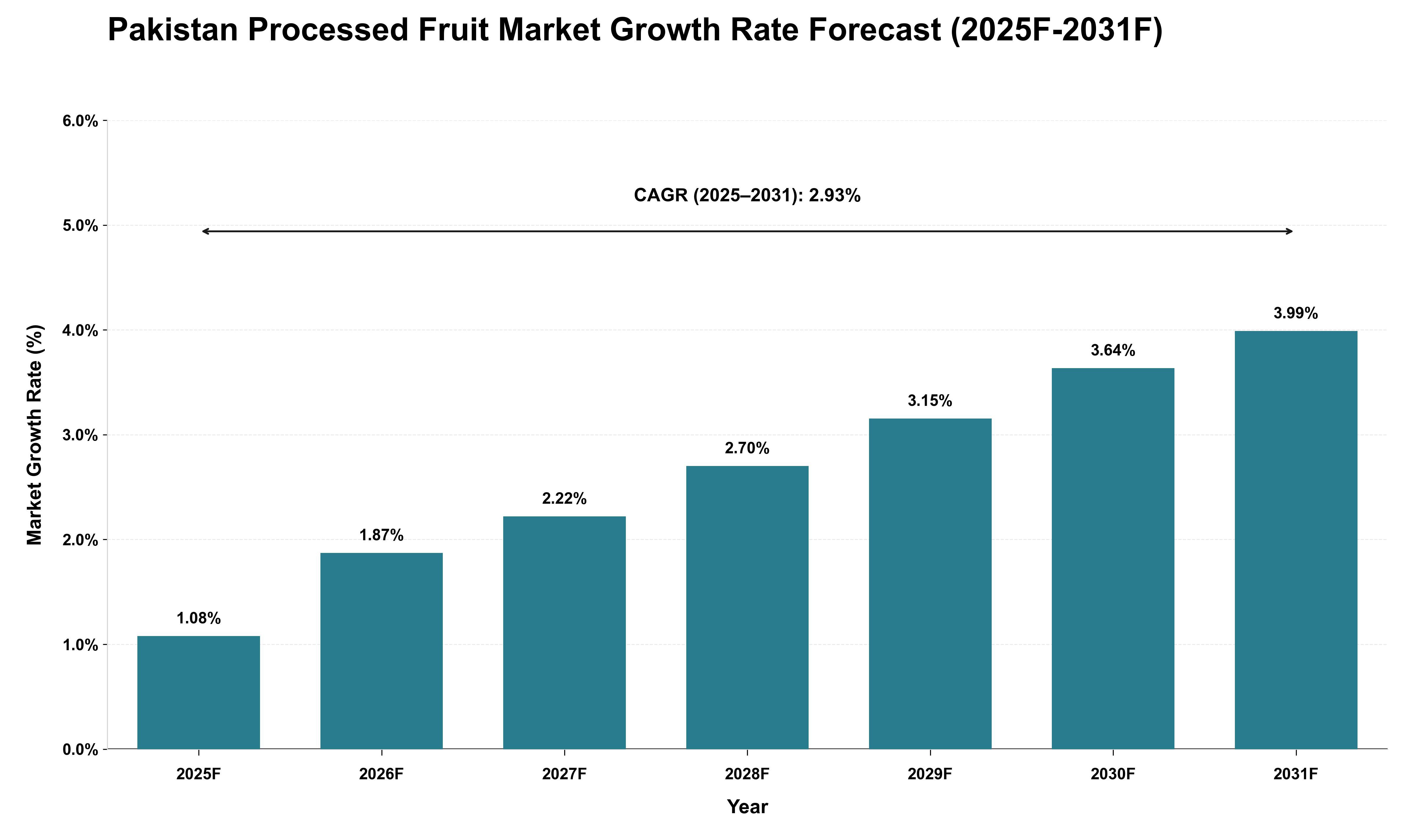
The Pakistan processed fruit market is projected to experience a compound annual growth rate of 2.93% from 2025 to 2031, reflecting a gradual increase in demand driven by evolving consumer preferences and health consciousness. The annual growth rates will rise from 1.08% in 2025 to an anticipated peak of 3.99% in 2031, indicating a strengthening market trajectory as raw material availability becomes more favorable due to improved agricultural practices and potential investments in supply chain efficiencies. However, fluctuations in global fruit prices and import dependencies will play critical roles; as domestic production scales up, the reliance on imports may decrease, stabilizing costs and enhancing competitiveness. Additionally, cyclical trends related to seasonal harvests will influence pricing dynamics, potentially leading to periods of heightened supply that could further support market expansion during this forecast period.
Key Highlights of the Report:
- Pakistan Processed Fruit Market Outlook
- Market Size of Pakistan Processed Fruit Market, 2025
- Forecast of Pakistan Processed Fruit Market, 2032
- Historical Data and Forecast of Pakistan Processed Fruit Revenues & Volume for the Period 2022-2032F
- Pakistan Processed Fruit Market Trend Evolution
- Pakistan Processed Fruit Market Drivers and Challenges
- Pakistan Processed Fruit Price Trends
- Pakistan Processed Fruit Porter's Five Forces
- Pakistan Processed Fruit Industry Life Cycle
- Historical Data and Forecast of Pakistan Processed Fruit Market Revenues & Volume By Product for the Period 2022-2032F
- Historical Data and Forecast of Pakistan Processed Fruit Market Revenues & Volume By Fresh for the Period 2022-2032F
- Historical Data and Forecast of Pakistan Processed Fruit Market Revenues & Volume By Fresh- Cut for the Period 2022-2032F
- Historical Data and Forecast of Pakistan Processed Fruit Market Revenues & Volume By Canned for the Period 2022-2032F
- Historical Data and Forecast of Pakistan Processed Fruit Market Revenues & Volume By Frozen for the Period 2022-2032F
- Historical Data and Forecast of Pakistan Processed Fruit Market Revenues & Volume By Drying &Dehydration for the Period 2022-2032F
- Historical Data and Forecast of Pakistan Processed Fruit Market Revenues & Volume By Processing Equipment for the Period 2022-2032F
- Historical Data and Forecast of Pakistan Processed Fruit Market Revenues & Volume By Pre-processing for the Period 2022-2032F
- Historical Data and Forecast of Pakistan Processed Fruit Market Revenues & Volume By Processing for the Period 2022-2032F
- Historical Data and Forecast of Pakistan Processed Fruit Market Revenues & Volume By Washing for the Period 2022-2032F
- Historical Data and Forecast of Pakistan Processed Fruit Market Revenues & Volume By Filling for the Period 2022-2032F
- Historical Data and Forecast of Pakistan Processed Fruit Market Revenues & Volume By Seasoning for the Period 2022-2032F
- Historical Data and Forecast of Pakistan Processed Fruit Market Revenues & Volume By Packaging for the Period 2022-2032F
- Pakistan Processed Fruit Import Export Trade Statistics
- Market Opportunity Assessment By Product
- Market Opportunity Assessment By Processing Equipment
- Pakistan Processed Fruit Top Companies Market Share
- Pakistan Processed Fruit Competitive Benchmarking By Technical and Operational Parameters
- Pakistan Processed Fruit Company Profiles
- Pakistan Processed Fruit Key Strategic Recommendations






































