Pakistan Synthetic Leather Market: Import Trend Analysis
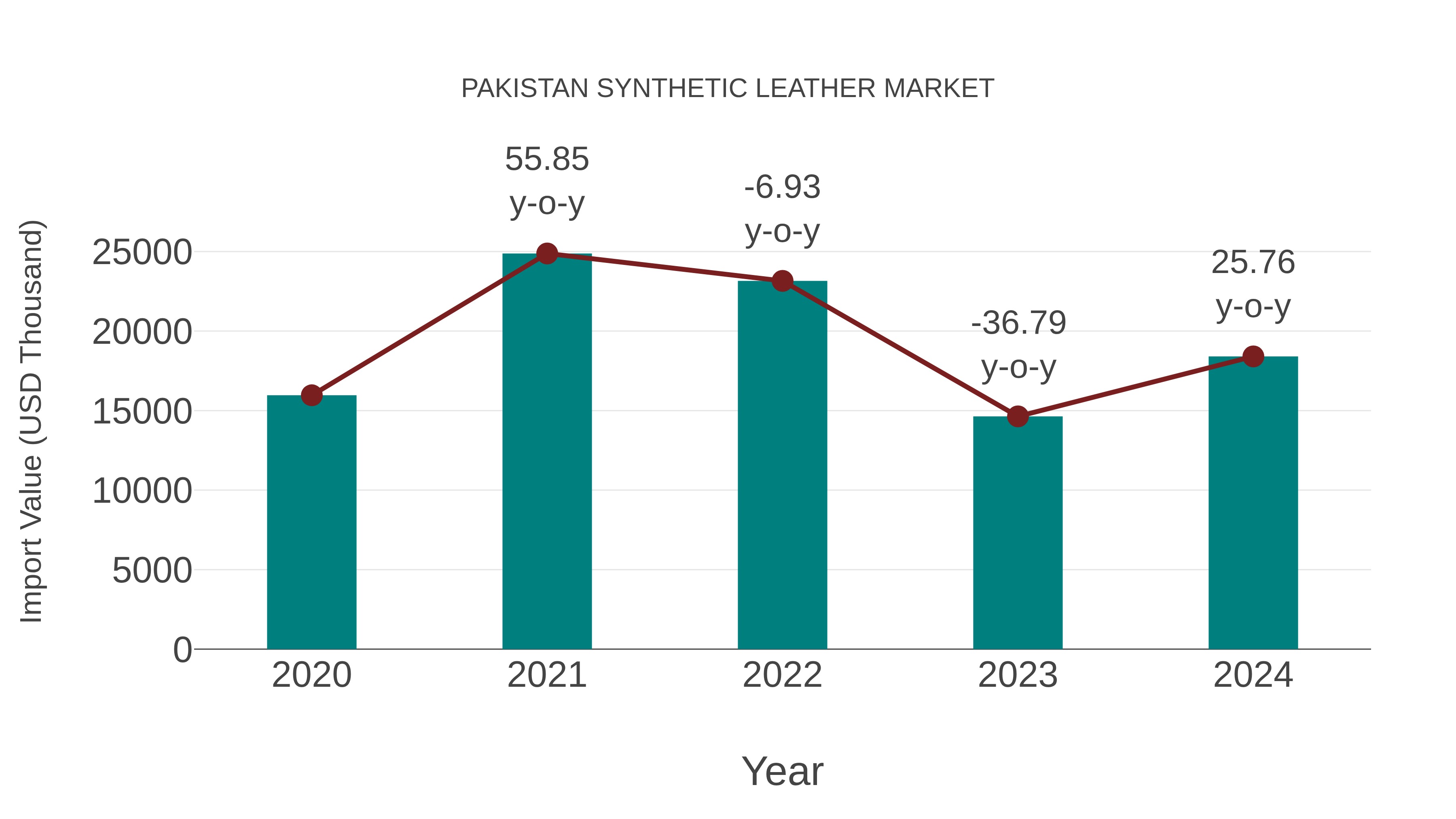
Pakistan synthetic leather market witnessed a 25.76% growth in imports from 2023 to 2024, with a compound annual growth rate (CAGR) of 3.63% from 2020 to 2024. This growth can be attributed to increasing demand for affordable and durable synthetic leather products in the market.
Pakistan Synthetic Leather Market Overview
The Pakistan Synthetic Leather Market is witnessing significant growth driven by the increasing demand from various industries such as automotive, footwear, and furniture. Factors such as the cost-effectiveness, durability, and versatility of synthetic leather compared to genuine leather are driving its adoption in the market. The automotive sector, in particular, is a key growth driver as synthetic leather is being used for car interiors due to its easy maintenance and aesthetic appeal. Additionally, the growing trend of sustainable and cruelty-free materials is also contributing to the market growth. Key players in the Pakistan Synthetic Leather Market include companies like Al-Abid Enterprises, Al-Farooq Enterprises, and Al-Karam Packages, among others, who are focusing on product innovation and quality to gain a competitive edge in the market.
Pakistan Synthetic Leather Market Trends
The Pakistan Synthetic Leather Market is experiencing growth due to the increasing demand for faux leather products across various industries such as automotive, fashion, and footwear. The market is witnessing a trend towards sustainable and eco-friendly synthetic leather materials, driven by consumer preferences for cruelty-free and environmentally friendly alternatives. Manufacturers are also focusing on developing innovative synthetic leather products that closely mimic the look and feel of genuine leather, thus attracting a wider customer base. Additionally, the rise of e-commerce platforms has made synthetic leather products more accessible to consumers, further contributing to market growth. Overall, the Pakistan Synthetic Leather Market is expected to continue expanding, driven by evolving consumer preferences and advancements in synthetic leather technology.
Pakistan Synthetic Leather Market Challenges
In the Pakistan Synthetic Leather Market, some key challenges include the presence of counterfeit products, fluctuations in raw material prices, and the lack of awareness among consumers regarding the benefits of synthetic leather over genuine leather. Counterfeit products not only erode the market share of genuine synthetic leather manufacturers but also lead to reputational risks. Fluctuations in raw material prices, such as PVC or PU, can impact production costs and ultimately the pricing of synthetic leather products. Additionally, the market faces difficulties in educating consumers about the sustainability and durability of synthetic leather compared to genuine leather, which continues to be the preferred choice for many due to traditional perceptions. Overcoming these challenges will require investments in quality control measures, strategic pricing strategies, and robust marketing campaigns to promote the benefits of synthetic leather.
Pakistan Synthetic Leather Market Investment Opportunities
Investment opportunities in the Pakistan Synthetic Leather Market include the growing demand for synthetic leather across various industries such as automotive, footwear, and furniture due to its cost-effectiveness and durability compared to genuine leather. With the increasing focus on sustainable and cruelty-free alternatives, there is a rising trend towards synthetic leather products. Investors can consider opportunities in manufacturing facilities to cater to the expanding market demand, research and development for innovative products, as well as partnerships with retail brands for distribution. Additionally, advancements in technology and materials offer potential for value-added products in the market, creating avenues for investment in product differentiation and market positioning strategies to capitalize on the evolving consumer preferences in Pakistan`s synthetic leather industry.
Pakistan Synthetic Leather Market Government Policy
The Pakistan government has implemented various policies to support the synthetic leather market in the country. These policies include providing incentives such as tax breaks and subsidies to manufacturers of synthetic leather products, as well as promoting research and development in the industry to enhance product quality and innovation. Additionally, the government has introduced regulations to ensure the sustainable production of synthetic leather, including guidelines for waste management and environmental protection. Furthermore, trade policies aim to boost exports of synthetic leather goods by facilitating access to international markets through free trade agreements and trade promotion initiatives. Overall, these government policies are designed to stimulate growth and competitiveness in the Pakistan synthetic leather market while ensuring environmental sustainability and compliance with international standards.
Pakistan Synthetic Leather Market Future Outlook
The future outlook for the Pakistan Synthetic Leather Market appears promising, driven by factors such as increasing demand for cruelty-free and sustainable alternatives to real leather, growth in the automotive and footwear industries, and technological advancements in synthetic leather production. The market is expected to witness steady growth as consumers become more environmentally conscious and seek affordable yet high-quality leather substitutes. Additionally, government initiatives to promote the use of synthetic leather due to its lower environmental impact are likely to further fuel market expansion. With a focus on innovation and sustainability, the Pakistan Synthetic Leather Market is poised for significant opportunities in the coming years, making it an attractive sector for investors and businesses looking to capitalize on the shifting consumer preferences and industry trends.
Key Highlights of the Report:
- Pakistan Synthetic Leather Market Outlook
- Market Size of Pakistan Synthetic Leather Market, 2025
- Forecast of Pakistan Synthetic Leather Market, 2032
- Historical Data and Forecast of Pakistan Synthetic Leather Revenues & Volume for the Period 2022 - 2032F
- Pakistan Synthetic Leather Market Trend Evolution
- Pakistan Synthetic Leather Market Drivers and Challenges
- Pakistan Synthetic Leather Price Trends
- Pakistan Synthetic Leather Porter's Five Forces
- Pakistan Synthetic Leather Industry Life Cycle
- Historical Data and Forecast of Pakistan Synthetic Leather Market Revenues & Volume By Product for the Period 2022 - 2032F
- Historical Data and Forecast of Pakistan Synthetic Leather Market Revenues & Volume By PU for the Period 2022 - 2032F
- Historical Data and Forecast of Pakistan Synthetic Leather Market Revenues & Volume By PVC for the Period 2022 - 2032F
- Historical Data and Forecast of Pakistan Synthetic Leather Market Revenues & Volume By Bio-based for the Period 2022 - 2032F
- Historical Data and Forecast of Pakistan Synthetic Leather Market Revenues & Volume By Application for the Period 2022 - 2032F
- Historical Data and Forecast of Pakistan Synthetic Leather Market Revenues & Volume By Furnishing for the Period 2022 - 2032F
- Historical Data and Forecast of Pakistan Synthetic Leather Market Revenues & Volume By Automotive for the Period 2022 - 2032F
- Historical Data and Forecast of Pakistan Synthetic Leather Market Revenues & Volume By Footwear for the Period 2022 - 2032F
- Historical Data and Forecast of Pakistan Synthetic Leather Market Revenues & Volume By Bags & Wallets for the Period 2022 - 2032F
- Historical Data and Forecast of Pakistan Synthetic Leather Market Revenues & Volume By Clothing for the Period 2022 - 2032F
- Historical Data and Forecast of Pakistan Synthetic Leather Market Revenues & Volume By Others for the Period 2022 - 2032F
- Pakistan Synthetic Leather Import Export Trade Statistics
- Market Opportunity Assessment By Product
- Market Opportunity Assessment By Application
- Pakistan Synthetic Leather Top Companies Market Share
- Pakistan Synthetic Leather Competitive Benchmarking By Technical and Operational Parameters
- Pakistan Synthetic Leather Company Profiles
- Pakistan Synthetic Leather Key Strategic Recommendations






































