Pakistan Used Car Market Summary
The pakistan used car market was estimated at USD 194 Million in 2025 and is projected to reach USD 213 Million by 2032, growing at a CAGR of 1.4% from 2026 to 2032.
Pakistan Used Car Market Year-wise Growth Rate and Key Drivers
This graph highlights how the Pakistan Used Car Market has steadily grown over the past five years, supported by major growth factors.
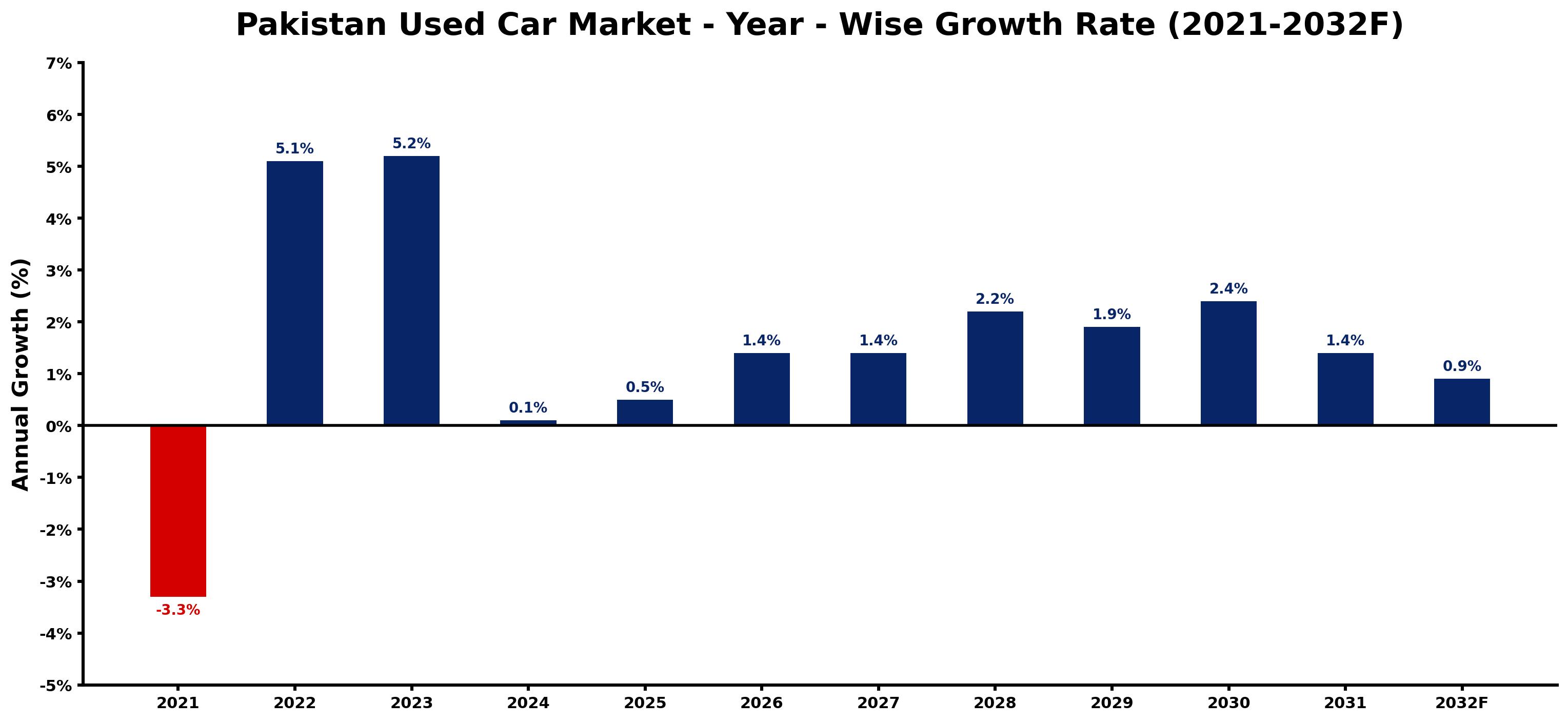
The table below presents the year wise growth rates along with the key drivers influencing the market
| Year | Growth Rate | Major Drivers |
| 2021 | -3.3% | Increased import tariffs on used vehicles significantly restricted market accessibility for potential buyers. |
| 2022 | 5.1% | E-commerce platforms gained traction, facilitating online used car transactions nationwide. |
| 2023 | 5.2% | Urban migration heightened demand for affordable transportation options across cities. |
| 2024 | 0.1% | Expansion of financing options resulted in higher accessibility for first-time buyers. |
| 2025 | 0.5% | Regional automotive trade shows stimulated interest and awareness of used vehicles. |
| 2026 | 1.4% | Emergence of certified pre-owned programs reassured buyers about vehicle quality. |
| 2027 | 1.4% | Technological advancements in vehicle inspection processes improved transaction transparency. |
| 2028 | 2.2% | Higher fuel prices encouraged consumers to turn to fuel-efficient used cars. |
| 2029 | 1.9% | Increased availability of electric vehicles diversified the used car market offering. |
| 2030 | 2.4% | Local automotive manufacturers began offering warranties on certified pre-owned cars. |
| 2031 | 1.4% | Rising disposable income among middle-class families bolstered market participation significantly. |
| 2032 | 0.9% | Integration of digital platforms streamlined vehicle registration, enhancing buyer convenience. |
Note - Market size estimations and growth projections presented in this report are based on 6Wresearch's advanced forecasting approach, validated with industry datasets as of June 2026.
Pakistan Used Car Market Synopsis
The Pakistan Used Car Market is projected to reach 1.4% and witness significant growth during the forecast period (2026-2032). This growth is fueled by the increasing demand for affordable transportation solutions as the middle-class population expands and disposable incomes rise. The market is characterized by a diverse selection of vehicles that accommodate various consumer budgets and preferences, thus highlighting the evolving landscape of automotive needs in Pakistan.
Pakistan Used Car Market Growth Drivers
Several key factors are driving the growth of the Pakistan Used Car Market. The rising middle class demonstrates a growing appetite for personal vehicles, underpinned by an increasing willingness to invest in pre-owned automobiles.
- The expanding disposable income levels among Pakistani households are enhancing consumer purchasing power, leading to heightened demand for used vehicles.
- Financing options have become more accessible, facilitating easier transactions for buyers and encouraging more individuals to consider used cars as viable alternatives to new vehicles.
- Japanese cars enjoy immense popularity due to their reputation for quality, reliability, and strong resale values, creating a favorable environment for their resale market.
- The burgeoning online marketplace for used cars offers customers greater access to inventories, promoting fair pricing and transparency.
- As environmental awareness increases, there is a rising preference for hybrid and electric vehicles among consumers seeking sustainable transportation options.
Pakistan Used Car Market Trends and Opportunities
The Pakistan Used Car Market is undergoing notable trends that reflect changing consumer behavior and technological advancements. One significant trend is the growing reliance on online platforms for buying and selling used cars.
- Online vehicle marketplaces simplify transactions, offering an extensive range of options and fostering competition among sellers, which benefits consumers.
- There is a marked shift towards environmentally friendly vehicles, with hybrid and electric cars gaining prominence as consumers become more conscious of their ecological footprints.
- Certified pre-owned vehicles are increasingly favored by buyers who value the assurance of quality and reliability, allowing them to make informed purchasing decisions.
- Emerging refurbishment services cater to buyers looking to customize or enhance their used vehicles, creating additional avenues for industry growth.
- The demand for transparent documentation processes is rising, signaling an opportunity for service providers to innovate in offering verification and certification services.
Pakistan Used Car Market Challenges and Restraints
The Pakistan Used Car Market is not without its challenges, which could hinder its overall growth potential. A primary issue is the lack of standardized pricing across the market.
- This lack of transparency complicates the buyer's evaluation of vehicle worth, possibly leading to mistrust in transactions.
- The prevalence of counterfeit parts and fraudulent documentation undermines market credibility, deterring potential buyers from engaging with used cars.
- High-interest rates on financing options may pose barriers to broader market participation, impacting the ability of consumers to purchase vehicles.
- Limited regulatory oversight can result in inconsistent quality assurance, leaving buyers vulnerable to purchasing subpar vehicles.
- Potential changes in import regulations or tax obligations may also influence market dynamics, affecting supply chain stability and pricing structures.
Pakistan Used Car Market Government Investment and Initiatives
The government plays a crucial role in shaping the Pakistan Used Car Market through various policies and initiatives aimed at regulating the industry. Import duties levied on used vehicles are designed to enhance domestic manufacturing capabilities while also protecting local automotive industries.
These measures encourage the purchase of locally assembled vehicles over imports while ensuring that the market remains competitive. Additionally, the registration and documentation of used cars are mandated to ensure transparency and prevent fraudulent activities, thereby fostering consumer trust.
Furthermore, the government enforces emissions standards and safety requirements, reflecting its commitment to environmental sustainability and public safety. By balancing the interests of consumers, local industry stakeholders, and regulatory bodies, these policies contribute to creating a fair and competitive marketplace for used vehicles.
Pakistan Used Car Market Latest Developments (May 2025 - June 2026)
Recent developments within the Pakistan Used Car Market have illustrated a progressive trajectory influenced by evolving consumer preferences and technological advancements. The surge in digital platforms for vehicle transactions has notably transformed the buying experience, providing consumers with more choices and simplified processes.
Innovations in online marketplaces have facilitated greater accessibility to inventories, enhancing competition among sellers and driving down prices. Environmental considerations have prompted increasing interest in hybrid and electric vehicles, spurring market adaptations in response to these trends.
The government's continued focus on regulations pertaining to safety and emissions has reinforced consumer confidence and promoted the acquisition of higher-quality vehicles. Overall, the market appears poised for continual growth, driven by both evolving market dynamics and supportive governmental strategies.
Pakistan Used Car Market - Key Attractiveness of the Report
- 10 Years of Market Numbers
- Historical Data Starting from 2022 to 2025
- Base Year: 2025
- Forecast Data until 2032
- Key Performance Indicators Impacting the Market
- Major Upcoming Developments and Projects
Key Highlights of the Report:
- Pakistan Used Car Market Outlook
- Market Size of Pakistan Used Car Market, 2025
- Forecast of Pakistan Used Car Market, 2032F
- Historical Data and Forecast of Pakistan Used Car Revenues & Volume for the Period 2022-2032F
- Pakistan Used Car Market Trend Evolution
- Pakistan Used Car Market Drivers and Challenges
- Pakistan Used Car Price Trends
- Pakistan Used Car Porter's Five Forces
- Pakistan Used Car Industry Life Cycle
- Historical Data and Forecast of Pakistan Used Car Market Revenues & Volume By Vehicle Type for the Period 2022-2032F
- Historical Data and Forecast of Pakistan Used Car Market Revenues & Volume By Hatchbacks for the Period 2022-2032F
- Historical Data and Forecast of Pakistan Used Car Market Revenues & Volume By Sedan for the Period 2022-2032F
- Historical Data and Forecast of Pakistan Used Car Market Revenues & Volume By Sports Utility Vehicle for the Period 2022-2032F
- Historical Data and Forecast of Pakistan Used Car Market Revenues & Volume By Others for the Period 2022-2032F
- Historical Data and Forecast of Pakistan Used Car Market Revenues & Volume By Vendor for the Period 2022-2032F
- Historical Data and Forecast of Pakistan Used Car Market Revenues & Volume By Organized for the Period 2022-2032F
- Historical Data and Forecast of Pakistan Used Car Market Revenues & Volume By Unorganized for the Period 2022-2032F
- Historical Data and Forecast of Pakistan Used Car Market Revenues & Volume By Fuel Type for the Period 2022-2032F
- Historical Data and Forecast of Pakistan Used Car Market Revenues & Volume By Gasoline for the Period 2022-2032F
- Historical Data and Forecast of Pakistan Used Car Market Revenues & Volume By Diesel for the Period 2022-2032F
- Historical Data and Forecast of Pakistan Used Car Market Revenues & Volume By Alternative Fuel Vehicles for the Period 2022-2032F
- Pakistan Used Car Import Export Trade Statistics
- Market Opportunity Assessment By Vehicle Type
- Market Opportunity Assessment By Vendor
- Market Opportunity Assessment By Fuel Type
- Pakistan Used Car Top Companies Market Share
- Pakistan Used Car Competitive Benchmarking By Technical and Operational Parameters
- Pakistan Used Car Company Profiles
- Pakistan Used Car Key Strategic Recommendations






































