Pakistan Water Treatment Market: Import Trend Analysis
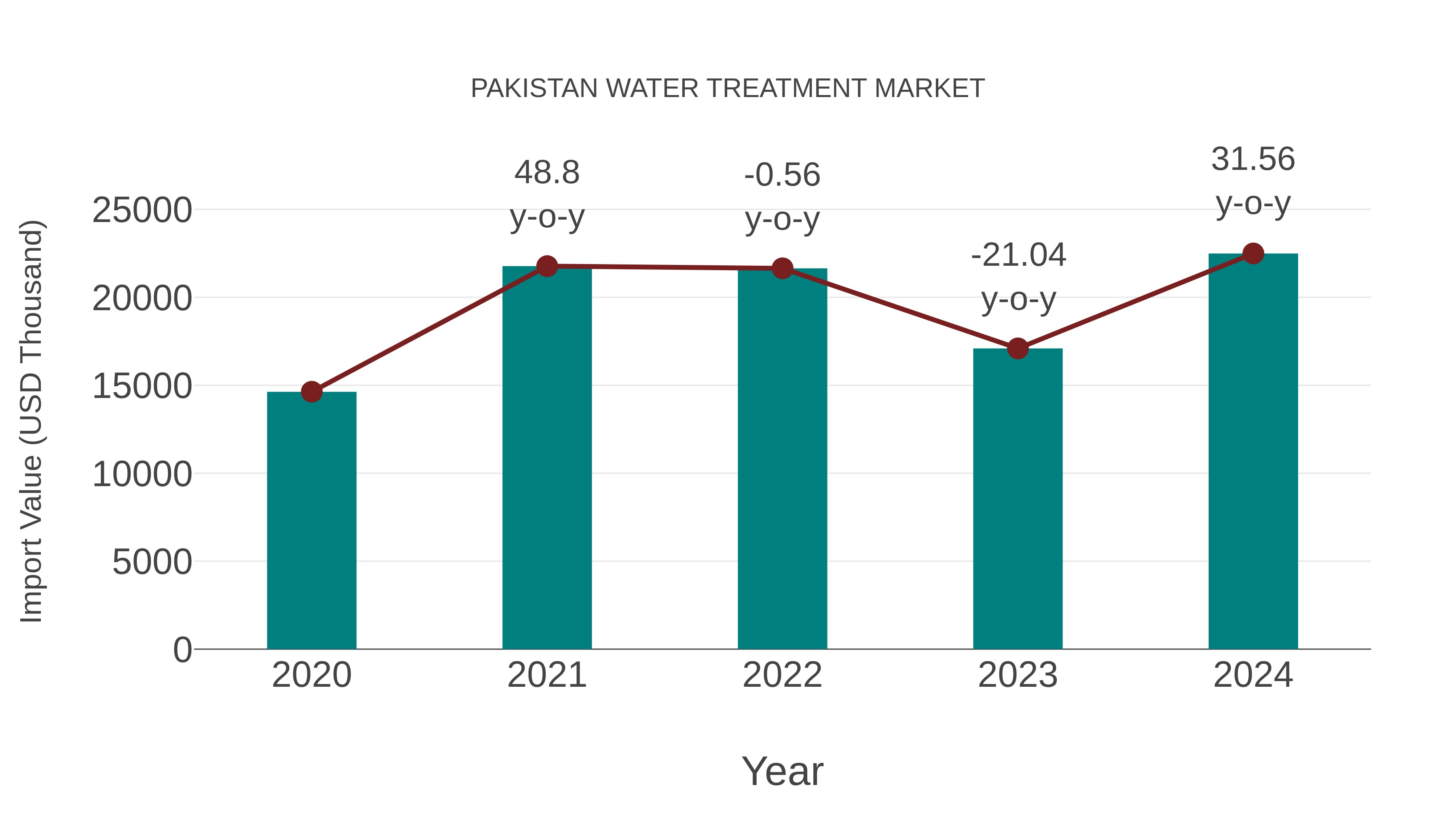
Pakistan import trend in the water treatment market saw significant fluctuations. From 2023 to 2024, imports surged by 32.2%, contrasting with a -14.51% compound annual growth rate from 2020 to 2024. This shift could be attributed to evolving regulatory standards or increased industrial demand, impacting market dynamics.
Pakistan Water Treatment Market Overview
The Water Treatment Market in Pakistan is growing with the increasing need for effective water treatment solutions in municipal, industrial, and residential applications. Water treatment processes remove contaminants and impurities from water, ensuring safe and clean water supply. The market growth is driven by advancements in treatment technologies, the rising focus on public health, and the growing demand for water quality management.
Drivers of the market
The Water Treatment market in Pakistan is driven by the urgent need to address water pollution and provide clean water for various uses. Rapid industrialization and urbanization have led to increased wastewater generation, necessitating effective water treatment solutions. Government regulations and initiatives focused on water conservation and pollution control further bolster the demand for water treatment technologies. Public awareness regarding health risks associated with contaminated water also drives market growth.
Challenges of the market
The water treatment market in Pakistan faces significant challenges due to the high cost of advanced treatment technologies and the lack of local manufacturing capabilities. Dependence on imports increases costs and supply chain vulnerabilities. Additionally, inadequate regulatory frameworks and limited awareness about the health and environmental benefits of water treatment restrict market growth and adoption.
Government Policy of the market
Government policies in water treatment encompass public health protection, environmental conservation, and water infrastructure development. Regulatory frameworks include treatment plant standards, effluent discharge limits, and water supply management regulations. Initiatives promote technology adoption in water treatment processes, skills development in environmental engineering, and market regulation of treatment solutions that ensure safe drinking water, reduce pollution, and sustainably manage water resources in Pakistan.
Key Highlights of the Report:
- Pakistan Water Treatment Market Outlook
- Market Size of Pakistan Water Treatment Market, 2025
- Forecast of Pakistan Water Treatment Market, 2032
- Historical Data and Forecast of Pakistan Water Treatment Revenues & Volume for the Period 2022-2032F
- Pakistan Water Treatment Market Trend Evolution
- Pakistan Water Treatment Market Drivers and Challenges
- Pakistan Water Treatment Price Trends
- Pakistan Water Treatment Porter's Five Forces
- Pakistan Water Treatment Industry Life Cycle
- Historical Data and Forecast of Pakistan Water Treatment Market Revenues & Volume By Types for the Period 2022-2032F
- Historical Data and Forecast of Pakistan Water Treatment Market Revenues & Volume By Distillation? for the Period 2022-2032F
- Historical Data and Forecast of Pakistan Water Treatment Market Revenues & Volume By Filtration? for the Period 2022-2032F
- Historical Data and Forecast of Pakistan Water Treatment Market Revenues & Volume By Disinfection for the Period 2022-2032F
- Historical Data and Forecast of Pakistan Water Treatment Market Revenues & Volume By Reverse Osmosis for the Period 2022-2032F
- Historical Data and Forecast of Pakistan Water Treatment Market Revenues & Volume By Applications for the Period 2022-2032F
- Historical Data and Forecast of Pakistan Water Treatment Market Revenues & Volume By Residential? for the Period 2022-2032F
- Historical Data and Forecast of Pakistan Water Treatment Market Revenues & Volume By Non-Residential? for the Period 2022-2032F
- Historical Data and Forecast of Pakistan Water Treatment Market Revenues & Volume By Installations for the Period 2022-2032F
- Historical Data and Forecast of Pakistan Water Treatment Market Revenues & Volume By Point Of Use for the Period 2022-2032F
- Historical Data and Forecast of Pakistan Water Treatment Market Revenues & Volume By Point Of Entry for the Period 2022-2032F
- Pakistan Water Treatment Import Export Trade Statistics
- Market Opportunity Assessment By Types
- Market Opportunity Assessment By Applications
- Market Opportunity Assessment By Installations
- Pakistan Water Treatment Top Companies Market Share
- Pakistan Water Treatment Competitive Benchmarking By Technical and Operational Parameters
- Pakistan Water Treatment Company Profiles
- Pakistan Water Treatment Key Strategic Recommendations






































