Paraguay Grape Wine Market Growth Rate Analysis (2025 - 2031)
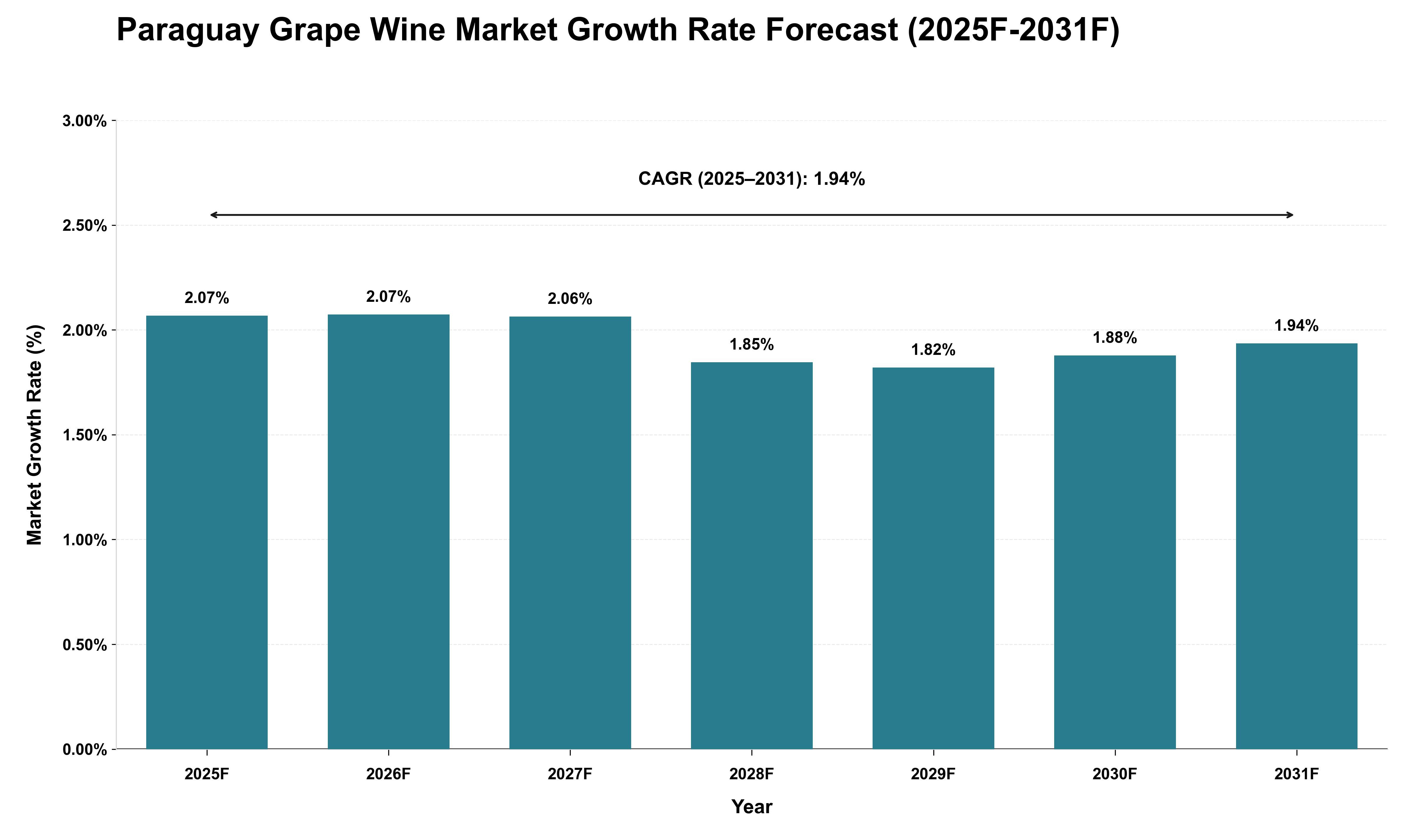
The forecast for the Paraguay grape wine market indicates a gradual deceleration in growth rates, transitioning from an initial 2.07% in 2025 to a projected 1.94% by 2031. This trend reflects broader macroeconomic cycles where consumer spending on non-essential goods, such as wine, may face pressures from fluctuating disposable incomes and potential inflationary impacts. The slight decline in annual growth rates suggests that while demand remains stable, it could be influenced by external factors such as import dependencies and shifts in global supply chains, particularly if economic conditions lead to increased costs or reduced availability of imported wines. Additionally, the cyclical nature of consumer preferences may result in a more cautious approach to discretionary spending on premium products like grape wine, further contributing to the anticipated moderation in growth over this period.
Key Highlights of the Report:
- Paraguay Grape Wine Market Outlook
- Market Size of Paraguay Grape Wine Market, 2024
- Forecast of Paraguay Grape Wine Market, 2031
- Historical Data and Forecast of Paraguay Grape Wine Revenues & Volume for the Period 2021-2031
- Paraguay Grape Wine Market Trend Evolution
- Paraguay Grape Wine Market Drivers and Challenges
- Paraguay Grape Wine Price Trends
- Paraguay Grape Wine Porter`s Five Forces
- Paraguay Grape Wine Industry Life Cycle
- Historical Data and Forecast of Paraguay Grape Wine Market Revenues & Volume By Type for the Period 2021-2031
- Historical Data and Forecast of Paraguay Grape Wine Market Revenues & Volume By Red Wine for the Period 2021-2031
- Historical Data and Forecast of Paraguay Grape Wine Market Revenues & Volume By White Wine for the Period 2021-2031
- Historical Data and Forecast of Paraguay Grape Wine Market Revenues & Volume By Rose Wine for the Period 2021-2031
- Historical Data and Forecast of Paraguay Grape Wine Market Revenues & Volume By Other for the Period 2021-2031
- Historical Data and Forecast of Paraguay Grape Wine Market Revenues & Volume By Applications for the Period 2021-2031
- Historical Data and Forecast of Paraguay Grape Wine Market Revenues & Volume By Commercial Consumption for the Period 2021-2031
- Historical Data and Forecast of Paraguay Grape Wine Market Revenues & Volume By Household Consumption for the Period 2021-2031
- Historical Data and Forecast of Paraguay Grape Wine Market Revenues & Volume By Other for the Period 2021-2031
- Paraguay Grape Wine Import Export Trade Statistics
- Market Opportunity Assessment By Type
- Market Opportunity Assessment By Applications
- Paraguay Grape Wine Top Companies Market Share
- Paraguay Grape Wine Competitive Benchmarking By Technical and Operational Parameters
- Paraguay Grape Wine Company Profiles
- Paraguay Grape Wine Key Strategic Recommendations






































