Paraguay Molasses Market Growth Rate Analysis (2025 - 2031)
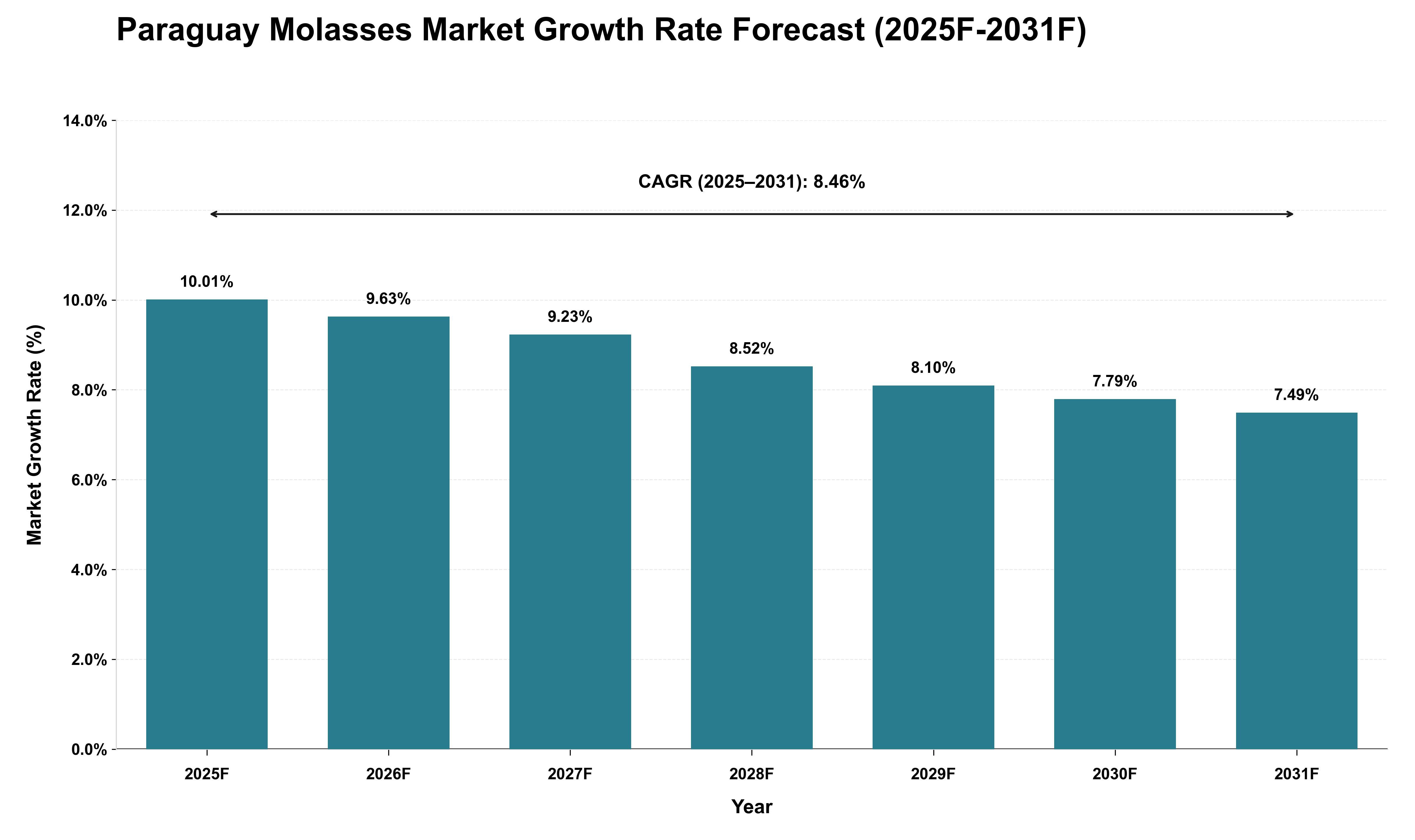
The Paraguay molasses market is projected to experience a compound annual growth rate of 8.46% from 2025 to 2031, driven primarily by shifts in end-use demand across various sectors, including food and beverage, animal feed, and biofuel production. The initial surge in growth at 10.01% in 2025 indicates a robust increase in consumption as industries increasingly seek sustainable alternatives and value-added products derived from molasses. As the forecast progresses, the anticipated gradual decline in growth rates reflects a natural adjustment as supply chains stabilize and import dependencies are addressed. The consistent demand for molasses as a sweetener and fermentation substrate will likely be bolstered by rising health consciousness among consumers, further enhancing its appeal across diverse applications. This evolving landscape will necessitate strategic adaptations by producers to meet changing consumer preferences while navigating cyclical trends inherent to agricultural commodities.
Key Highlights of the Report:
- Paraguay Molasses Market Outlook
- Market Size of Paraguay Molasses Market, 2024
- Forecast of Paraguay Molasses Market, 2031
- Historical Data and Forecast of Paraguay Molasses Revenues & Volume for the Period 2021-2031
- Paraguay Molasses Market Trend Evolution
- Paraguay Molasses Market Drivers and Challenges
- Paraguay Molasses Price Trends
- Paraguay Molasses Porter`s Five Forces
- Paraguay Molasses Industry Life Cycle
- Historical Data and Forecast of Paraguay Molasses Market Revenues & Volume By Source for the Period 2021-2031
- Historical Data and Forecast of Paraguay Molasses Market Revenues & Volume By Sugarcane for the Period 2021-2031
- Historical Data and Forecast of Paraguay Molasses Market Revenues & Volume By Sugarbeet for the Period 2021-2031
- Historical Data and Forecast of Paraguay Molasses Market Revenues & Volume By Type for the Period 2021-2031
- Historical Data and Forecast of Paraguay Molasses Market Revenues & Volume By Regular Molasses for the Period 2021-2031
- Historical Data and Forecast of Paraguay Molasses Market Revenues & Volume By Blackstrap Molasses for the Period 2021-2031
- Historical Data and Forecast of Paraguay Molasses Market Revenues & Volume By Nature for the Period 2021-2031
- Historical Data and Forecast of Paraguay Molasses Market Revenues & Volume By Organic for the Period 2021-2031
- Historical Data and Forecast of Paraguay Molasses Market Revenues & Volume By Conventional for the Period 2021-2031
- Historical Data and Forecast of Paraguay Molasses Market Revenues & Volume By End-Use for the Period 2021-2031
- Historical Data and Forecast of Paraguay Molasses Market Revenues & Volume By Industrial for the Period 2021-2031
- Historical Data and Forecast of Paraguay Molasses Market Revenues & Volume By Commercial for the Period 2021-2031
- Historical Data and Forecast of Paraguay Molasses Market Revenues & Volume By Household for the Period 2021-2031
- Historical Data and Forecast of Paraguay Molasses Market Revenues & Volume By Sales Channel for the Period 2021-2031
- Historical Data and Forecast of Paraguay Molasses Market Revenues & Volume By Direct for the Period 2021-2031
- Historical Data and Forecast of Paraguay Molasses Market Revenues & Volume By Indirect for the Period 2021-2031
- Paraguay Molasses Import Export Trade Statistics
- Market Opportunity Assessment By Source
- Market Opportunity Assessment By Type
- Market Opportunity Assessment By Nature
- Market Opportunity Assessment By End-Use
- Market Opportunity Assessment By Sales Channel
- Paraguay Molasses Top Companies Market Share
- Paraguay Molasses Competitive Benchmarking By Technical and Operational Parameters
- Paraguay Molasses Company Profiles
- Paraguay Molasses Key Strategic Recommendations






































