Paraguay Wood Pulp Market Growth Rate Analysis (2025 - 2031)
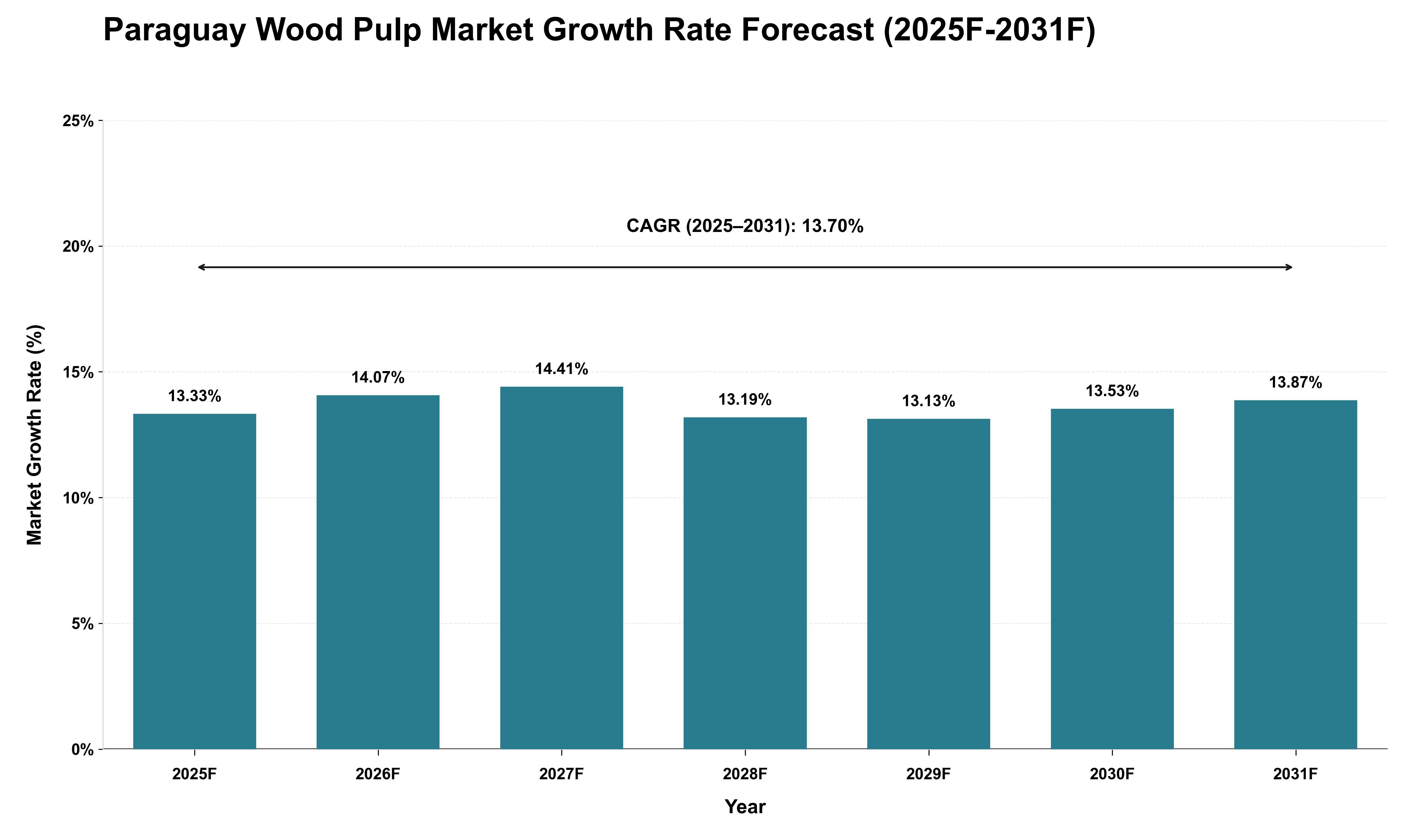
The Paraguay wood pulp market is projected to experience a robust compound annual growth rate of 13.70% from 2025 to 2031, reflecting strong demand dynamics in both domestic and international markets. This growth trajectory will be underpinned by increasing export opportunities as global demand for sustainable materials rises, particularly in the packaging and paper industries. The annual growth rates indicate a consistent upward trend, with peaks in 2026 and 2027 at 14.07% and 14.41%, respectively, suggesting heightened competitiveness in export markets during these years. Import dependencies may shift as Paraguay enhances its production capabilities, potentially reducing reliance on foreign sources while capitalizing on favorable trade agreements that facilitate access to key markets. Overall, the cyclical nature of wood pulp consumption will likely align with broader economic recovery trends globally, further bolstering Paraguay's position as a significant player in the wood pulp sector.
Key Highlights of the Report:
- Paraguay Wood Pulp Market Outlook
- Market Size of Paraguay Wood Pulp Market, 2024
- Forecast of Paraguay Wood Pulp Market, 2031
- Historical Data and Forecast of Paraguay Wood Pulp Revenues & Volume for the Period 2021-2031
- Paraguay Wood Pulp Market Trend Evolution
- Paraguay Wood Pulp Market Drivers and Challenges
- Paraguay Wood Pulp Price Trends
- Paraguay Wood Pulp Porter`s Five Forces
- Paraguay Wood Pulp Industry Life Cycle
- Historical Data and Forecast of Paraguay Wood Pulp Market Revenues & Volume By Type for the Period 2021-2031
- Historical Data and Forecast of Paraguay Wood Pulp Market Revenues & Volume By Hardwood for the Period 2021-2031
- Historical Data and Forecast of Paraguay Wood Pulp Market Revenues & Volume By Softwood for the Period 2021-2031
- Historical Data and Forecast of Paraguay Wood Pulp Market Revenues & Volume By Grade for the Period 2021-2031
- Historical Data and Forecast of Paraguay Wood Pulp Market Revenues & Volume By Mechanical for the Period 2021-2031
- Historical Data and Forecast of Paraguay Wood Pulp Market Revenues & Volume By Chemical for the Period 2021-2031
- Historical Data and Forecast of Paraguay Wood Pulp Market Revenues & Volume By Semi-Chemical for the Period 2021-2031
- Historical Data and Forecast of Paraguay Wood Pulp Market Revenues & Volume By Others for the Period 2021-2031
- Historical Data and Forecast of Paraguay Wood Pulp Market Revenues & Volume By End Use for the Period 2021-2031
- Historical Data and Forecast of Paraguay Wood Pulp Market Revenues & Volume By Packaging for the Period 2021-2031
- Historical Data and Forecast of Paraguay Wood Pulp Market Revenues & Volume By Paper for the Period 2021-2031
- Historical Data and Forecast of Paraguay Wood Pulp Market Revenues & Volume By Others for the Period 2021-2031
- Paraguay Wood Pulp Import Export Trade Statistics
- Market Opportunity Assessment By Type
- Market Opportunity Assessment By Grade
- Market Opportunity Assessment By End Use
- Paraguay Wood Pulp Top Companies Market Share
- Paraguay Wood Pulp Competitive Benchmarking By Technical and Operational Parameters
- Paraguay Wood Pulp Company Profiles
- Paraguay Wood Pulp Key Strategic Recommendations






































