Philippines Agricultural Waste Market Summary
The philippines agricultural waste market was estimated at USD 257 Million in 2025 and is projected to reach USD 358 Million by 2032, growing at a CAGR of 5.8% from 2026 to 2032.
Philippines Agricultural Waste Market Year-wise Growth Rate and Key Drivers
This graph highlights how the Philippines Agricultural Waste Market has steadily grown over the past five years, supported by major growth factors.
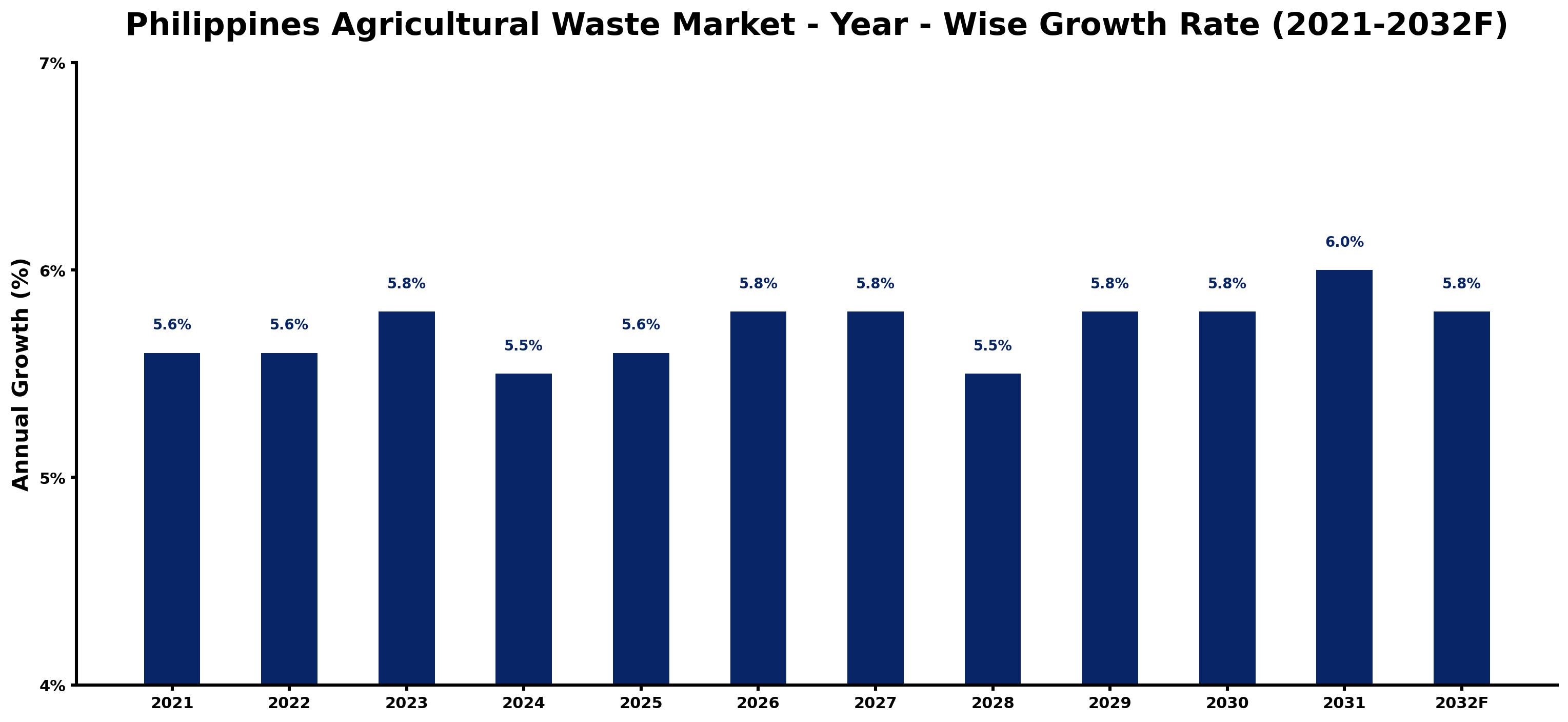
The table below presents the year wise growth rates along with the key drivers influencing the market
| Year | Growth Rate | Major Drivers |
| 2021 | 5.6% | Agricultural practices increasingly emphasize sustainability, highlighting waste-to-value opportunities. |
| 2022 | 5.6% | Innovative startups emerge, leveraging technology to transform waste into usable resources. |
| 2023 | 5.8% | Local communities engage in pilot programs, proving the viability of alternative uses. |
| 2024 | 5.5% | Partnerships between farmers and tech firms enhance waste management efficiency significantly. |
| 2025 | 5.6% | Increased awareness of climate issues urges farmers to adopt eco-friendly waste practices. |
| 2026 | 5.8% | Emerging bioenergy solutions attract significant investments from both local and foreign entities. |
| 2027 | 5.8% | Traditional practices slowly evolve, integrating modern waste management methodologies effectively. |
| 2028 | 5.5% | Corporate social responsibility initiatives drive companies to invest in sustainable agriculture. |
| 2029 | 5.8% | Educational programs promote waste recycling, influencing younger generations of farmers positively. |
| 2030 | 5.8% | Market analyses indicate that agricultural waste can significantly diversify revenue streams. |
| 2031 | 6.0% | Emerging regulations further streamline processes, enhancing market accessibility for new entrants. |
| 2032 | 5.8% | Technological advancements in processing elevate the overall quality of waste-derived products. |
Note - Market size estimations and growth projections presented in this report are based on 6Wresearch's advanced forecasting approach, validated with industry datasets as of June 2026.
Philippines Agricultural Waste Market Synopsis
The Philippines Agricultural Waste Market is projected to reach 5.8% and witness significant growth during the forecast period (2026-2032). This burgeoning sector is largely driven by a heightened demand for organic and biodegradable materials, particularly as farmers and agricultural stakeholders increasingly recognize the importance of sustainable practices in addressing environmental concerns. The Philippines, as a country reliant on agriculture, is experiencing transformative changes, wherein agricultural waste is being repurposed to function as effective fertilizers and soil conditioners.
Philippines Agricultural Waste Market Growth Drivers
A combination of factors is propelling the growth of the Philippines Agricultural Waste Market. These drivers include:
- Population Growth: The escalating population in the Philippines necessitates enhanced agricultural productivity, resulting in increased agricultural waste generation and the need for innovative management solutions.
- Urbanization: Rapid urbanization patterns have heightened awareness regarding the benefits of using agricultural waste as an eco-friendly alternative, giving rise to its demand in urban agriculture.
- Climate Change: With the adverse effects of climate change becoming evident, there is a growing emphasis on sustainable agricultural practices that utilize agricultural waste as a resource rather than as a burden.
- Government Policies: Supportive government initiatives aimed at reducing agricultural waste have created an enabling environment for market growth through incentives for sustainable practices.
- Market Awareness: A rising consciousness among consumers regarding the environmental implications of farming practices has fostered increased demand for organic inputs derived from agricultural waste.
Philippines Agricultural Waste Market Government Investment and Initiatives
The Philippine government is actively engaged in promoting sustainable agricultural practices through a range of investments and initiatives aimed at fortifying the agricultural waste market. Key government strategies include:
- Policy Framework: A comprehensive set of policies has been established to guide agricultural waste management, ensuring that farmers are encouraged to adopt practices that minimize waste and harness ecological benefits.
- Financial Incentives: The government offers various financial support mechanisms, including tax exemptions and subsidies for farmers utilizing sustainable practices, thereby alleviating the economic burden linked to waste management.
- Research and Development: Investment in R&D initiatives to innovate sustainable agricultural technologies has been a central focus, ensuring that farmers have access to advanced and efficient waste processing methods.
- Public Awareness Campaigns: Government campaigns aimed at educating farmers about the benefits of agricultural waste utilization have bolstered participation in eco-friendly practices.
- Collaboration with NGOs: The government partners with non-governmental organizations to promote best practices in agricultural waste management, fostering a collaborative approach to sustainability.
Philippines Agricultural Waste Market Trends and Opportunities
As the Philippines Agricultural Waste Market continues to evolve, several notable trends and opportunities are emerging. These include:
- Increased Demand for Organic Fertilizers: With a notable shift toward organic farming, there is a growing market for fertilizers produced from agricultural waste, presenting significant opportunities for farmers to innovate.
- Technological Advancements: Innovations in waste management technologies, such as anaerobic digestion and composting methods, are gaining traction, improving efficiency and sustainability in waste utilization.
- Circular Economy Principles: The adoption of circular economy principles in agriculture is becoming prevalent, where agricultural waste is seen as a resource rather than waste, paving the way for new business models.
- Local Processing Facilities: The establishment of local processing facilities for agricultural waste is on the rise, enhancing access to sustainable soil amendments and fertilizers.
- Investment in Sustainable Practices: Increased interest from stakeholders in investing in sustainable agricultural technologies indicates a robust potential for growth in the agricultural waste market.
Philippines Agricultural Waste Market Latest Developments (May 2025 - June 2026)
The period from May 2025 to June 2026 has seen noteworthy advancements in the Philippines Agricultural Waste Market. Key developments include:
- Policy Enhancements: Recent policy enhancements aimed at incentivizing the reduction of agricultural waste have garnered attention, encouraging more farmers to adopt eco-friendly practices.
- Technological Integration: The integration of modern technologies in agricultural waste processing has gained popularity, significantly improving efficiency and environmental outcomes.
- Public-Private Partnerships: Increased collaborations between public and private sectors have emerged, focused on developing sustainable waste management solutions tailored to local needs.
- Community Engagement Initiatives: Grassroots efforts to educate and engage farming communities have manifested, promoting awareness about the benefits of using agricultural waste wisely.
- Innovative Waste Utilization Projects: Several pilot projects demonstrating successful agricultural waste utilization methods have increased visibility and interest in sustainable farming techniques.
Philippines Agricultural Waste Market - Key Attractiveness of the Report
- 10 Years of Market Numbers
- Historical Data Starting from 2022 to 2025
- Base Year: 2025
- Forecast Data until 2032
- Key Performance Indicators Impacting the Market
- Major Upcoming Developments and Projects
Key Highlights of the Report:
- Philippines Agricultural Waste Market Outlook
- Market Size of Philippines Agricultural Waste Market, 2025
- Forecast of Philippines Agricultural Waste Market, 2032F
- Historical Data and Forecast of Philippines Agricultural Waste Revenues & Volume for the Period 2022-2032F
- Philippines Agricultural Waste Market Trend Evolution
- Philippines Agricultural Waste Market Drivers and Challenges
- Philippines Agricultural Waste Price Trends
- Philippines Agricultural Waste Porter's Five Forces
- Philippines Agricultural Waste Industry Life Cycle
- Historical Data and Forecast of Philippines Agricultural Waste Market Revenues & Volume By Product Type for the Period 2022-2032F
- Historical Data and Forecast of Philippines Agricultural Waste Market Revenues & Volume By Nonpoint Source for the Period 2022-2032F
- Historical Data and Forecast of Philippines Agricultural Waste Market Revenues & Volume By Point Source for the Period 2022-2032F
- Historical Data and Forecast of Philippines Agricultural Waste Market Revenues & Volume By Applications for the Period 2022-2032F
- Historical Data and Forecast of Philippines Agricultural Waste Market Revenues & Volume By Food Industry for the Period 2022-2032F
- Historical Data and Forecast of Philippines Agricultural Waste Market Revenues & Volume By Fish Forming Industry for the Period 2022-2032F
- Philippines Agricultural Waste Import Export Trade Statistics
- Market Opportunity Assessment By Product Type
- Market Opportunity Assessment By Applications
- Philippines Agricultural Waste Top Companies Market Share
- Philippines Agricultural Waste Competitive Benchmarking By Technical and Operational Parameters
- Philippines Agricultural Waste Company Profiles
- Philippines Agricultural Waste Key Strategic Recommendations






































