Philippines AI in IoT Market Size & Growth Rate (2026-2032)
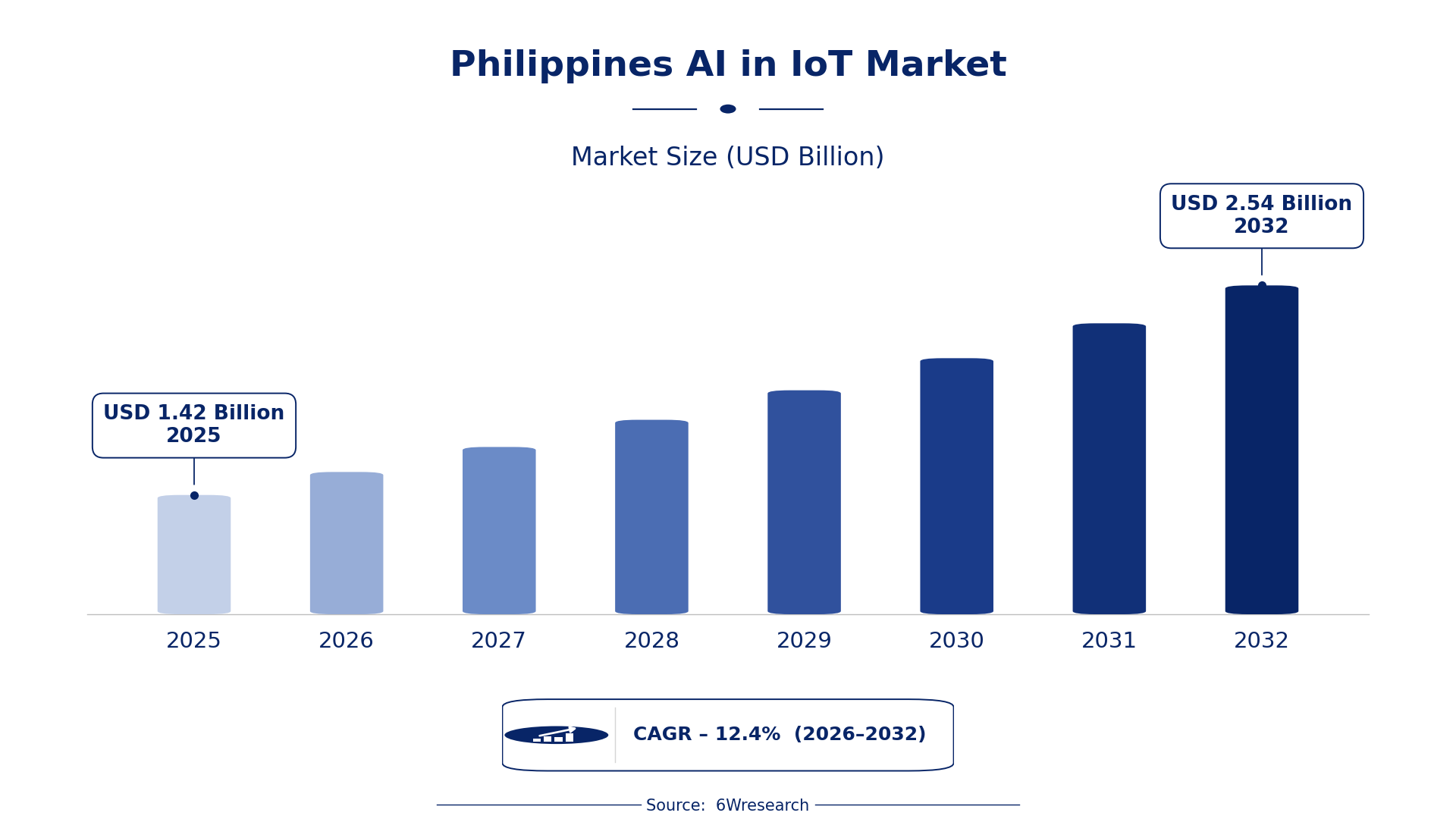
The Philippines AI in IoT Market was estimated at USD 1419 Million in 2025 and is projected to reach USD 2541 Million by 2032, growing at a CAGR of 12.4% from 2026 to 2032.
Philippines AI in IoT Market Synopsis
The Philippines AI in IoT market is witnessing significant momentum as businesses and consumers alike embrace connectivity. With AI technology enhancing the efficiency of IoT devices, organizations can now harness real-time data to make informed decisions that drive operational excellence.
As industries across the Philippines continue to integrate smart technologies, the demand for AI-enabled IoT solutions is expected to surge. From agriculture to healthcare, this convergence is not just a trend; it represents a fundamental shift in how data is utilized to improve productivity and service delivery.
Philippines AI in IoT Market Year-wise Growth Rate and Key Drivers
This graph illustrates the annual growth rates of the Philippines AI in IoT Market from 2021 to 2032, highlighting a steady upward trajectory and projected expansion over the forecast period.
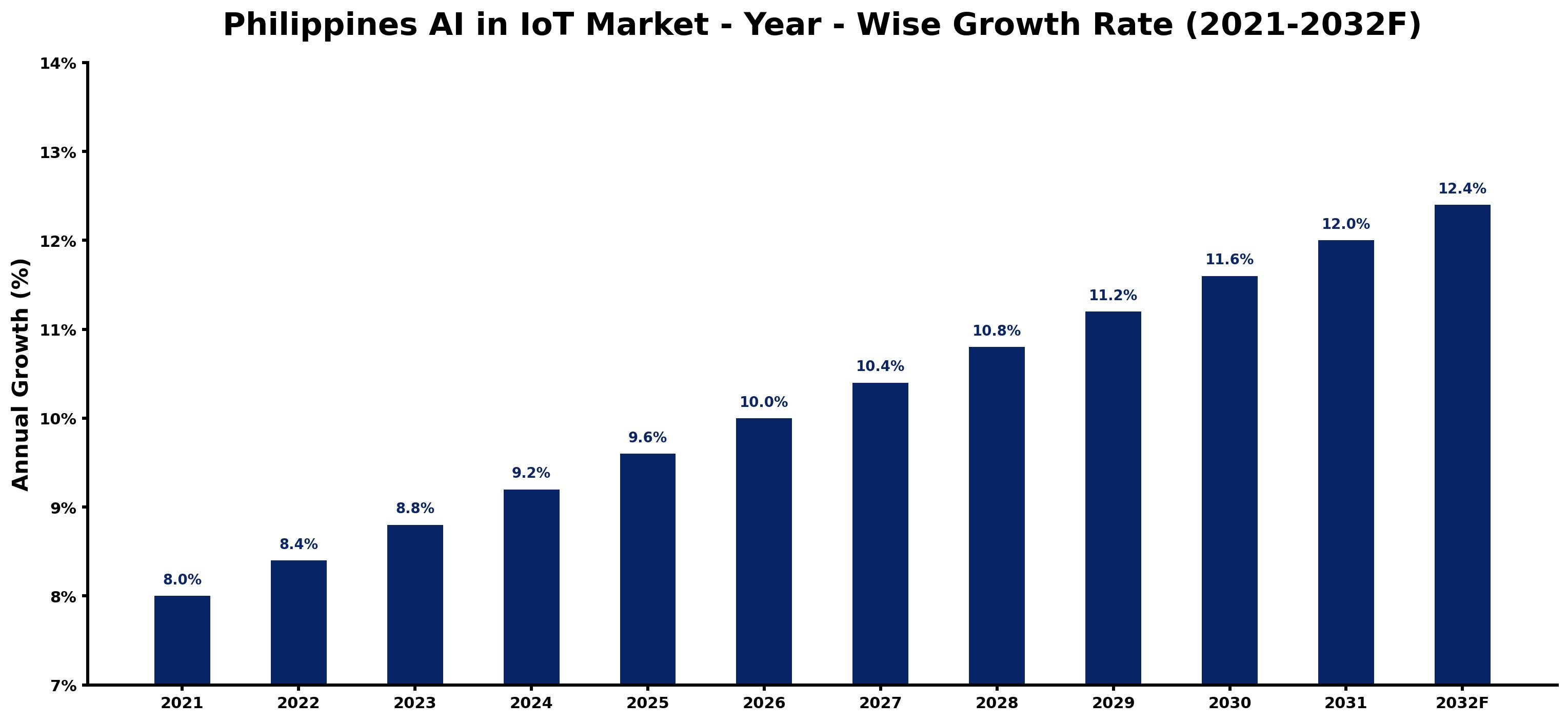
The table below presents the year‑wise growth rates along with the key drivers influencing the market
| Year | Growth Rate | Major Drivers |
| 2021 | 8.0% | DTI's IoT roadmap accelerates technology adoption nationwide. |
| 2022 | 8.4% | Government incentives for smart agriculture drive IoT growth. |
| 2023 | 8.8% | Increased urbanization boosts demand for connected devices. |
| 2024 | 9.2% | Philippine startup ecosystem fosters innovative IoT solutions. |
| 2025 | 9.6% | Telecommunications upgrades enhance IoT network connectivity nationwide. |
| 2026 | 10.0% | Local universities promote AI curriculum for IoT applications. |
| 2027 | 10.4% | Smart city initiatives spark investments in IoT infrastructure. |
| 2028 | 10.8% | Rising consumer interest in home automation technologies. |
| 2029 | 11.2% | E-commerce growth encourages IoT logistics and supply chain integration. |
| 2030 | 11.6% | National broadband plan enhances IoT device interoperability. |
| 2031 | 12.0% | Telehealth services expand utilizing IoT-enabled health monitoring. |
| 2032 | 12.4% | Sustainability efforts drive IoT integration in energy systems. |
Note: Market size estimations and growth projections presented in this report are based on 6Wresearch's proprietary forecasting methodology, utilizing the latest available industry data, government publications, and primary research inputs.
Philippines AI in IoT Market Key Takeaways
Below are some of the specific key takeaways from the market, including:
- The integration of AI in IoT applications is enhancing data analytics capabilities across various sectors.
- Healthcare and smart agriculture are leading the charge in adopting AI-driven IoT solutions.
- Concerns surrounding data privacy and cybersecurity are critical challenges that need addressing.
- Government initiatives are playing a crucial role in shaping the regulatory environment for AI in IoT.
- Investment in digital infrastructure is necessary to support the growing demand for AI-enabled IoT devices.
Evaluation of Restraints in Philippines AI in IoT Market
The Philippines AI in IoT market faces several hurdles that inhibit its full potential. Cybersecurity remains a paramount concern, as the interconnected nature of IoT devices makes them susceptible to cyber threats. Organizations often grapple with the challenge of ensuring data privacy while simultaneously striving for innovation. on top of that, the lack of standardized regulations can create uncertainty for companies looking to invest in AI and IoT technologies. These constraints not only limit growth but also hinder the level of trust that potential users might have in AI-driven IoT solutions.
Philippines AI in IoT Market Trends
Several trends are emerging in the Philippines AI in IoT market that are shaping its trajectory. First, there's a pronounced shift towards predictive analytics, allowing businesses to anticipate market demands and optimize operations. Secondly, the growth of 5G networks is enabling more reliable and faster data transmission, thus enhancing the capabilities of IoT devices. Third, sustainability is becoming a significant focus, with companies increasingly seeking IoT solutions that promote energy efficiency and waste reduction. These trends indicate not only a technological evolution but also a shift in consumer and business priorities.
Philippines AI in IoT Market Opportunities
Opportunities abound in the Philippines AI in IoT market, especially in sectors like healthcare, where remote monitoring and telemedicine are gaining traction. The agricultural sector presents a ripe area for growth, with smart farming solutions that leverage AI to enhance crop yields. on top of that, the ongoing digital transformation across various industries opens avenues for innovative startups and established firms to develop tailored AI solutions. Partnerships between tech companies and local governments can also drive infrastructure development, paving the way for broader IoT adoption.
Government Initiatives in the Philippines AI in IoT Market
Government policies are significantly influencing the development of the Philippines AI in IoT market. With a focus on enhancing digital infrastructure, the government is prioritizing initiatives that will facilitate the integration of AI and IoT technologies in various sectors. This regulatory environment is crucial as it encourages investment and innovation while addressing concerns related to data privacy and cybersecurity.
- A recently completed initiative focused on upgrading national digital infrastructure, improving connectivity across urban and rural areas.
- Current ongoing programs aimed at developing a regulatory framework for AI applications in healthcare and transportation sectors.
- A planned public-private partnership expected to launch by 2026, aimed at expanding IoT device accessibility in underserved regions.
- Ongoing workshops and training programs by the government to enhance skills in AI and IoT among local professionals and students.
- A proposed policy framework expected to be introduced in 2027, which will set guidelines for data privacy specific to IoT devices.
Future Insights of the Philippines AI in IoT Market
Looking ahead to 2026-2032, the Philippines AI in IoT market is set for transformative growth. As businesses increasingly recognize the value of data-driven insights, the demand for AI-powered IoT solutions will intensify. Emerging technologies, such as edge computing, will enable faster data processing, making IoT applications even more efficient. The government's commitment to fostering a digital economy will further bolster this growth, ensuring that the Philippines remains competitive in the global AI and IoT landscape.
Philippines AI in IoT Market Latest Developments
Recent activity in the Philippines AI in IoT market illustrates a vibrant and competitive environment. Companies are innovating rapidly, focusing on solutions that meet the specific needs of local industries. The push towards smarter technologies is evident as various sectors experiment with new applications and partnerships to enhance their operational capabilities.
- A major technology vendor announced a new AI-driven analytics platform in early 2025, aimed at improving supply chain efficiency.
- A collaborative project between local universities and tech startups, which began in mid-2025, is currently underway to develop smart agriculture technologies.
- Plans for a nationwide AI and IoT conference in late 2026 are being finalized, aiming to showcase innovations and foster collaboration.
- An ongoing pilot program in healthcare is testing remote monitoring solutions that utilize AI, expected to conclude by early 2026.
- A rollout of enhanced IoT security protocols is scheduled for mid-2025, following concerns about data breaches and device vulnerabilities.
Philippines AI in IoT Market - Key Attractiveness of the Report
- 10 Years of Market Numbers
- Historical Data Starting from 2022 to 2025
- Base Year: 2025
- Forecast Data until 2032
- Key Performance Indicators Impacting the Market
- Major Upcoming Developments and Projects
Key Highlights of the Report:
- Philippines AI in IoT Market Outlook
- Market Size of Philippines AI in IoT Market, 2025
- Forecast of Philippines AI in IoT Market, 2032
- Historical Data and Forecast of Philippines AI in IoT Revenues & Volume for the Period 2022-2032F
- Philippines AI in IoT Market Trend Evolution
- Philippines AI in IoT Market Drivers and Challenges
- Philippines AI in IoT Price Trends
- Philippines AI in IoT Porter's Five Forces
- Philippines AI in IoT Industry Life Cycle
- Historical Data and Forecast of Philippines AI in IoT Market Revenues & Volume By Component for the Period 2022-2032F
- Historical Data and Forecast of Philippines AI in IoT Market Revenues & Volume By Platforms for the Period 2022-2032F
- Historical Data and Forecast of Philippines AI in IoT Market Revenues & Volume By Software Solutions for the Period 2022-2032F
- Historical Data and Forecast of Philippines AI in IoT Market Revenues & Volume By Services for the Period 2022-2032F
- Historical Data and Forecast of Philippines AI in IoT Market Revenues & Volume By Vertical for the Period 2022-2032F
- Historical Data and Forecast of Philippines AI in IoT Market Revenues & Volume By Manufacturing for the Period 2022-2032F
- Historical Data and Forecast of Philippines AI in IoT Market Revenues & Volume By Energy and Utilities for the Period 2022-2032F
- Historical Data and Forecast of Philippines AI in IoT Market Revenues & Volume By Transportation and Mobility for the Period 2022-2032F
- Historical Data and Forecast of Philippines AI in IoT Market Revenues & Volume By BFSI for the Period 2022-2032F
- Historical Data and Forecast of Philippines AI in IoT Market Revenues & Volume By Government and Defense for the Period 2022-2032F
- Historical Data and Forecast of Philippines AI in IoT Market Revenues & Volume By Retail for the Period 2022-2032F
- Historical Data and Forecast of Philippines AI in IoT Market Revenues & Volume By Healthcare and Life Sciences for the Period 2022-2032F
- Historical Data and Forecast of Philippines AI in IoT Market Revenues & Volume By Telecom for the Period 2022-2032F
- Historical Data and Forecast of Philippines AI in IoT Market Revenues & Volume By Technology for the Period 2022-2032F
- Historical Data and Forecast of Philippines AI in IoT Market Revenues & Volume By ML and Deep Learning for the Period 2022-2032F
- Historical Data and Forecast of Philippines AI in IoT Market Revenues & Volume By NLP for the Period 2022-2032F
- Philippines AI in IoT Import Export Trade Statistics
- Market Opportunity Assessment By Component
- Market Opportunity Assessment By Vertical
- Market Opportunity Assessment By Technology
- Philippines AI in IoT Top Companies Market Share
- Philippines AI in IoT Competitive Benchmarking By Technical and Operational Parameters
- Philippines AI in IoT Company Profiles
- Philippines AI in IoT Key Strategic Recommendations






































