Philippines Apiculture Market Top 5 Importing Countries and Market Competition (HHI) Analysis
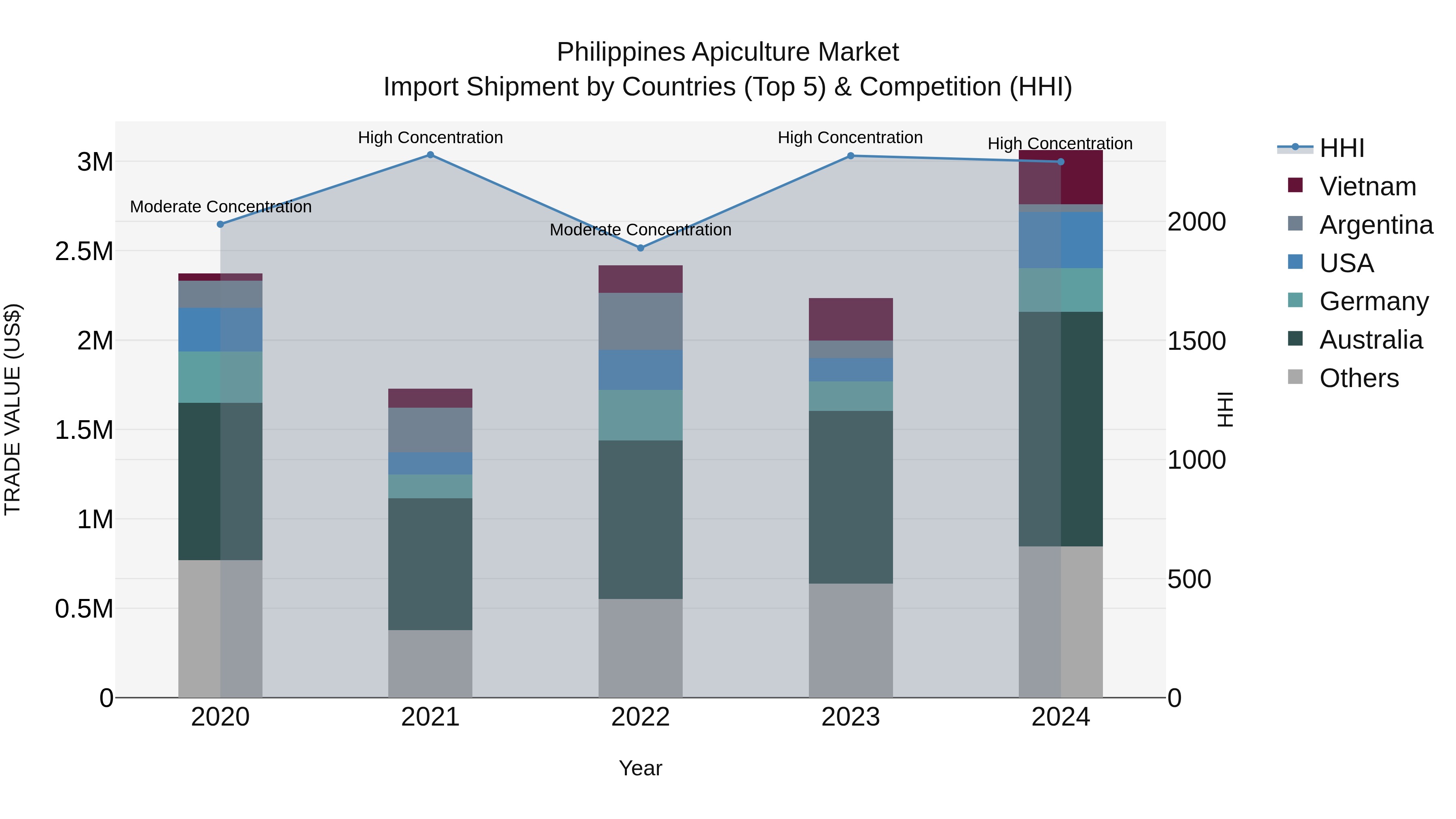
The Philippines` apiculture import market in 2024 saw significant contributions from key exporters such as Australia, USA, Vietnam, Spain, and Germany. With a high Herfindahl-Hirschman Index (HHI) indicating market concentration, the industry experienced a notable Compound Annual Growth Rate (CAGR) of 6.58% from 2020-2024. The impressive growth rate of 37.06% from 2023-2024 signals a dynamic and expanding market, highlighting the strong demand for imported apiculture products in the Philippines.
philippines apiculture market Synopsis
The Philippines apiculture market, centered around beekeeping and honey production, has shown steady growth in recent years. With its diverse flora and tropical climate, the country offers a conducive environment for beekeeping activities. Small-scale beekeeping is common among rural communities, providing an additional source of income for many households. The demand for natural honey and other bee-related products has been on the rise, both domestically and in international markets. However, challenges such as disease management, lack of modern beekeeping techniques, and limited access to quality beekeeping equipment still exist, presenting opportunities for improvement and investment in the sector.
Drivers of the Market
The Philippines has witnessed significant developments and opportunities across various sectors of its agricultural and seafood industries. The apiculture market, involving the cultivation of bees and the production of honey and other bee-related products, is being driven by growing consumer demand for natural sweeteners and the numerous health benefits associated with honey consumption. Additionally, the increasing awareness of honey`s various applications in cosmetics and pharmaceuticals is further propelling the growth of this market.
Challenges of the Market
The Philippines apiculture market faces challenges linked to disease management, climate change, and market access. Beekeeping and honey production can be affected by diseases that impact bee populations. Climate change can disrupt flowering patterns and affect bee foraging. Market access and distribution can also be challenging for small-scale beekeepers. Ensuring proper disease control measures, promoting climate-resilient beekeeping practices, and establishing effective marketing channels are important for the growth of the apiculture market.
COVID-19 Impact on the Market
The Philippines apiculture market faced challenges during the pandemic as movement restrictions and supply chain disruptions impacted beekeeping activities and honey production. Beekeepers encountered difficulties in accessing equipment, transporting hives, and marketing their products. However, the pandemic emphasized the role of beekeeping in supporting food security and biodiversity. Increased consumer awareness of the importance of local and natural products might drive the market`s recovery.
Key Players in the Market
The key players in the Philippines apiculture market are Peter Honeybee, John Beekeeper, and Susan Apiarist. These companies provide beekeeping services to domestic and international markets, offering a variety of products such as honey, beeswax, royal jelly, propolis and other hive products. They also offer educational services related to beekeeping as well as handling of bee colonies for pollination purposes.
Key Highlights of the Report:
- Philippines Apiculture Market Outlook
- Market Size of Philippines Apiculture Market, 2024
- Forecast of Philippines Apiculture Market, 2031
- Historical Data and Forecast of Philippines Apiculture Revenues & Volume for the Period 2021-2031
- Philippines Apiculture Market Trend Evolution
- Philippines Apiculture Market Drivers and Challenges
- Philippines Apiculture Price Trends
- Philippines Apiculture Porter's Five Forces
- Philippines Apiculture Industry Life Cycle
- Historical Data and Forecast of Philippines Apiculture Market Revenues & Volume By Product Type for the Period 2021-2031
- Historical Data and Forecast of Philippines Apiculture Market Revenues & Volume By Honey for the Period 2021-2031
- Historical Data and Forecast of Philippines Apiculture Market Revenues & Volume By Beeswax for the Period 2021-2031
- Historical Data and Forecast of Philippines Apiculture Market Revenues & Volume By Live-bees for the Period 2021-2031
- Historical Data and Forecast of Philippines Apiculture Market Revenues & Volume By Others for the Period 2021-2031
- Historical Data and Forecast of Philippines Apiculture Market Revenues & Volume By Application for the Period 2021-2031
- Historical Data and Forecast of Philippines Apiculture Market Revenues & Volume By Medical for the Period 2021-2031
- Historical Data and Forecast of Philippines Apiculture Market Revenues & Volume By Food Beverages for the Period 2021-2031
- Historical Data and Forecast of Philippines Apiculture Market Revenues & Volume By Cosmetics for the Period 2021-2031
- Historical Data and Forecast of Philippines Apiculture Market Revenues & Volume By Others for the Period 2021-2031
- Philippines Apiculture Import Export Trade Statistics
- Market Opportunity Assessment By Product Type
- Market Opportunity Assessment By Application
- Philippines Apiculture Top Companies Market Share
- Philippines Apiculture Competitive Benchmarking By Technical and Operational Parameters
- Philippines Apiculture Company Profiles
- Philippines Apiculture Key Strategic Recommendations






































