Philippines Baby Prams And Strollers Market Top 5 Importing Countries and Market Competition (HHI) Analysis
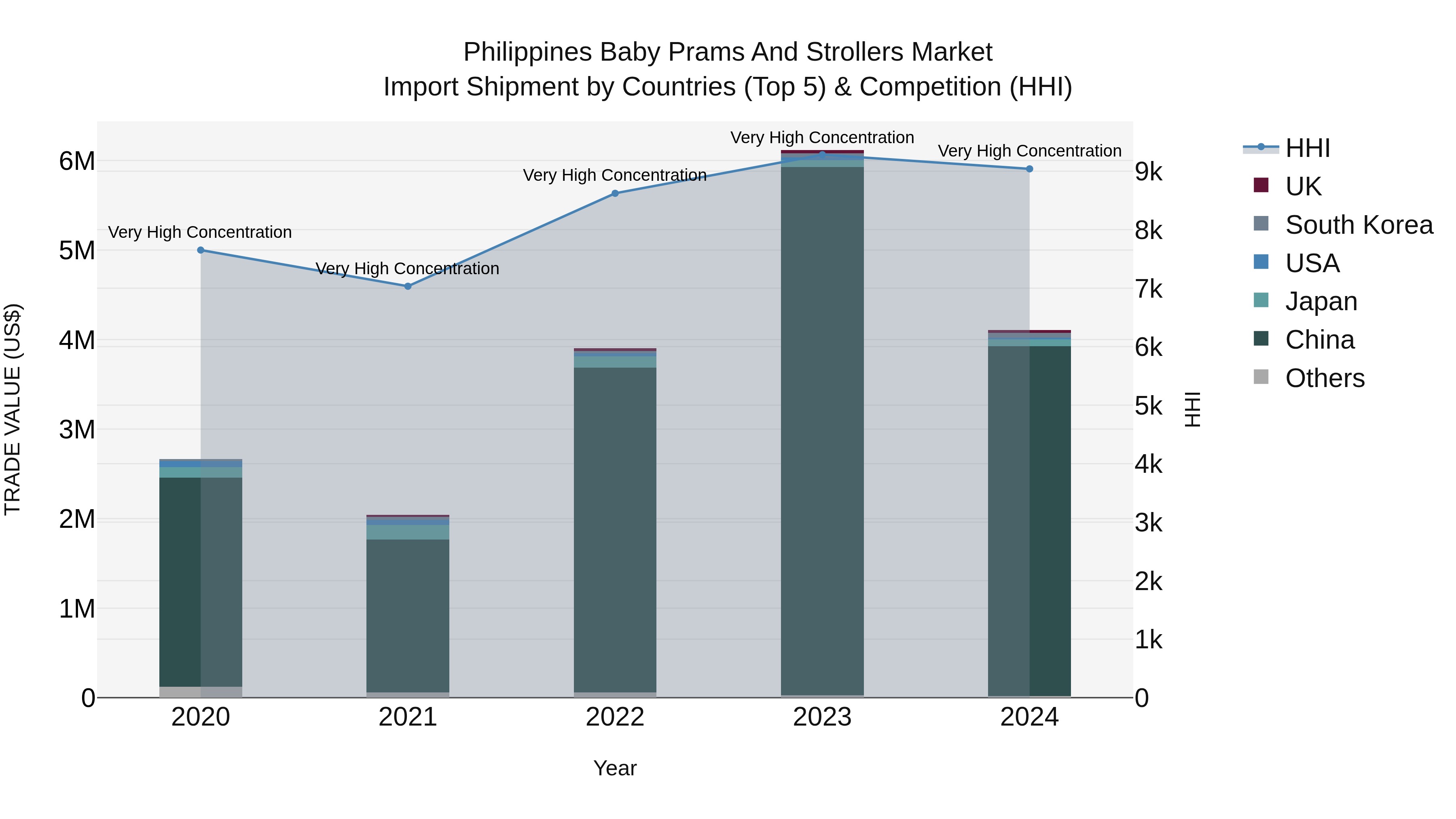
The Philippines baby prams and strollers import market continued to be dominated by key players such as China, Japan, South Korea, UK, and USA in 2024, indicating a high level of concentration. Despite a significant decline in growth rate from 2023 to 2024 at -32.85%, the market still maintained a strong Compound Annual Growth Rate (CAGR) of 11.41% from 2020 to 2024. This suggests a steady demand for imported baby prams and strollers in the Philippines, with opportunities for market expansion and diversification in the coming years.
philippines baby prams and strollers market Synopsis
The Philippines baby prams and strollers market has experienced notable growth in recent years, driven by various factors such as urbanization, increasing disposable incomes, and changing lifestyles. As more families are opting for convenience and safety when traveling with their infants, the demand for high-quality and innovative baby prams and strollers has risen. Both local manufacturers and international brands have recognized this trend and are offering a wide range of products to cater to different customer preferences. Additionally, advancements in design, functionality, and safety features have further propelled market expansion. However, the market is not without its challenges, including pricing sensitivity and competition from lower-cost alternatives. To stay competitive, market players are focusing on product differentiation, marketing strategies, and after-sales services.
Drivers of the Market
The growth of the baby prams and strollers market in the Philippines is driven by several significant drivers. The rise of dual-income households and changing family dynamics have led to an increased emphasis on convenience and mobility for parents. Urban parents, seeking ease of travel and outdoor activities with their children, have contributed to the demand for versatile and comfortable baby prams and strollers. Moreover, a growing middle-class population and an increasing awareness of international parenting trends have further fueled market growth.
Challenges of the Market
While the Philippines baby prams and strollers market thrives, it faces specific challenges. Balancing affordability with quality and safety standards is an ongoing concern for both manufacturers and consumers. Ensuring that products are suitable for local weather conditions, infrastructure, and cultural preferences requires careful adaptation and customization. Additionally, educating parents about proper usage and safety features is crucial to ensure the well-being of infants and toddlers.
COVID-19 Impact on the Market
The Covid-19 pandemic has had a noticeable impact on the Philippines baby prams and strollers market. Movement restrictions and a heightened focus on health and hygiene led to changes in parenting behaviors and outdoor activities. The pandemic emphasized the importance of outdoor excursions and safe transport options for families. As parents sought ways to maintain a sense of normalcy and engage in outdoor play with their children, the demand for reliable and comfortable baby prams and strollers increased.
Key Players in the Market
Several key players have emerged as influential contributors to the Philippines baby prams and strollers market. Brands such as Aprica, Chicco, and Graco have played pivotal roles in providing a range of baby transportation solutions that cater to various preferences and lifestyles. These entities have not only driven market growth but have also demonstrated their commitment to safety, innovation, and enhancing the parenting experience.
Key Highlights of the Report:
- Philippines Baby Prams and Strollers Market Outlook
- Market Size of Philippines Baby Prams and Strollers Market, 2024
- Forecast of Philippines Baby Prams and Strollers Market, 2031
- Historical Data and Forecast of Philippines Baby Prams and Strollers Revenues & Volume for the Period 2021-2031
- Philippines Baby Prams and Strollers Market Trend Evolution
- Philippines Baby Prams and Strollers Market Drivers and Challenges
- Philippines Baby Prams and Strollers Price Trends
- Philippines Baby Prams and Strollers Porter's Five Forces
- Philippines Baby Prams and Strollers Industry Life Cycle
- Historical Data and Forecast of Philippines Baby Prams and Strollers Market Revenues & Volume By Product Type for the Period 2021-2031
- Historical Data and Forecast of Philippines Baby Prams and Strollers Market Revenues & Volume By Lightweight Strollers for the Period 2021-2031
- Historical Data and Forecast of Philippines Baby Prams and Strollers Market Revenues & Volume By Jogging Strollers for the Period 2021-2031
- Historical Data and Forecast of Philippines Baby Prams and Strollers Market Revenues & Volume By Standard Strollers for the Period 2021-2031
- Historical Data and Forecast of Philippines Baby Prams and Strollers Market Revenues & Volume By Double / Triple Strollers for the Period 2021-2031
- Historical Data and Forecast of Philippines Baby Prams and Strollers Market Revenues & Volume By Multi-Optional System Strollers for the Period 2021-2031
- Historical Data and Forecast of Philippines Baby Prams and Strollers Market Revenues & Volume By Age for the Period 2021-2031
- Historical Data and Forecast of Philippines Baby Prams and Strollers Market Revenues & Volume By 0 - 6 months for the Period 2021-2031
- Historical Data and Forecast of Philippines Baby Prams and Strollers Market Revenues & Volume By 6 - 12 months for the Period 2021-2031
- Historical Data and Forecast of Philippines Baby Prams and Strollers Market Revenues & Volume By 12 - 36 months for the Period 2021-2031
- Historical Data and Forecast of Philippines Baby Prams and Strollers Market Revenues & Volume By Sales Channel for the Period 2021-2031
- Historical Data and Forecast of Philippines Baby Prams and Strollers Market Revenues & Volume By BaBoutiques for the Period 2021-2031
- Historical Data and Forecast of Philippines Baby Prams and Strollers Market Revenues & Volume By Specialty Stores for the Period 2021-2031
- Historical Data and Forecast of Philippines Baby Prams and Strollers Market Revenues & Volume By Modern Trade for the Period 2021-2031
- Historical Data and Forecast of Philippines Baby Prams and Strollers Market Revenues & Volume By Departmental Stores for the Period 2021-2031
- Historical Data and Forecast of Philippines Baby Prams and Strollers Market Revenues & Volume By Mono-brand Stores for the Period 2021-2031
- Historical Data and Forecast of Philippines Baby Prams and Strollers Market Revenues & Volume By Online retailers for the Period 2021-2031
- Historical Data and Forecast of Philippines Baby Prams and Strollers Market Revenues & Volume By Other Sales Channel for the Period 2021-2031
- Philippines Baby Prams and Strollers Import Export Trade Statistics
- Market Opportunity Assessment By Product Type
- Market Opportunity Assessment By Age
- Market Opportunity Assessment By Sales Channel
- Philippines Baby Prams and Strollers Top Companies Market Share
- Philippines Baby Prams and Strollers Competitive Benchmarking By Technical and Operational Parameters
- Philippines Baby Prams and Strollers Company Profiles
- Philippines Baby Prams and Strollers Key Strategic Recommendations






































