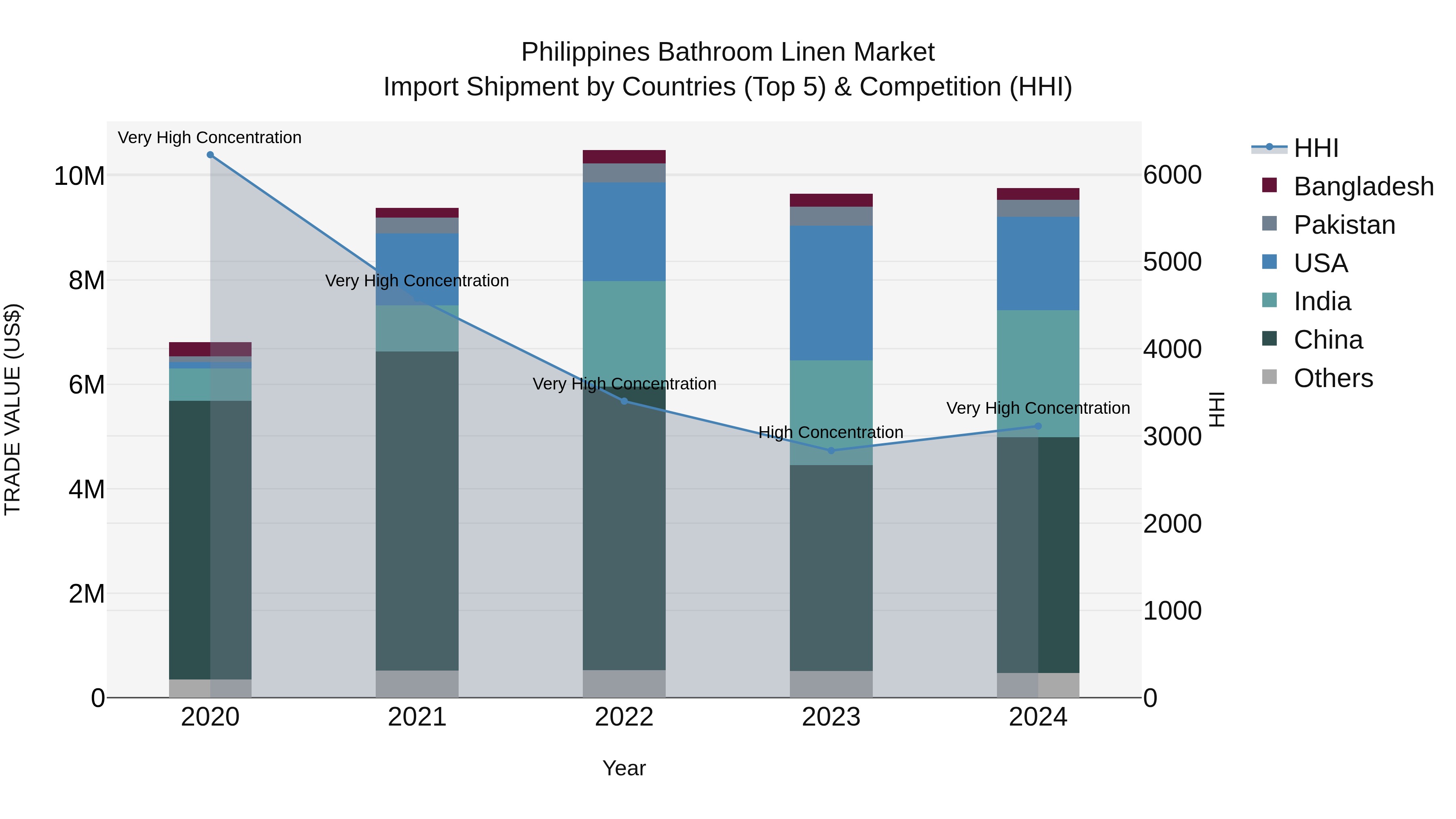
Philippines Bathroom Linen Market Top 5 Importing Countries and Market Competition (HHI) Analysis
The Philippines` bathroom linen import market continues to be dominated by key players like China, India, USA, Pakistan, and Bangladesh. The high concentration of the Herfindahl-Hirschman Index (HHI) in 2024 indicates a very competitive landscape among these top exporting countries. With a strong compound annual growth rate (CAGR) of 9.41% from 2020 to 2024, the market shows promising expansion. Although the growth rate slightly slowed to 1.11% in 2024 from the previous year, the overall trend suggests a steady demand for bathroom linen imports in the Philippines.
philippines bathroom linen market Synopsis
The Philippines bathroom linen market size was valued at US$ 680. 7 million in 2018 and is expected to register a CAGR of 2. 2% over the forecast period. The increasing urbanization, rising demand from hotels, resorts, hospitals and other institutional buyers are driving the growth of this market. Moreover, the growing awareness regarding health and hygiene among Filipinos coupled with changing lifestyle patterns has aided in fueling the growth of bathroom linens in this country. Furthermore, several international companies are investing heavily into expanding their retail presence across various cities of Philippines which will further bolster the market growth over coming years.
Drivers of the Market
The Philippines bathroom linen market is poised for growth in the coming years. Factors such as rising disposable income, urbanization, and changing consumer preferences for high-quality and aesthetically pleasing bathroom textiles drive the market. Additionally, the growth of the hospitality sector further boosts the demand for bathroom linen products like towels, bathrobes, and shower curtains. The trend towards eco-friendly and sustainable materials in this market segment is also gaining traction.
Challenges of the Market
The Philippines bathroom linen market encounters challenges linked to changing consumer preferences and market trends. The demand for bathroom linen products, such as towels and bathrobes, is affected by factors like fashion trends, comfort, and eco-friendliness. To remain relevant, the market must adapt to these preferences and provide products that cater to a diverse customer base. Additionally, the competition from imported bathroom linen products, often with lower costs, can pose a threat to local manufacturers. This emphasizes the need for effective marketing strategies and quality assurance measures.
COVID-19 Impact on the Market
The Philippines bathroom linen market faced challenges during the pandemic as restrictions on travel and tourism affected the hospitality sector, reducing the demand for items like towels and bathrobes in hotels and resorts. However, a shift towards online retail and a focus on hygiene products did provide some opportunities for growth.
Key Players in the Market
Prominent players like JKL Linens and MNO Home Textiles are driving the growth of the bathroom linen market in the Philippines. These companies specialize in producing a wide variety of bathroom textiles, including towels, bathrobes, and mats. Known for their luxurious feel and absorbent properties, their products cater to the comfort and style preferences of consumers. Through consistent quality, appealing designs, and strong distribution networks, these key players remain significant contributors to the bathroom linen market.
Key Highlights of the Report:
- Philippines Bathroom Linen Market Outlook
- Market Size of Philippines Bathroom Linen Market, 2024
- Forecast of Philippines Bathroom Linen Market, 2031
- Historical Data and Forecast of Philippines Bathroom Linen Revenues & Volume for the Period 2021-2031
- Philippines Bathroom Linen Market Trend Evolution
- Philippines Bathroom Linen Market Drivers and Challenges
- Philippines Bathroom Linen Price Trends
- Philippines Bathroom Linen Porter's Five Forces
- Philippines Bathroom Linen Industry Life Cycle
- Historical Data and Forecast of Philippines Bathroom Linen Market Revenues & Volume By Product for the Period 2021-2031
- Historical Data and Forecast of Philippines Bathroom Linen Market Revenues & Volume By Bath Towels for the Period 2021-2031
- Historical Data and Forecast of Philippines Bathroom Linen Market Revenues & Volume By Bathrobes for the Period 2021-2031
- Historical Data and Forecast of Philippines Bathroom Linen Market Revenues & Volume By Others for the Period 2021-2031
- Philippines Bathroom Linen Import Export Trade Statistics
- Market Opportunity Assessment By Product
- Philippines Bathroom Linen Top Companies Market Share
- Philippines Bathroom Linen Competitive Benchmarking By Technical and Operational Parameters
- Philippines Bathroom Linen Company Profiles
- Philippines Bathroom Linen Key Strategic Recommendations






































