Philippines Chlorine Dioxide Market Size, Share & Growth Rate
The Philippines Chlorine Dioxide Market was estimated at USD 466 Million in 2025 and is projected to reach USD 618 Million by 2032, growing at a CAGR of 4.1% from 2026 to 2032. This growth trajectory is driven by the increasing necessity for effective water purification solutions amidst rising concerns over water quality and safety. Furthermore, the heightened adoption of chlorine dioxide in healthcare for sterilization processes is creating additional demand, cementing its vital role in public health initiatives.
Philippines Chlorine Dioxide Market Year-wise Growth Rate and Key Drivers
This graph highlights how the Philippines Chlorine Dioxide Market has steadily grown over the years, supported by major growth factors.
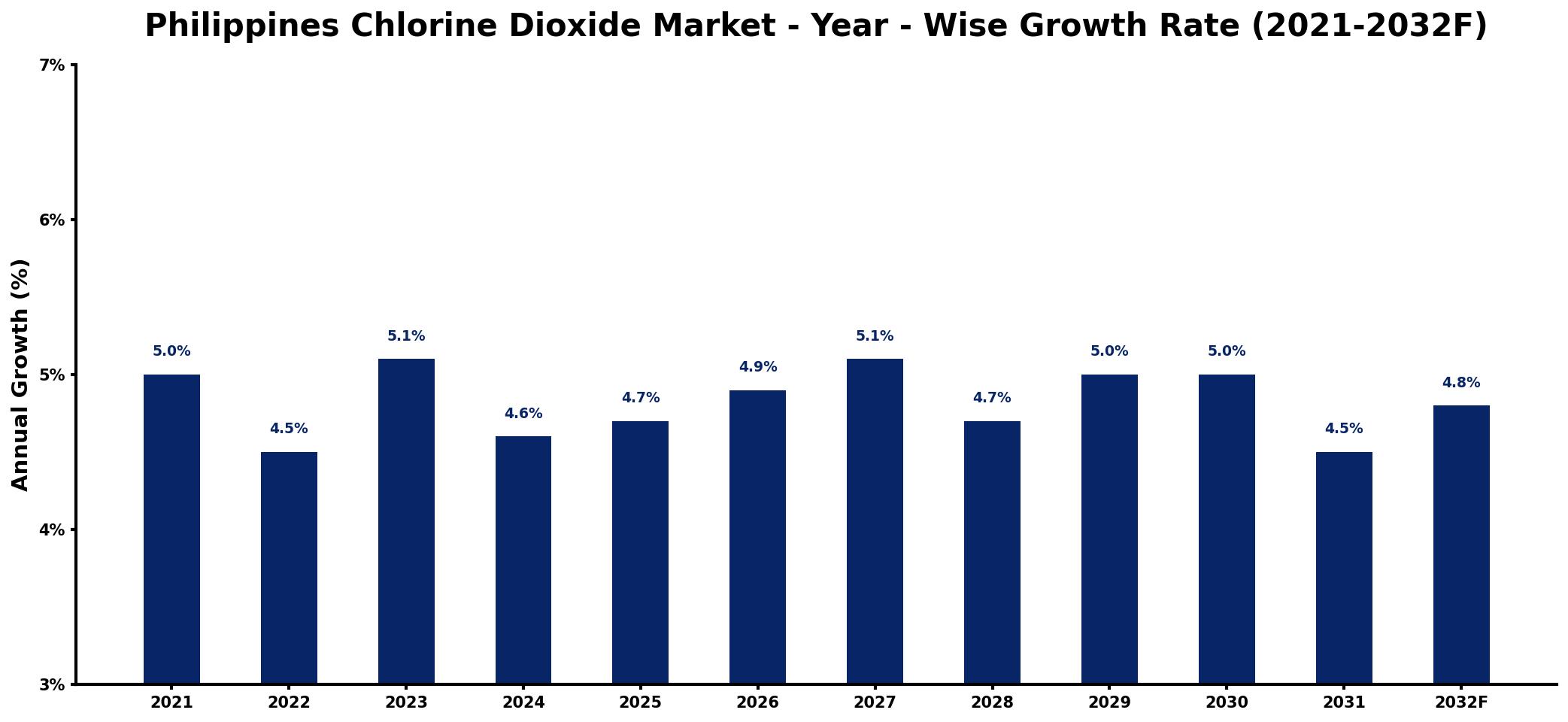
The table below presents the year‑wise growth rates along with the key drivers influencing the market
| Year | Growth Rate | Major Drivers |
| 2021 | 5.0% | Increased water treatment initiatives |
| 2022 | 4.5% | Rising demand in sanitation sector |
| 2023 | 5.1% | Expansion of healthcare facilities |
| 2024 | 4.6% | Growing industrial applications utilization |
| 2025 | 4.7% | Heightened focus on environmental safety |
| 2026 | 4.9% | Investment in infrastructure development |
| 2027 | 5.1% | Surge in agricultural sector requirements |
| 2028 | 4.7% | Strengthened regulations on hygiene practices |
| 2029 | 5.0% | Advancements in wastewater management technologies |
| 2030 | 5.0% | Growing emphasis on public health |
| 2031 | 4.5% | Increased awareness of safety protocols |
| 2032 | 4.8% | increased production capacity utilization |
Note: Market size estimations and growth projections presented in this report are based on 6Wresearch's proprietary forecasting methodology, utilizing the latest available industry data, government publications, and primary research inputs.
Philippines Chlorine Dioxide Market Synopsis
In the Philippines, chlorine dioxide is increasingly recognized as a crucial agent in combating waterborne pathogens, thereby ensuring potable water availability. This rising focus on water safety standards is spurring consistent investments in water treatment facilities nationwide.
Additionally, the healthcare sectors expanded application of chlorine dioxide for disinfection and sterilization purposes reflects a growing awareness of its efficiency. This trend is particularly evident in hospitals and clinics, where maintaining stringent hygiene standards is paramount for patient safety.
Philippines Chlorine Dioxide Market Key Takeaways
- Significant growth opportunities exist in the water treatment and healthcare sectors.
- Growing regulatory frameworks emphasize the safe use of chlorine dioxide, enhancing market stability.
- Environmental sustainability is becoming a pivotal concern, influencing product development and consumer choice.
- Technological advancements in chlorine dioxide generation are crucial for improving safety and efficacy.
- Heightened sanitation awareness post-pandemic continues to drive demand across various industries.
Evaluation of Restraints in Philippines Chlorine Dioxide Market
Despite its promising growth, the Philippines chlorine dioxide market faces limitations primarily surrounding safety and environmental implications. As a potent oxidizing agent, chlorine dioxide necessitates specialized handling and expertise to mitigate health risks associated with exposure. Moreover, concerns regarding byproducts from its application can lead to regulatory scrutiny, impacting market growth. Companies must navigate these complexities while ensuring compliance with evolving safety standards and environmental policies.
Philippines Chlorine Dioxide Market Trends
Emerging trends in the Philippines chlorine dioxide market reflect a significant shift towards eco-friendly disinfection solutions, aligning with global sustainability initiatives. The growing integration of advanced technologies, such as digital monitoring systems for chlorine dioxide dosing, is enhancing operational efficiency. Additionally, increased public awareness about the benefits of chlorine dioxide is driving its adoption in residential and commercial spaces, further expanding the market's reach.
Philippines Chlorine Dioxide Market Opportunities
The market is poised for substantial growth, particularly in rural areas where access to clean water remains a challenge. Investments in water treatment infrastructure present lucrative opportunities for chlorine dioxide applications. Moreover, as industries seek sustainable practices, the demand for effective disinfectants will likely rise, positioning chlorine dioxide as a key player in eco-friendly sanitation solutions.
Government Initiatives in the Philippines Chlorine Dioxide Market
The Philippine government has been proactive in implementing policies aimed at improving water quality and sanitation. Public spending on water treatment facilities is on the rise, with various programs promoting the safe use of chemical disinfectants, including chlorine dioxide. These initiatives not only underscore the government's commitment to health and safety but also create a supportive environment for market growth.
Future Insights of the Philippines Chlorine Dioxide Market
Looking ahead to 2026-2032, the Philippines chlorine dioxide market is expected to witness sustained growth driven by increased regulatory support and consumer demand for safe water and effective sanitation solutions. As technology continues to evolve, the market will likely see the emergence of innovative applications and improved safety measures, making chlorine dioxide an even more integral part of the country's public health strategy.
Philippines Chlorine Dioxide Market Latest Developments (2025 - 2026)
Recent developments in the Philippines chlorine dioxide market have focused on enhancing production processes and improving safety protocols. Industry players are increasingly investing in research and development to optimize chlorine dioxide formulations for various applications. Furthermore, there is a notable uptick in partnerships between public and private sectors to bolster water sanitation initiatives, reflecting a collective effort to address public health challenges.
Philippines Chlorine Dioxide Market - Key Attractiveness of the Report
- 10 Years of Market Numbers
- Historical Data Starting from 2022 to 2025
- Base Year: 2025
- Forecast Data until 2032
- Key Performance Indicators Impacting the Market
- Major Upcoming Developments and Projects
Key Highlights of the Report:
- Philippines Chlorine Dioxide Market Outlook
- Market Size of Philippines Chlorine Dioxide Market, 2025
- Forecast of Philippines Chlorine Dioxide Market, 2032
- Historical Data and Forecast of Philippines Chlorine Dioxide Revenues & Volume for the Period 2022-2032F
- Philippines Chlorine Dioxide Market Trend Evolution
- Philippines Chlorine Dioxide Market Drivers and Challenges
- Philippines Chlorine Dioxide Price Trends
- Philippines Chlorine Dioxide Porter's Five Forces
- Philippines Chlorine Dioxide Industry Life Cycle
- Historical Data and Forecast of Philippines Chlorine Dioxide Market Revenues & Volume By Application for the Period 2022-2032F
- Historical Data and Forecast of Philippines Chlorine Dioxide Market Revenues & Volume By Industrial Water Treatment for the Period 2022-2032F
- Historical Data and Forecast of Philippines Chlorine Dioxide Market Revenues & Volume By Pulp & Paper Processing for the Period 2022-2032F
- Historical Data and Forecast of Philippines Chlorine Dioxide Market Revenues & Volume By Oil & Gas for the Period 2022-2032F
- Historical Data and Forecast of Philippines Chlorine Dioxide Market Revenues & Volume By Medical for the Period 2022-2032F
- Historical Data and Forecast of Philippines Chlorine Dioxide Market Revenues & Volume By Food & Beverages for the Period 2022-2032F
- Historical Data and Forecast of Philippines Chlorine Dioxide Market Revenues & Volume By Others for the Period 2022-2032F
- Philippines Chlorine Dioxide Import Export Trade Statistics
- Market Opportunity Assessment By Application
- Philippines Chlorine Dioxide Top Companies Market Share
- Philippines Chlorine Dioxide Competitive Benchmarking By Technical and Operational Parameters
- Philippines Chlorine Dioxide Company Profiles
- Philippines Chlorine Dioxide Key Strategic Recommendations






































