Philippines Christmas Tree Market Size, Share & Growth Rate
The Philippines Christmas Tree Market was estimated at USD 688 Million in 2025 and is projected to reach USD 988 Million by 2032, growing at a CAGR of 5.3% from 2026 to 2032. This growth is driven by a combination of cultural significance and increasing consumer spending during the holiday season. The ongoing trend of holiday decorations among Filipino households, along with a rising preference for artificial trees, further supports this upward trajectory.
Philippines Christmas Tree Market Year-wise Growth Rate and Key Drivers
This graph highlights how the Philippines Christmas Tree Market has steadily grown over the years, supported by major growth factors.
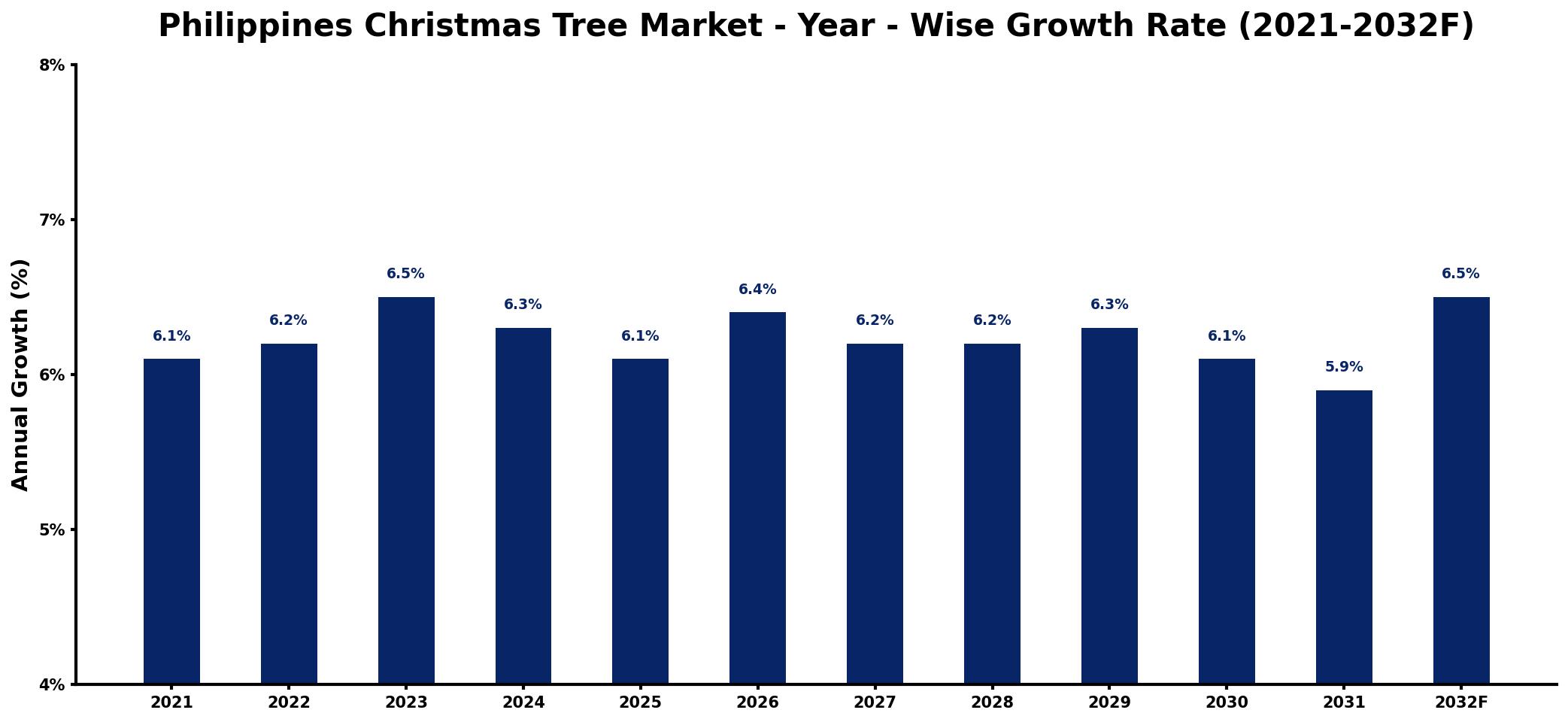
The table below presents the year‑wise growth rates along with the key drivers influencing the market
| Year | Growth Rate | Major Drivers |
| 2021 | 6.1% | Increased consumer spending on decorations |
| 2022 | 6.2% | Growth in festive event planning |
| 2023 | 6.5% | Rise in home decoration investments |
| 2024 | 6.3% | Expansion of retail distribution channels |
| 2025 | 6.1% | Higher demand for eco-friendly options |
| 2026 | 6.4% | Surge in online shopping trends |
| 2027 | 6.2% | Increase in seasonal tourism activities |
| 2028 | 6.2% | strengthening underlying market demand |
| 2029 | 6.3% | Boost in DIY decoration popularity |
| 2030 | 6.1% | rising export shipment volumes |
| 2031 | 5.9% | Steady interest in traditional celebrations |
| 2032 | 6.5% | expanding manufacturing base activity |
Note: Market size estimations and growth projections presented in this report are based on 6Wresearch's proprietary forecasting methodology, utilizing the latest available industry data, government publications, and primary research inputs.
Philippines Christmas Tree Market Synopsis
In recent years, the Philippines Christmas Tree Market has witnessed a surge in demand, particularly for artificial trees and decorative accessories, in line with shifting consumer preferences. However, as we look ahead, this market is expected to evolve, with sustainability becoming a key consideration for consumers and manufacturers alike.
The trend towards eco-friendliness is influencing production practices, prompting companies to explore materials and methods that align with environmental consciousness. With both traditional and modern styles coexisting, the market is poised for dynamic growth driven by innovation and consumer engagement.
Philippines Christmas Tree Market Key Takeaways
- The market is expected to experience significant growth, driven by cultural practices and increased disposable income during the holiday season.
- Innovation in design and materials is changing the landscape, making artificial trees more appealing to consumers.
- Consumer preference is shifting towards sustainable options, pushing manufacturers to adapt their product offerings.
- Urbanization and lifestyle changes are contributing to the growing popularity of Christmas decorations.
- Festive e-commerce growth is enhancing the market landscape, providing consumers with greater access to diverse product selections.
Evaluation of Restraints in Philippines Christmas Tree Market
The Philippines Christmas Tree Market does face certain restraints that could temper its growth potential. Primarily, fluctuations in the economy can influence discretionary spending during the holiday season, which is crucial for this market. Additionally, the competition from alternative festive decorations, such as locally sourced plants or handmade decor, may divert consumer attention from traditional Christmas trees. Furthermore, the importation of cheaper artificial trees from other countries may create challenges for local manufacturers striving to maintain their market share.
Philippines Christmas Tree Market Trends
Several notable trends are shaping the Philippines Christmas Tree Market. The increasing demand for versatile decorations is prompting consumers to seek options that can blend with diverse themes and styles. The rise of social media is also influencing consumers' decoration choices, showcasing creative and visually appealing setups that inspire festive spirit. Moreover, technological advancements are leading to innovative features in artificial trees, such as built-in lighting and automated setups, enhancing user experience.
Philippines Christmas Tree Market Opportunities
Opportunities for growth within the Philippines Christmas Tree Market are abundant. Local manufacturers can capitalize on the sustainability trend by introducing eco-friendly options made from recycled materials. Additionally, tapping into e-commerce platforms presents a chance to reach a broader audience, especially younger consumers who prefer online shopping. Developing seasonal promotional events and partnerships with local communities for tree lighting ceremonies can further enhance brand visibility and engagement.
Government Initiatives in the Philippines Christmas Tree Market
The Philippine government has implemented initiatives aimed at promoting local businesses and sustainable practices, which indirectly benefit the Christmas Tree Market. Public spending on holiday-related events and infrastructure improvements enhances community engagement, promoting local craftsmanship. Moreover, efforts to provide incentives for eco-friendly practices encourage manufacturers to innovate while aligning with national goals to reduce waste and promote sustainability.
Future Insights of the Philippines Christmas Tree Market
Looking towards 2026-2032, the Philippines Christmas Tree Market is expected to continue its positive trajectory. Factors such as increasing urbanization and changing lifestyles will likely drive demand, with more families investing in quality decorations. As sustainability becomes increasingly important, companies that embrace eco-conscious practices will likely gain a competitive edge. Additionally, the integration of technology in festive decorations could redefine consumer expectations, leading to an exciting evolution in the market.
Philippines Christmas Tree Market Latest Developments (2025 - 2026)
Recent developments in the Philippines Christmas Tree Market indicate a growing emphasis on sustainability and innovation. Manufacturers are exploring biodegradable materials and environmentally friendly production techniques. E-commerce platforms are seeing a rise in festive decoration sales, reflecting changing shopping habits among consumers. Collaborations with local artists for unique design offerings are also becoming more prevalent, enhancing product diversity and cultural relevance.
Philippines Christmas Tree Market - Key Attractiveness of the Report
- 10 Years of Market Numbers
- Historical Data Starting from 2022 to 2025
- Base Year: 2025
- Forecast Data until 2032
- Key Performance Indicators Impacting the Market
- Major Upcoming Developments and Projects
Key Highlights of the Report:
- Philippines Christmas Tree Market Outlook
- Market Size of Philippines Christmas Tree Market, 2025
- Forecast of Philippines Christmas Tree Market, 2032
- Historical Data and Forecast of Philippines Christmas Tree Revenues & Volume for the Period 2022-2032F
- Philippines Christmas Tree Market Trend Evolution
- Philippines Christmas Tree Market Drivers and Challenges
- Philippines Christmas Tree Price Trends
- Philippines Christmas Tree Porter's Five Forces
- Philippines Christmas Tree Industry Life Cycle
- Historical Data and Forecast of Philippines Christmas Tree Market Revenues & Volume By Type for the Period 2022-2032F
- Historical Data and Forecast of Philippines Christmas Tree Market Revenues & Volume By Horizontal Tree for the Period 2022-2032F
- Historical Data and Forecast of Philippines Christmas Tree Market Revenues & Volume By Vertical Tree for the Period 2022-2032F
- Historical Data and Forecast of Philippines Christmas Tree Market Revenues & Volume By Location of Deployment for the Period 2022-2032F
- Historical Data and Forecast of Philippines Christmas Tree Market Revenues & Volume By Onshore for the Period 2022-2032F
- Historical Data and Forecast of Philippines Christmas Tree Market Revenues & Volume By Offshore for the Period 2022-2032F
- Philippines Christmas Tree Import Export Trade Statistics
- Market Opportunity Assessment By Type
- Market Opportunity Assessment By Location of Deployment
- Philippines Christmas Tree Top Companies Market Share
- Philippines Christmas Tree Competitive Benchmarking By Technical and Operational Parameters
- Philippines Christmas Tree Company Profiles
- Philippines Christmas Tree Key Strategic Recommendations






































