Philippines Copper Alloy Market Top 5 Importing Countries and Market Competition (HHI) Analysis
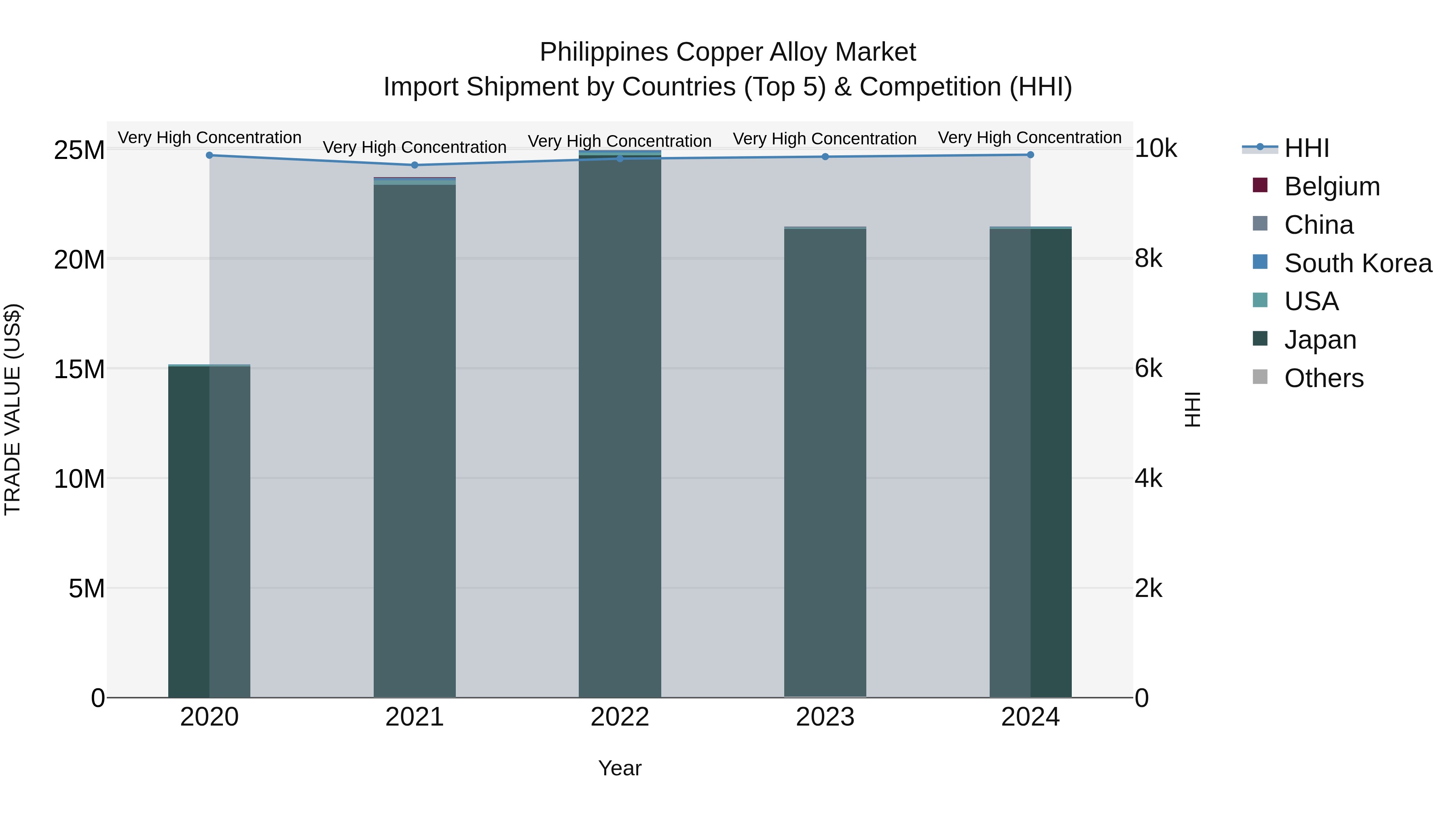
Despite a slight decline in growth rate from 2023 to 2024, the Philippines saw a steady increase in copper alloy import shipments with a promising CAGR of 9.04% from 2020 to 2024. The top exporting countries to the Philippines in 2024, including Japan, USA, South Korea, China, and Singapore, reflect a diverse range of sources. However, the high Herfindahl-Hirschman Index (HHI) concentration indicates a dominant market presence among these key players, shaping the landscape of copper alloy imports in the Philippines.
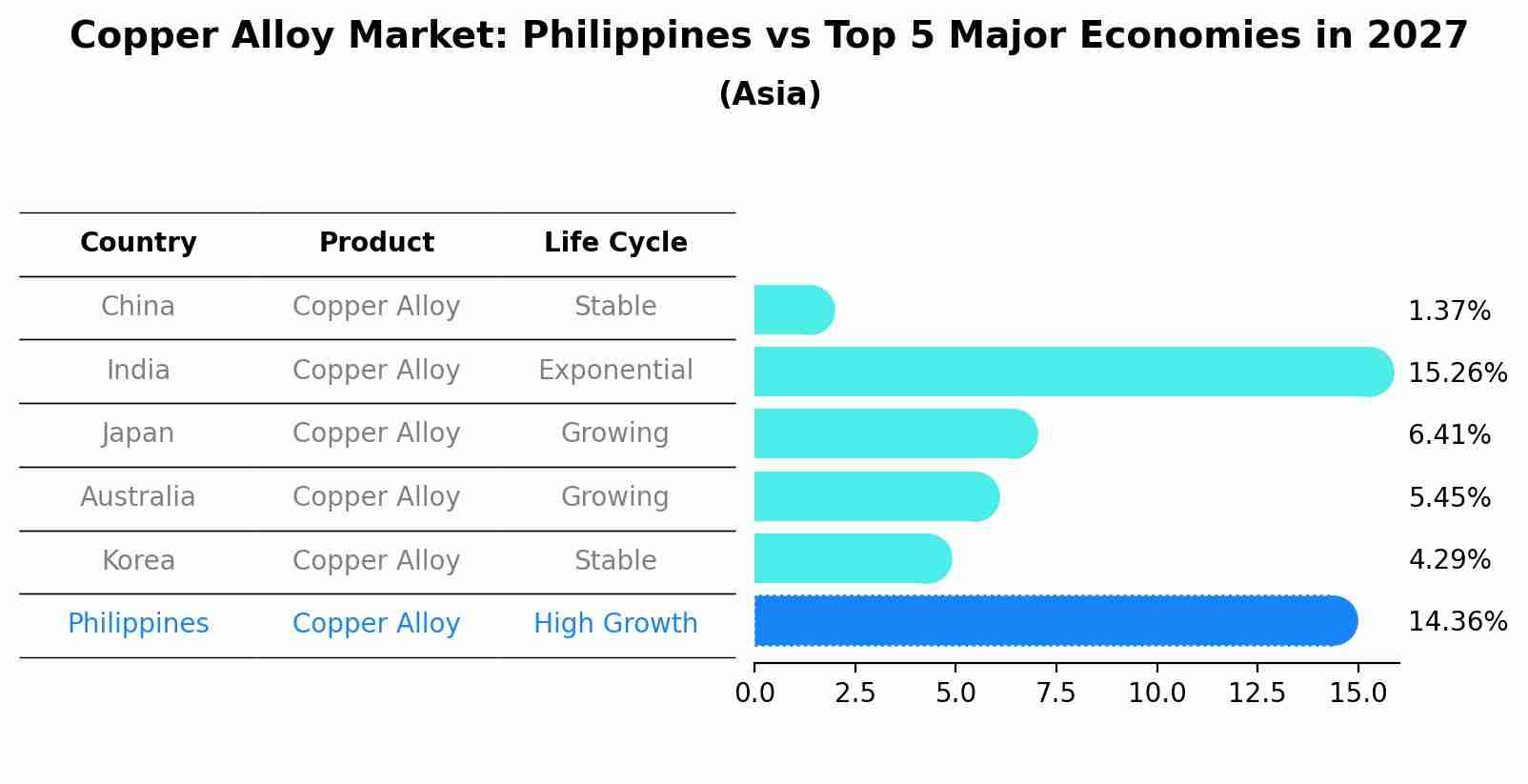
Copper Alloy Market: Philippines vs Top 5 Major Economies in 2027 (Asia)
In the Asia region, the Copper Alloy market in Philippines is projected to expand at a high growth rate of 14.36% by 2027. The largest economy is China, followed by India, Japan, Australia and South Korea.
philippines copper kitchenware market Synopsis
The Philippines copper kitchenware market is expected to register an estimated CAGR of 8% during the forecast period owing to its excellent heat conductivity properties that help prepare food faster than other cookwares available in the markets currently. In addition, consumers are increasingly opting for aesthetically pleasing utensils made up of copper which has proven beneficial for manufacturers? revenue generation through enhanced sales figures over recent years.
Drivers of the Market
The Philippines copper kitchenware market is poised for growth driven by several factors. The aesthetic appeal of copper kitchenware, its excellent heat conductivity, and durability make it an attractive choice for consumers seeking premium cookware. Additionally, the rise in disposable income and changing consumer preferences towards high-quality kitchen products contribute to the demand for copper kitchenware. The market is also influenced by the trend of home cooking and culinary enthusiasts, as well as the growing awareness of the health benefits associated with copper-infused cookware.
Challenges of the Market
The Philippines copper kitchenware market faces several challenges. The first challenge is the relatively high cost associated with copper kitchenware compared to alternative materials. This can deter price-sensitive consumers from purchasing copper kitchenware products. Additionally, the market is influenced by fluctuations in copper prices on the global market, which can lead to unpredictable pricing for both manufacturers and consumers. Another challenge is the competition from other types of kitchenware materials that offer similar functionality at a lower cost, such as stainless steel or non-stick coatings. Moreover, there might be issues related to maintaining the appearance of copper kitchenware, as it tends to tarnish over time and requires regular cleaning and maintenance. Lastly, educating consumers about the benefits of copper kitchenware and its unique properties is essential, as many consumers might not be aware of the advantages it offers in terms of heat conductivity and cooking performance.
COVID-19 Impact on the Market
The Philippines copper kitchenware market has demonstrated resilience over the years, driven by the aesthetic appeal and functional benefits of copper utensils. However, the market experienced disruptions due to the COVID-19 pandemic. Lockdowns and supply chain disruptions affected production and distribution, leading to fluctuations in availability and pricing. As the situation gradually improves, the market is expected to regain momentum, driven by the growing preference for high-quality cookware and the pursuit of traditional culinary practices.
Key Players in the Market
The Philippines copper kitchenware market is experiencing steady growth due to the increasing preference for high-quality cookware. Key players in this market include established brands such as CopperCuisine Ltd. and GourmetCraft Industries. These companies continue to dominate the market by offering a wide range of copper kitchenware products that cater to both traditional and modern cooking practices.
Key Highlights of the Report:
- Philippines Copper Alloy Market Outlook
- Market Size of Philippines Copper Alloy Market, 2024
- Forecast of Philippines Copper Alloy Market, 2031
- Historical Data and Forecast of Philippines Copper Alloy Revenues & Volume for the Period 2021-2031
- Philippines Copper Alloy Market Trend Evolution
- Philippines Copper Alloy Market Drivers and Challenges
- Philippines Copper Alloy Price Trends
- Philippines Copper Alloy Porter's Five Forces
- Philippines Copper Alloy Industry Life Cycle
- Historical Data and Forecast of Philippines Copper Alloy Market Revenues & Volume By Type for the Period 2021-2031
- Historical Data and Forecast of Philippines Copper Alloy Market Revenues & Volume By Rods & Wires for the Period 2021-2031
- Historical Data and Forecast of Philippines Copper Alloy Market Revenues & Volume By Plates & Strips for the Period 2021-2031
- Historical Data and Forecast of Philippines Copper Alloy Market Revenues & Volume By Tubes for the Period 2021-2031
- Historical Data and Forecast of Philippines Copper Alloy Market Revenues & Volume By Other for the Period 2021-2031
- Historical Data and Forecast of Philippines Copper Alloy Market Revenues & Volume By Application for the Period 2021-2031
- Historical Data and Forecast of Philippines Copper Alloy Market Revenues & Volume By Electrical Industry for the Period 2021-2031
- Historical Data and Forecast of Philippines Copper Alloy Market Revenues & Volume By Transportation Industry for the Period 2021-2031
- Historical Data and Forecast of Philippines Copper Alloy Market Revenues & Volume By Machinery and Metallurgy Industry for the Period 2021-2031
- Historical Data and Forecast of Philippines Copper Alloy Market Revenues & Volume By Architecture and Art for the Period 2021-2031
- Historical Data and Forecast of Philippines Copper Alloy Market Revenues & Volume By Other for the Period 2021-2031
- Philippines Copper Alloy Import Export Trade Statistics
- Market Opportunity Assessment By Type
- Market Opportunity Assessment By Application
- Philippines Copper Alloy Top Companies Market Share
- Philippines Copper Alloy Competitive Benchmarking By Technical and Operational Parameters
- Philippines Copper Alloy Company Profiles
- Philippines Copper Alloy Key Strategic Recommendations






































