Philippines Dairy Protein Market Top 5 Importing Countries and Market Competition (HHI) Analysis
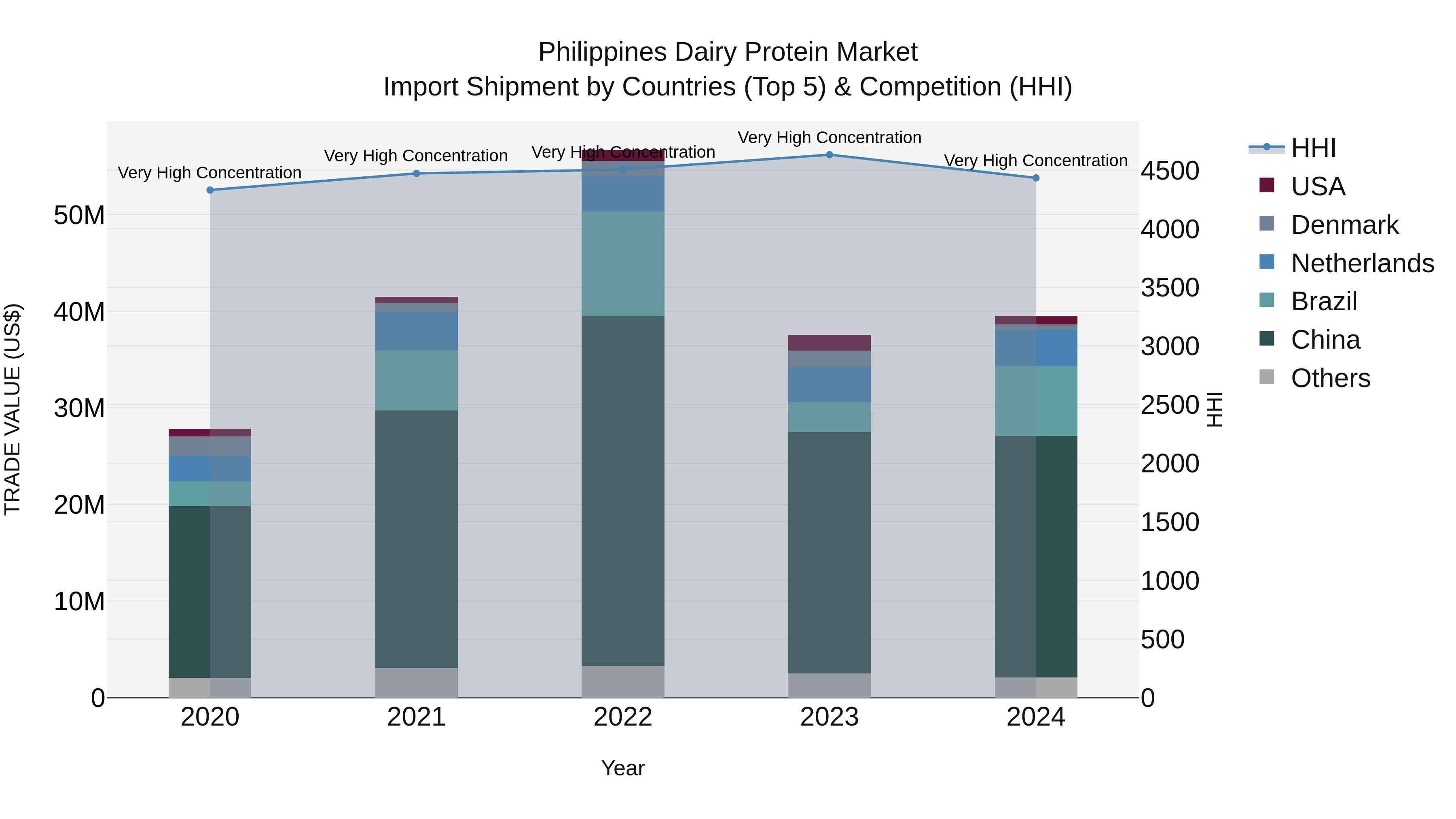
In 2024, the Philippines continued to see significant dairy protein import shipments, with top exporters being China, Brazil, Netherlands, USA, and Denmark. The high Herfindahl-Hirschman Index (HHI) indicates a concentrated market. The compound annual growth rate (CAGR) from 2020 to 2024 was strong at 9.17%, showing sustained demand. Additionally, the growth rate from 2023 to 2024 stood at 5.21%, signaling continued expansion in the import market for dairy protein in the Philippines.
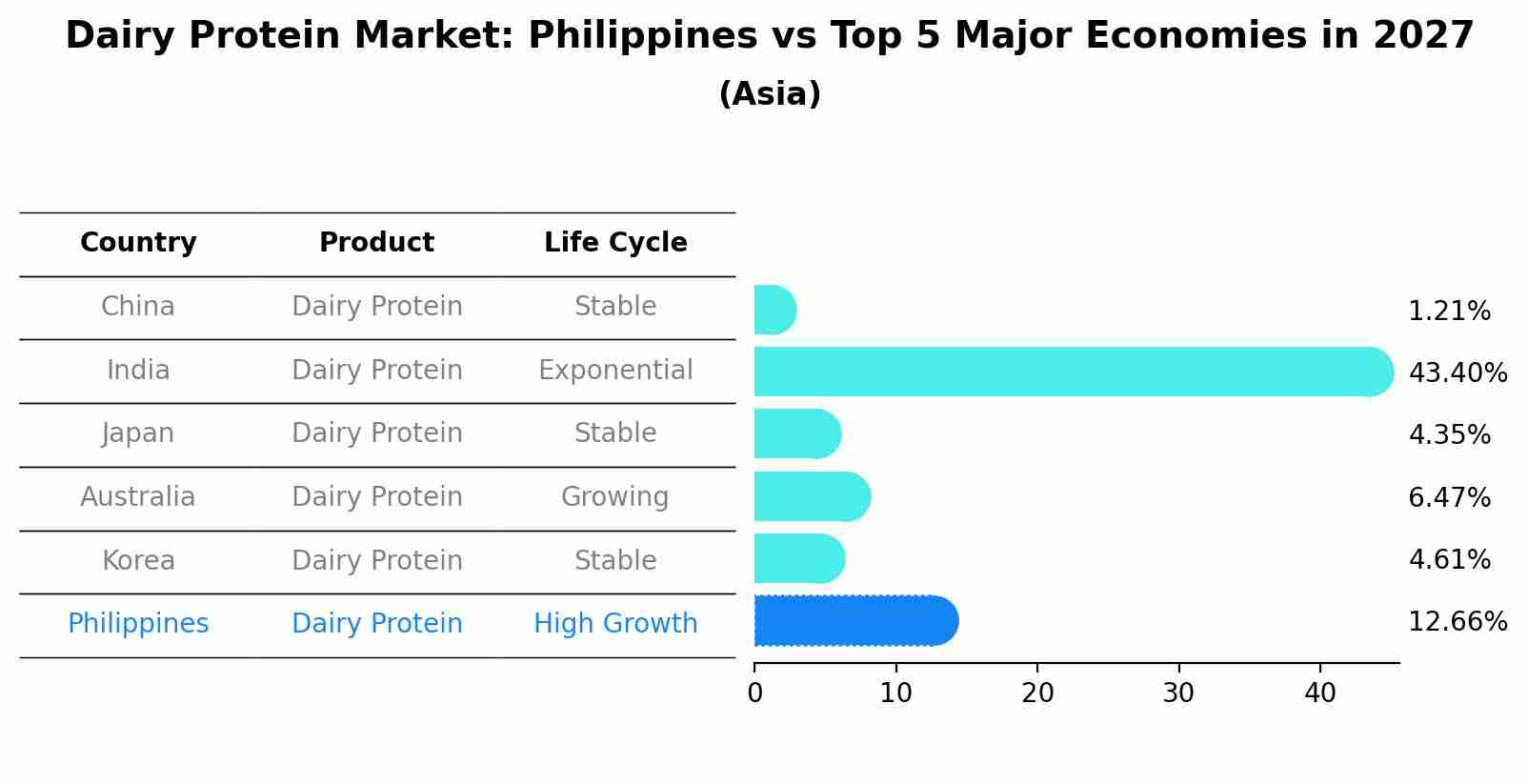
Dairy Protein Market: Philippines vs Top 5 Major Economies in 2027 (Asia)
By 2027, Philippines's Dairy Protein market is forecasted to achieve a high growth rate of 12.66%, with China leading the Asia region, followed by India, Japan, Australia and South Korea.
Philippines Dairy Protein Market Synopsis
The Philippines dairy protein market is estimated to be worth US$ 650.3 million in 2025, and is expected to grow at a CAGR of 4.6% during the forecast period. The increasing demand for convenience products such as instant food mixes, snacks, ready meals etc., coupled with rising health consciousness among consumers are driving the growth of the Philippine dairy industry. Additionally, increased spending on processed food & beverages has influenced the increasing number of product launches within this sector which further propels its growth across both rural and urban areas in the country.
Drivers of the market
Key drivers in the Philippines dairy protein market contribute to its growth and significance in the food and beverage sector. The increasing demand for protein-enriched foods and beverages, particularly among health-conscious consumers and athletes, has driven the demand for dairy protein. The versatility of dairy protein ingredients in various applications, such as protein bars, shakes, supplements, and baked goods, has further expanded their use. The dairy industry`s focus on product innovation and the development of value-added products have led to the formulation of dairy proteins with enhanced functionalities, driving their adoption in food formulations.
Challenges of the market
The Philippines dairy protein market encounters challenges related to affordability and accessibility. Dairy protein products can sometimes be priced beyond the reach of certain consumer segments, limiting their adoption. Ensuring the availability of a variety of dairy protein options, including alternatives for lactose-intolerant individuals, is essential to expand market penetration.
Covid-19 Impact of the market
The Philippines dairy protein market navigated through changes caused by the COVID-19 pandemic. With disruptions in the food processing sector and shifts in consumer behavior, the demand for dairy protein faced challenges. The closure of fitness centers and reduced sports activities impacted the demand for protein supplements. However, the increased focus on health and wellness at home led to sustained demand for dairy protein products among health-conscious consumers. Manufacturers and suppliers had to adapt by enhancing their online presence and marketing efforts to target consumers looking to maintain their fitness routines. Supply chain disruptions posed challenges in sourcing raw materials and ingredients for protein products. Despite these challenges, the Philippines dairy protein market responded by addressing changing consumer preferences and emphasizing the role of dairy protein in supporting a healthy lifestyle.
Key Players of the market
In the Philippines dairy protein market, various players are instrumental in providing a variety of protein-rich dairy products. Companies like ProteinCrafters Inc., DairyProtein Brands, and NutriDairy Protein Producers play a significant role in producing and distributing dairy protein concentrates and isolates that cater to nutritional and dietary needs.
Key Highlights of the Report:
- Philippines Dairy Protein Market Outlook
- Market Size of Philippines Dairy Protein Market, 2024
- Forecast of Philippines Dairy Protein Market, 2031
- Historical Data and Forecast of Philippines Dairy Protein Revenues & Volume for the Period 2021-2031
- Philippines Dairy Protein Market Trend Evolution
- Philippines Dairy Protein Market Drivers and Challenges
- Philippines Dairy Protein Price Trends
- Philippines Dairy Protein Porter's Five Forces
- Philippines Dairy Protein Industry Life Cycle
- Historical Data and Forecast of Philippines Dairy Protein Market Revenues & Volume By Type for the Period 2021-2031
- Historical Data and Forecast of Philippines Dairy Protein Market Revenues & Volume By Casein and Derivatives for the Period 2021-2031
- Historical Data and Forecast of Philippines Dairy Protein Market Revenues & Volume By Whey protein for the Period 2021-2031
- Historical Data and Forecast of Philippines Dairy Protein Market Revenues & Volume By Milk Protein Concentrate for the Period 2021-2031
- Historical Data and Forecast of Philippines Dairy Protein Market Revenues & Volume By Application for the Period 2021-2031
- Historical Data and Forecast of Philippines Dairy Protein Market Revenues & Volume By Food & Beverages for the Period 2021-2031
- Historical Data and Forecast of Philippines Dairy Protein Market Revenues & Volume By Nutrition for the Period 2021-2031
- Historical Data and Forecast of Philippines Dairy Protein Market Revenues & Volume By Personal Care & Cosmetics for the Period 2021-2031
- Historical Data and Forecast of Philippines Dairy Protein Market Revenues & Volume By Feed for the Period 2021-2031
- Historical Data and Forecast of Philippines Dairy Protein Market Revenues & Volume By Others for the Period 2021-2031
- Historical Data and Forecast of Philippines Dairy Protein Market Revenues & Volume By Form for the Period 2021-2031
- Historical Data and Forecast of Philippines Dairy Protein Market Revenues & Volume By Solid for the Period 2021-2031
- Historical Data and Forecast of Philippines Dairy Protein Market Revenues & Volume By Liquid for the Period 2021-2031
- Philippines Dairy Protein Import Export Trade Statistics
- Market Opportunity Assessment By Type
- Market Opportunity Assessment By Application
- Market Opportunity Assessment By Form
- Philippines Dairy Protein Top Companies Market Share
- Philippines Dairy Protein Competitive Benchmarking By Technical and Operational Parameters
- Philippines Dairy Protein Company Profiles
- Philippines Dairy Protein Key Strategic Recommendations






































