Philippines Debt Collection Software Market Size & Growth Rate (2026-2032)
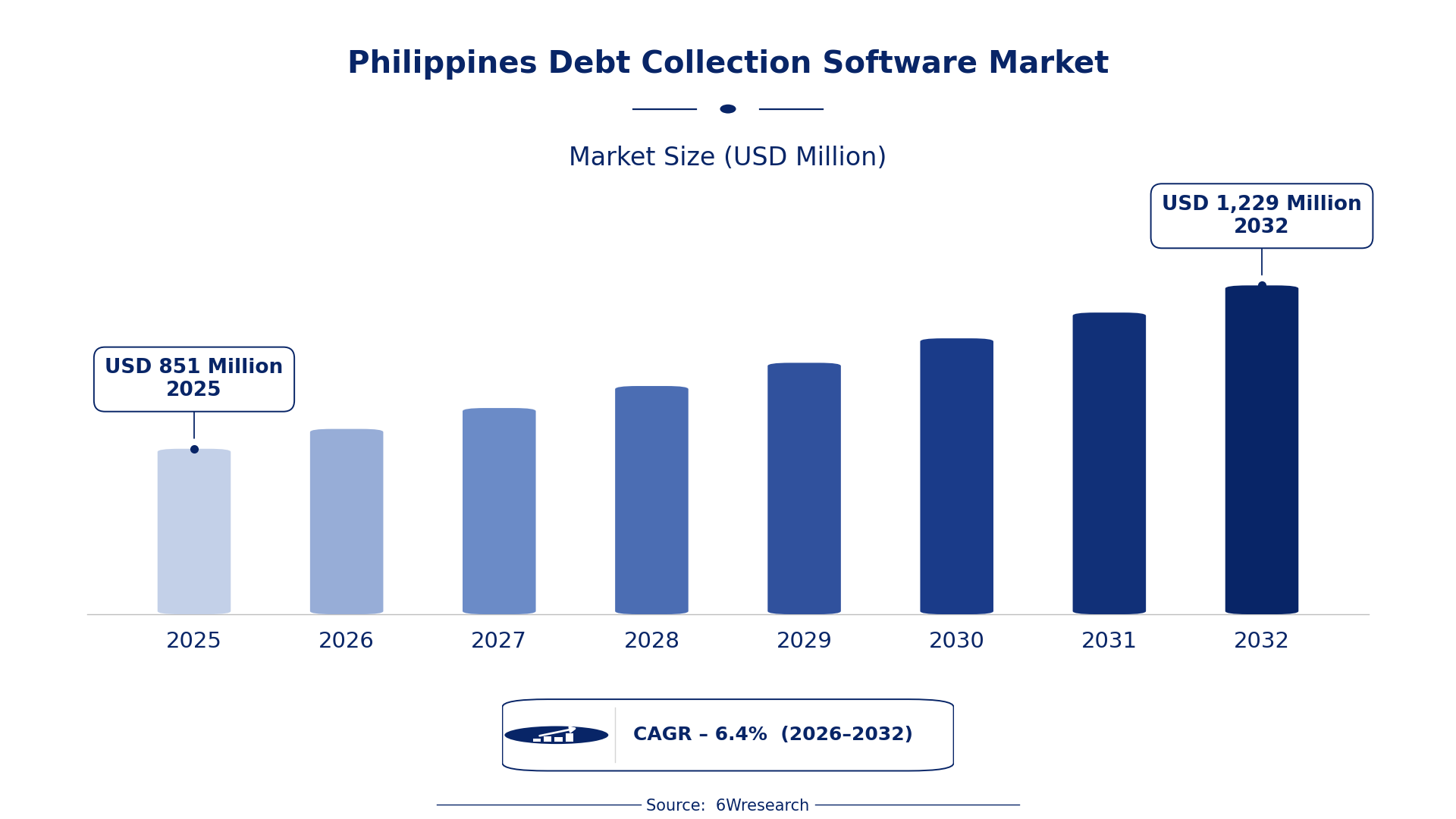
The Philippines Debt Collection Software Market was estimated at USD 851 Million in 2025 and is projected to reach USD 1229 Million by 2032, growing at a CAGR of 6.4% from 2026 to 2032.
Philippines Debt Collection Software Market Synopsis
The demand for effective debt recovery solutions in the Philippines is escalating. Financial institutions are facing increasing pressure to enhance their collection processes, driven by rising non-performing loans and a challenging economic environment.
As collection agencies adopt advanced technologies, the market for debt collection software is evolving rapidly. Features like AI-driven analytics and automated communication are becoming crucial in optimizing recovery rates and ensuring compliance.
Philippines Debt Collection Software Market Year-wise Growth Rate and Key Drivers
This graph illustrates the annual growth rates of the Philippines Debt Collection Software Market from 2021 to 2032, highlighting a steady upward trajectory and projected expansion over the forecast period.
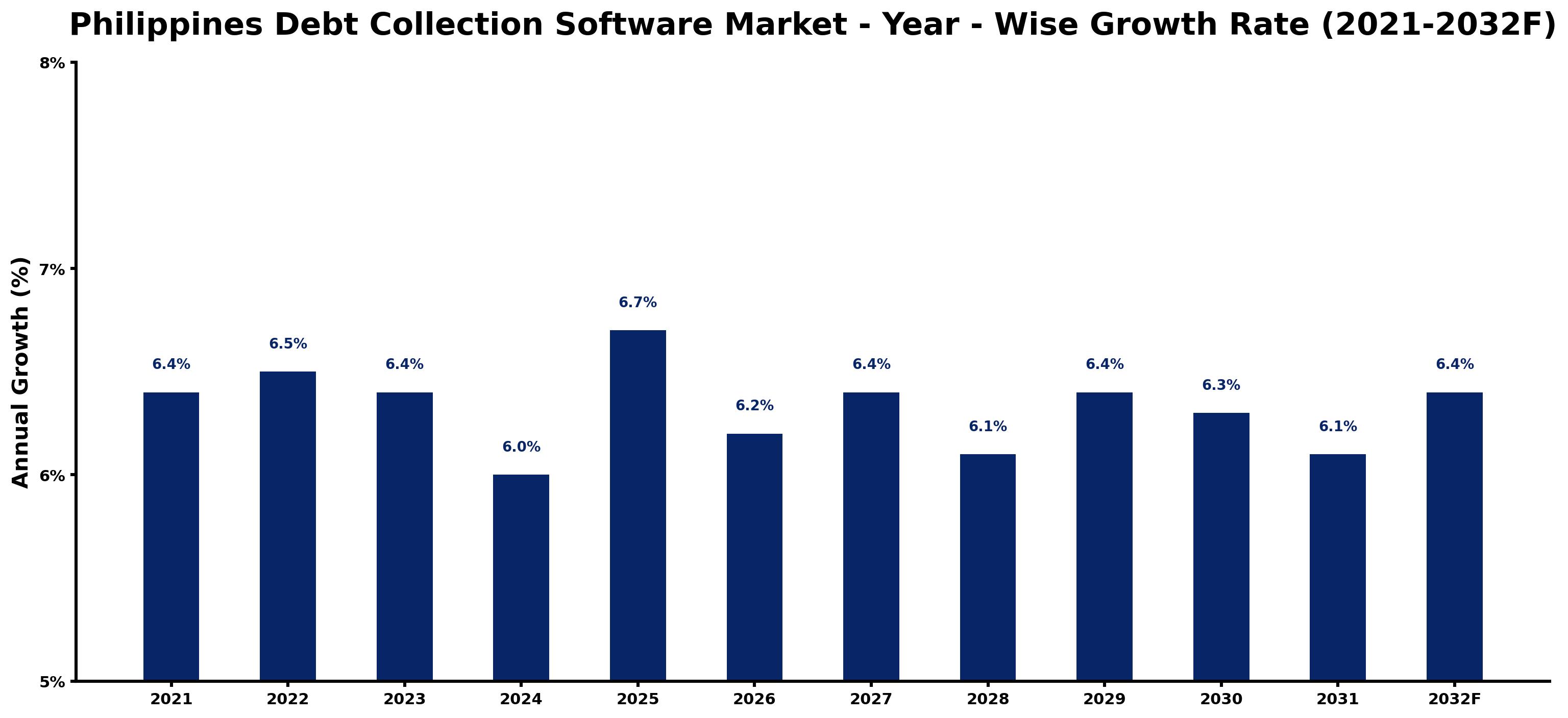
The table below presents the year‑wise growth rates along with the key drivers influencing the market
| Year | Growth Rate | Major Drivers |
| 2021 | 6.4% | Rising consumer debt amid economic recovery efforts |
| 2022 | 6.5% | Regulatory push for digital debt recovery solutions |
| 2023 | 6.4% | Increased adoption of fintech solutions for collections |
| 2024 | 6.0% | Government support for SMEs through debt restructuring |
| 2025 | 6.7% | Implementation of stricter credit reporting regulations |
| 2026 | 6.2% | Growing need for remote debt collection tools |
| 2027 | 6.4% | Shift to online transactions boosting debt software demand |
| 2028 | 6.1% | Enhanced compliance requirements for financial institutions |
| 2029 | 6.4% | Widespread digital payments adoption facilitating collections |
| 2030 | 6.3% | Focus on consumer protection laws strengthening collections sector |
| 2031 | 6.1% | Emergence of local startups offering innovative solutions |
| 2032 | 6.4% | Ongoing economic growth driving higher credit demand |
Note: Market size estimations and growth projections presented in this report are based on 6Wresearch's proprietary forecasting methodology, utilizing the latest available industry data, government publications, and primary research inputs.
Philippines Debt Collection Software Market Key Takeaways
Below are some of the specific key takeaways from the market, including:
- Strong growth driven by the increasing need for efficient debt recovery processes.
- The adoption of technology is reshaping how agencies approach collections.
- Regulatory compliance remains a major focus for financial institutions.
- COVID-19 has intensified the demand for debt collection solutions.
- Key software features include automation and analytics to improve recovery rates.
Evaluation of Restraints in Philippines Debt Collection Software Market
The Philippines Debt Collection Software Market is constrained by stringent regulatory frameworks that demand ethical collection practices. Financial institutions must navigate complex compliance issues, which can slow down the implementation of new software solutions. Additionally, negative public perception of debt collection practices poses a challenge, making brand reputation a critical concern for firms. As organizations strive to align their operations with legal requirements, this balancing act can limit the speed and scope of software adoption.
Philippines Debt Collection Software Market Trends
A noticeable trend in the Philippines Debt Collection Software Market is the increasing integration of AI and machine learning technologies. These advancements enhance predictive analytics, allowing agencies to tailor their collection strategies more effectively. Another trend is the growing emphasis on omni-channel communication, enabling agencies to interact with debtors through various platforms, including SMS, email, and social media. Such approaches not only improve engagement but also foster a more customer-centric collection process.
Philippines Debt Collection Software Market Opportunities
Investment opportunities are blossoming in the Philippines Debt Collection Software Market, particularly for firms that can offer innovative compliance solutions. With the ongoing increase in debt levels, especially post-pandemic, agencies are actively seeking tools that streamline operations while adhering to regulations. on top of that, partnerships between software vendors and financial institutions can create synergies that enhance service offerings and broaden market reach.
Government Initiatives in the Philippines Debt Collection Software Market
Government policy plays a crucial role in shaping the Philippines Debt Collection Software Market. As authorities focus on enhancing financial stability and protecting consumer rights, regulatory initiatives are being introduced to ensure compliance in debt collection practices. This framework not only aims to curb unethical practices but also encourages the adoption of technology that aligns with these standards.
- A recently completed initiative involved the introduction of a regulatory framework aimed at improving transparency in debt collection practices.
- Currently ongoing is a government-led program that promotes the adoption of digital solutions in financial services, enhancing the efficiency of debt recovery.
- A planned public-private collaboration is expected to launch in 2026, focusing on developing a comprehensive compliance monitoring system for debt collection agencies.
- In 2025, a national awareness campaign was initiated to educate consumers about their rights and responsibilities related to debt recovery.
- A regulatory review is underway to assess the impact of current policies on the debt collection sector, with expected recommendations in late 2025.
Future Insights of the Philippines Debt Collection Software Market
Looking ahead to 2026-2032, the Philippines Debt Collection Software Market is set to evolve significantly. The integration of emerging technologies such as blockchain for secure transactions and enhanced data protection is anticipated. As the regulatory environment becomes clearer, firms that proactively adapt their practices to meet compliance requirements will likely gain a competitive advantage. The trend toward consumer-friendly collection practices will further shape the market, compelling agencies to innovate continuously.
Philippines Debt Collection Software Market Latest Developments
In the past year, the Philippines Debt Collection Software Market has seen a flurry of activity as companies adapt to changing regulations and consumer expectations. The push for digital transformation remains strong, with many agencies investing in advanced software solutions to improve efficiency and compliance.
- A major technology vendor launched a new AI-driven debt recovery platform in early 2025, enhancing predictive analytics capabilities for collection agencies.
- In Q2 2025, a leading software provider announced a partnership with a financial institution to develop tailored debt collection solutions aimed at improving compliance.
- An initiative that began in mid-2025 focuses on integrating customer relationship management (CRM) systems with debt collection software to streamline operations.
- A rollout expected to begin in late 2025 will introduce advanced analytics features designed to optimize collection strategies based on debtor behavior.
- A collaboration between local agencies and tech firms is currently underway to create educational workshops on effective debt recovery practices.
Philippines Debt Collection Software Market - Key Attractiveness of the Report
- 10 Years of Market Numbers
- Historical Data Starting from 2022 to 2025
- Base Year: 2025
- Forecast Data until 2032
- Key Performance Indicators Impacting the Market
- Major Upcoming Developments and Projects
Key Highlights of the Report:
- Philippines Debt Collection Software Market Outlook
- Market Size of Philippines Debt Collection Software Market, 2025
- Forecast of Philippines Debt Collection Software Market, 2032
- Historical Data and Forecast of Philippines Debt Collection Software Revenues & Volume for the Period 2022-2032F
- Philippines Debt Collection Software Market Trend Evolution
- Philippines Debt Collection Software Market Drivers and Challenges
- Philippines Debt Collection Software Price Trends
- Philippines Debt Collection Software Porter's Five Forces
- Philippines Debt Collection Software Industry Life Cycle
- Historical Data and Forecast of Philippines Debt Collection Software Market Revenues & Volume By Component for the Period 2022-2032F
- Historical Data and Forecast of Philippines Debt Collection Software Market Revenues & Volume By Software for the Period 2022-2032F
- Historical Data and Forecast of Philippines Debt Collection Software Market Revenues & Volume By Services for the Period 2022-2032F
- Historical Data and Forecast of Philippines Debt Collection Software Market Revenues & Volume By User Type for the Period 2022-2032F
- Historical Data and Forecast of Philippines Debt Collection Software Market Revenues & Volume By Financial Institutions for the Period 2022-2032F
- Historical Data and Forecast of Philippines Debt Collection Software Market Revenues & Volume By Collection Agencies for the Period 2022-2032F
- Historical Data and Forecast of Philippines Debt Collection Software Market Revenues & Volume By Healthcare for the Period 2022-2032F
- Historical Data and Forecast of Philippines Debt Collection Software Market Revenues & Volume By Government for the Period 2022-2032F
- Historical Data and Forecast of Philippines Debt Collection Software Market Revenues & Volume By Telecom & Utilities for the Period 2022-2032F
- Historical Data and Forecast of Philippines Debt Collection Software Market Revenues & Volume By Others for the Period 2022-2032F
- Historical Data and Forecast of Philippines Debt Collection Software Market Revenues & Volume By Deployment Type for the Period 2022-2032F
- Historical Data and Forecast of Philippines Debt Collection Software Market Revenues & Volume By On-Premises for the Period 2022-2032F
- Historical Data and Forecast of Philippines Debt Collection Software Market Revenues & Volume By Cloud for the Period 2022-2032F
- Historical Data and Forecast of Philippines Debt Collection Software Market Revenues & Volume By Organization Size for the Period 2022-2032F
- Historical Data and Forecast of Philippines Debt Collection Software Market Revenues & Volume By SMEs for the Period 2022-2032F
- Historical Data and Forecast of Philippines Debt Collection Software Market Revenues & Volume By Large Enterprises for the Period 2022-2032F
- Philippines Debt Collection Software Import Export Trade Statistics
- Market Opportunity Assessment By Component
- Market Opportunity Assessment By User Type
- Market Opportunity Assessment By Deployment Type
- Market Opportunity Assessment By Organization Size
- Philippines Debt Collection Software Top Companies Market Share
- Philippines Debt Collection Software Competitive Benchmarking By Technical and Operational Parameters
- Philippines Debt Collection Software Company Profiles
- Philippines Debt Collection Software Key Strategic Recommendations






































