Philippines Deli Meat Market Size, Share & Growth Rate
The Philippines Deli Meat Market was estimated at USD 499 Million in 2025 and is projected to reach USD 690 Million by 2032, growing at a CAGR of 4.7% from 2026 to 2032. This growth trajectory is largely fueled by the country's rapid urbanization and evolving consumer preferences for convenience. As busy lifestyles drive the demand for ready-to-eat protein sources, deli meats, particularly sausages and ham, have gained significant traction among Filipino consumers.
Philippines Deli Meat Market Year-wise Growth Rate and Key Drivers
This graph highlights how the Philippines Deli Meat Market has steadily grown over the years, supported by major growth factors.
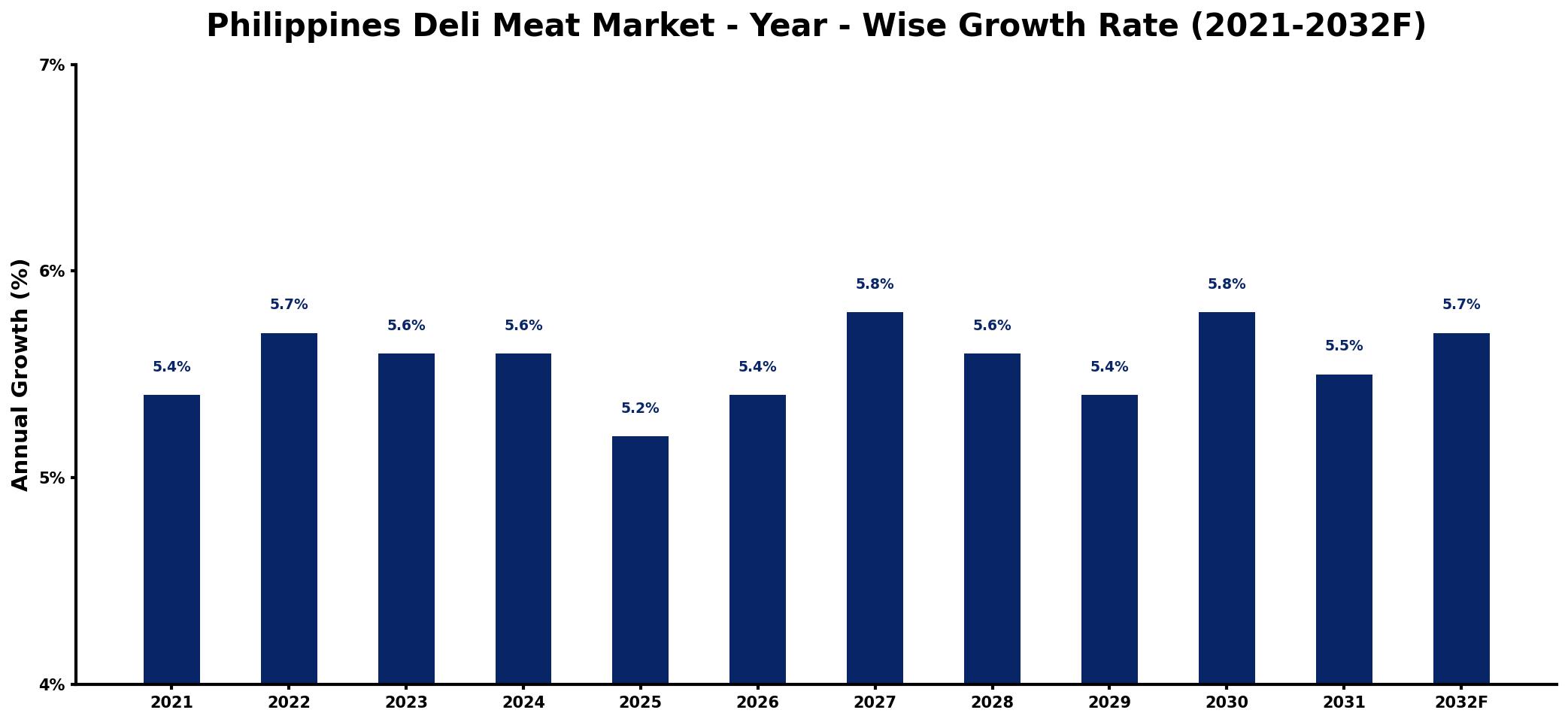
The table below presents the year‑wise growth rates along with the key drivers influencing the market
| Year | Growth Rate | Major Drivers |
| 2021 | 5.4% | Rising consumer health consciousness |
| 2022 | 5.7% | Expansion of retail distribution channels |
| 2023 | 5.6% | Growing demand for convenience foods |
| 2024 | 5.6% | Increase in urban population density |
| 2025 | 5.2% | Surge in online grocery shopping |
| 2026 | 5.4% | Investment in cold storage facilities |
| 2027 | 5.8% | Growth in foodservice sector |
| 2028 | 5.6% | Development of new product lines |
| 2029 | 5.4% | rising procurement volume requirements |
| 2030 | 5.8% | rising export shipment volumes |
| 2031 | 5.5% | Rise in home cooking trends |
| 2032 | 5.7% | Strengthening of supply chain networks |
Note: Market size estimations and growth projections presented in this report are based on 6Wresearch's proprietary forecasting methodology, utilizing the latest available industry data, government publications, and primary research inputs.
Philippines Deli Meat Market Synopsis
The Philippines deli meat market is witnessing a notable transformation as changing dietary habits and rising disposable incomes contribute to its expansion. Consumers are increasingly seeking quick meal solutions that do not compromise on taste or nutrition, driving the popularity of deli meats. In parallel, the growing penetration of modern retail formats makes these products more accessible across various consumer demographics.
As interest in diverse culinary experiences rises, the market has seen a shift toward international cuisine, notably sandwiches that prominently feature deli meats. With this change, producers are increasingly focused on quality and safety to address health concerns surrounding processed meats, positioning themselves as trusted providers of both convenience and nutrition.
Philippines Deli Meat Market Key Takeaways
- The market is anticipated to experience significant growth, driven by urban lifestyles and evolving dietary preferences.
- Product innovations and a focus on health and quality will be essential for capturing consumer interest.
- Expanding modern retail channels are facilitating wider distribution of deli meat products.
- Convenience and ready-to-eat options are central to meeting the demands of busy consumers.
- Increased consumer awareness regarding health benefits may enhance market expansion over time.
Evaluation of Restraints in Philippines Deli Meat Market
While the market displays promising growth potential, it is not without its hurdles. A persistent concern among consumers is the perception of processed meats and their association with health risks. Despite the increasing availability of high-quality products, some segments of the population remain skeptical regarding the safety and nutritional value of deli meats. Addressing these concerns through education and transparent marketing strategies will be crucial in reshaping consumer perceptions and enhancing market penetration.
Philippines Deli Meat Market Trends
One of the most significant trends in the Philippines deli meat market is the rising preference for gourmet and artisanal products. Consumers are increasingly inclined toward premium offerings that emphasize quality ingredients and authentic flavors. Additionally, the surge in online grocery shopping and food delivery services is reshaping how consumers access deli meats, making them more convenient than ever before. Sustainability and ethical sourcing practices are also becoming pivotal in influencing purchase decisions, as environmentally conscious consumers seek out brands that align with their values.
Philippines Deli Meat Market Opportunities
The growing demand for convenient meal solutions presents substantial opportunities for businesses operating in the deli meat sector. Companies can leverage this trend by investing in innovative product development, including healthier and more diverse options that cater to shifting consumer preferences. Furthermore, expanding into untapped geographic regions and enhancing online sales channels could significantly boost market reach. Collaborations with culinary professionals to create unique recipes featuring deli meats may also enhance brand visibility and consumer engagement.
Government Initiatives in the Philippines Deli Meat Market
The government of the Philippines has recognized the importance of the food industry in economic development, implementing various initiatives aimed at boosting local production and food safety standards. Programs that promote agricultural sustainability and incentivize local processing can enhance the quality and availability of deli meats. Additionally, regulatory frameworks are being developed to ensure food safety, further supporting consumer confidence in processed products. These initiatives collectively create a conducive environment for growth within the deli meat market.
Future Insights of the Philippines Deli Meat Market
Looking ahead to the period from 2026 to 2032, the Philippines deli meat market is poised for robust growth, driven by ongoing urbanization and demographic shifts. The increasing pace of lifestyle changes will likely enhance the demand for quick and convenient food solutions, further solidifying deli meats as a staple in the Filipino diet. As brands adapt to consumer demands for transparency and quality, the emphasis on health benefits will shape product offerings, making it essential for players to stay ahead of market trends and consumer preferences.
Philippines Deli Meat Market Latest Developments (2025 - 2026)
Recent months have seen a notable shift toward innovation within the deli meat sector in the Philippines. Companies are increasingly focusing on health-oriented product lines, including low-sodium and organic options, to meet the demands of health-conscious consumers. Furthermore, collaborations with local chefs and culinary influencers are gaining traction as brands seek to enhance their appeal through creative recipes and marketing campaigns. This emphasis on culinary creativity, combined with a steady increase in e-commerce platforms, signifies a dynamic direction for the industry.
Philippines Deli Meat Market - Key Attractiveness of the Report
- 10 Years of Market Numbers
- Historical Data Starting from 2022 to 2025
- Base Year: 2025
- Forecast Data until 2032
- Key Performance Indicators Impacting the Market
- Major Upcoming Developments and Projects
Key Highlights of the Report:
- Philippines Deli Meat Market Outlook
- Market Size of Philippines Deli Meat Market, 2025
- Forecast of Philippines Deli Meat Market, 2032
- Historical Data and Forecast of Philippines Deli Meat Revenues & Volume for the Period 2022-2032F
- Philippines Deli Meat Market Trend Evolution
- Philippines Deli Meat Market Drivers and Challenges
- Philippines Deli Meat Price Trends
- Philippines Deli Meat Porter's Five Forces
- Philippines Deli Meat Industry Life Cycle
- Historical Data and Forecast of Philippines Deli Meat Market Revenues & Volume By Source for the Period 2022-2032F
- Historical Data and Forecast of Philippines Deli Meat Market Revenues & Volume By Beef for the Period 2022-2032F
- Historical Data and Forecast of Philippines Deli Meat Market Revenues & Volume By Pork for the Period 2022-2032F
- Historical Data and Forecast of Philippines Deli Meat Market Revenues & Volume By Chicken for the Period 2022-2032F
- Historical Data and Forecast of Philippines Deli Meat Market Revenues & Volume By Others for the Period 2022-2032F
- Historical Data and Forecast of Philippines Deli Meat Market Revenues & Volume By Product Type for the Period 2022-2032F
- Historical Data and Forecast of Philippines Deli Meat Market Revenues & Volume By Cured Meat for the Period 2022-2032F
- Historical Data and Forecast of Philippines Deli Meat Market Revenues & Volume By Uncured Meat for the Period 2022-2032F
- Historical Data and Forecast of Philippines Deli Meat Market Revenues & Volume By Sales Channel for the Period 2022-2032F
- Historical Data and Forecast of Philippines Deli Meat Market Revenues & Volume By Hypermarkets/Supermarkets for the Period 2022-2032F
- Historical Data and Forecast of Philippines Deli Meat Market Revenues & Volume By Specialty Stores for the Period 2022-2032F
- Historical Data and Forecast of Philippines Deli Meat Market Revenues & Volume By Convenience Stores for the Period 2022-2032F
- Historical Data and Forecast of Philippines Deli Meat Market Revenues & Volume By Online Channels for the Period 2022-2032F
- Historical Data and Forecast of Philippines Deli Meat Market Revenues & Volume By Others for the Period 2022-2032F
- Philippines Deli Meat Import Export Trade Statistics
- Market Opportunity Assessment By Source
- Market Opportunity Assessment By Product Type
- Market Opportunity Assessment By Sales Channel
- Philippines Deli Meat Top Companies Market Share
- Philippines Deli Meat Competitive Benchmarking By Technical and Operational Parameters
- Philippines Deli Meat Company Profiles
- Philippines Deli Meat Key Strategic Recommendations






































