Philippines Digital Signature Market Size & Growth Rate (2026-2032)
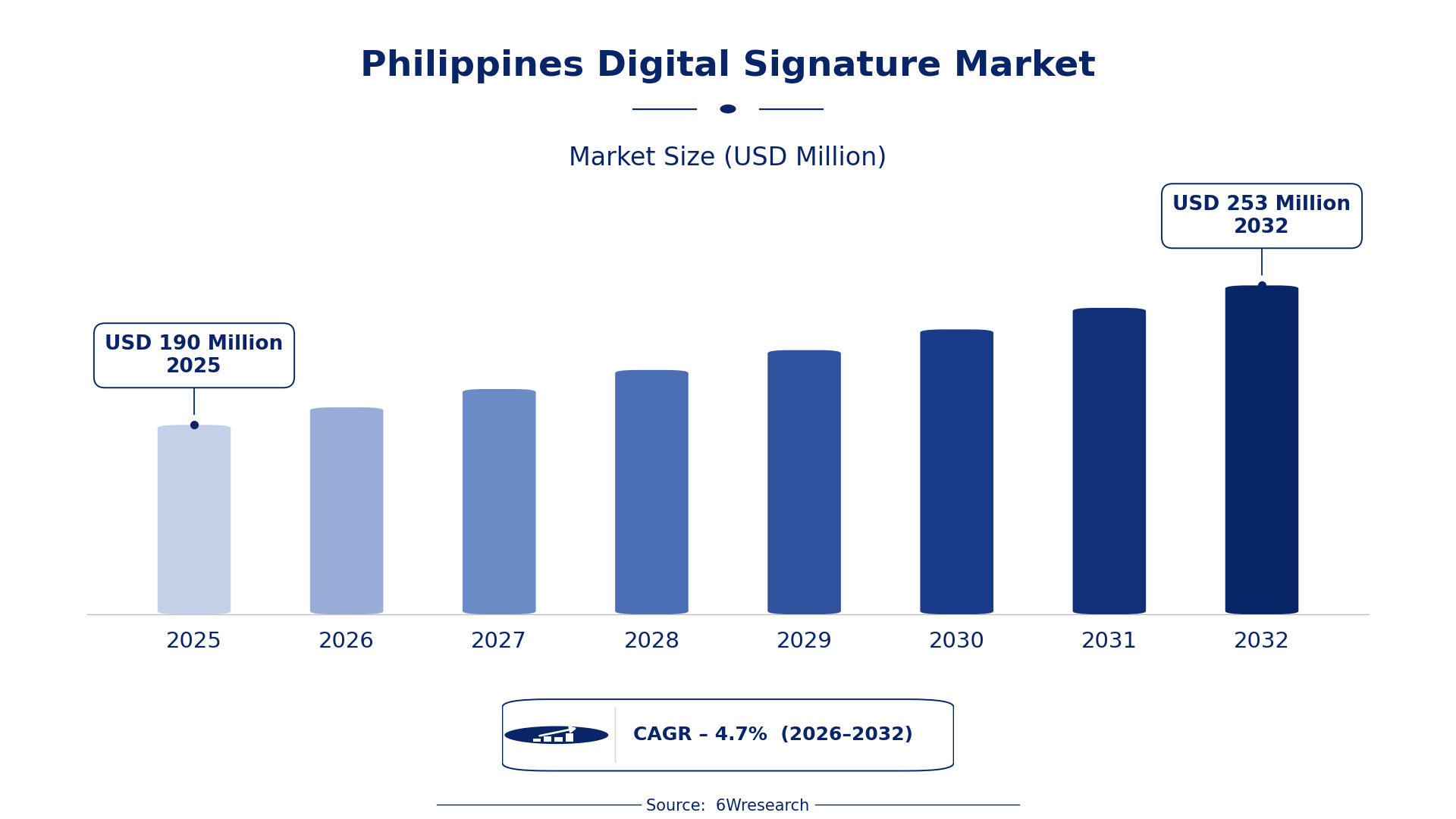
The Philippines Digital Signature Market was estimated at USD 190 Million in 2025 and is projected to reach USD 253 Million by 2032, growing at a CAGR of 4.7% from 2026 to 2032.
Philippines Digital Signature Market Synopsis
The shift towards digital documentation and transactions in the Philippines has catalyzed a surge in demand for digital signature solutions. As businesses and individuals increasingly embrace online platforms, digital signatures are emerging as the cornerstone of secure, legally recognized transactions.
The Philippine market's growth is driven by the necessity for enhanced security and efficiency in document signing processes. Digital signature technology not only streamlines operations but also ensures compliance with legal standards, catering to the evolving needs of the local workforce and commercial environment.
Philippines Digital Signature Market Year-wise Growth Rate and Key Drivers
This graph illustrates the annual growth rates of the Philippines Digital Signature Market from 2021 to 2032, highlighting a steady upward trajectory and projected expansion over the forecast period.
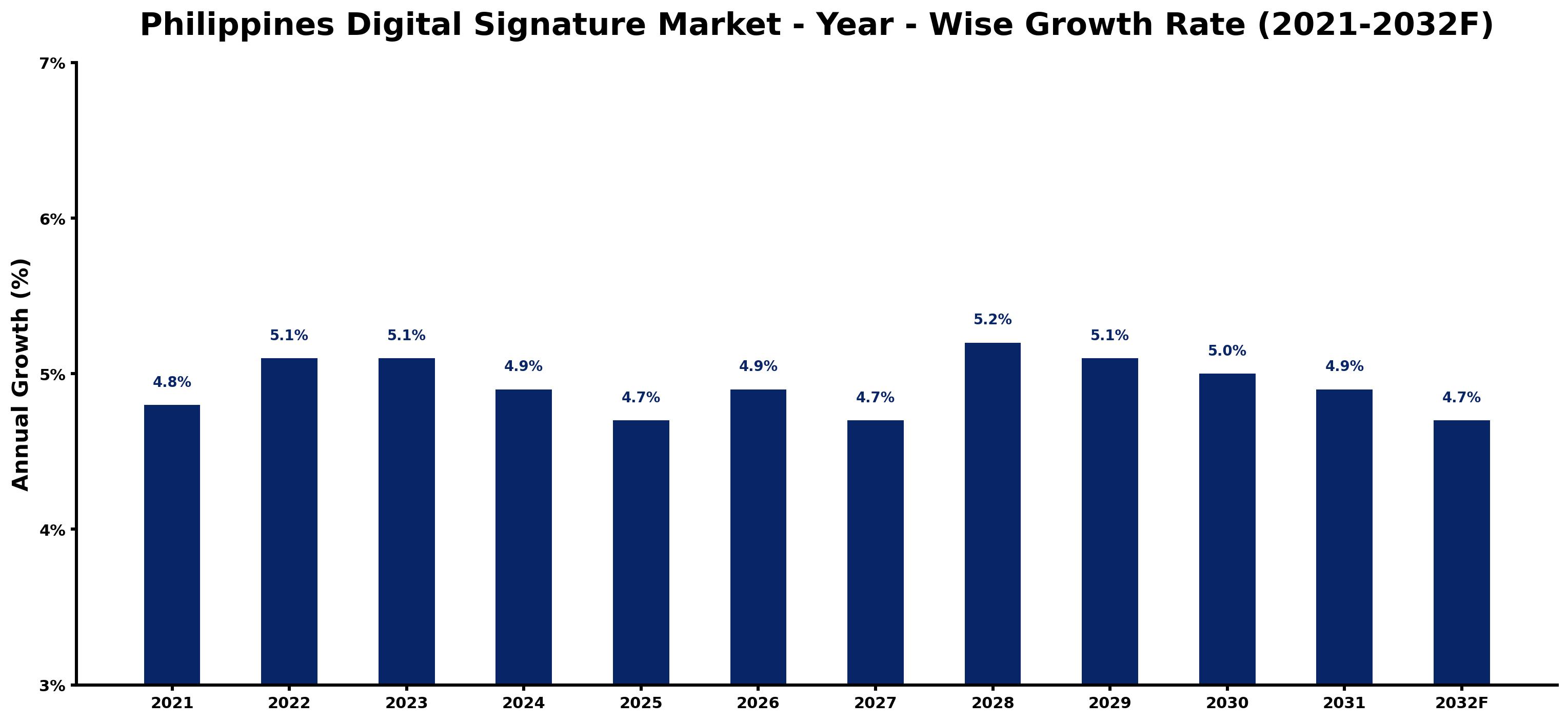
The table below presents the year‑wise growth rates along with the key drivers influencing the market
| Year | Growth Rate | Major Drivers |
| 2021 | 4.8% | Implementation of the eGovernment Act promoting digital transactions. |
| 2022 | 5.1% | Adoption of online payment systems by small businesses. |
| 2023 | 5.1% | Increased blockchain technology integration in digital signatures. |
| 2024 | 4.9% | Regulatory support from the Department of Information and Communications Technology. |
| 2025 | 4.7% | Growing awareness of cybersecurity risks among organizations. |
| 2026 | 4.9% | Rising digital literacy across various demographics in urban areas. |
| 2027 | 4.7% | Launch of new authentication regulations by the SEC. |
| 2028 | 5.2% | Increased investments in fintech solutions by local startups. |
| 2029 | 5.1% | Collaborations between banks and tech firms for secure transactions. |
| 2030 | 5.0% | Government initiatives to streamline business registration processes. |
| 2031 | 4.9% | Higher demand for remote working solutions amid pandemic effects. |
| 2032 | 4.7% | Emergence of e-signature standards by the Bureau of Internal Revenue. |
Note: Market size estimations and growth projections presented in this report are based on 6Wresearch's proprietary forecasting methodology, utilizing the latest available industry data, government publications, and primary research inputs.
Philippines Digital Signature Market Key Takeaways
Below are some of the specific key takeaways from the market, including:
- Rising adoption rates of digital signatures among enterprises looking to modernize workflows.
- Challenges persist due to varying levels of digital literacy across the population.
- The COVID-19 pandemic has acted as a catalyst, accelerating the shift to digital transactions.
- Key initiatives by the government are aimed at fostering digital transformation across sectors.
- Increased focus on regulatory frameworks ensuring secure digital transactions is vital for growth.
Evaluation of Restraints in Philippines Digital Signature Market
Despite the promising outlook, the Philippines Digital Signature Market faces notable obstacles. One of the primary barriers is the country's digital literacy rate, which remains low in certain demographics, impacting the understanding and acceptance of digital signatures. Furthermore, infrastructural challenges, especially in remote areas, hinder broader adoption. This disconnect between technology and user capability creates friction in the transition from traditional signing methods to digital alternatives.
Philippines Digital Signature Market Trends
As digital transformation sweeps across various sectors, trends indicate an increasing reliance on automation and integrated solutions. Companies are not only adopting digital signatures but are also seeking comprehensive platforms that offer end-to-end document management capabilities. Additionally, there is a shift toward solutions that include advanced authentication methods, ensuring security beyond mere signature verification. This trend points toward a future where digital signatures become part of a larger ecosystem of digital transaction tools.
Philippines Digital Signature Market Opportunities
Investment opportunities in this market are substantial, particularly for firms that can provide user-friendly solutions that bridge the digital literacy gap. Furthermore, partnerships with educational institutions could lead to programs aimed at increasing digital literacy. The growing demand for secure transaction methods in industries such as finance, real estate, and e-commerce presents additional avenues for growth, especially for localized solutions tailored to meet the specific needs of Filipino businesses.
Government Initiatives in the Philippines Digital Signature Market
The Philippine government recognizes the importance of fostering a digital economy, which is vital for enhancing the country's competitiveness. Public policy is increasingly focused on creating a conducive environment for digital transactions, including the establishment of regulatory frameworks that promote the use of digital signatures.
- A national digital infrastructure upgrade program was recently completed, aimed at improving internet access across rural areas.
- A current initiative is underway to streamline the regulatory framework for digital signatures, enhancing compliance and security measures.
- The Department of Information and Communications Technology is leading an upcoming campaign focused on public education about digital signatures, set to launch in early 2026.
- Plans are in place for a public-private partnership to develop secure digital platforms by 2027, intended to support various sectors.
Future Insights of the Philippines Digital Signature Market
Looking ahead to 2026-2032, the Philippines Digital Signature Market is likely to experience robust growth, driven by technological advancements and a growing awareness of the benefits of digital transactions. As organizations increasingly recognize the need for efficient, secure processes, digital signatures will play a crucial role in enhancing operational agility. The expected rise in regulatory support will further accelerate this trend, positioning the market for sustained growth.
Philippines Digital Signature Market Latest Developments
In recent months, the Philippines Digital Signature Market has seen a flurry of activity as companies pivot to digital solutions. This shift is propelled by both consumer demand for faster service and government efforts to standardize digital transaction practices.
- A major technology vendor launched a new suite of digital signature tools in Q1 2025, aimed at small to medium enterprises.
- An ongoing project to integrate biometric verification into digital signature platforms began in late 2025, enhancing security protocols.
- A partnership formed in mid-2025 between local startups and educational institutions focuses on increasing public understanding of digital signatures.
- Upcoming regulatory changes, expected to be introduced by mid-2026, aim to simplify the approval process for digital signature providers.
Philippines Digital Signature Market - Key Attractiveness of the Report
- 10 Years of Market Numbers
- Historical Data Starting from 2022 to 2025
- Base Year: 2025
- Forecast Data until 2032
- Key Performance Indicators Impacting the Market
- Major Upcoming Developments and Projects
Key Highlights of the Report:
- Philippines Digital Signature Market Outlook
- Market Size of Philippines Digital Signature Market, 2025
- Forecast of Philippines Digital Signature Market, 2032
- Historical Data and Forecast of Philippines Digital Signature Revenues & Volume for the Period 2022-2032F
- Philippines Digital Signature Market Trend Evolution
- Philippines Digital Signature Market Drivers and Challenges
- Philippines Digital Signature Price Trends
- Philippines Digital Signature Porter's Five Forces
- Philippines Digital Signature Industry Life Cycle
- Historical Data and Forecast of Philippines Digital Signature Market Revenues & Volume By Component for the Period 2022-2032F
- Historical Data and Forecast of Philippines Digital Signature Market Revenues & Volume By Solutions for the Period 2022-2032F
- Historical Data and Forecast of Philippines Digital Signature Market Revenues & Volume By Services for the Period 2022-2032F
- Historical Data and Forecast of Philippines Digital Signature Market Revenues & Volume By Solution for the Period 2022-2032F
- Historical Data and Forecast of Philippines Digital Signature Market Revenues & Volume By Software for the Period 2022-2032F
- Historical Data and Forecast of Philippines Digital Signature Market Revenues & Volume By Hardware for the Period 2022-2032F
- Historical Data and Forecast of Philippines Digital Signature Market Revenues & Volume By Vertical for the Period 2022-2032F
- Historical Data and Forecast of Philippines Digital Signature Market Revenues & Volume By BFSI for the Period 2022-2032F
- Historical Data and Forecast of Philippines Digital Signature Market Revenues & Volume By Government for the Period 2022-2032F
- Historical Data and Forecast of Philippines Digital Signature Market Revenues & Volume By Defense for the Period 2022-2032F
- Historical Data and Forecast of Philippines Digital Signature Market Revenues & Volume By Legal for the Period 2022-2032F
- Historical Data and Forecast of Philippines Digital Signature Market Revenues & Volume By Real Estate for the Period 2022-2032F
- Historical Data and Forecast of Philippines Digital Signature Market Revenues & Volume By Organization Size for the Period 2022-2032F
- Historical Data and Forecast of Philippines Digital Signature Market Revenues & Volume By Large Enterprises for the Period 2022-2032F
- Historical Data and Forecast of Philippines Digital Signature Market Revenues & Volume By Small and Medium-Sized Enterprises (SMEs) for the Period 2022-2032F
- Historical Data and Forecast of Philippines Digital Signature Market Revenues & Volume By Deployment Mode for the Period 2022-2032F
- Historical Data and Forecast of Philippines Digital Signature Market Revenues & Volume By Cloud for the Period 2022-2032F
- Historical Data and Forecast of Philippines Digital Signature Market Revenues & Volume By On-Premises for the Period 2022-2032F
- Philippines Digital Signature Import Export Trade Statistics
- Market Opportunity Assessment By Component
- Market Opportunity Assessment By Solution
- Market Opportunity Assessment By Vertical
- Market Opportunity Assessment By Organization Size
- Market Opportunity Assessment By Deployment Mode
- Philippines Digital Signature Top Companies Market Share
- Philippines Digital Signature Competitive Benchmarking By Technical and Operational Parameters
- Philippines Digital Signature Company Profiles
- Philippines Digital Signature Key Strategic Recommendations






































