Philippines Ergonomic Chair Market Size, Share & Growth Rate
The Philippines Ergonomic Chair Market was estimated at USD 1235 Million in 2025 and is projected to reach USD 2128 Million by 2032, growing at a CAGR of 8.1% from 2026 to 2032. This robust growth trajectory is driven primarily by the increasing awareness of ergonomics among businesses and employees alike. As companies recognize the importance of health and comfort in the workplace, investments in ergonomic solutions have surged, prompting a significant shift in consumer preferences towards ergonomic chairs.
Philippines Ergonomic Chair Market Year-wise Growth Rate and Key Drivers
This graph highlights how the Philippines Ergonomic Chair Market has steadily grown over the years, supported by major growth factors.
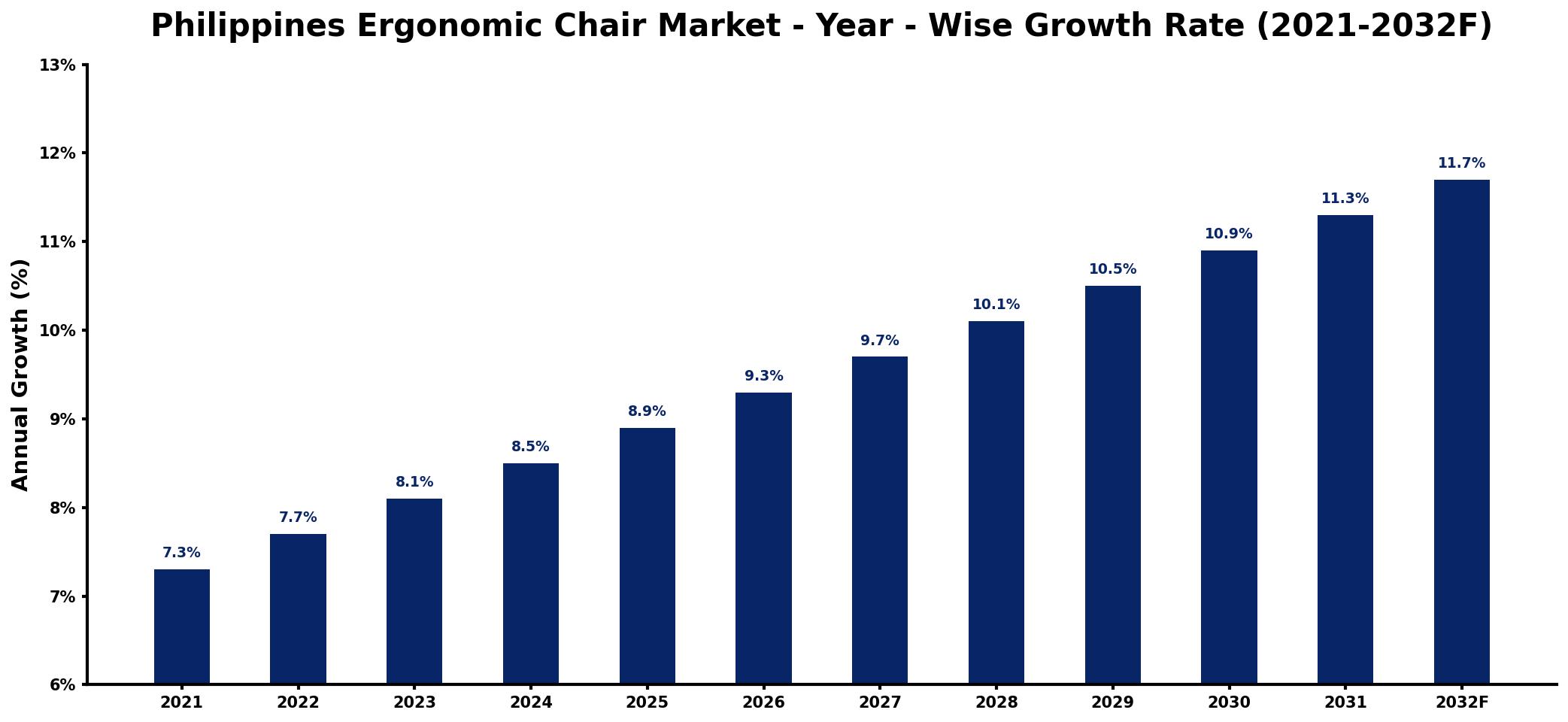
The table below presents the year‑wise growth rates along with the key drivers influencing the market
| Year | Growth Rate | Major Drivers |
| 2021 | 7.3% | Remote work trend accelerates demand |
| 2022 | 7.7% | Corporate wellness programs flourish |
| 2023 | 8.1% | E-commerce platforms expand offerings |
| 2024 | 8.5% | Health awareness drives consumer choices |
| 2025 | 8.9% | Increased focus on home offices |
| 2026 | 9.3% | Sustainability trends influence purchasing |
| 2027 | 9.7% | Technological advancements enhance features |
| 2028 | 10.1% | Rising disposable income boosts sales |
| 2029 | 10.5% | Growing urban population demands solutions |
| 2030 | 10.9% | Global design influences local markets |
| 2031 | 11.3% | Government initiatives support workplace health |
| 2032 | 11.7% | Enhanced online shopping experiences thrive |
Note: Market size estimations and growth projections presented in this report are based on 6Wresearch's proprietary forecasting methodology, utilizing the latest available industry data, government publications, and primary research inputs.
Philippines Ergonomic Chair Market Synopsis
In the Philippines, the demand for ergonomic chairs is gaining traction, particularly within corporate environments where long hours are the norm. Organizations are increasingly seeking innovative solutions that cater to employee wellness, which is reshaping purchasing patterns in favor of ergonomic designs.
As remote work becomes a fixture in many industries, the need for comfortable home office setups has further amplified the demand for ergonomic seating. The ongoing shift towards flexible working arrangements underscores a pivotal change in how both employers and employees view the significance of ergonomic furniture.
Philippines Ergonomic Chair Market Key Takeaways
- The market is expanding rapidly due to heightened awareness regarding the benefits of ergonomic seating.
- Flexible work arrangements and remote setups are significantly influencing consumer buying behavior.
- Office-based customers represent the largest segment, with corporations prioritizing employee health initiatives.
- The market's growth potential is countered by challenges such as misconceptions about ergonomic products.
- Key players are increasingly focusing on innovative designs that support proper posture and comfort.
Evaluation of Restraints in Philippines Ergonomic Chair Market
Despite the growth prospects, the Philippines Ergonomic Chair Market faces notable restraints that could hinder its expansion. One significant challenge is the persistence of misconceptions surrounding ergonomic products, leading to skepticism among potential consumers. Additionally, price sensitivity is a critical concern; many customers prioritize cost over quality, potentially compromising the health benefits associated with high-quality ergonomic chairs. The absence of specific ergonomic standards tailored to the local market further complicates consumer choices, creating an environment where suboptimal products may gain traction.
Philippines Ergonomic Chair Market Trends
Current trends indicate a strong move towards multifunctional ergonomic chairs that cater to diverse user needs. Features such as adjustable settings, lumbar support, and breathable materials are increasingly sought after. Furthermore, sustainability is becoming a prominent consideration; more consumers are inclined towards environmentally-friendly designs. The integration of smart technology into ergonomic chairs is also on the rise, enhancing user experience through tailored adjustments and health monitoring capabilities.
Philippines Ergonomic Chair Market Opportunities
The Philippines offers several promising opportunities for growth within the ergonomic chair market. As organizations continue to invest in employee well-being initiatives, theres a substantial market for ergonomic solutions that enhance productivity and comfort. Moreover, the rise of e-commerce provides a platform for ergonomic chair manufacturers to reach a wider audience, enabling a seamless purchasing experience. With increasing health awareness, there is an opportunity to educate consumers about the long-term benefits of ergonomic furniture, potentially fostering a more informed customer base.
Government Initiatives in the Philippines Ergonomic Chair Market
The Philippine government has been increasingly focused on promoting workplace safety and employee health through various initiatives. Programs aimed at enhancing occupational health standards have spurred interest in ergonomic products. Additionally, public spending on infrastructure projects often emphasizes the incorporation of ergonomic solutions, creating additional avenues for market growth. By supporting health and safety standards, the government plays a critical role in fostering an environment conducive to the growth of the ergonomic chair market.
Future Insights of the Philippines Ergonomic Chair Market
Looking ahead to 2026-2032, the Philippines Ergonomic Chair Market is poised for significant advancements driven by ongoing shifts in workplace culture and technology. The anticipated rise in hybrid work models will likely maintain the demand for ergonomic solutions, particularly as more employees work from home. As awareness grows around the consequences of poor posture, both consumers and organizations will prioritize ergonomic furniture. Furthermore, technological integration into ergonomic design promises to reshape the market landscape, making these products more accessible and tailored to user needs.
Philippines Ergonomic Chair Market Latest Developments (2025 - 2026)
In the recent months, the ergonomic chair market in the Philippines has experienced several notable developments. Manufacturers are increasingly focusing on innovative designs and features to enhance user comfort. Collaborations between ergonomic furniture designers and technology firms have emerged, leading to the introduction of smart ergonomic chairs equipped with health-monitoring capabilities. Additionally, several local companies have ramped up their marketing efforts, aiming to educate consumers about the benefits of ergonomic seating. This trend reflects a broader commitment to workplace wellness, aligning with global movements towards healthier work environments.
Philippines Ergonomic Chair Market - Key Attractiveness of the Report
- 10 Years of Market Numbers
- Historical Data Starting from 2022 to 2025
- Base Year: 2025
- Forecast Data until 2032
- Key Performance Indicators Impacting the Market
- Major Upcoming Developments and Projects
Key Highlights of the Report:
- Philippines Ergonomic Chair Market Outlook
- Market Size of Philippines Ergonomic Chair Market, 2025
- Forecast of Philippines Ergonomic Chair Market, 2032
- Historical Data and Forecast of Philippines Ergonomic Chair Revenues & Volume for the Period 2022-2032F
- Philippines Ergonomic Chair Market Trend Evolution
- Philippines Ergonomic Chair Market Drivers and Challenges
- Philippines Ergonomic Chair Price Trends
- Philippines Ergonomic Chair Porter's Five Forces
- Philippines Ergonomic Chair Industry Life Cycle
- Historical Data and Forecast of Philippines Ergonomic Chair Market Revenues & Volume By Application for the Period 2022-2032F
- Historical Data and Forecast of Philippines Ergonomic Chair Market Revenues & Volume By Enterprise Procurement for the Period 2022-2032F
- Historical Data and Forecast of Philippines Ergonomic Chair Market Revenues & Volume By Government Procurement for the Period 2022-2032F
- Historical Data and Forecast of Philippines Ergonomic Chair Market Revenues & Volume By School Procurement for the Period 2022-2032F
- Historical Data and Forecast of Philippines Ergonomic Chair Market Revenues & Volume By Individual Procurement for the Period 2022-2032F
- Historical Data and Forecast of Philippines Ergonomic Chair Market Revenues & Volume By Other for the Period 2022-2032F
- Philippines Ergonomic Chair Import Export Trade Statistics
- Market Opportunity Assessment By Application
- Philippines Ergonomic Chair Top Companies Market Share
- Philippines Ergonomic Chair Competitive Benchmarking By Technical and Operational Parameters
- Philippines Ergonomic Chair Company Profiles
- Philippines Ergonomic Chair Key Strategic Recommendations






































