Philippines Food Wrap Films Market Top 5 Importing Countries and Market Competition (HHI) Analysis
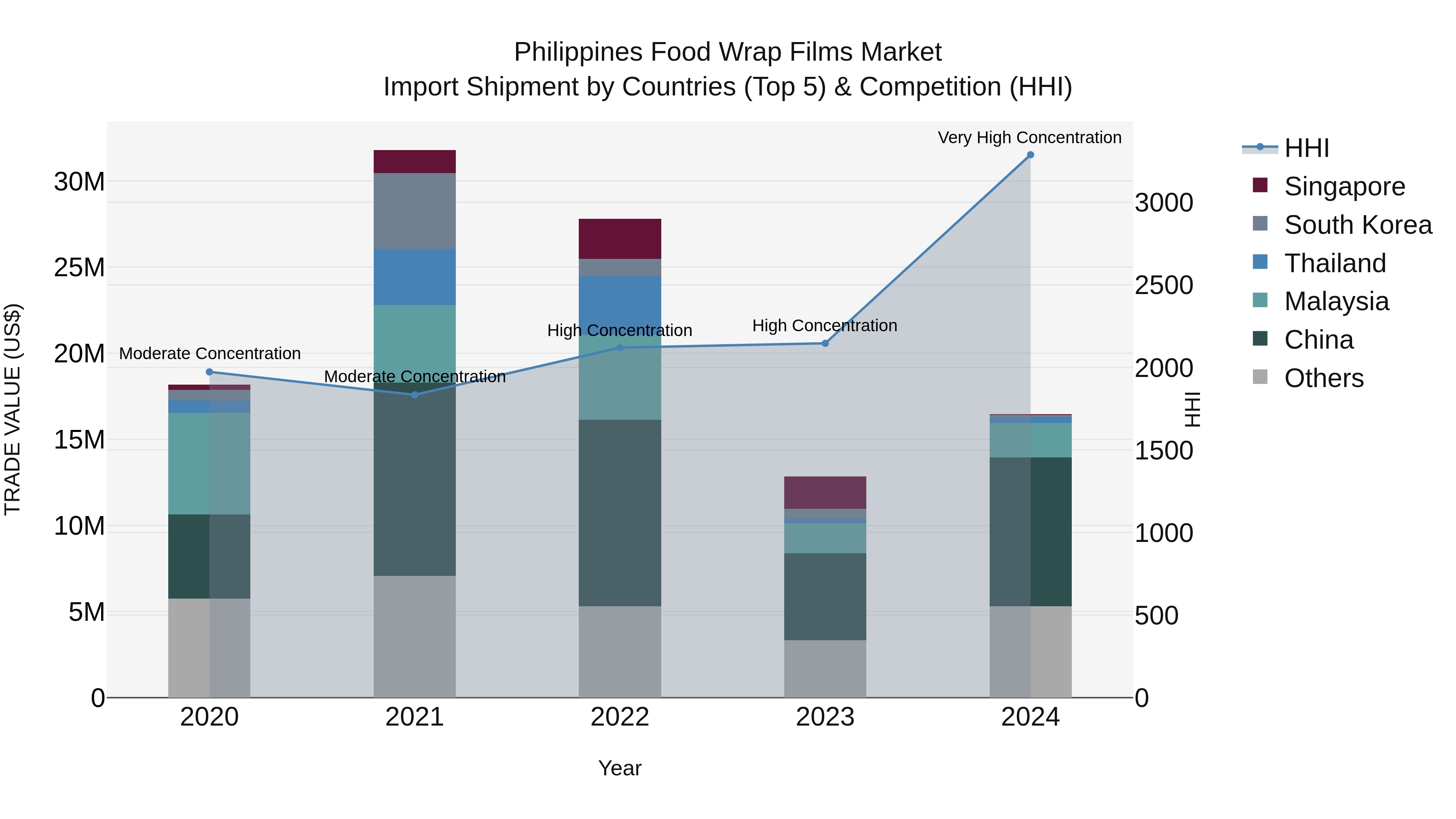
The Philippines food wrap films import market experienced significant growth in 2024, with top exporting countries including China, USA, Malaysia, Taiwan, and Japan. The high concentration of market share indicates a competitive landscape, with a very high concentration in 2024. Despite a negative CAGR from 2020 to 2024, the market saw a remarkable growth rate of 28.11% from 2023 to 2024. This suggests a strong demand for food wrap films in the Philippines, driven by imports from key global players.
Philippines Food Wrap Films Market Synopsis
The food wrap films market in the Philippines is thriving due to rising consumer demand for packaged foods and an increased focus on food hygiene and shelf life. These films, including plastic wraps and biodegradable alternatives, are widely used in retail, households, and foodservice. Innovations in eco-friendly and microwave-safe materials are reshaping the landscape of food packaging in the country.
Trends of the market
The food wrap films market in the Philippines is being driven by rising demand for food preservation and increasing sales of packaged food. Supermarkets and food vendors are increasingly relying on plastic wrap, cling film, and biodegradable alternatives to extend shelf life and maintain hygiene. Innovations in eco-friendly and compostable films are expected to gain traction as sustainability concerns grow.
Challenges of the market
The Food Wrap Films market in the Philippines faces challenges related to environmental concerns and the growing shift towards sustainable packaging alternatives. With increasing awareness about plastic pollution, there is a strong push to reduce the use of plastic-based food wraps. As a result, consumers and businesses are increasingly looking for biodegradable or reusable alternatives, putting pressure on manufacturers to innovate. Additionally, the cost of production for eco-friendly food wrap films is higher, which makes it a less attractive option for price-sensitive consumers. The market is also impacted by supply chain disruptions, particularly in sourcing raw materials for packaging production.
Investment opportunities in the Market
The food wrap films market in the Philippines is seeing growth due to the increasing demand for convenient packaging solutions in the food industry. Food wrap films play a crucial role in preserving the freshness, hygiene, and safety of food products. With the expanding food processing and retail sectors, there are opportunities for investment in biodegradable and eco-friendly food wrap films to meet consumer demand for sustainable packaging solutions that also preserve food quality.
Government Policy of the market
The food wrap films market in the Philippines is influenced by the increasing demand for convenient and hygienic food packaging solutions. Government policies regarding food safety, packaging standards, and environmental protection have impacted this market. The Department of Environment and Natural Resources (DENR) has been actively promoting the reduction of single-use plastics and encouraging alternatives such as biodegradable food wrap films. Policies and guidelines issued by the Food and Drug Administration (FDA) ensure that the materials used in food packaging, including food wrap films, meet safety and quality standards.
Key Highlights of the Report:
- Philippines Food Wrap Films Market Outlook
- Market Size of Philippines Food Wrap Films Market, 2024
- Forecast of Philippines Food Wrap Films Market, 2031
- Historical Data and Forecast of Philippines Food Wrap Films Revenues & Volume for the Period 2021- 2031
- Philippines Food Wrap Films Market Trend Evolution
- Philippines Food Wrap Films Market Drivers and Challenges
- Philippines Food Wrap Films Price Trends
- Philippines Food Wrap Films Porter's Five Forces
- Philippines Food Wrap Films Industry Life Cycle
- Historical Data and Forecast of Philippines Food Wrap Films Market Revenues & Volume By Material Type for the Period 2021- 2031
- Historical Data and Forecast of Philippines Food Wrap Films Market Revenues & Volume By Aluminum for the Period 2021- 2031
- Historical Data and Forecast of Philippines Food Wrap Films Market Revenues & Volume By Plastic for the Period 2021- 2031
- Historical Data and Forecast of Philippines Food Wrap Films Market Revenues & Volume By End-user for the Period 2021- 2031
- Historical Data and Forecast of Philippines Food Wrap Films Market Revenues & Volume By Food Processing for the Period 2021- 2031
- Historical Data and Forecast of Philippines Food Wrap Films Market Revenues & Volume By Food Service for the Period 2021- 2031
- Historical Data and Forecast of Philippines Food Wrap Films Market Revenues & Volume By Retail for the Period 2021- 2031
- Philippines Food Wrap Films Import Export Trade Statistics
- Market Opportunity Assessment By Material Type
- Market Opportunity Assessment By End-user
- Philippines Food Wrap Films Top Companies Market Share
- Philippines Food Wrap Films Competitive Benchmarking By Technical and Operational Parameters
- Philippines Food Wrap Films Company Profiles
- Philippines Food Wrap Films Key Strategic Recommendations






































