Philippines Grape Market Top 5 Importing Countries and Market Competition (HHI) Analysis
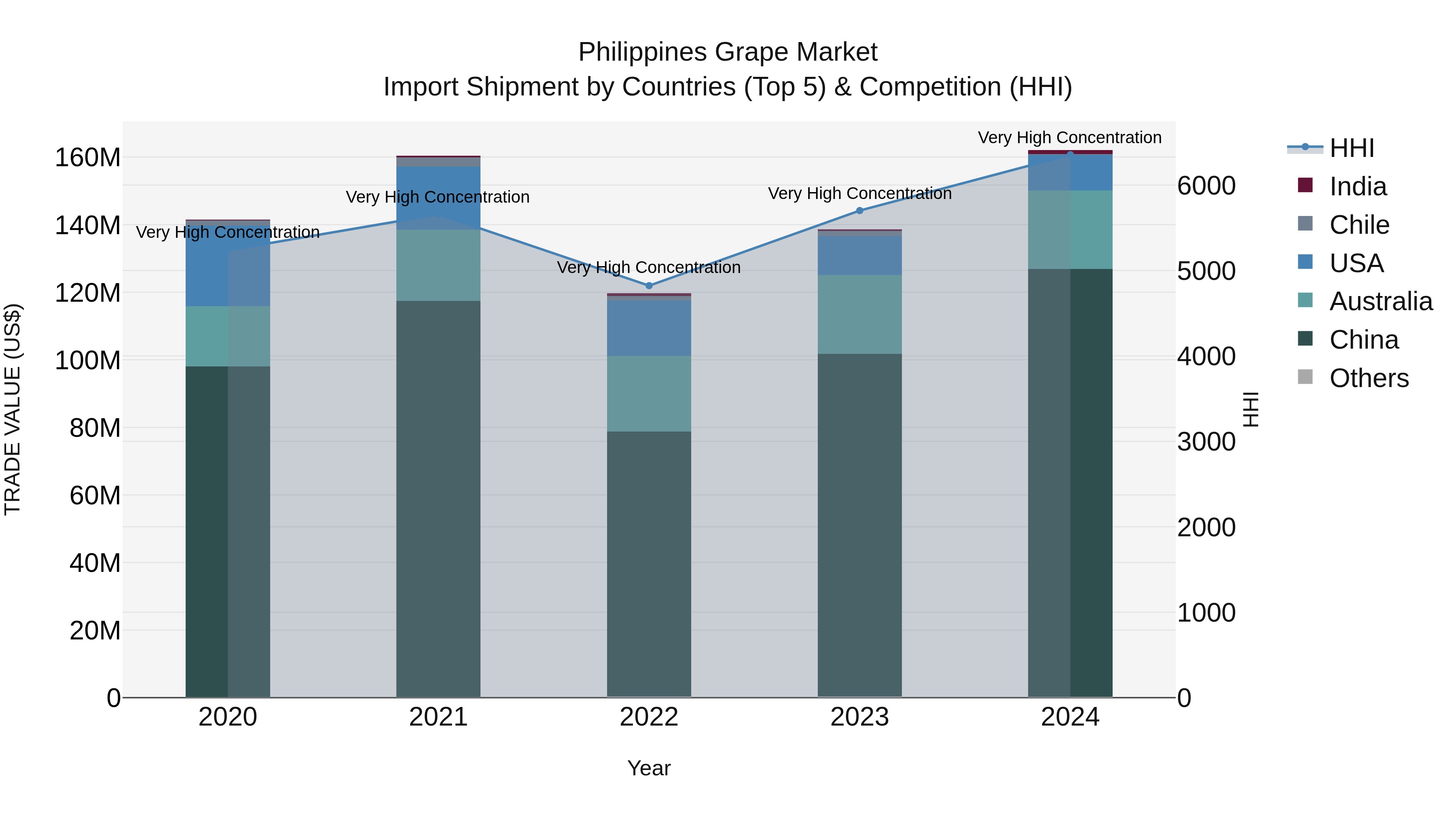
The Philippines` grape import market in 2024 continued to see a high concentration of shipments from top exporting countries such as China, Australia, USA, India, and Chile. With a Compound Annual Growth Rate (CAGR) of 3.46% from 2020 to 2024, the market exhibited steady expansion. Notably, the growth rate spiked to 16.85% from 2023 to 2024, indicating a surge in demand for imported grapes. The sustained dominance of key exporting nations highlights the significance of these trade relationships in meeting the Philippines` grape consumption needs.
Philippines Grape Market Overview
The Philippines grape market is characterized by both local cultivation and the importation of grapes, primarily for consumption as fresh fruit and for use in food processing. The demand for grapes has grown steadily, driven by the increasing popularity of healthy, fresh fruits among consumers. Grapes are also used in the production of wines, juices, and dried fruits, further expanding their market scope. As the local production of grapes continues to improve with the development of more efficient farming techniques and infrastructure, the market is poised to see significant growth, benefiting from both domestic and export demand.
Drivers of the market
The grape market in the Philippines is expanding due to a growing demand for fresh fruits, particularly in urban centers. Increasing awareness about the health benefits of grapes, including their high vitamin C and antioxidant content, is driving consumers toward this fruit. The expanding middle class, rising disposable income, and changing dietary preferences are further contributing to the growth of the grape market. Additionally, improvements in farming technologies, such as advanced irrigation systems and better pest control, have enhanced grape production and quality, making grapes more accessible to a broader consumer base.
Challenges of the market
Challenges in the Philippine grape market include issues related to local cultivation, such as vulnerability to adverse weather conditions and pests, which can significantly impact grape yields. The high cost of importing grapes to meet demand also limits accessibility for some consumers.
Investment opportunities in the Market
The grape market in the Philippines is an established agricultural sector, but there are still significant investment opportunities in improving cultivation practices, production efficiency, and product diversification. With an increasing demand for fresh and dried grapes, as well as wine production, investors can explore opportunities in vineyard management, grape processing, and exporting. Technological advancements in irrigation and pest control could further enhance profitability for investors in the agricultural space.
Government Policy of the market
The government supports agricultural research to improve local grape farming. Import regulations, tariffs, and trade agreements influence the availability and pricing of grapes in the market. Wine production is also regulated under food and beverage industry laws.
Key Highlights of the Report:
- Philippines Grape Market Outlook
- Market Size of Philippines Grape Market, 2024
- Forecast of Philippines Grape Market, 2031
- Historical Data and Forecast of Philippines Grape Revenues & Volume for the Period 2021- 2031
- Philippines Grape Market Trend Evolution
- Philippines Grape Market Drivers and Challenges
- Philippines Grape Price Trends
- Philippines Grape Porter's Five Forces
- Philippines Grape Industry Life Cycle
- Historical Data and Forecast of Philippines Grape Market Revenues & Volume By Application for the Period 2021- 2031
- Historical Data and Forecast of Philippines Grape Market Revenues & Volume By Bakery and Pastry for the Period 2021- 2031
- Historical Data and Forecast of Philippines Grape Market Revenues & Volume By Nutritional Supplements for the Period 2021- 2031
- Historical Data and Forecast of Philippines Grape Market Revenues & Volume By Functional Beverages for the Period 2021- 2031
- Historical Data and Forecast of Philippines Grape Market Revenues & Volume By Brewing Industry for the Period 2021- 2031
- Historical Data and Forecast of Philippines Grape Market Revenues & Volume By Barbecue or Fireplace Briquettes for the Period 2021- 2031
- Historical Data and Forecast of Philippines Grape Market Revenues & Volume By Others for the Period 2021- 2031
- Philippines Grape Import Export Trade Statistics
- Market Opportunity Assessment By Application
- Philippines Grape Top Companies Market Share
- Philippines Grape Competitive Benchmarking By Technical and Operational Parameters
- Philippines Grape Company Profiles
- Philippines Grape Key Strategic Recommendations






































