Philippines Hospitality Furniture Market Top 5 Importing Countries and Market Competition (HHI) Analysis
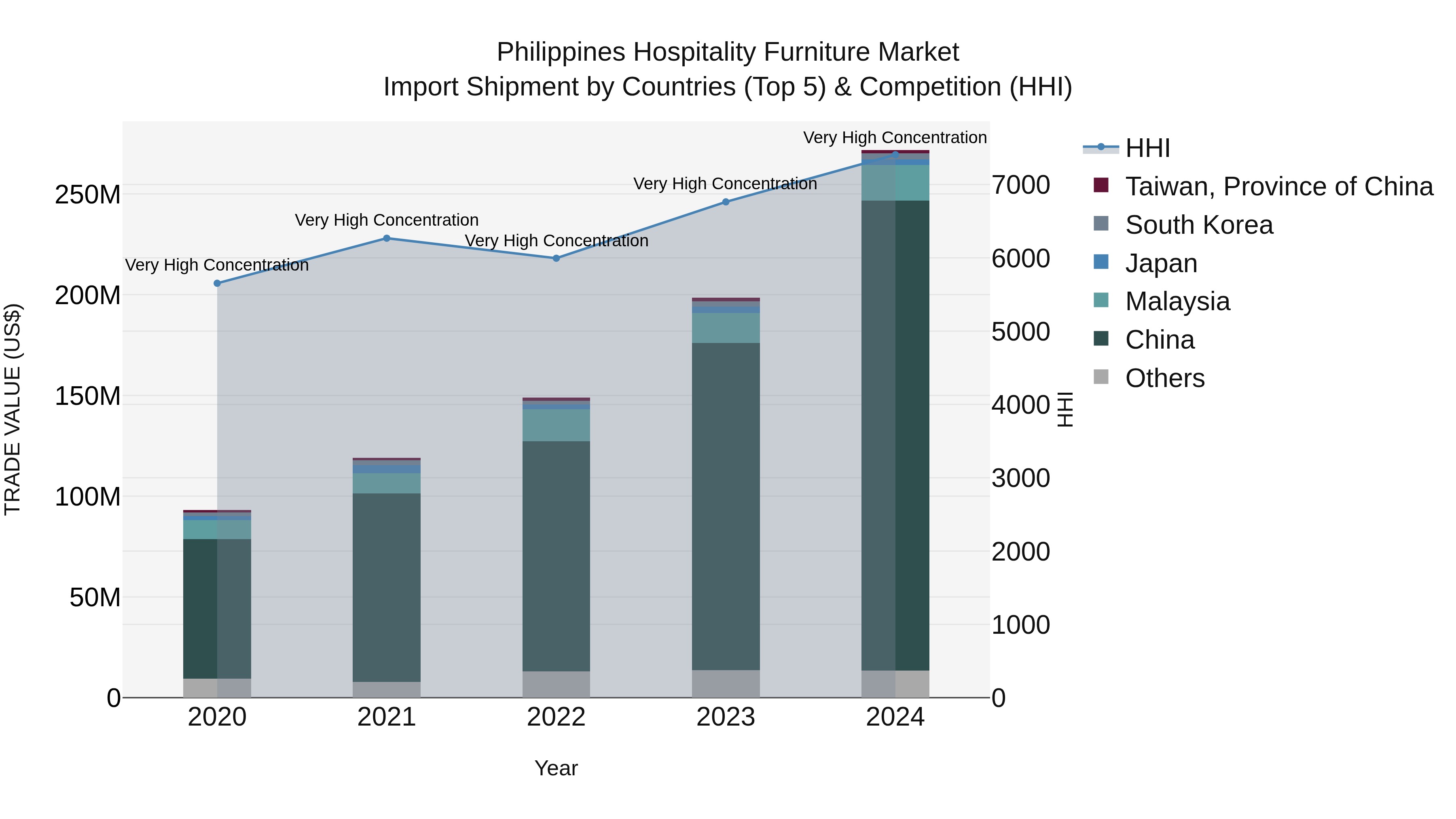
In 2024, Philippines witnessed a significant influx of hospitality furniture imports, primarily sourced from key exporting countries such as China, Malaysia, South Korea, Japan, and Singapore. The industry displayed a high level of market concentration, with a Compound Annual Growth Rate (CAGR) of 30.71% from 2020 to 2024. Impressively, the growth rate spiked to 36.92% from 2023 to 2024, indicating a thriving market with strong demand for quality furniture offerings in the hospitality sector.
Hospitality Furniture Market: Philippines vs Top 5 Major Economies in 2027 (Asia)
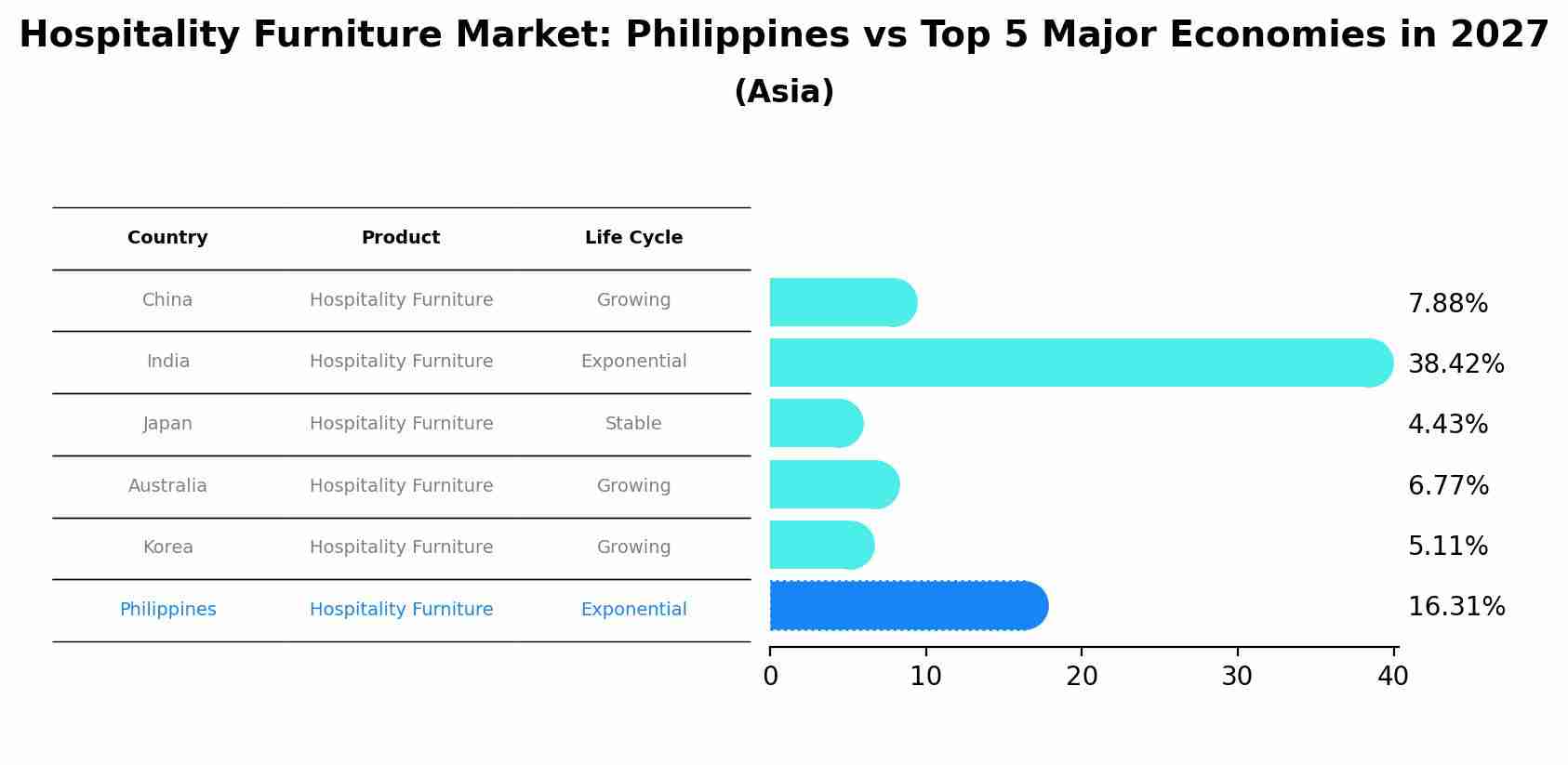
In the Asia region, the Hospitality Furniture market in Philippines is projected to expand at a exponential growth rate of 16.31% by 2027. The largest economy is China, followed by India, Japan, Australia and South Korea.
philippines hospitality furniture market Synopsis
The hospitality furniture market size was valued at USD 1 million in 2025 and is projected to reach USD 1. 4 million by 2031 with a CAGR of 4. 1%. Increasing demand from commercial spaces such as hotels & restaurants is one of the key driving forces behind this growth trend across the country. Additionally, changes in lifestyle trends that emphasize convenience coupled with rising disposable incomes among consumers have led them towards opting for luxury furnishings at both their homes as well as workplaces resulting in higher spending on furniture items specifically designed for these spaces such us lobby chairs or lounge couches etc.
Drivers of the Market
The Philippines hospitality furniture market is projected to grow due to the expansion of the tourism and hospitality sectors. As the country becomes a more attractive destination for travelers, hotels, resorts, and other hospitality establishments are investing in high-quality and aesthetically pleasing furniture to enhance guest experiences. The demand for both functional and visually appealing furniture solutions, in line with changing interior design trends, will drive the market`s growth.
Challenges of the Market
The hospitality furniture market in the Philippines encounters several challenges. With the tourism industry being a significant contributor to the economy, demand for high-quality hospitality furniture is on the rise. However, budget constraints of some establishments lead to the use of lower-grade options that may not withstand heavy usage. Additionally, design preferences and trends change rapidly, requiring manufacturers to stay adaptable and invest in research and development.
COVID-19 Impact on the Market
The hospitality furniture market was severely hit as travel and tourism plummeted. Hotel closures and reduced bookings directly impacted the demand for new furniture in this sector. Recovery depended on the revival of the hospitality industry.
Key Players in the Market
In the Philippines hospitality furniture market, key players like HotelHaven Furnishings and ResortStyles Furniture supply hotels, resorts, and other hospitality establishments with tailored furnishing solutions. These companies offer a wide range of furniture items, including beds, sofas, and dining sets designed to meet the unique aesthetic and functional requirements of the hospitality industry. By creating inviting and stylish spaces for guests, these key players play a vital role in elevating the overall guest experience in the Philippines` hospitality sector.
Key Highlights of the Report:
- Philippines Hospitality Furniture Market Outlook
- Market Size of Philippines Hospitality Furniture Market, 2024
- Forecast of Philippines Hospitality Furniture Market, 2031
- Historical Data and Forecast of Philippines Hospitality Furniture Revenues & Volume for the Period 2021-2031
- Philippines Hospitality Furniture Market Trend Evolution
- Philippines Hospitality Furniture Market Drivers and Challenges
- Philippines Hospitality Furniture Price Trends
- Philippines Hospitality Furniture Porter's Five Forces
- Philippines Hospitality Furniture Industry Life Cycle
- Historical Data and Forecast of Philippines Hospitality Furniture Market Revenues & Volume By Type for the Period 2021-2031
- Historical Data and Forecast of Philippines Hospitality Furniture Market Revenues & Volume By Wooden Furniture for the Period 2021-2031
- Historical Data and Forecast of Philippines Hospitality Furniture Market Revenues & Volume By Leather & Fabric Furniture for the Period 2021-2031
- Historical Data and Forecast of Philippines Hospitality Furniture Market Revenues & Volume By Metal Furniture for the Period 2021-2031
- Historical Data and Forecast of Philippines Hospitality Furniture Market Revenues & Volume By Others for the Period 2021-2031
- Historical Data and Forecast of Philippines Hospitality Furniture Market Revenues & Volume By Applications for the Period 2021-2031
- Historical Data and Forecast of Philippines Hospitality Furniture Market Revenues & Volume By Economy Hotel for the Period 2021-2031
- Historical Data and Forecast of Philippines Hospitality Furniture Market Revenues & Volume By Extended-stay Hotel for the Period 2021-2031
- Historical Data and Forecast of Philippines Hospitality Furniture Market Revenues & Volume By Full-service Hotel for the Period 2021-2031
- Historical Data and Forecast of Philippines Hospitality Furniture Market Revenues & Volume By Luxury Hotel for the Period 2021-2031
- Historical Data and Forecast of Philippines Hospitality Furniture Market Revenues & Volume By Others for the Period 2021-2031
- Historical Data and Forecast of Philippines Hospitality Furniture Market Revenues & Volume By Industry Vertical for the Period 2021-2031
- Historical Data and Forecast of Philippines Hospitality Furniture Market Revenues & Volume By Hotels & Restaurants for the Period 2021-2031
- Historical Data and Forecast of Philippines Hospitality Furniture Market Revenues & Volume By Public Places for the Period 2021-2031
- Historical Data and Forecast of Philippines Hospitality Furniture Market Revenues & Volume By Corporate Offices for the Period 2021-2031
- Historical Data and Forecast of Philippines Hospitality Furniture Market Revenues & Volume By Others for the Period 2021-2031
- Philippines Hospitality Furniture Import Export Trade Statistics
- Market Opportunity Assessment By Type
- Market Opportunity Assessment By Applications
- Market Opportunity Assessment By Industry Vertical
- Philippines Hospitality Furniture Top Companies Market Share
- Philippines Hospitality Furniture Competitive Benchmarking By Technical and Operational Parameters
- Philippines Hospitality Furniture Company Profiles
- Philippines Hospitality Furniture Key Strategic Recommendations






































