Philippines License Management Market Size & Growth Rate (2026-2032)
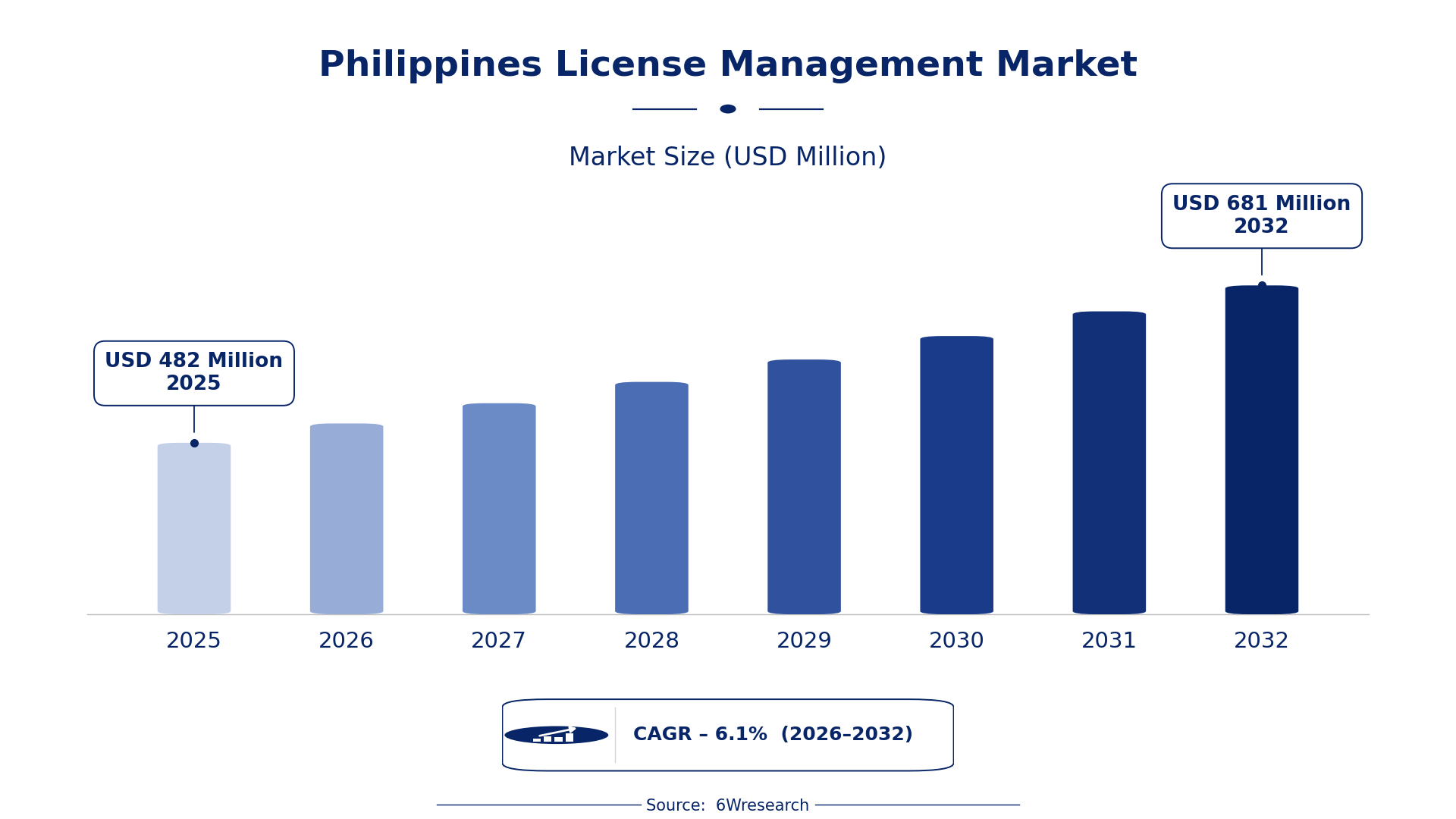
The Philippines License Management Market was estimated at USD 482 Million in 2025 and is projected to reach USD 681 Million by 2032, growing at a CAGR of 6.1% from 2026 to 2032.
Philippines License Management Market Synopsis
The Philippines License Management Market has seen increased activity as organizations ramp up their digital transformation efforts. With software being integral to operations, businesses are now focusing on optimizing license utilization and ensuring compliance.
However, the market is still grappling with complexities in license management. As companies expand their software portfolios, the challenge of keeping track of compliance and avoiding over-licensing becomes more pronounced, pushing for more structured solutions.
Philippines License Management Market Year-wise Growth Rate and Key Drivers
This graph illustrates the annual growth rates of the Philippines License Management Market from 2021 to 2032, highlighting a steady upward trajectory and projected expansion over the forecast period.
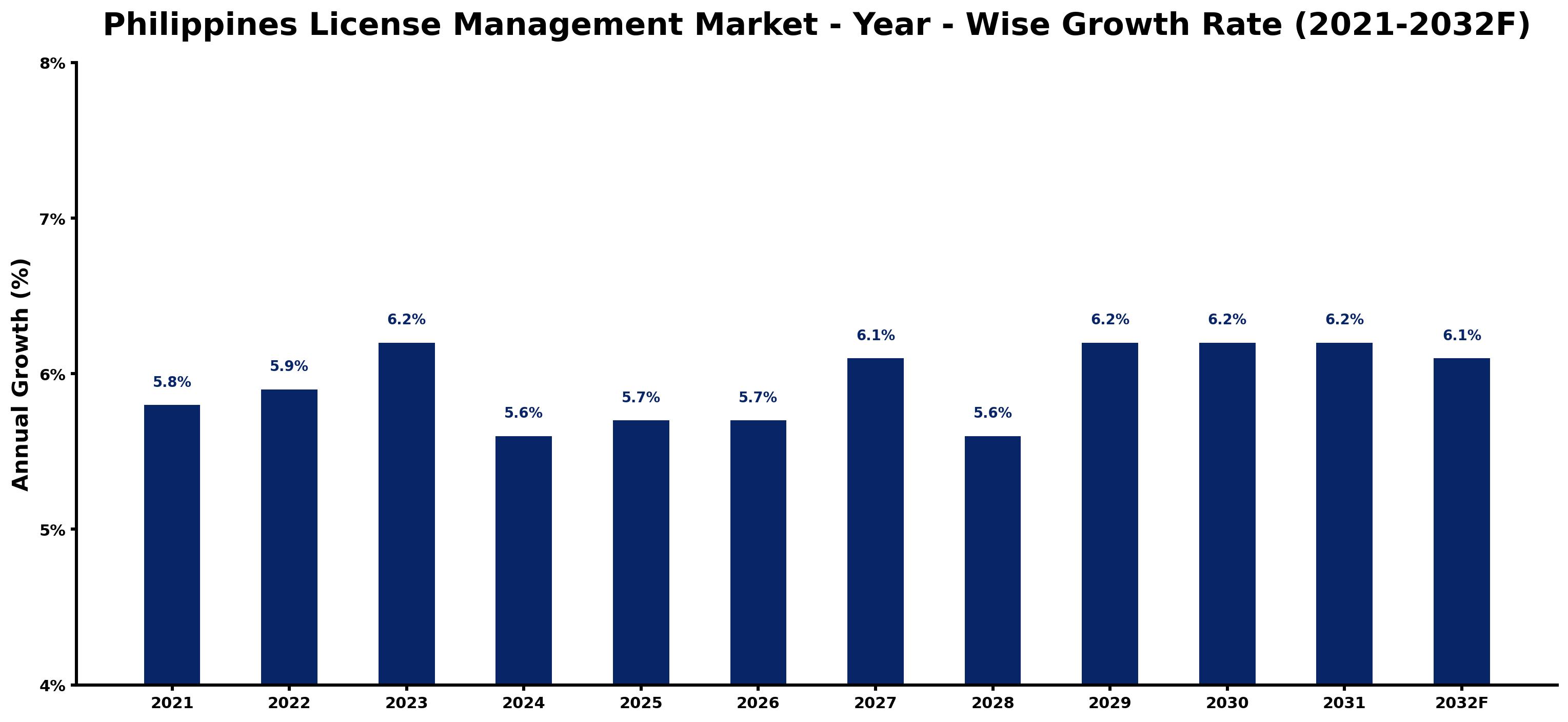
The table below presents the year‑wise growth rates along with the key drivers influencing the market
| Year | Growth Rate | Major Drivers |
| 2021 | 5.8% | Implementation of Philippine E-Commerce Law boosts compliance need. |
| 2022 | 5.9% | Rise in SaaS adoption increases license management necessity. |
| 2023 | 6.2% | Growing digital economy drives demand for software licenses. |
| 2024 | 5.6% | Government campaign promoting digital transformation enhances licensing uptake. |
| 2025 | 5.7% | Increased focus on cybersecurity strengthens license management importance. |
| 2026 | 5.7% | Emergence of remote work amplifies licensing for digital tools. |
| 2027 | 6.1% | Local startup ecosystem expands, requiring more software licenses. |
| 2028 | 5.6% | Education sector's digitalization demands efficient license management solutions. |
| 2029 | 6.2% | Regulatory body emphasizes software compliance in educational institutions. |
| 2030 | 6.2% | Telecom infrastructure improvements boost digital service licensing requirements. |
| 2031 | 6.2% | Growing freelance economy increases demand for software licenses. |
| 2032 | 6.1% | Rise in online businesses promotes license management necessity. |
Note: Market size estimations and growth projections presented in this report are based on 6Wresearch's proprietary forecasting methodology, utilizing the latest available industry data, government publications, and primary research inputs.
Philippines License Management Market Key Takeaways
Below are some of the specific key takeaways from the market, including:
- Increased reliance on software applications drives demand for efficient license management solutions.
- Compliance with licensing agreements is a top concern for organizations, necessitating expert management strategies.
- Investment in software asset management tools is expected to rise as businesses seek to optimize their operations.
- Growth in cloud-based applications is reshaping licensing needs and management approaches.
- The market is witnessing a trend toward automation in license management processes.
Evaluation of Restraints in Philippines License Management Market
The Philippines License Management Market faces several restraints that hinder its growth potential. A primary issue is the complexity of licensing agreements, which often lead to compliance challenges for organizations. Many companies lack the expertise needed to navigate these agreements effectively, resulting in potential penalties for non-compliance. Additionally, the ongoing transition to cloud-based solutions adds another layer of complexity, as businesses must adjust their licensing strategies accordingly. The lack of standardized practices in license management further complicates the landscape, leaving organizations vulnerable to inefficiencies and financial risks.
Philippines License Management Market Trends
Several trends are shaping the Philippines License Management Market. A noticeable shift toward automation is occurring, with businesses increasingly adopting software tools that streamline license management processes. This trend is driven by the necessity for efficiency and compliance in a competitive environment. Additionally, the rise of cloud services is influencing how organizations approach their licensing strategies, leading to a demand for more flexible and scalable solutions. Companies are also prioritizing data analytics in their license management practices, enabling better decision-making and forecasting.
Philippines License Management Market Opportunities
Opportunities in the Philippines License Management Market are substantial. As organizations continue to expand their software applications, the need for effective license management solutions will grow. There is a clear market gap for specialized services that can help companies navigate complex licensing requirements, particularly in the software and compliance-driven sectors. on top of that, the increasing trend toward remote work has spurred demand for tools that ensure compliance and optimize license usage in a distributed environment. Investment in training programs to enhance in-house expertise presents another avenue for growth.
Government Initiatives in the Philippines License Management Market
Government policies are shaping the Philippines License Management Market by emphasizing regulatory compliance and efficient software use. The public sector is increasingly focusing on enhancing digital infrastructure, which directly impacts software licensing needs. As authorities prioritize transparency and accountability, businesses must adapt to evolving regulations that govern software usage and licensing. This regulatory environment creates a critical need for robust license management solutions.
- A recently completed initiative aimed at establishing a regulatory framework for software licensing compliance was launched in early 2025.
- A current program is underway to promote public-private partnerships focused on software asset management best practices, enhancing compliance and efficiency.
- Upcoming legislation is expected to introduce stricter compliance requirements for software usage in government contracts by 2026.
- A planned public awareness campaign targeting businesses about the importance of proper license management is expected to roll out in late 2025.
Future Insights of the Philippines License Management Market
Looking ahead to 2026-2032, the Philippines License Management Market is set for substantial growth. As digital transformation accelerates, organizations will increasingly prioritize efficient license management solutions to mitigate risks and enhance compliance. The ongoing adoption of cloud technologies will continue to shape demand, prompting providers to innovate and offer more adaptable solutions. Companies that successfully align their strategies with emerging trends and government regulations will likely gain a competitive advantage in this evolving market.
Philippines License Management Market Latest Developments
In the last 12-14 months, the Philippines License Management Market has witnessed significant developments as organizations adapt to new software requirements and compliance standards. The push for automation and improved efficiency has driven many businesses to seek advanced license management solutions, leading to a surge in investment in software asset management tools.
- A major technology vendor launched a new license optimization platform in Q1 2025, aimed at helping organizations streamline compliance efforts.
- In mid-2025, a regional operator initiated a partnership with a software asset management company to enhance its compliance capabilities.
- A rollout of a cloud-based licensing solution is expected to begin in the second half of 2026, targeting enterprises transitioning to remote work.
- A prominent service provider introduced a training program in early 2025 focused on enhancing in-house license management expertise for local businesses.
Philippines License Management Market - Key Attractiveness of the Report
- 10 Years of Market Numbers
- Historical Data Starting from 2022 to 2025
- Base Year: 2025
- Forecast Data until 2032
- Key Performance Indicators Impacting the Market
- Major Upcoming Developments and Projects
Key Highlights of the Report:
- Philippines License Management Market Outlook
- Market Size of Philippines License Management Market, 2025
- Forecast of Philippines License Management Market, 2032
- Historical Data and Forecast of Philippines License Management Revenues & Volume for the Period 2022-2032F
- Philippines License Management Market Trend Evolution
- Philippines License Management Market Drivers and Challenges
- Philippines License Management Price Trends
- Philippines License Management Porter's Five Forces
- Philippines License Management Industry Life Cycle
- Historical Data and Forecast of Philippines License Management Market Revenues & Volume By Component for the Period 2022-2032F
- Historical Data and Forecast of Philippines License Management Market Revenues & Volume By Software for the Period 2022-2032F
- Historical Data and Forecast of Philippines License Management Market Revenues & Volume By Services for the Period 2022-2032F
- Historical Data and Forecast of Philippines License Management Market Revenues & Volume By Professional Services for the Period 2022-2032F
- Historical Data and Forecast of Philippines License Management Market Revenues & Volume By Application Area for the Period 2022-2032F
- Historical Data and Forecast of Philippines License Management Market Revenues & Volume By Audit Services for the Period 2022-2032F
- Historical Data and Forecast of Philippines License Management Market Revenues & Volume By Advisory Services for the Period 2022-2032F
- Historical Data and Forecast of Philippines License Management Market Revenues & Volume By Compliance Management for the Period 2022-2032F
- Historical Data and Forecast of Philippines License Management Market Revenues & Volume By License Entitlement and Optimization for the Period 2022-2032F
- Historical Data and Forecast of Philippines License Management Market Revenues & Volume By Operations and Analytics for the Period 2022-2032F
- Historical Data and Forecast of Philippines License Management Market Revenues & Volume By Software Inventory Management for the Period 2022-2032F
- Historical Data and Forecast of Philippines License Management Market Revenues & Volume By Usage Monitoring for the Period 2022-2032F
- Historical Data and Forecast of Philippines License Management Market Revenues & Volume By Others for the Period 2022-2032F
- Historical Data and Forecast of Philippines License Management Market Revenues & Volume By Deployment Type for the Period 2022-2032F
- Historical Data and Forecast of Philippines License Management Market Revenues & Volume By On-premises for the Period 2022-2032F
- Historical Data and Forecast of Philippines License Management Market Revenues & Volume By Cloud for the Period 2022-2032F
- Historical Data and Forecast of Philippines License Management Market Revenues & Volume By Industry Vertical for the Period 2022-2032F
- Historical Data and Forecast of Philippines License Management Market Revenues & Volume By IT for the Period 2022-2032F
- Historical Data and Forecast of Philippines License Management Market Revenues & Volume By Banking, Financial Services, and Insurance (BFSI) for the Period 2022-2032F
- Historical Data and Forecast of Philippines License Management Market Revenues & Volume By Telecom for the Period 2022-2032F
- Historical Data and Forecast of Philippines License Management Market Revenues & Volume By Manufacturing for the Period 2022-2032F
- Historical Data and Forecast of Philippines License Management Market Revenues & Volume By Healthcare for the Period 2022-2032F
- Historical Data and Forecast of Philippines License Management Market Revenues & Volume By Media and Entertainment for the Period 2022-2032F
- Historical Data and Forecast of Philippines License Management Market Revenues & Volume By Retail and Consumer Goods for the Period 2022-2032F
- Historical Data and Forecast of Philippines License Management Market Revenues & Volume By Others for the Period 2022-2032F
- Historical Data and Forecast of Philippines License Management Market Revenues & Volume By Organization Size for the Period 2022-2032F
- Historical Data and Forecast of Philippines License Management Market Revenues & Volume By Large Enterprises for the Period 2022-2032F
- Historical Data and Forecast of Philippines License Management Market Revenues & Volume By Small and Medium-sized Enterprises (SMEs) for the Period 2022-2032F
- Philippines License Management Import Export Trade Statistics
- Market Opportunity Assessment By Component
- Market Opportunity Assessment By Application Area
- Market Opportunity Assessment By Deployment Type
- Market Opportunity Assessment By Industry Vertical
- Market Opportunity Assessment By Organization Size
- Philippines License Management Top Companies Market Share
- Philippines License Management Competitive Benchmarking By Technical and Operational Parameters
- Philippines License Management Company Profiles
- Philippines License Management Key Strategic Recommendations






































