Philippines Linen Yarn Market Size, Share & Growth Rate
The Philippines Linen Yarn Market was estimated at USD 466 Million in 2025 and is projected to reach USD 650 Million by 2032, growing at a CAGR of 4.9% from 2026 to 2032. This upward trajectory is driven by an increasing preference for natural and sustainable fibers, as consumers become more environmentally conscious. Additionally, the burgeoning textile industry, coupled with the rise of home textiles and apparel markets, significantly contributes to the growing demand for high-quality linen yarn.
Philippines Linen Yarn Market Year-wise Growth Rate and Key Drivers
This graph highlights how the Philippines Linen Yarn Market has steadily grown over the years, supported by major growth factors.
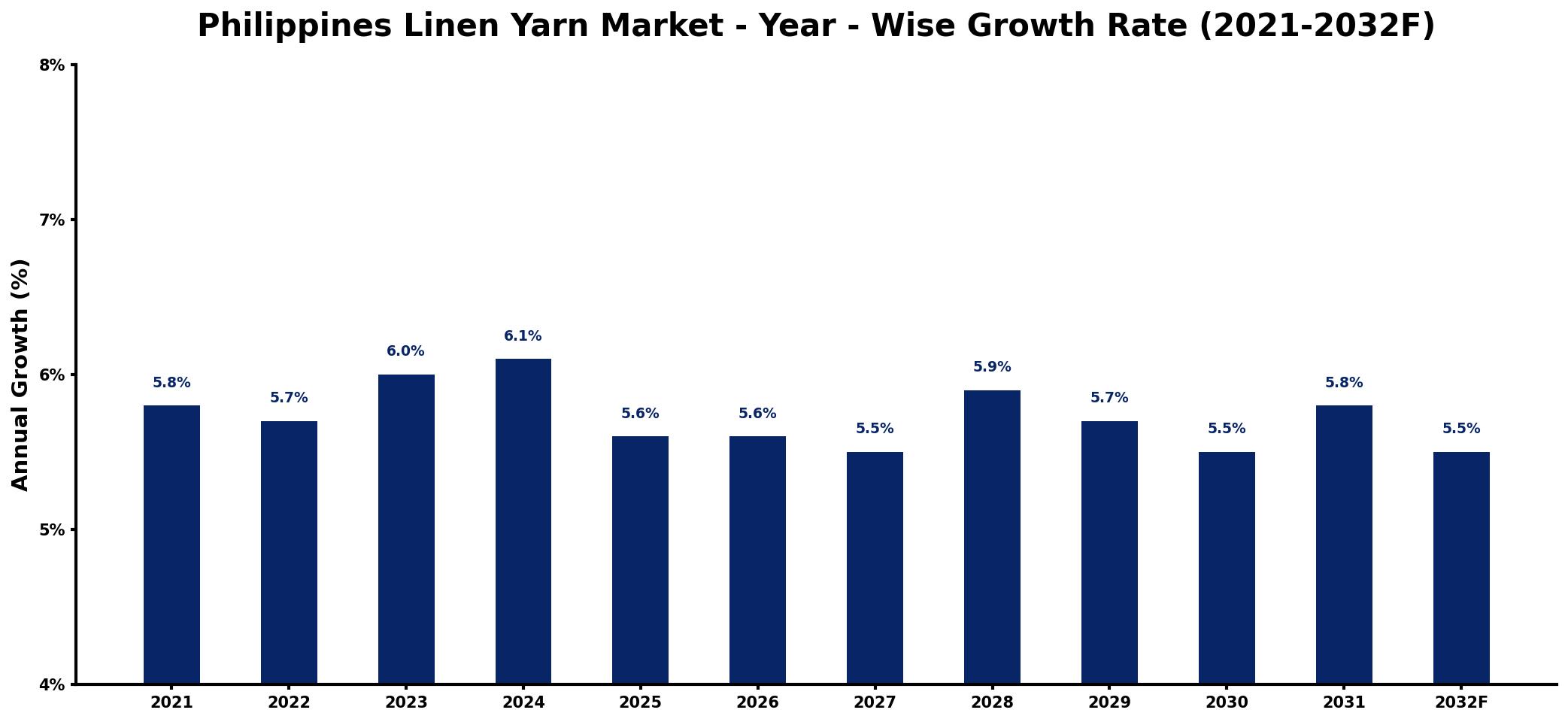
The table below presents the year‑wise growth rates along with the key drivers influencing the market
| Year | Growth Rate | Major Drivers |
| 2021 | 5.8% | Rising demand in textile industry |
| 2022 | 5.7% | Increased investment in sustainable materials |
| 2023 | 6.0% | Growth in home textile applications |
| 2024 | 6.1% | Expansion of eco-friendly fashion trends |
| 2025 | 5.6% | Surge in export opportunities |
| 2026 | 5.6% | Growing popularity of natural fibers |
| 2027 | 5.5% | Technological advancements in production |
| 2028 | 5.9% | Increased consumer awareness of sustainability |
| 2029 | 5.7% | growing regional consumption patterns |
| 2030 | 5.5% | Emergence of innovative design trends |
| 2031 | 5.8% | enhanced product quality standards |
| 2032 | 5.5% | Rise in demand for customization |
Note: Market size estimations and growth projections presented in this report are based on 6Wresearch's proprietary forecasting methodology, utilizing the latest available industry data, government publications, and primary research inputs.
Philippines Linen Yarn Market Synopsis
Recent years have seen a marked shift in the Philippines Linen Yarn Market, reflecting a growing awareness and preference for eco-friendly materials among consumers and manufacturers alike. Linen, known for its durability, breathability, and natural qualities, is carving out a niche amidst the surge in sustainable fashion and textile applications.
As Filipino artisans and textile manufacturers increasingly focus on quality and tradition, the market is poised for dynamic growth. The rise of both local and international brands seeking premium linen yarn for clothing, home décor, and other applications underscores the potential for innovation and diversification within this sector.
Philippines Linen Yarn Market Key Takeaways
- Strong growth driven by rising consumer demand for sustainable textiles.
- Increased investments in local textile manufacturing capabilities.
- Expanding applications of linen yarn in fashion and home textiles.
- Heightened interest in traditional weaving techniques and local craftsmanship.
- Government support for the textile sector bolstering market confidence.
Evaluation of Restraints in Philippines Linen Yarn Market
Despite its promising growth prospects, the Philippines Linen Yarn Market faces several challenges that may hinder its development. The primary restraint lies in the high cost of production associated with linen fibers compared to synthetic alternatives, which can deter widespread adoption, particularly among budget-conscious consumers. Additionally, fluctuating raw material availability and competition from cheaper textile materials can impact pricing strategies. In this context, manufacturers must navigate market dynamics while maintaining product quality and sustainability, requiring innovative solutions and effective supply chain management.
Philippines Linen Yarn Market Trends
The Philippines Linen Yarn Market is increasingly influenced by trends towards sustainability and ethical manufacturing. Consumers are gravitating towards products that are not only stylish but also environmentally friendly, driving brands to prioritize natural fibers like linen. Moreover, the integration of modern technology with traditional weaving practices is gaining traction, enabling manufacturers to create unique and versatile linen products that appeal to both local and international markets. There is also a growing interest in linen's health benefits, such as its hypoallergenic properties, further contributing to its rising popularity.
Philippines Linen Yarn Market Opportunities
The potential for growth in the Philippines Linen Yarn Market is notable, particularly as international demand for sustainable textiles continues to rise. Opportunities lie in expanding local production capacities, which can meet both domestic and export needs. Furthermore, collaborations between traditional artisans and modern brands can open pathways for innovative product lines that celebrate Filipino craftsmanship. Investment in eco-friendly technologies and practices will also position the market favorably amidst the increasing global push for sustainability.
Government Initiatives in the Philippines Linen Yarn Market
The Philippine government has recognized the importance of the textile industry and is actively implementing initiatives to support its growth. Policies aimed at boosting local production, enhancing quality standards, and promoting sustainable practices are becoming more prevalent. Additionally, various programs encouraging small and medium-sized enterprises (SMEs) in the textile sector help to stimulate innovation and market expansion. By fostering a favorable regulatory environment and offering incentives for sustainable practices, the government is playing a crucial role in enhancing the competitiveness of the linen yarn market.
Future Insights of the Philippines Linen Yarn Market
Looking ahead to 2026-2032, the Philippines Linen Yarn Market is expected to continue its growth trajectory driven by evolving consumer preferences and increased demand for sustainable textiles. As manufacturers adopt advanced technologies and practices that focus on sustainability, the market will likely see innovations that enhance product offerings. The interplay of traditional techniques with contemporary design will further enrich the market landscape, positioning linen yarn as a staple in both local and global textile industries.
Philippines Linen Yarn Market Latest Developments (2025 - 2026)
In recent months, the Philippines Linen Yarn Market has been characterized by a surge in collaborations between traditional weavers and modern fashion brands, leading to unique product launches that celebrate local craftsmanship. Additionally, several textile firms are embracing digital platforms for marketing and sales, enhancing their reach to broader consumer bases. The government's ongoing support for sustainable practices has also encouraged more enterprises to invest in eco-friendly production methods, aligning with global trends toward sustainability.
Philippines Linen Yarn Market - Key Attractiveness of the Report
- 10 Years of Market Numbers
- Historical Data Starting from 2022 to 2025
- Base Year: 2025
- Forecast Data until 2032
- Key Performance Indicators Impacting the Market
- Major Upcoming Developments and Projects
Key Highlights of the Report:
- Philippines Linen Yarn Market Outlook
- Market Size of Philippines Linen Yarn Market, 2025
- Forecast of Philippines Linen Yarn Market, 2032
- Historical Data and Forecast of Philippines Linen Yarn Revenues & Volume for the Period 2022-2032F
- Philippines Linen Yarn Market Trend Evolution
- Philippines Linen Yarn Market Drivers and Challenges
- Philippines Linen Yarn Price Trends
- Philippines Linen Yarn Porter's Five Forces
- Philippines Linen Yarn Industry Life Cycle
- Historical Data and Forecast of Philippines Linen Yarn Market Revenues & Volume By Products for the Period 2022-2032F
- Historical Data and Forecast of Philippines Linen Yarn Market Revenues & Volume By Dry spun yarn for the Period 2022-2032F
- Historical Data and Forecast of Philippines Linen Yarn Market Revenues & Volume By Wet spun yarn for the Period 2022-2032F
- Historical Data and Forecast of Philippines Linen Yarn Market Revenues & Volume By Blended yarn for the Period 2022-2032F
- Historical Data and Forecast of Philippines Linen Yarn Market Revenues & Volume By Applications for the Period 2022-2032F
- Historical Data and Forecast of Philippines Linen Yarn Market Revenues & Volume By Clothings for the Period 2022-2032F
- Historical Data and Forecast of Philippines Linen Yarn Market Revenues & Volume By Beddings for the Period 2022-2032F
- Historical Data and Forecast of Philippines Linen Yarn Market Revenues & Volume By Others for the Period 2022-2032F
- Philippines Linen Yarn Import Export Trade Statistics
- Market Opportunity Assessment By Products
- Market Opportunity Assessment By Applications
- Philippines Linen Yarn Top Companies Market Share
- Philippines Linen Yarn Competitive Benchmarking By Technical and Operational Parameters
- Philippines Linen Yarn Company Profiles
- Philippines Linen Yarn Key Strategic Recommendations






































