Philippines LTE IoT Market Size & Growth Rate (2026-2032)
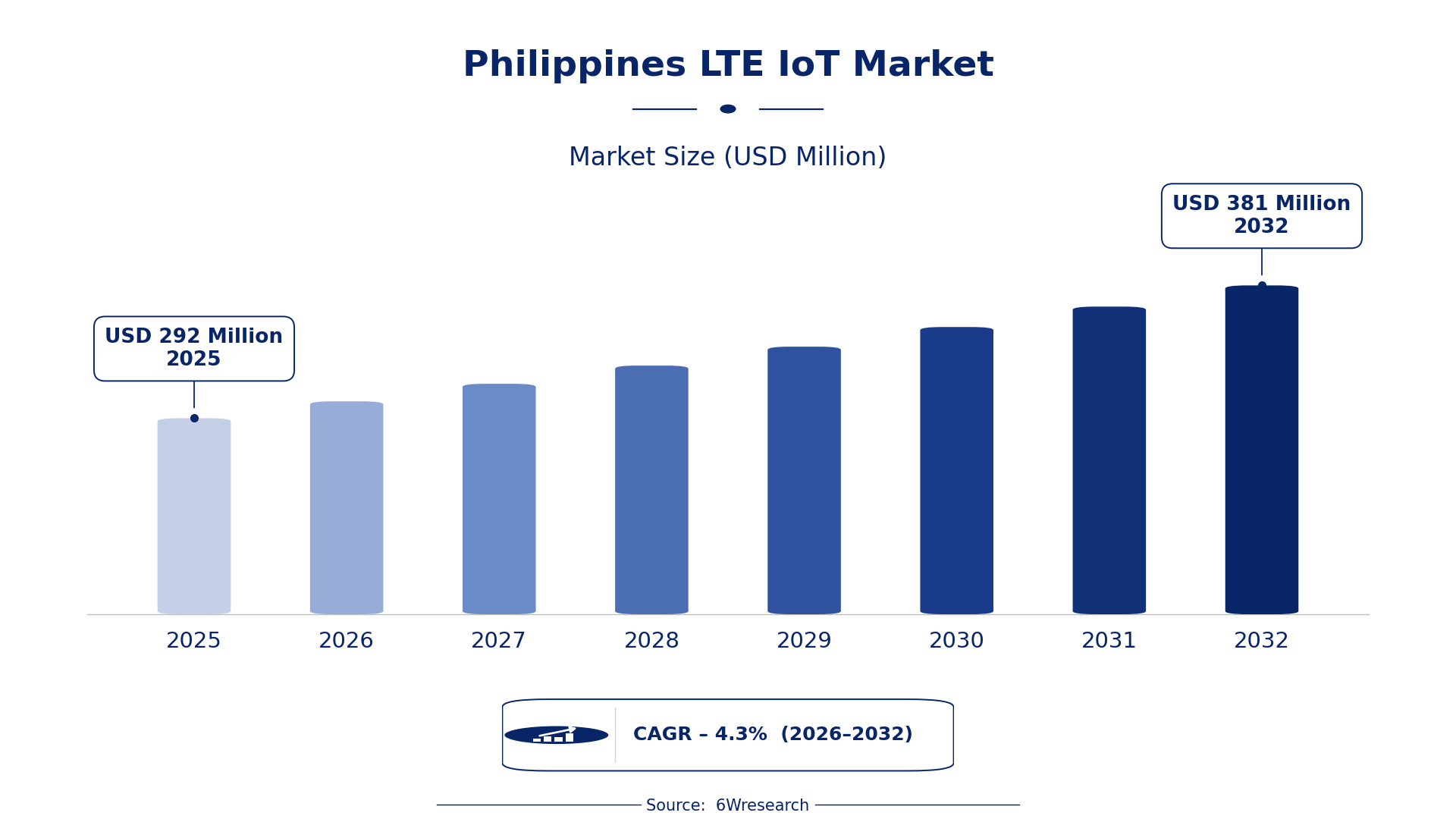
The Philippines LTE IoT Market was estimated at USD 292 Million in 2025 and is projected to reach USD 381 Million by 2032, growing at a CAGR of 4.3% from 2026 to 2032.
Philippines LTE IoT Market Synopsis
The surge in demand for efficient agricultural practices is a key driver behind the Philippines LTE IoT Market. Farmers are increasingly deploying IoT solutions to monitor soil health, optimize water usage, and manage crops effectively, thereby increasing yield and reducing waste.
Healthcare is another vital sector where IoT solutions are gaining traction. The pandemic underscored the need for remote monitoring and telemedicine, pushing healthcare providers to invest in LTE IoT technologies that enhance patient care while minimizing physical contact.
Philippines LTE IoT Market Year-wise Growth Rate and Key Drivers
This graph illustrates the annual growth rates of the Philippines LTE IoT Market from 2021 to 2032, highlighting a steady upward trajectory and projected expansion over the forecast period.
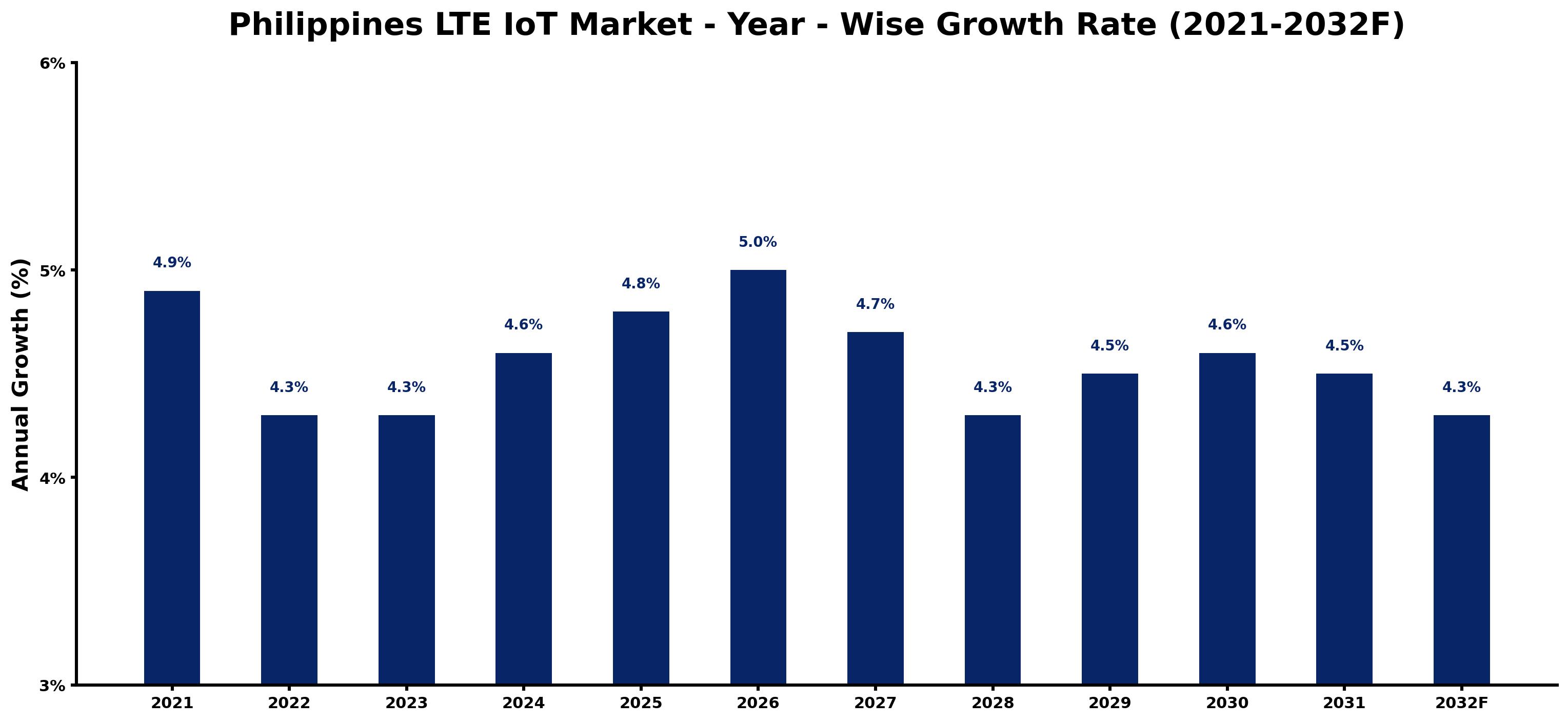
The table below presents the year‑wise growth rates along with the key drivers influencing the market
| Year | Growth Rate | Major Drivers |
| 2021 | 4.9% | Philippine government encourages IoT for disaster management. |
| 2022 | 4.3% | Increase in smart agriculture adoption drives IoT demand. |
| 2023 | 4.3% | Telehealth expansion boosts LTE IoT usage in rural areas. |
| 2024 | 4.6% | Smart cities initiative supports urban IoT infrastructure growth. |
| 2025 | 4.8% | Telecom upgrades enhance LTE connectivity for IoT solutions. |
| 2026 | 5.0% | Rise in logistics optimization fuels IoT adoption in transport. |
| 2027 | 4.7% | Local manufacturing adoption of IoT improves operational efficiency. |
| 2028 | 4.3% | Government policies incentivize IoT investments in energy sectors. |
| 2029 | 4.5% | Increased mobile penetration boosts consumer IoT applications. |
| 2030 | 4.6% | Smart home technology gains traction among Filipino consumers. |
| 2031 | 4.5% | Philippine startups innovate in IoT for health monitoring. |
| 2032 | 4.3% | Regulatory support for IoT enhances cybersecurity measures. |
Note: Market size estimations and growth projections presented in this report are based on 6Wresearch's proprietary forecasting methodology, utilizing the latest available industry data, government publications, and primary research inputs.
Philippines LTE IoT Market Key Takeaways
Below are some of the specific key takeaways from the market, including:
- The market is driven by increased agricultural efficiency and enhanced healthcare monitoring solutions.
- Telecom companies are exploring innovative IoT applications to enhance connectivity across various sectors.
- Device interoperability and network coverage remain critical issues that need to be addressed.
- The impact of COVID-19 has accelerated the adoption of IoT technologies across multiple industries.
- Government initiatives are focused on expanding digital infrastructure and regulatory frameworks.
Evaluation of Restraints in Philippines LTE IoT Market
One significant restraint is the challenge of device interoperability. Different manufacturers often produce devices that do not communicate effectively with each other, leading to fragmentation in the IoT ecosystem. Network coverage, particularly in rural areas, poses another limitation. While urban areas have decent LTE infrastructure, expanding this coverage to remote regions is crucial for the broader adoption of IoT solutions. Furthermore, power consumption of IoT devices can hinder widespread deployment, particularly in areas without reliable electricity supply.
Philippines LTE IoT Market Trends
The trend toward smart agriculture continues to gain momentum, with farmers looking for IoT solutions that provide real-time data for better decision-making. Health monitoring systems are also advancing, utilizing wearables and connected devices to keep track of patient health metrics. Businesses are increasingly adopting smart logistics, leveraging IoT to optimize supply chains and improve efficiency. The drive for sustainability and energy efficiency is pushing the market toward low-power IoT devices, reflecting a shift in both consumer preferences and regulatory requirements.
Philippines LTE IoT Market Opportunities
There are substantial opportunities in developing smart cities as urban centers expand. The government’s push towards digital infrastructure creates an environment conducive to investments in IoT technologies. Furthermore, partnerships between telecom operators and agricultural firms to create bespoke IoT solutions represent a lucrative avenue for growth. The rise of remote healthcare monitoring solutions is another area ripe for investment, particularly in light of the continuing demand for efficient healthcare delivery.
Government Initiatives in the Philippines LTE IoT Market
Government policy is shaping the Philippines LTE IoT Market through initiatives aimed at improving digital infrastructure and regulatory frameworks. A focused approach on enhancing connectivity in rural areas reflects a commitment to ensuring that all Filipinos can access IoT technologies. Current and planned initiatives are expected to further drive market growth and facilitate the expansion of IoT applications across sectors.
- A national digital infrastructure upgrade programme now in its rollout phase aims to enhance connectivity in underserved areas.
- A regulatory framework introduced in 2025 mandating improved billing transparency for IoT services has been successfully implemented.
- A current initiative focuses on promoting public-private partnerships to expand telecom infrastructure access by 2028.
- Ongoing discussions about establishing an IoT innovation hub are expected to foster local startups in the sector.
- A planned strategy to incentivize IoT adoption in healthcare is anticipated to begin implementation by mid-2026.
Future Insights of the Philippines LTE IoT Market
Looking ahead to 2026-2032, the Philippines LTE IoT Market is set for steady growth, driven by continuous investments in digital infrastructure and increasing demand from various sectors. The focus on sustainable practices will encourage the development of low-power devices. Collaborations among key stakeholders will become more common as businesses strive to integrate IoT solutions into their operations. The government’s commitment to enhancing connectivity will likely result in improved coverage, thus facilitating the broader adoption of IoT technologies.
Philippines LTE IoT Market Latest Developments
In recent months, the Philippines LTE IoT Market has witnessed a surge in activity as players adapt to changing demands. The focus has shifted towards developing innovative solutions to meet the needs of various sectors, such as agriculture and healthcare. Recent partnerships and technological advancements reflect a proactive approach to market challenges and opportunities.
- A leading regional operator launched a pilot IoT project aimed at enhancing agricultural monitoring solutions in late 2025.
- An initiative that began in early 2025 focuses on deploying smart meters across urban areas to optimize energy usage.
- A major technology vendor is currently underway with the rollout of an advanced IoT platform designed to support healthcare applications.
- A new partnership expected to finalize by Q3 2026 will enhance logistic capabilities for local businesses through IoT solutions.
- Research into developing energy-efficient IoT devices is ongoing, with potential commercial applications anticipated in late 2026.
Philippines LTE IoT Market - Key Attractiveness of the Report
- 10 Years of Market Numbers
- Historical Data Starting from 2022 to 2025
- Base Year: 2025
- Forecast Data until 2032
- Key Performance Indicators Impacting the Market
- Major Upcoming Developments and Projects
Key Highlights of the Report:
- Philippines LTE IoT Market Outlook
- Market Size of Philippines LTE IoT Market, 2025
- Forecast of Philippines LTE IoT Market, 2032
- Historical Data and Forecast of Philippines LTE IoT Revenues & Volume for the Period 2022-2032F
- Philippines LTE IoT Market Trend Evolution
- Philippines LTE IoT Market Drivers and Challenges
- Philippines LTE IoT Price Trends
- Philippines LTE IoT Porter's Five Forces
- Philippines LTE IoT Industry Life Cycle
- Historical Data and Forecast of Philippines LTE IoT Market Revenues & Volume By Technology for the Period 2022-2032F
- Historical Data and Forecast of Philippines LTE IoT Market Revenues & Volume By NB-IoT for the Period 2022-2032F
- Historical Data and Forecast of Philippines LTE IoT Market Revenues & Volume By LTE-M for the Period 2022-2032F
- Historical Data and Forecast of Philippines LTE IoT Market Revenues & Volume By Service for the Period 2022-2032F
- Historical Data and Forecast of Philippines LTE IoT Market Revenues & Volume By Professional Services for the Period 2022-2032F
- Historical Data and Forecast of Philippines LTE IoT Market Revenues & Volume By Managed Services for the Period 2022-2032F
- Historical Data and Forecast of Philippines LTE IoT Market Revenues & Volume By Industry for the Period 2022-2032F
- Historical Data and Forecast of Philippines LTE IoT Market Revenues & Volume By Manufacturing for the Period 2022-2032F
- Historical Data and Forecast of Philippines LTE IoT Market Revenues & Volume By Energy and utilities for the Period 2022-2032F
- Historical Data and Forecast of Philippines LTE IoT Market Revenues & Volume By Transportation and logistics for the Period 2022-2032F
- Historical Data and Forecast of Philippines LTE IoT Market Revenues & Volume By Healthcare for the Period 2022-2032F
- Historical Data and Forecast of Philippines LTE IoT Market Revenues & Volume By Agriculture for the Period 2022-2032F
- Philippines LTE IoT Import Export Trade Statistics
- Market Opportunity Assessment By Technology
- Market Opportunity Assessment By Service
- Market Opportunity Assessment By Industry
- Philippines LTE IoT Top Companies Market Share
- Philippines LTE IoT Competitive Benchmarking By Technical and Operational Parameters
- Philippines LTE IoT Company Profiles
- Philippines LTE IoT Key Strategic Recommendations






































