Philippines Mustard Oil Market Top 5 Importing Countries and Market Competition (HHI) Analysis
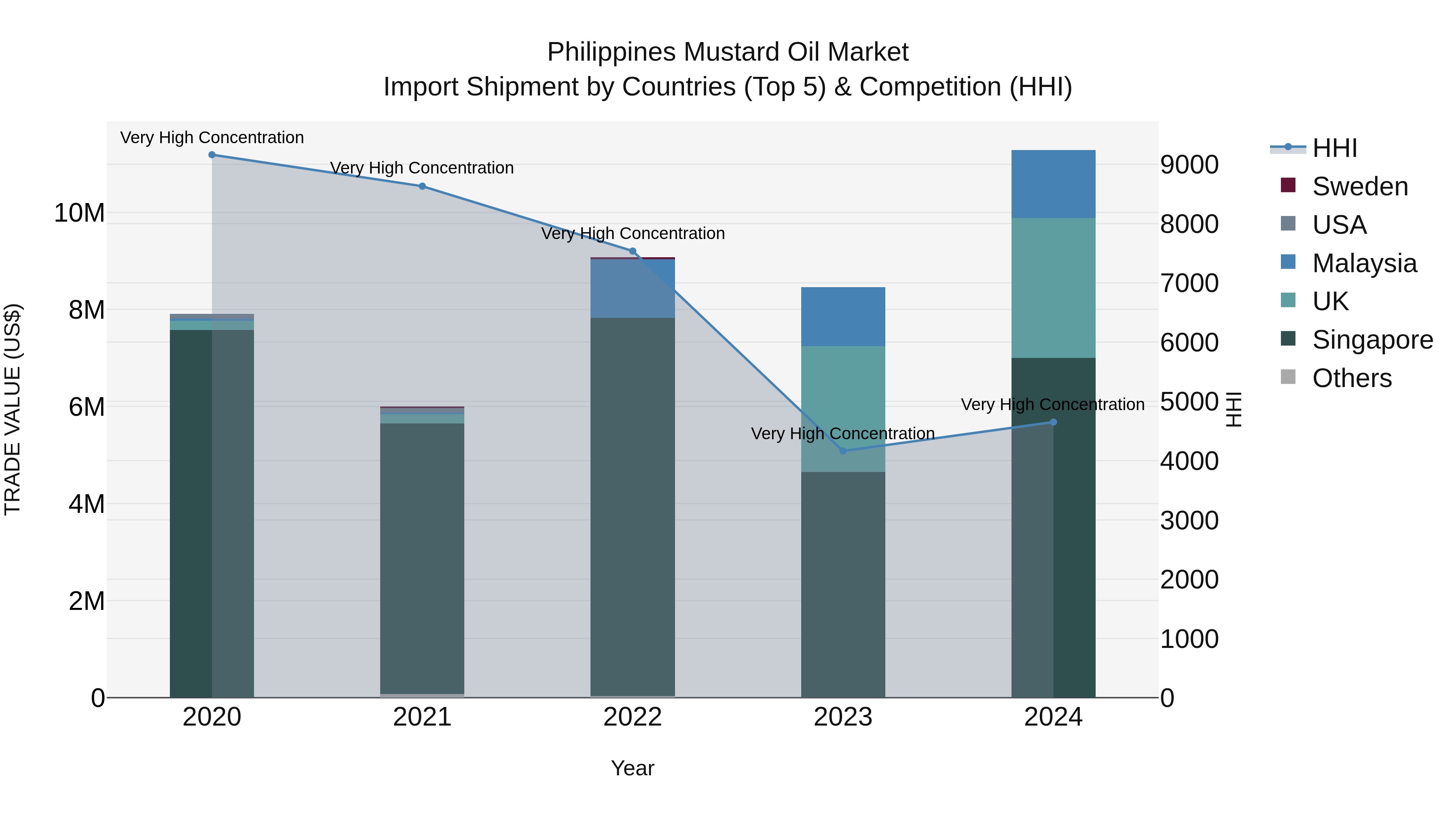
In 2024, Philippines continued to witness a significant inflow of mustard oil imports, with key exporting countries including Singapore, UK, Malaysia, Japan, and Denmark. The market displayed a high level of concentration, as indicated by the Herfindahl-Hirschman Index (HHI). The compound annual growth rate (CAGR) from 2020 to 2024 stood at a healthy 9.3%, reflecting sustained demand. Moreover, the impressive growth rate of 33.39% from 2023 to 2024 suggests a potential uptrend in consumer preferences for mustard oil in the Philippines.
Philippines Mustard oil Market Synopsis
Mustard oil is widely used across households, restaurants, catering businesses, hotels etc., for different cooking purposes such as frying, tempering etc., owing to its high smoking point property which makes it ideal choice for deep frying foods without creating carcinogenic compounds resulting from prolonged heating at high temperatures when using other vegetable oils like sunflower or groundnut oil. Philippine mustard oil market size was valued at around US$ 11 Million in 2025 and is likely reach nearly US$ 15 million exhibiting a CAGR of 5% on account of increased preference towards healthier edible oils over traditional ones like palm oil based on improved nutritional value provided by them along with attractive flavor profiles offered depending upon variety used.
Drivers of the market
In the Philippines Mustard Oil market, drivers are linked to the culinary and health-conscious consumer trends. Mustard oil is valued for its distinct flavor and potential health benefits. As consumers seek flavorful and nutritious cooking alternatives, the demand for mustard oil as a cooking medium and ingredient increases. The culinary industry and health enthusiasts appreciate its unique taste and potential positive impact on cardiovascular health, contributing to its growing popularity.
Challenges of the market
The Philippines Mustard Oil market encounters challenges related to quality control, consumer preferences, and market competition. Mustard oil`s pungent taste and strong aroma can be divisive among consumers, impacting its market demand. Ensuring consistent quality and addressing consumer preferences are critical to maintain a loyal customer base. Moreover, competition from other cooking oils and health-conscious trends can influence mustard oil`s market share. Navigating these challenges requires product diversification, effective marketing strategies, and efforts to educate consumers about the unique characteristics and potential health benefits of mustard oil.
Covid-19 Impact of the market
The COVID-19 pandemic had notable impacts on the Philippines Mustard Oil market, affecting both consumption patterns and production dynamics. Key players in the food and culinary sectors, navigated challenges related to supply chain disruptions and shifts in consumer preferences. As lockdowns and movement restrictions limited restaurant dining, the demand for certain culinary ingredients, including mustard oil, was temporarily impacted. However, as home cooking and healthier eating gained traction, mustard oil found a renewed appeal due to its culinary and potential health benefits. The pandemic underscored the significance of versatile and nutritious ingredients in consumers` kitchens. Market players demonstrated agility by responding to evolving trends and focusing on e-commerce channels to reach consumers directly. As the culinary landscape evolves post-pandemic, mustard oil`s adaptability positions it to continue meeting changing consumer preferences and culinary aspirations.
Key Players of the market
In the Philippines Mustard Oil market, influential players from the culinary and food sectors are essential in producing and supplying high-quality mustard oil. Companies such as MustardFlavor Foods, CulinaryBlend Innovations, and CookingOil Corporation contribute significantly to enhancing the flavors and nutritional profiles of various cuisines. These key players offer versatile mustard oil options that cater to the culinary preferences of consumers.
Key Highlights of the Report:
- Philippines Mustard oil Market Outlook
- Market Size of Philippines Mustard oil Market, 2024
- Forecast of Philippines Mustard oil Market, 2031
- Historical Data and Forecast of Philippines Mustard oil Revenues & Volume for the Period 2021-2031
- Philippines Mustard oil Market Trend Evolution
- Philippines Mustard oil Market Drivers and Challenges
- Philippines Mustard oil Price Trends
- Philippines Mustard oil Porter's Five Forces
- Philippines Mustard oil Industry Life Cycle
- Historical Data and Forecast of Philippines Mustard oil Market Revenues & Volume By Product Type for the Period 2021-2031
- Historical Data and Forecast of Philippines Mustard oil Market Revenues & Volume By Black mustard Oil for the Period 2021-2031
- Historical Data and Forecast of Philippines Mustard oil Market Revenues & Volume By Brown mustard Oil for the Period 2021-2031
- Historical Data and Forecast of Philippines Mustard oil Market Revenues & Volume By White Mustard Oil for the Period 2021-2031
- Historical Data and Forecast of Philippines Mustard oil Market Revenues & Volume By Production Process type for the Period 2021-2031
- Historical Data and Forecast of Philippines Mustard oil Market Revenues & Volume By Pressing Extraction for the Period 2021-2031
- Historical Data and Forecast of Philippines Mustard oil Market Revenues & Volume By Distillation extraction for the Period 2021-2031
- Historical Data and Forecast of Philippines Mustard oil Market Revenues & Volume By Application Type for the Period 2021-2031
- Historical Data and Forecast of Philippines Mustard oil Market Revenues & Volume By Pharmaceutical for the Period 2021-2031
- Historical Data and Forecast of Philippines Mustard oil Market Revenues & Volume By Aromatherapy for the Period 2021-2031
- Historical Data and Forecast of Philippines Mustard oil Market Revenues & Volume By Cooking for the Period 2021-2031
- Historical Data and Forecast of Philippines Mustard oil Market Revenues & Volume By Soaps for the Period 2021-2031
- Historical Data and Forecast of Philippines Mustard oil Market Revenues & Volume By Others for the Period 2021-2031
- Historical Data and Forecast of Philippines Mustard oil Market Revenues & Volume By Distribution Type for the Period 2021-2031
- Historical Data and Forecast of Philippines Mustard oil Market Revenues & Volume By Online Retail for the Period 2021-2031
- Historical Data and Forecast of Philippines Mustard oil Market Revenues & Volume By Supermarkets for the Period 2021-2031
- Historical Data and Forecast of Philippines Mustard oil Market Revenues & Volume By Departmental Stores for the Period 2021-2031
- Philippines Mustard oil Import Export Trade Statistics
- Market Opportunity Assessment By Product Type
- Market Opportunity Assessment By Production Process type
- Market Opportunity Assessment By Application Type
- Market Opportunity Assessment By Distribution Type
- Philippines Mustard oil Top Companies Market Share
- Philippines Mustard oil Competitive Benchmarking By Technical and Operational Parameters
- Philippines Mustard oil Company Profiles
- Philippines Mustard oil Key Strategic Recommendations






































