Philippines Passwordless Authentication Market Size & Growth Rate (2026-2032)
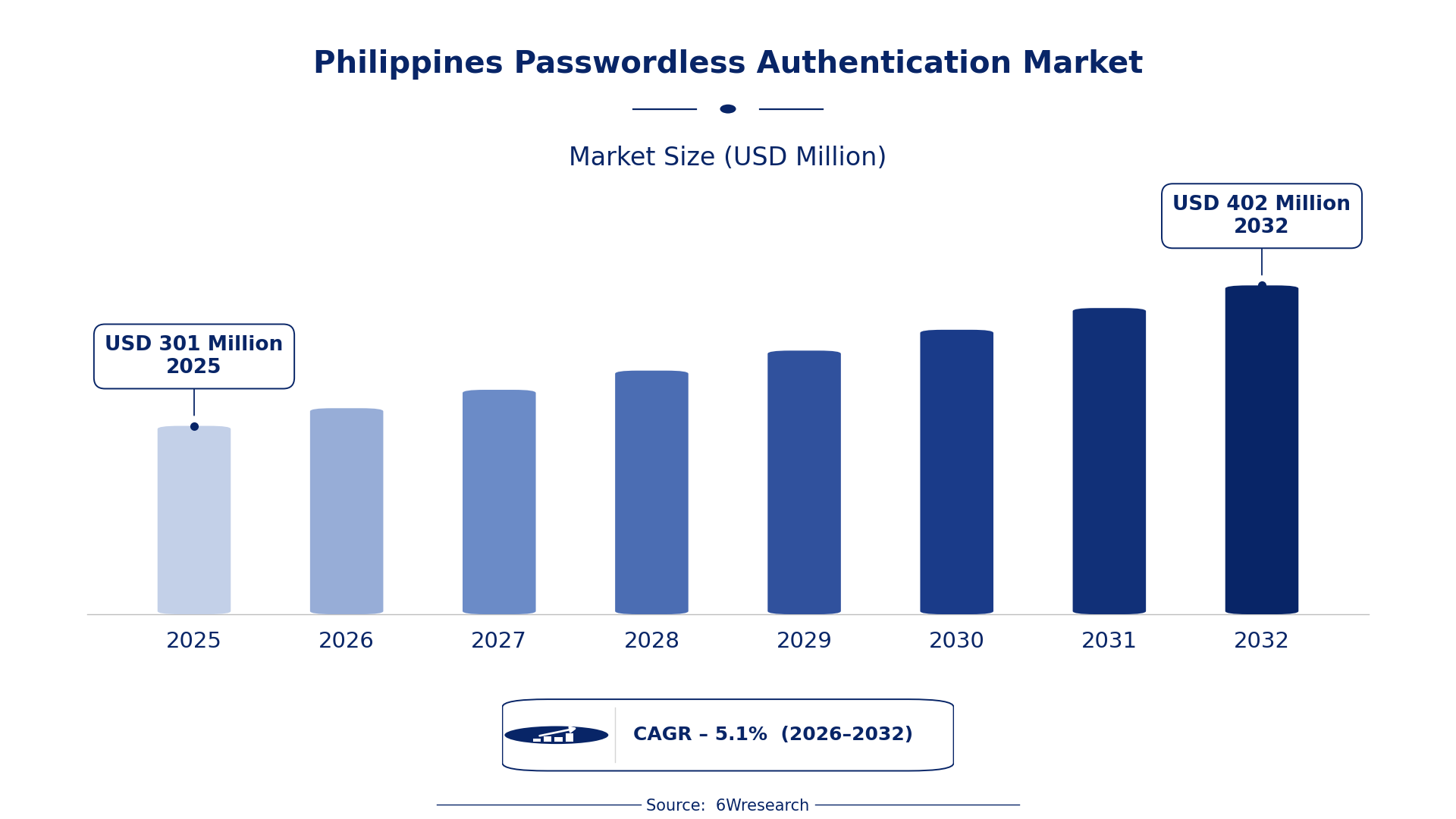
The Philippines Passwordless Authentication Market was estimated at USD 301 Million in 2025 and is projected to reach USD 402 Million by 2032, growing at a CAGR of 5.1% from 2026 to 2032.
Philippines Passwordless Authentication Market Synopsis
The demand for passwordless authentication in the Philippines is driven by a surge in cyber threats and the push for improved user experiences. Organizations are actively seeking methods that enhance security without the cumbersome process of password management, making passwordless options increasingly attractive.
This market is witnessing a shift as both large enterprises and SMEs recognize the importance of securing sensitive data while simplifying access for end-users. With growing awareness about the risks associated with traditional password systems, companies are pivoting toward innovative authentication solutions to safeguard their operations.
Philippines Passwordless Authentication Market Year-wise Growth Rate and Key Drivers
This graph illustrates the annual growth rates of the Philippines Passwordless Authentication Market from 2021 to 2032, highlighting a steady upward trajectory and projected expansion over the forecast period.
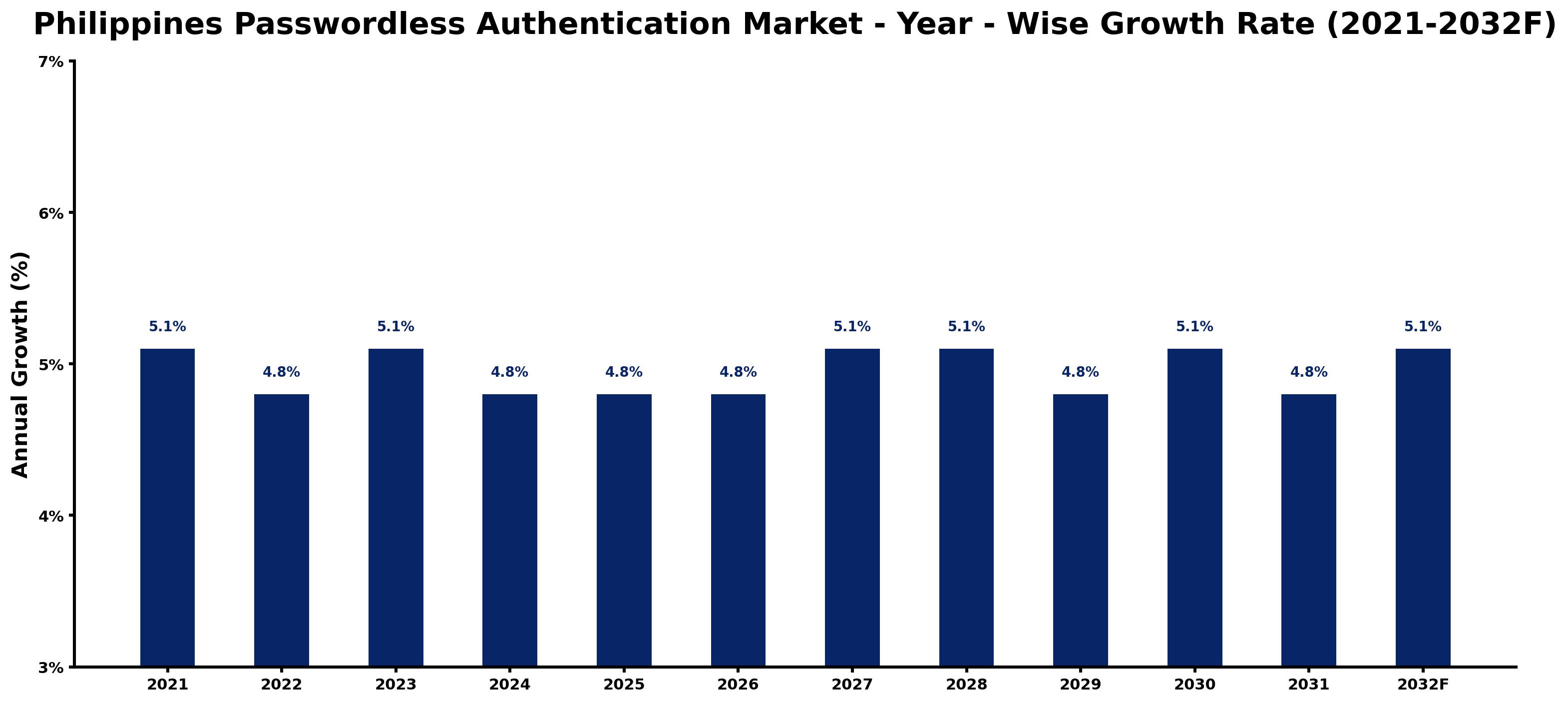
The table below presents the year‑wise growth rates along with the key drivers influencing the market
| Year | Growth Rate | Major Drivers |
| 2021 | 5.1% | Rising concerns over cybersecurity threats drive demand. |
| 2022 | 4.8% | Government mandates for secure digital identity verification. |
| 2023 | 5.1% | Increased adoption of mobile banking necessitates authentication solutions. |
| 2024 | 4.8% | Local startups focus on innovative authentication technologies. |
| 2025 | 4.8% | Awareness campaigns boost knowledge of passwordless benefits. |
| 2026 | 4.8% | Regulatory pressure encourages biometric authentication implementations. |
| 2027 | 5.1% | Emergence of fintech firms promoting passwordless solutions. |
| 2028 | 5.1% | Increased online activity due to the pandemic response. |
| 2029 | 4.8% | Growing tech-savvy population drives demand for secure access. |
| 2030 | 5.1% | Collaboration with local universities enhances research in security. |
| 2031 | 4.8% | Digital transformation initiatives push for advanced security frameworks. |
| 2032 | 5.1% | E-commerce growth accelerates need for efficient authentication. |
Note: Market size estimations and growth projections presented in this report are based on 6Wresearch's proprietary forecasting methodology, utilizing the latest available industry data, government publications, and primary research inputs.
Philippines Passwordless Authentication Market Key Takeaways
Below are some of the specific key takeaways from the market, including:
- Adoption of biometric authentication methods is on the rise, responding to user demand for more secure access.
- Businesses are prioritizing user experience alongside security, with a focus on reducing friction during login processes.
- The impact of the COVID-19 pandemic has expedited the transition to remote work, amplifying the need for secure, flexible access solutions.
- Technological innovations, such as behavioral biometrics, are emerging as competitive differentiators among service providers.
- Regulatory pressures are increasing, pushing organizations to comply with stringent data protection laws, thereby driving investment in passwordless technologies.
Evaluation of Restraints in Philippines Passwordless Authentication Market
Despite its promise, the market for passwordless authentication faces notable challenges. A significant hurdle is the resistance to change among users accustomed to traditional passwords. Organizations must manage this behavioral shift carefully, which often requires comprehensive training and communication strategies. Additionally, integration with existing systems poses technical difficulties, potentially delaying adoption. Concerns regarding the reliability of emerging authentication methods, particularly in sectors that handle sensitive information, also linger. Companies may hesitate to fully commit to passwordless solutions without proven security standards in place.
Philippines Passwordless Authentication Market Trends
A notable trend is the growing reliance on multi-factor authentication (MFA) alongside passwordless systems, creating a layered security approach that meets organizational needs. Companies are increasingly experimenting with biometrics—such as facial recognition and fingerprint scanning—as these technologies evolve and become more accessible.
Furthermore, cloud-based passwordless solutions are gaining traction, allowing businesses to scale their security measures efficiently without heavy upfront investments. This flexibility is particularly appealing to smaller enterprises, which often lack the resources for extensive IT infrastructure.
Philippines Passwordless Authentication Market Opportunities
The potential for growth in the Philippines Passwordless Authentication Market is substantial. Emerging sectors, such as fintech and e-commerce, are prime candidates for adopting passwordless technologies, given their high user interaction rates and sensitivity to data breaches. Additionally, investment in digital transformation initiatives across various industries is expected to stimulate demand for innovative security solutions.
As organizations increasingly migrate to cloud services, passwordless authentication will likely play a vital role in securing these environments. Companies that can provide tailored solutions to address specific industry challenges will find lucrative opportunities to grow their market presence.
Government Initiatives in the Philippines Passwordless Authentication Market
Government policy is instrumental in shaping the Philippines Passwordless Authentication Market, as regulatory frameworks evolve to bolster cybersecurity. The government is emphasizing the need for stronger digital identity verification methods to protect citizens and businesses alike, prompting increased investment in advanced authentication technologies.
- A digital identity verification program launched in 2024 to enhance trust in online transactions has accelerated the push for passwordless solutions.
- Current initiatives focus on developing a national cybersecurity strategy, aiming to address the growing threat landscape and encourage the adoption of secure authentication measures.
- Upcoming regulations are expected to mandate higher security standards for financial institutions, directly influencing the shift toward passwordless authentication.
- Recently, a cybersecurity awareness campaign was initiated, aimed at educating the public about secure access methods and the risks associated with traditional passwords.
Future Insights of the Philippines Passwordless Authentication Market
Looking ahead to 2026-2032, the Philippines Passwordless Authentication Market is set for considerable transformation. As awareness of cybersecurity challenges continues to rise, organizations will increasingly prioritize adopting cutting-edge authentication technologies. The evolution of consumer behavior, particularly in the wake of the pandemic, indicates a lasting shift toward more convenient and secure access methods.
Increased investment in digital infrastructure will pave the way for enhanced passwordless solutions that can effectively address both enterprise and consumer needs. As technology evolves, the market can anticipate innovative solutions that not only improve security but also streamline user experiences.
Philippines Passwordless Authentication Market Latest Developments
Recent activity in the Philippines Passwordless Authentication Market reflects a dynamic shift toward innovative security solutions. Organizations across various sectors are embracing passwordless technologies to improve both security and user convenience.
- A major technology vendor launched a new biometric authentication service in late 2025, enabling seamless user access across platforms.
- An initiative began in early 2025 focusing on integrating passwordless solutions into government services, aiming to enhance citizen engagement and security.
- Ongoing collaborations among local startups and global technology firms have emerged to develop tailored passwordless solutions for SMEs.
- Several organizations are currently testing advanced authentication methods, including behavioral biometrics, expected to conclude by mid-2026.
Philippines Passwordless Authentication Market - Key Attractiveness of the Report
- 10 Years of Market Numbers
- Historical Data Starting from 2022 to 2025
- Base Year: 2025
- Forecast Data until 2032
- Key Performance Indicators Impacting the Market
- Major Upcoming Developments and Projects
Key Highlights of the Report:
- Philippines Passwordless Authentication Market Outlook
- Market Size of Philippines Passwordless Authentication Market, 2025
- Forecast of Philippines Passwordless Authentication Market, 2032
- Historical Data and Forecast of Philippines Passwordless Authentication Revenues & Volume for the Period 2022-2032F
- Philippines Passwordless Authentication Market Trend Evolution
- Philippines Passwordless Authentication Market Drivers and Challenges
- Philippines Passwordless Authentication Price Trends
- Philippines Passwordless Authentication Porter's Five Forces
- Philippines Passwordless Authentication Industry Life Cycle
- Historical Data and Forecast of Philippines Passwordless Authentication Market Revenues & Volume By Offering for the Period 2022-2032F
- Historical Data and Forecast of Philippines Passwordless Authentication Market Revenues & Volume By Hardware for the Period 2022-2032F
- Historical Data and Forecast of Philippines Passwordless Authentication Market Revenues & Volume By Software for the Period 2022-2032F
- Historical Data and Forecast of Philippines Passwordless Authentication Market Revenues & Volume By Services for the Period 2022-2032F
- Historical Data and Forecast of Philippines Passwordless Authentication Market Revenues & Volume By Motility for the Period 2022-2032F
- Historical Data and Forecast of Philippines Passwordless Authentication Market Revenues & Volume By Fixed/Rack Mounted for the Period 2022-2032F
- Historical Data and Forecast of Philippines Passwordless Authentication Market Revenues & Volume By Mobile/Portable for the Period 2022-2032F
- Historical Data and Forecast of Philippines Passwordless Authentication Market Revenues & Volume By Authentication Type for the Period 2022-2032F
- Historical Data and Forecast of Philippines Passwordless Authentication Market Revenues & Volume By Single-factor for the Period 2022-2032F
- Historical Data and Forecast of Philippines Passwordless Authentication Market Revenues & Volume By Multi-factor for the Period 2022-2032F
- Historical Data and Forecast of Philippines Passwordless Authentication Market Revenues & Volume By End User for the Period 2022-2032F
- Historical Data and Forecast of Philippines Passwordless Authentication Market Revenues & Volume By BFSI for the Period 2022-2032F
- Historical Data and Forecast of Philippines Passwordless Authentication Market Revenues & Volume By IT and ITeS for the Period 2022-2032F
- Historical Data and Forecast of Philippines Passwordless Authentication Market Revenues & Volume By Government and Law Enforcement for the Period 2022-2032F
- Historical Data and Forecast of Philippines Passwordless Authentication Market Revenues & Volume By Healthcare for the Period 2022-2032F
- Historical Data and Forecast of Philippines Passwordless Authentication Market Revenues & Volume By Manufacturing for the Period 2022-2032F
- Historical Data and Forecast of Philippines Passwordless Authentication Market Revenues & Volume By Retail and Consumer Electronics for the Period 2022-2032F
- Historical Data and Forecast of Philippines Passwordless Authentication Market Revenues & Volume By Travel and Hospitality for the Period 2022-2032F
- Historical Data and Forecast of Philippines Passwordless Authentication Market Revenues & Volume By Other Verticals (Education; Energy and Utilities; Aerospace and Defense; Media and Entertainment; Online Gaming; and Transportation and Logistics) for the Period 2022-2032F
- Philippines Passwordless Authentication Import Export Trade Statistics
- Market Opportunity Assessment By Offering
- Market Opportunity Assessment By Motility
- Market Opportunity Assessment By Authentication Type
- Market Opportunity Assessment By End User
- Philippines Passwordless Authentication Top Companies Market Share
- Philippines Passwordless Authentication Competitive Benchmarking By Technical and Operational Parameters
- Philippines Passwordless Authentication Company Profiles
- Philippines Passwordless Authentication Key Strategic Recommendations






































