Philippines Polyester Spun Yarn Market Top 5 Importing Countries and Market Competition (HHI) Analysis
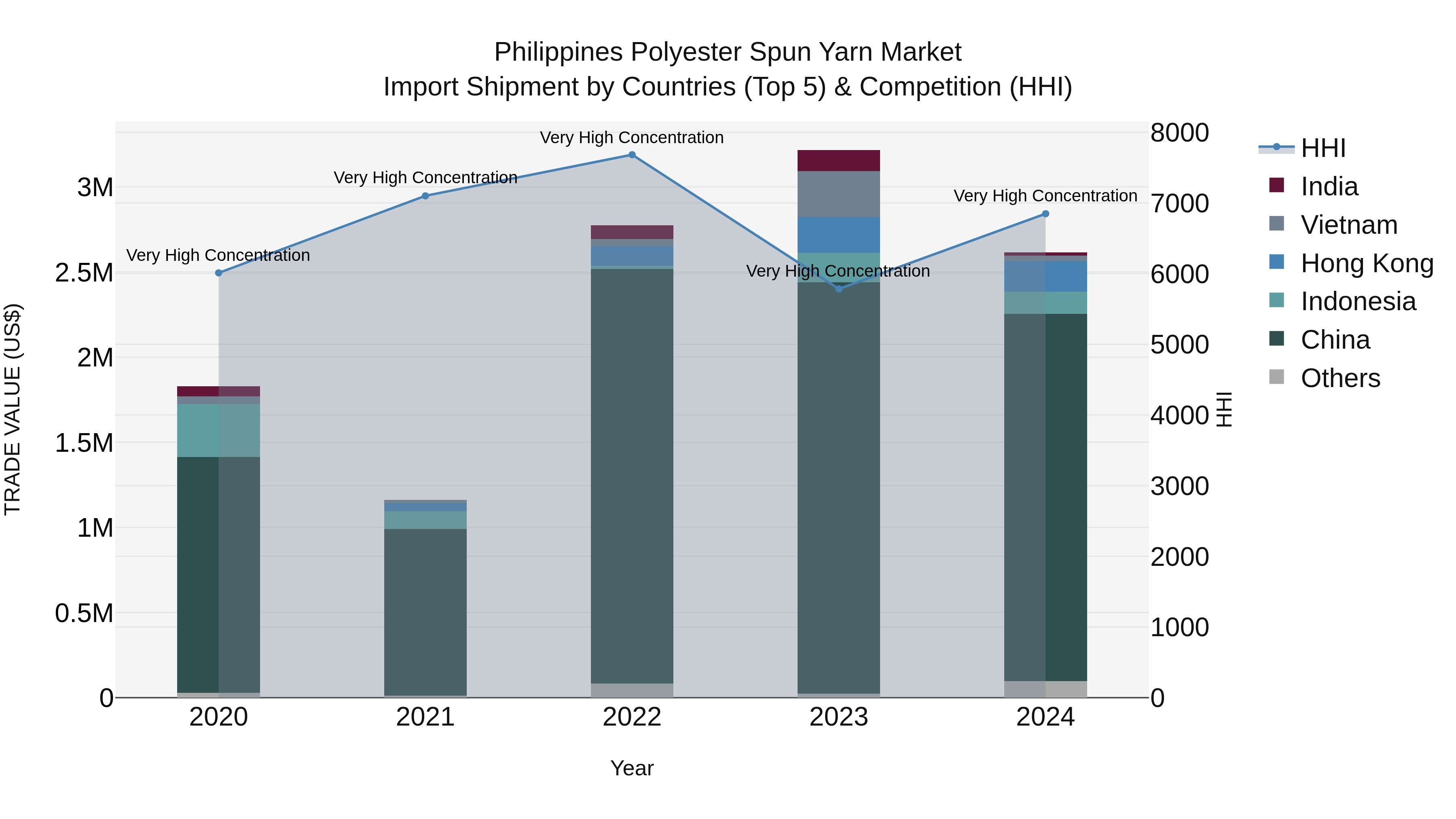
Despite a high concentration with the Herfindahl-Hirschman Index (HHI) in 2024, the Philippines saw a significant Compound Annual Growth Rate (CAGR) of 9.34% in polyester spun yarn import shipments from 2020 to 2024. However, there was a notable decline in the growth rate from 2023 to 2024, dropping by -18.69%. China, Hong Kong, Indonesia, Thailand, and Vietnam emerged as the top exporting countries to the Philippines in 2024, indicating the importance of these markets in supplying polyester spun yarn to meet the country`s demand.
philippines polyester spun yarn market Synopsis
The Philippines polyester spun yarn market has displayed robust expansion owing to its diverse applications in the textile and garment industry. Polyester spun yarn is known for its durability, wrinkle resistance, and cost-effectiveness, making it a preferred choice for various end-use products. The market has benefited from the country`s skilled labor force and favorable manufacturing conditions. Over the next few years, the market is anticipated to witness a CAGR of approximately 6%, driven by the steady growth of the textile and apparel sector domestically and regionally.
Drivers of the Market
The Philippines polyester spun yarn market is anticipated to expand due to its versatile applications across textiles and apparel industries. Polyester spun yarn`s durability, affordability, and versatility make it a preferred choice for various products. The growing textile and garment sectors, both domestically and in export markets, will be instrumental in driving demand for polyester spun yarn.
Challenges of the Market
The Philippines polyester spun yarn market has growth potential in textiles and related industries. However, challenges must be managed for sustained success. Raw material sourcing, particularly high-quality polyester fibers, is crucial to produce consistent and durable yarn. Ensuring a steady supply that meets industry standards can be challenging. Market education is essential to communicate the benefits of polyester spun yarn, such as its versatility and cost-effectiveness, compared to other yarn types. Overcoming preconceived notions and demonstrating quality will be important. Moreover, competition from both domestic and international yarn manufacturers can impact pricing and market share. Balancing affordability with quality will be key. Navigating these challenges will determine the trajectory of the Philippines polyester spun yarn market.
COVID-19 Impact on the Market
The Philippines polyester spun yarn market has shown steady growth over the past few years. With the country`s textile and garment industry expanding, the demand for polyester spun yarn has been on the rise. This growth is attributed to factors such as increased consumer spending and the growing popularity of synthetic fibers. However, the COVID-19 pandemic had a temporary impact on the industry, causing disruptions in the supply chain and affecting production. As the country recovers, the market is expected to regain its momentum, driven by the rebounding economy and sustained demand for textiles.
Key Players in the Market
The demand for polyester spun yarn remains steady in the Philippines textile and garment industries. Companies such as PolyYarn Industries, SynthFiber Mills, and FabriWeave Corp. continue to play pivotal roles in supplying polyester spun yarn to meet market demands.
Key Highlights of the Report:
- Philippines Polyester Spun Yarn Market Outlook
- Market Size of Philippines Polyester Spun Yarn Market, 2024
- Forecast of Philippines Polyester Spun Yarn Market, 2031
- Historical Data and Forecast of Philippines Polyester Spun Yarn Revenues & Volume for the Period 2021-2031
- Philippines Polyester Spun Yarn Market Trend Evolution
- Philippines Polyester Spun Yarn Market Drivers and Challenges
- Philippines Polyester Spun Yarn Price Trends
- Philippines Polyester Spun Yarn Porter's Five Forces
- Philippines Polyester Spun Yarn Industry Life Cycle
- Historical Data and Forecast of Philippines Polyester Spun Yarn Market Revenues & Volume By Types for the Period 2021-2031
- Historical Data and Forecast of Philippines Polyester Spun Yarn Market Revenues & Volume By Recycled Spun Yarn for the Period 2021-2031
- Historical Data and Forecast of Philippines Polyester Spun Yarn Market Revenues & Volume By Non-recycled Spun Yarn for the Period 2021-2031
- Historical Data and Forecast of Philippines Polyester Spun Yarn Market Revenues & Volume By Fields for the Period 2021-2031
- Historical Data and Forecast of Philippines Polyester Spun Yarn Market Revenues & Volume By Apparel for the Period 2021-2031
- Historical Data and Forecast of Philippines Polyester Spun Yarn Market Revenues & Volume By Household Textiles for the Period 2021-2031
- Historical Data and Forecast of Philippines Polyester Spun Yarn Market Revenues & Volume By Others for the Period 2021-2031
- Philippines Polyester Spun Yarn Import Export Trade Statistics
- Market Opportunity Assessment By Types
- Market Opportunity Assessment By Fields
- Philippines Polyester Spun Yarn Top Companies Market Share
- Philippines Polyester Spun Yarn Competitive Benchmarking By Technical and Operational Parameters
- Philippines Polyester Spun Yarn Company Profiles
- Philippines Polyester Spun Yarn Key Strategic Recommendations






































