Philippines Rattan Furniture Market Top 5 Importing Countries and Market Competition (HHI) Analysis
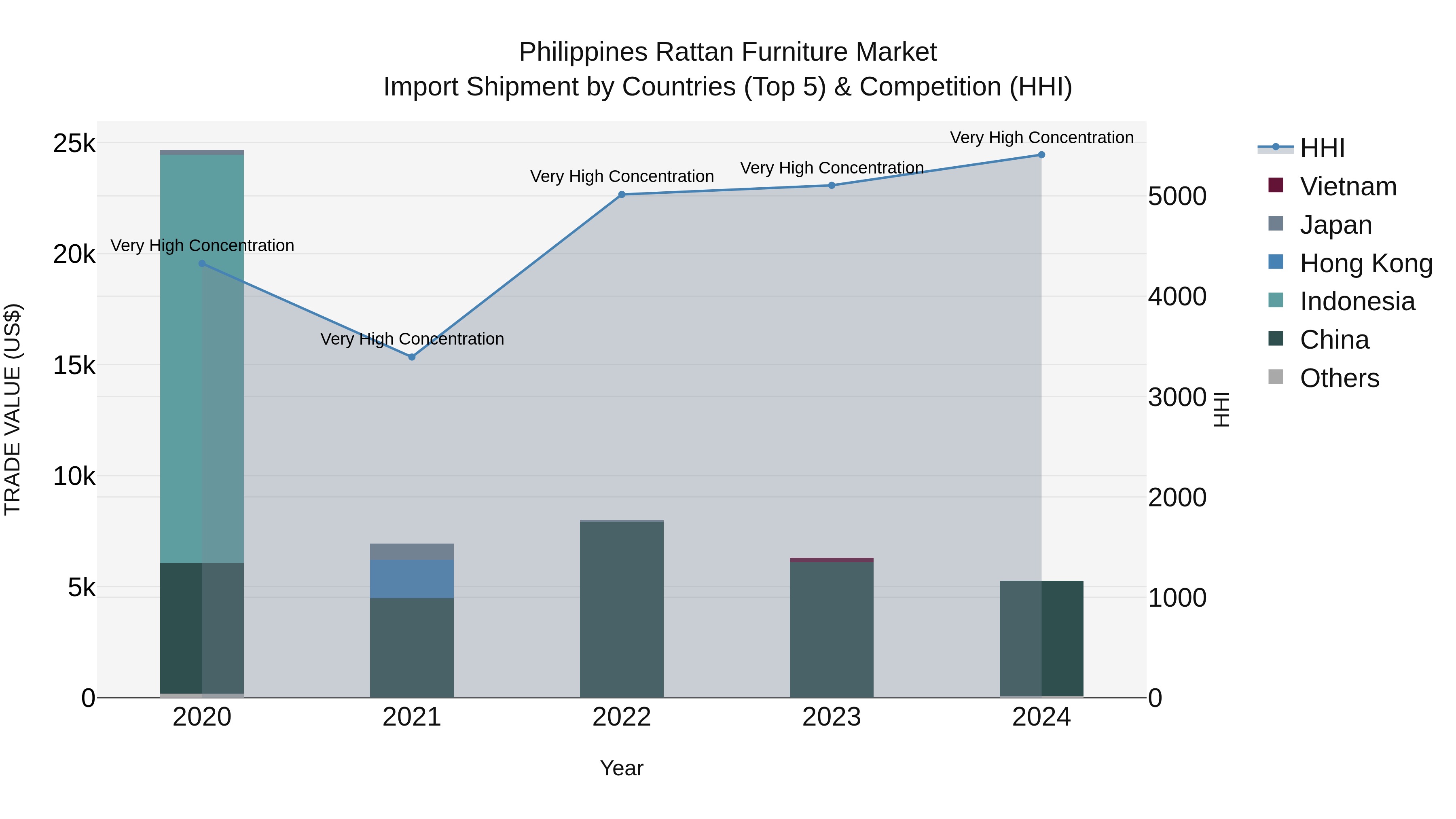
Despite the high concentration of import shipments in the Philippines rattan furniture market, there has been a significant decline in CAGR from 2020-2024 at -32.04%. In 2024, the top exporting countries to the Philippines include China, Jamaica, Hong Kong, Indonesia, and Japan. The growth rate in 2024 also saw a decrease of -16.47%. These trends suggest a challenging market environment for rattan furniture imports in the Philippines, with potential implications for the industry`s future outlook.
Rattan Furniture Market: Philippines vs Top 5 Major Economies in 2027 (Asia)
By 2027, Philippines's Rattan Furniture market is forecasted to achieve a exponential growth rate of 15.54%, with China leading the Asia region, followed by India, Japan, Australia and South Korea.

Philippines Rattan Furniture Market Growth Rate
According to 6Wresearch internal database and industry insight, the Philippines Rattan Furniture Market is projected to grow at a compound annual growth rate (CAGR) of 7.7% during the forecast period (2026-2032).
Topics Covered in the Philippines Rattan Furniture Market Report
The Philippines Rattan Furniture Market report thoroughly covers the market by type, application and distribution channel. The report provides an unbiased and detailed analysis of ongoing market trends, opportunities/high-growth areas, and market drivers, helping stakeholders devise and align their market strategies according to the current and future market dynamics.
Philippines Rattan Furniture Market Highlights
| Report Name | Philippines Rattan Furniture Market |
| Forecast Period | 2026–2032 |
| CAGR | 7.7% |
| Growing Sector | Residential |
Philippines Rattan Furniture Market Synopsis
The Philippines Rattan Furniture Market is witnessing major growth, which is spurred by the increasing demand for ecofriendly and sustainable living solutions. Rattan furniture is renowned for its durability and aesthetic appeal, which makes it a preferred choice for both residential and commercial applications. The market is booming due to an increasing interest in natural materials and artisanal items, particularly in interior design and home decor. The growing knowledge of sustainability is also contributing to the demand for rattan furniture.
Evaluation of Growth Drivers in the Philippines Rattan Furniture Market
Below mentioned are some prominent drivers and their influence on market dynamics:
| Drivers | Primary Segments Affected | Why it Matters (Evidence) |
| Eco-friendly & Sustainable Products | All Segments | The evolving consumer demand for green furniture choices is increasing the development of rattan furniture. |
| Urbanization & Rising Disposable Income | Residential, Commercial | Consumers are increasingly favoring high-quality furniture due to the rising purchasing power. |
| Tourism Growth | Commercial | The growing popularity of compact apartment furniture is increasing the demand for space-efficient rattan furniture. |
| Preference for Space-Saving Solutions | Residential | The increasing trend of small apartment furniture solutions is raising the demand for space-saving rattan furniture. |
| Online Shopping & E-commerce Growth | Distribution Channels | The development of e-commerce platforms is making it easier for consumers to access a wider range of rattan furniture. |
The Philippines Rattan Furniture Market size is expected to grow at a significant CAGR of 7.7% during the forecast period 2026-2032, backed by the country’s rich tradition of skilled craftsmanship, which enables for the production of high-quality, unique rattan furniture. There is a growing demand for sustainable and eco-friendly products, which has significantly contributed to the popularity of rattan furniture, as it is a renewable resource. Along with these, the increasing global demand for handcrafted, bespoke furniture, especially from luxury and high-end consumers, has propelled the market. The expanding tourism and hospitality sectors in the Philippines further boost the market.
Evaluation of Restraints in the Philippines Rattan Furniture Market
Below mentioned are some major restraints and their influence on market dynamics:
| Restraints | Primary Segments Affected | What This Means (Evidence) |
| High Cost of Rattan Furniture | All Segments | The high cost of rattan furniture, especially among price sensitive consumers, can limit the adoption of the market. |
| Limited Awareness in Rural Areas | Distribution Channels | Lack of awareness in remote regions may delay the development of the furniture market. |
| Limited Raw Material Availability | Manufacturing | The lack of availability of high-quality rattan materials may delay production. |
| Imitation & Counterfeit Products | All Segments | The rise of affordable imitation rattan furniture could discourage consumers from purchasing genuine products. |
| Supply Chain Disruptions | All Segments | Natural disasters and transportation disruptions could slow down the expansion of the market. |
Philippines Rattan Furniture Market Challenges
Even with the growth prospects, the Philippines rattan furniture market revenue can be affected due to the major challenges. Such a challenge includes the premium cost of rattan furniture, which could create a barrier to the growth of the market. Along with this, lack of domestic production capacity is coupled with the reliance on imported materials, which could slow down the development of the market. The shortage of raw material availability could slow down the market’s adoption.
Philippines Rattan Furniture Market Trends
The following are major trends transforming the growth of the market:
- Technological Advancements in Manufacturing: The advancements of technology in manufacturing, including the use of automated machines, are improving the effectiveness of rattan furniture production.
- Growth of Online Retailers: The expansion of digital platforms is making it easier for the consumers to access furniture across various industries.
- Increasing Preference for Multifunctional Furniture: There is an evolving consumer preference for multifunctional furniture, particularly for urban living spaces, which is raising the demand for the furniture.
- Sustainable Practices in Rattan Production: The increasing demand for green practices in sourcing rattan is growing rapidly as many consumers adopt eco-friendly products.
Investment Opportunities in the Philippines Rattan Furniture Market
The following are key investment opportunities that are expected to increase the revenue of the market:
- Expanding Distribution Networks: Investment in both physical retail stores and digital platforms will increase the availability of rattan furniture in rural areas.
- Product Innovation: The progress in multifunctional furniture will create major growth opportunities, which is expected to propel the expansion of the market.
- Tourism & Hospitality Sector: The increasing investment in the commercial segment, particularly in hotels and resorts, offers major growth opportunities
- Sustainability Initiatives: By investing in green sourcing practices, companies can attract ecofriendly consumers, coupled with the global push for sustainability.
Top 5 Leading Players in the Philippines Rattan Furniture Market
Here is a list of prominent players leading the Philippines Rattan Furniture Market:
1. Kenneth Cobonpue
| Company / Brand | Kenneth Cobonpue |
|---|---|
| Established Year | 1996 |
| Headquarters | Cebu City, Philippines |
| Official Website | Click Here |
Kenneth Cobonpue is a globally recognized Filipino designer and manufacturer of high-end rattan furniture. His brand is known for combining traditional Filipino craftsmanship with modern design techniques, creating luxury furniture pieces widely used in upscale residential and hospitality projects around the world.
2. Dedon
| Company Name | Dedon |
|---|---|
| Established Year | 1990 |
| Headquarters | Cebu City, Philippines |
| Official Website | Click Here |
Dedon is a global leader in luxury outdoor furniture and is widely known for its premium rattan and woven furniture collections. The company focuses on innovative design, high-quality synthetic fibers, and sustainable production practices, making it one of the most influential brands in the international rattan furniture industry.
3. Obra Cebuana Furniture Designs Inc.
| Company Name | Obra Cebuana Furniture Designs Inc. |
|---|---|
| Established Year | 1981 |
| Headquarters | Cebu City, Philippines |
| Official Website | Click Here |
Obra Cebuana Furniture Designs Inc. specializes in handcrafted rattan furniture that blends traditional Filipino craftsmanship with contemporary aesthetics. The company produces a variety of indoor and outdoor furniture pieces widely exported to international markets.
4. Jed Yabut
| Company / Brand | Jed Yabut |
|---|---|
| Established Year | 2010 |
| Headquarters | Cebu City, Philippines |
| Official Website | Click Here |
Jed Yabut is a modern Filipino furniture designer known for his minimalist and functional rattan furniture creations. His designs emphasize clean lines, durability, and timeless aesthetics, making them popular among both domestic and international buyers.
5. Cebu-based Manufacturers
| Company Group | Cebu-based Manufacturers |
|---|---|
| Established Year | 1980 |
| Headquarters | Cebu, Philippines |
| Official Website | - |
Cebu is widely regarded as a major hub for rattan furniture manufacturing in the Philippines. Numerous manufacturers in the region produce high-quality handmade rattan furniture ranging from traditional styles to contemporary designs, supplying both domestic and global furniture markets.
Government Regulations Introduced in the Philippines Rattan Furniture Market
According to the Philippine government data, there are many guidelines in place to ensure the safety and quality of rattan furniture products. For example, the Department of Trade and Industry (DTI) controls the manufacturing, distribution and sale of rattan furniture to confirm they meet safety standards, and it is expected to fuel the growth of the market. These guidelines are proposed to protect consumers and boost green practices, which boost the growth of the market.
Future Insights of the Philippines Rattan Furniture Market
The Philippines Rattan Furniture Market revenue is expected to surge in the coming years, which is spurred by the rising demand for green and eco-friendly furniture. Along with this, the increasing consumer awareness regarding environmental impact and the rising preference for rattan furniture are anticipated to fuel the development of the market. Additional factors that are supporting the expansion of the market include the rising trend towards natural-themed interior designs and the increasing distribution channels.
Market Segmentation Analysis
This report provides an inclusive study of the following market segments and their leading categories:
By Type – Tables to Lead the Market
According to Mansi, Senior Research Analyst, 6Wresearch, tables are expected to lead the market due to the increasing demand for both residential and commercial rattan furniture for dining purposes.
By Application – Residential to Dominate the Market
The residential segment is anticipated to dominate the Philippines Rattan Furniture Market due to the rising demand for home furniture propelled by the increasing middle-class population.
By Distribution Channel – Multi-brand Stores to Dominate the Market
Multi-brand stores are projected to dominate the Philippines Rattan Furniture Market, which is spurred by the increasing consumer preference for convenience and the expansion of the retail networks.
Key Attractiveness of the Report
- 10 Years of Market Numbers
- Historical Data Starting from 2022 to 2025
- Base Year: 2025
- Forecast Data until 2032
- Key Performance Indicators Impacting the Market
- Major Upcoming Developments and Projects
Key Highlights of the Report:
- Philippines Rattan Furniture Market Outlook
- Market Size of Philippines Rattan Furniture Market, 2025
- Forecast of Philippines Rattan Furniture Market, 2032
- Historical Data and Forecast of Philippines Rattan Furniture Revenues & Volume for the Period 2022-2032
- Philippines Rattan Furniture Market Trend Evolution
- Philippines Rattan Furniture Market Drivers and Challenges
- Philippines Rattan Furniture Price Trends
- Philippines Rattan Furniture Porter's Five Forces
- Philippines Rattan Furniture Industry Life Cycle
- Historical Data and Forecast of Philippines Rattan Furniture Market Revenues & Volume By Type for the Period 2022-2032
- Historical Data and Forecast of Philippines Rattan Furniture Market Revenues & Volume By Table for the Period 2022-2032
- Historical Data and Forecast of Philippines Rattan Furniture Market Revenues & Volume By Chairs for the Period 2022-2032
- Historical Data and Forecast of Philippines Rattan Furniture Market Revenues & Volume By Storage for the Period 2022-2032
- Historical Data and Forecast of Philippines Rattan Furniture Market Revenues & Volume By Beds for the Period 2022-2032
- Historical Data and Forecast of Philippines Rattan Furniture Market Revenues & Volume By Others for the Period 2022-2032
- Historical Data and Forecast of Philippines Rattan Furniture Market Revenues & Volume By Application for the Period 2022-2032
- Historical Data and Forecast of Philippines Rattan Furniture Market Revenues & Volume By Residential for the Period 2022-2032
- Historical Data and Forecast of Philippines Rattan Furniture Market Revenues & Volume By Commercial for the Period 2022-2032
- Historical Data and Forecast of Philippines Rattan Furniture Market Revenues & Volume By Distribution Channel for the Period 2022-2032
- Historical Data and Forecast of Philippines Rattan Furniture Market Revenues & Volume By Multi-brand Stores for the Period 2022-2032
- Historical Data and Forecast of Philippines Rattan Furniture Market Revenues & Volume By Exclusive Stores for the Period 2022-2032
- Historical Data and Forecast of Philippines Rattan Furniture Market Revenues & Volume By Online for the Period 2022-2032
- Historical Data and Forecast of Philippines Rattan Furniture Market Revenues & Volume By Other Distribution Channel for the Period 2022-2032
- Philippines Rattan Furniture Import Export Trade Statistics
- Market Opportunity Assessment By Type
- Market Opportunity Assessment By Application
- Market Opportunity Assessment By Distribution Channel
- Philippines Rattan Furniture Top Companies Market Share
- Philippines Rattan Furniture Competitive Benchmarking By Technical and Operational Parameters
- Philippines Rattan Furniture Company Profiles
- Philippines Rattan Furniture Key Strategic Recommendations
Markets Covered
The report offers a comprehensive study of the subsequent market segments:
By Type:
- Table
- Chairs
- Storage
- Beds
- Others
By Application:
- Residential
- Commercial
By Distribution Channel:
- Multi-brand Stores
- Exclusive Stores
- Online
- Other Distribution Channels






































